Today is International Women’s Day, and it always feel weird to be “Mayorsplaining” the experience of women and girls to the majority of the City who are not cis guys. Especially as I am surrounded by so many smart, strong, and bold women who are leading in New Westminster. So I’ll take this opportunity to highlight a few of the books that have guided my learning about cities and hope some of the dudes who follow me do their own learning and work to support more equitable and just cities as a path to a more equitable and just world.
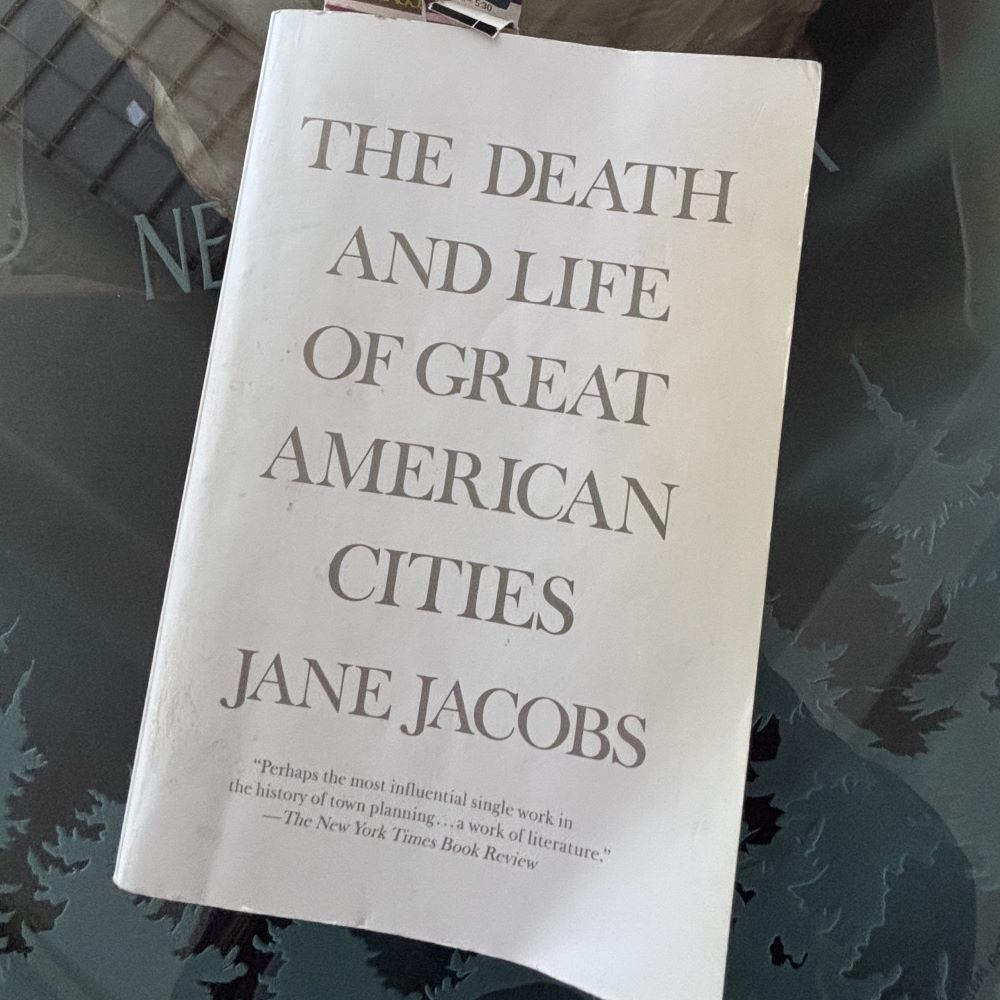
The obvious first book is Jane Jacobs’ “The Death and Life of Great American Cities”. Still relevant 65 years after it was written, the book was written as a critique (attack) on orthodox city planning and became an important part of the paradigm shift that changed the planning profession. My own copy has suffered greatly from dog-earing and marginal noting, as I return to the many insights in here round the role of sidewalks as social places, the value of framing the experience of children in a public space, and the difference between a City designed for cars an one designed for people. https://tinyurl.com/5ezdpkx2

When Janette Sadik-Khan wrote “Streetfight”, she had just left her role as Transportation Commissioner of New York City, where she led bold (and ultimately highly successful) initiatives to give the streets back to the people of New York, a City where most people don’t include driving as part of their everyday lives, but most public space was still given to cars. She was instrumental in making New York a cycling city, in the redesign of Times Square and other public spaces to emphasize gathering and community in the most famous city in the world. And one quote in this book is burned in my head: “When you push the status quo, it pushes back. Hard.” https://tinyurl.com/bdaj7e8d

One thing these two books reference, sometimes obliquely, is that cities are traditionally designed to serve an outmoded ideal – the single male breadwinner of the nuclear family. This is simply not how most people live today, and we need to change how our cities work if we want to address the needs of today. This is more explicitly set out in Leslie Kern’s “Feminist City”. This book opens up new ways to see a city and a community (at least new to folks like me), and asks a lot of questions, even if I think it falls short of providing answers to those questions (I’m hoping for a sequel!) https://tinyurl.com/szt42f3y
Have a meaningful International Women’s Day, and pass the knowledge!