Elections and Taxes and Salaries – Correction?

So, enjoying the election so far?

It has become slightly less comfortable for me since writing this post last week. I am fairly non-partisan, in that I vote for candidates, not parties. No sooner do you post a blog looking deeper at the facts being provided by some candidates, and the suggestion of bias comes out.

As an aside, this blog has a market saturation of about 0.01% of eligible voters in New West (my Mom lives in the Kootenays, otherwise it might be 0.011%), so I can’t imagine my criticism is something a candidate should be all that worried about. Secondly, I call myself non-partisan, I never said I wasn’t biased. I work for a city, when someone drags out the “Lazy Muni Employee” trope, I respond. I even declared my bias at the beginning of that post. Notably, I have provided financial and/or logistical help to three council candidates and one mayoral candidate so far this election, and as things stand, it looks like I will vote for about half of those 4. I even have biases within my own biases! Democracy is great.

Back to the topic in question: both of the Candidates I mentioned have taken me to task for the article I linked to above, as I took them to task for (to Quote Mr. Crosty’s campaign literature):

“…over 78% of out taxes are used to pay wages, benefits, and consulting fees”

(and, by implication, our City Staff is lazy, overpaid, and bankrupting the taxpayers of the City).

Demonstrating that, as I previously claimed, I am not a genius at financial statements, one of the Candidates provided me a link to this report prepared by the City which provides the info much more clearly (and, I assume, more accurately,) than my post on the subject. It was pointed out to me that I should look at I should look at Page 8 of the report, where one can find the line:

”…the City’s major cost is salaries and benefits, representing approximately 78% of the total general operating budget.”

I have to admit, this number is way better than the numbers I tried to parse out of the Annual Financial Statements, and it is stated so eloquently, so I guess I owe the Candidates an apology.

Sort of.

Problem is, 78% of the General Operating Budget is not the same thing as 78% of Taxes. Not even close.

The 78% for 2010 number comes from $60M in salaries paid out of the General Operating Fund of $77M. But the General Operating Fund is the money used for day-to-day operations of the City (See Appendix 1 of the Report). The fund from which they pay for office supplies, insurance, incidentals, and yes, salaries. It is not the fund used for Capital Works for the City (like building the Pier Park, or replacing a boiler or City Hall, or sidewalk repairs). Nor does it include any of the Utility operations or capital: the water pipes, sewers, and trash collection that is so much of what the City does.

Things also not included in the General Operating Fund budget: buying and maintaining the vehicle fleet, painting yellow lines on roads, Fire and Police equipment, the Master Transportation Plan, Christmas Lighting, Rail Crossing upgrades, paving projects, the Mercer Stadium Track replacement, street light or street sign upgrades, and the list goes on…

The budget for all of these “Capital costs” was about $65 Million in 2010. And much of that is paid with your taxes.

Then there are utility operations: Electrical, Sewer, Water, and Solid Waste. These are operated on a strict fee-for-service basis: so those who get the service are those who pay for it, and all the money paid for them goes right back into operating the utility. If memory serves me right, this is a strict requirement in the Local Government Act. Utilities cannot be used as cash cows to fund other programs. The only relationship this has to your taxes is that some money is transferred from the Utilities to the General Operating Fund in order to pay the salaries of the people who operate and maintain those utilities but are otherwise paid out of the General Operating Fund.

Interesting to consider that if we reduced salaries, we would need to reduce the General Operation Fund by the same amount of money. If we reduced salaries from $60M to $45M (a 25% cut, sure to cause chaos in any organization), then we would have to also reduce the General Operating Fund by $15M, so the statistic provided by the Candidates would then say “72% goes to taxes!”: not much of an improvement for decimating your City services.

Sorry guys, I stand by my original post as being a much more accurate picture of the relationship of taxes and salaries than “78% of our taxes go to salaries”.


Sievert and Becquerel, Oh Dear!

So the Georgia Straight sort of tries to clarify things in this article, and not surprisingly, fail miserably.

The article starts out pointing out how confusing all the data is, then does nothing but muddify the fuzzification (as Dr. Foth used to say) by throwing out more random numbers and units lacking context, and never once mentioning what the units mean. They complain that Environment Canada’s data is confusing, but do nothing to provide more clarity. The impression they leave is that Health Canada, by releasing the radiation data from Fukushima, is actually involved in a conspiracy to cover it up.

I already talked about Becquerel, so you should realize that the exposure listed in the following quote is one millionth of the exposure you receive from your own bones:

” The level of iodine-131 in Sidney, B.C., rose to a high of 3.63 milliBecquerel per cubic metre in the air on March 20. That’s over 300 times higher than the background level of 0.01 milliBecquerel per cubic metre or less.”

Oh, and that “background” value? There is no natural background value for Iodine 131, it is not a naturally occurring element in any quantity (it is a product of uranium fission), and has a short half-life (8 days) in real-world terms, so any of it that is created naturally goes away really quick. What they are falsely calling “background” is actually the Method Detection Limit (“MDL”), or the smallest concentration that can be detected using the equipment available. Note that Cesium-137, later in the article, has the same “background” concentration.

It is interesting to note that the acceptable level of Radon in your home is 200 Becquerel per cubic metre. So your daily exposure in your home, where you breathe 8 hours a day 365 a year is not significant health concern at 50,000 times the level of that one-day spike in Sidney.

But what about Sievert? According to the article:

“It’s a shell game. MicroSieverts are quite a distance removed from the raw data. They’re blending in stuff from nature to make the data look innocuous,”

. This is one of the most ignorant anti-science statements I have read in printed media in a long time. Sieverts confuse this poor idiot, so he assumes someone is pulling the wool over his eyes. We are not too sure who, and what their nefarious plan is, but this writer is finding conspiracy every time someone uses a term he does not understand. Instead of trying to understand it, he assumes the worst. That is the difference between skepticism and cynicism.

It really isn’t that complicated, and if he did a little research, he would discover that the calculation of “effective dose” does the exact opposite of what he says: it combines together the cumulative impacts onto a single unit, allowing us to compare radiation apples to radiation oranges.

Not all radioactive substances are the same. When they decompose, they release various different types of radiation and/or particles. So in that sense, a counting of Becquerel (like I have been doing for the last two posts) tells us about the amount of atom decay, but does not tell us about the harm each decay may cause.

When an atom of Potassium-40 in your bones decays, it (most often) releases an electron at very high energy (<1.3meV), and a neutrino. The neutrino is harmless (or at least it is drowned out by the 60+ billion of them that pass through every square centimetre of your body every second you are alive on earth) but the electron at that energy level is called a beta particle, and is a form of ionizing radiation that can cause cellular damage. When Iodine-137 decays, it does a little two-step decay that results in a beta particle followed very shortly by a gamma ray. Uranium-238, in contrast, releases an entire helium nucleus, otherwise known as an alpha particle. Each of these particles pack a different “punch”, a they carry different abilities to interact with other materials.

The unit “Grey” is used to convert the varying doses delivered by a unit of each of these types of radiation into one convertible unit. It is a little more complicated than this, but essentially, because an alpha particle is bigger and interacts more strongly with other materials, it packs 20x the “dose” of a gamma ray or a beta particle (which pack about equal doses). So one unit of alpha radiation packs the punch of 20 units of gamma or 20 units of beta. It also stands to reason that these three types of radiation (alpha, beta and gamma) are differently harmful to health. Alpha particles are big and heavy, so they cannot penetrate your skin very far (only a few micrometres), and actually can only travel a few metres through the air before being absorbed by the atmosphere. Therefore, direct exposure to alpha radiation tends to cause things like radiation burns. Beta particles are smaller, with more energy, and can travel through the air pretty freely, but only penetrate several centimetres into your skin, causing deeper damage. Gamma rays can pass through most materials (although lead does diffuse them quite a bit) and since they can pass right through your body, tend to cause systemic “radiation sickness” if you are exposed to a lot of them.

To further complicate matters, some tissues in your body (especially your bone marrow and lymph nodes) are more severely impacted by radiation than other tissues (like the skin or the liver). A single Grey of exposure will impact your lymph nodes more than your skin, so factors that account for these differences need to also be calculated if we want to understand the health effects of radiation. As the ultimate impact on your body are cumulative from all of the tissues affected, these tissue-specific factors are added together, and the sum value used to calculate the “effective dose” a person receives from any given amount (Grey) of radiation.

Since we are comparing three different types of radiation and dozens of different tissues, the unit must be standardized. The “effective dose” is measured in the Si unit “Sievert”, which is defined as the amount of radiation that has the equivalent biological impact as one joule of gamma rays adsorbed by one kilogram of tissue. You can look at this data table to put that number into perspective. The average North American is exposed to about 3 milliSievert (mSv) every day from natural sources (or 0.003 Sv), and can receive from 0.004 to 0.83 mSv from a medical or dental x-ray.

A microSievert is 0.001 milliSievert. So the radiation “spikes” mentioned in the Georgia Straight article, from 0.43 to 0.48 microSievert, or 0.23 to 0.25 microSievert, or even 0.36 to 0.96 microSievert, are much less than a thousandth of our daily exposure from things like the uranium in our granite countertops to the radium adsorbed in our rain to the potassium in our bananas (and notably, not the radio waves from our cell phones). And less than a hundredth of the exposure we would receive from a single dental x-ray.

The article does sum up with one of those great meaningless quotes: “There is no safe level of radiation.” I would suggest anyone in BC concerned about their increased exposure to radiation caused by Fukushima should probably eat one less banana this year, and you will more than offset any impacts

On Elections, Taxes, and Wages

Now I may be biased, seeing as how I work for a City, but I don’t work for New Westminster, so I am going to barge ahead with that potential bias exposed (sound like a declared conflict-of-interest?). There are currently at least two candidates in New Westminster who are talking taxes in a big way, and it seems they both think that City Workers get paid too much. Fair opinion, but are they arguing facts?

John Ashdown, sometimes referred to as the “Mayor of 12th Street”, is well known as both a community-builder and a fiscal conservative. His website includes the following quote:

”Do you know that 78% of your tax dollar ends up in to City Wages and Salaries?

Mayoral Candidate James Crosty was recently quoted by the Douglas College student paper making a very similar statement:

“80 per cent of every tax dollar that’s generated goes towards paying salaries in the city.”

His promotional newspaper is a little more conservative, downgrading that number to 78.08%. But the message is clear: the City pays so much of your taxes to the wages of City workers that they can hardly afford anything else form the 20% of the money that is left!

This first raised the question to me: is that high? I mean it sounds high, but I wonder if it really is compared to other cities, like Richmond, where I work. I asked these questions to Mr. Crosty at last night’s all-candidates mixer, and he suggested I make the comparison between New West and Richmond (presumably, a better-managed City in his opinion). However, before we compare the facts, let’s find out of they are facts.

Luckily, the City’s 2010 budget is available on-line for anyone to read. Now, I’m no financial expert. Tables of geochemical data generally make much more sense to me that tables with dollar signs on them, but we should be able to parse out the info here without too much trouble.

If we look at the amount of tax revenue generated in 2010, we get the nice, round number of $54,569,975 (page 10 of the .pdf, which is page 2 of the financial statements, first number, second column). So 80% of that is $43,655,980.

Now, if you scroll way, down to page 41 of the .pdf, you get a list of all salaries paid in 2010, notably excluding police: $40,430,379. That is about 74%. Close enough for politics.

Hopefully looking at these same financial statements, you see all the problems with this rough estimate. The $54 Million number only represents about a third of City revenue. The City’s annual revenue is actually more than $165 Million, when you include transfers from other governments, utility charges, and other revenue sources. If you want to be simplistic and call all of these “taxes”, then the $40 Million salary figure above only represents 24% of the money the City takes in.

In fact, a better count for the wages paid out is available on page 27 of the .pdf: including Police services, the City paid $64,034,085 in wages and salaries, or 117% of the tax revenue they take in!

Another way to look at it is to flip to page 48 of the .pdf. At the end of a long list of all the businesses to whom the City paid money for goods or services in 2010 is a grand total of $102,540,586.

Perhaps one of the candidates making the statements above can explain to me how a City that is took in $165 Million in revenue can spend 62% of that revenue on payments to suppliers of goods and services, and still spend 80% on staff salaries? Because I’m clearly not a financial genius, and I may have a bias here.

Finally, let’s compare New Westminster with Richmond.

New West collected $54M in property taxes in 2010, which represents 32% of their $165M in revenues. They pay $64M wages (including cops), and another $7M in contracted services, for a total of $71M. That total represents 43% of their revenue. So 43 cents of every tax dollar goes to wages and consultant fees.

Compare this to Richmond’s annual financial report. Note that Richmond collected $156M in Property Taxes, which is 41% of their $379M in revenue. In the same year, they paid wages to $116M and $49M in contracted services for a total of $165M. That represents 43% of their total revenue. Exactly the same as New West.

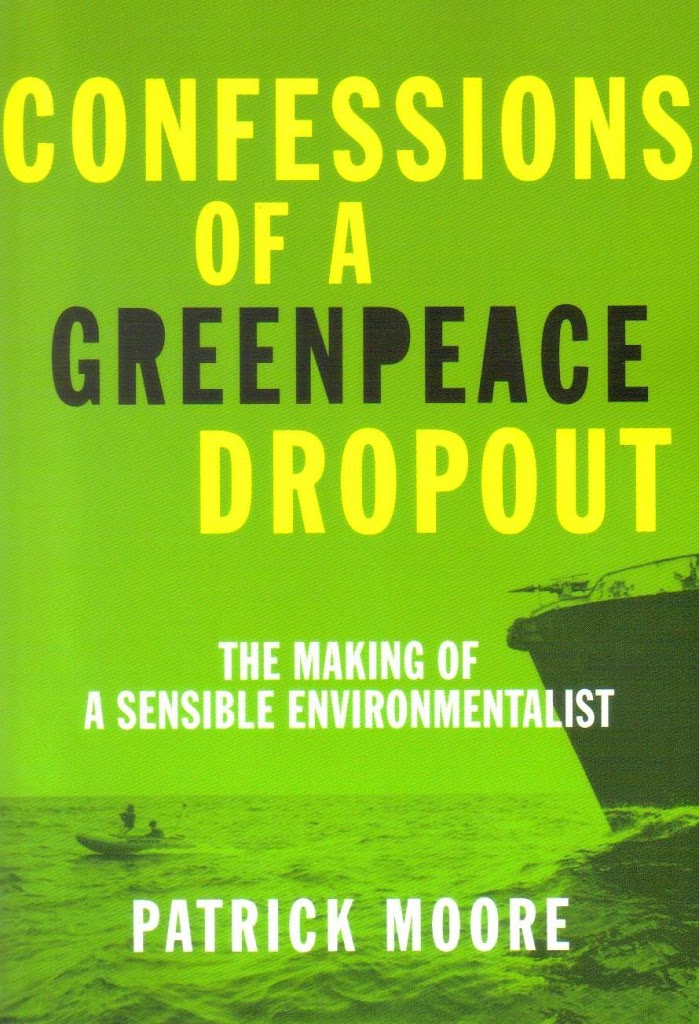
Confessions of a Greenpeace Dropout Review – Part 2

Still not through this book. What can I say, a lot has been happening in my life. There is lots of cool stuff about his campaigning in the 70s, with significant amounts of daring do and hijinks on the high seas, but first I would like to make one more point about Chapter 1.

For a guy with a Ph.D. in science, Dr. Moore has a pretty poor understanding of the scientific process. He seems to gloss over why it took him so long to get his dissertation done, although he alludes to corporate conspiracy. I wonder if he ever took a philosophy of science course? To be fair, he might be a victim of an overzealous editor’s ham-fisted attempt to dumb it down for the masses, but it comes across as a Grade 8 Science class outline of what science is, and how it works.

It starts with describing science as

“the accumulation of knowledge that could be passed down through generations” (p. 25).

Science is not a cumulative body of knowledge; it is a process to evaluate ideas, explore and describe the processes behind observable phenomenon, and make predictions based on a body of observational evidence. Accumulated knowledge is a product of science, but it is not what science is. That may sound like semantics, but it isn’t. Fundamentally, “science” is not a pile of books on a library shelf; it is a method to understand reality.

Then it gets worse:

“[an example of] a hypothesis is ‘If I drop a rock from a height, it will fall to the ground’. After thousands of replications the statement proves true in every case. The hypothesis is proved and soon becomes a theory, and ultimately a law, in this case a law of physics. A law is something that has never been disproven.”[p.25]

This is embarrassingly wrong, built on a meme that is repeatedly dragged out by the very pseudo-scientists he is wont to criticize (Flat-Earthers, Creationists, Wi-fi cancer-link scare mongers, etc.): that of a mythical scientific hierarchy-of-truth made up like this:

Facts < Hypotheses < Theories < Laws.

A better explanation of the relationship between those four terms is: Facts exist and can be determined with careful and systematic measurement of observable phenomenon , hypotheses are simple ideas that can be tested and verified using the measurement of facts, but only upon a framework of existing theories and laws.

A significant point: facts can exist without precision; they do not have to be exactly right to be correct. I love the story of the Richardson Problem. He was the mathematician who described the length of a border or a coastline varying based on the length of the tool used to measure it. As Mandlebrot put it: the length of Britain’s coastline increases to infinity as the ruler shrinks to infinity. But I digress…

A theory is not just a really, really good hypothesis. It is a functional model describing observed phenomena. A theory is something you test hypotheses against. Often theories describe a large number of observed phenomena in a single, elegant model. Plate Tectonics, Evolution through Natural Selection, General and Special Relativity, Germ Theory, Atomic Theory. These are the ideas upon which science is borne. Two things are certain: 1) none of them will ever be “proven”, because no-one will ever seek to prove them. The purpose of them is not to be proven, but to be accepted as useful models, upon which other ideas can be hung; and 2) They do not evolve into “Laws” by being proven. Neither of these points mean they are not “true”, or incredibly useful.

In science, a Law is usually a mathematical construct, an analytical relationship that can be used to measure, characterize, or evaluate phenomenon. Newton’s Law of Universal Gravitation says that all objects are attracted to all other objects by a force that varies relative to their mass and to the inverse square of the distances between their masses (multiplied by some factor). Laws also do not exist to be “proven” or “disproved”, they exist to allow us to make sense of phenomenon in a numerical sense, and to make predictions, within their acknowledged limits.

Since gravity is relatively non-controversial, and since Dr. Moore started with an example from gravity, let’s see how these terms are used by physical scientists when discussing gravity, starting with his example.

Rocks fall; that is an observable phenomenon. We can develop numerous theories as to why, and we can create and test various hypotheses and test them to see if they fit our theory. There are lots of observable facts: all objects fall at about the same rate regardless of weight; magnets fall at the same rate as insulators; falling objects are constantly accelerating, etc. A good theory to explain these observations (facts) is that of gravitation: that all objects with a mass are attracted to all other objects with a mass through some force. This was the theory developed by Galileo in the early 17th Century. By the end of the 17th Century, Newton had developed the math around it: the Law of Universal Gravitation: F= G *(m1*m2)/(r)^2. Through this he could predict the motions of pendulums before building them, and the motions of planets that had not yet been discovered. This Law is not the Theory “proven”; it is a mathematical formula that allows us to calculate the force described in the theory based on some measured variables.

Universal Gravitation works pretty well if you are building pendulum clocks or lobbing artillery shells, but if you try to really accurately measure the precession of the orbit of Mercury, it doesn’t work: in essence the Law was shown not to have predictive power (note, not disproven) in some special cases by Einstein’s General Relativity.

But that doesn’t mean Newton’s Universal Gravitation isn’t a perfectly valid Law, within its confines, useful for making predictions and describing an aspect of our universe. And (this is a really important part) it doesn’t even matter that neither Galileo, Newton, or Einstein really knew how gravity “worked”. Even lacking that, what would seem a fundamental fact, we could not live in the modern world without the benefit of the theory and the laws built around this force a century before the first direct observation of gravity waves.

Unfortunately, this book is full of either lazy or sloppy science. It would be pedantic to quote them all, but let me pick one paragraph that hits close to home for me, being a geologist. On Page 62, Dr. Moore describes whale evolution:

“They evolved after the great dinosaur extinction, caused by a large meteor that crashed near the Yucatan Peninsula, ending the Jurassic age. Among the dinosaurs exterminated were the large marine plesiosaurs and ichthyosaurs.”

Perhaps an ecologist can be forgiven for not knowing the Jurassic from the Cretaceous (it is only an 80 million year difference), but anyone involved in animal ecology should know the marine reptiles he named were not “dinosaurs”. Oh, and the ichthyosaurs died out at least 25 million years before the Yucatan impact. That is a lot of bad science in two short sentences.

Finally, Dr. Moore leaves the ignominious Page 25 stating that

“Science… has weaknesses. One of these is that you cannot prove a negative” (pg. 25)

To that I say: Bullshit. Science has proven, beyond a shadow of a doubt, that the Moon is not made of green cheese.

QED.

Becquerels and Sieverts, Oh My!

For some reason, the Georgia Straight keeps writing articles about the radiation from the Fukushima Nuclear plant causing us harm here in British Columbia, and the massive conspiracy involving several governments and hundreds of scientists, working to cover it up.

My cynicism makes me suspect the large number of Georgia Straight advertisers selling bogus “Cleansing” and “detoxifying” services may be influencing their editorial decisions. But what is the source of my skepticism? Perhaps it is their dishonest use of technical terms, without explaining what the terms mean.

Look at this story from last week’s edition. There are many scary statistics there: 0.69 Becquerel per Litre (Bq/l) of radiation in Vancouver rainwater, 8.18 Bq/l as an average in Calgary, 13 Bq/l as a spike in Burnaby! But no-where does it put that number into context. I guess it is expected anyone will think any Becquerel in our water is a Becquerel too much!

Part of the problem with radiation is that the science and the numbers are pretty technical and are often really big or really small, so we have a hard time wrapping out minds around them in a physical sense. It is the job of “journalist” to translate this information to the public, not to fear monger by throwing out terns you know your audience doesn’t understand. So let’s talk about Becquerels.

“Becquerel” is the “metric” measure, and it is easy to visualise: 1 Bq is one atom of radioactive material decaying (and therefore releasing one “unit” of radioactivity) per second. That is the smallest possible amount of radiation per second, so we usually think in terms of millions or billions of Bq, which sometimes makes the number cumbersome. The more common unit is the Curie (Ci), which is equal to 37 billion Bq (37,000,000,000Bq = 1 Ci).

So that is the technical meaning, but what do the numbers really mean in the real world? A good way to look at them is to think about the element potassium (K). The world is full of potassium, it is the “K” in NPK, the Nitrogen-Phosphorous-Potassium ratings for fertilizers. However, a small proportion of it (about 0.012%) is a naturally radioactive isotope Potassium 40. You can’t easily separate the two without advanced lab equipment, so it is randomly mixed in with normal potassium and in all chemical terms, acts exactly like “normal” potassium. So of the ~150 grams of potassium in your bones, teeth, and cellular nuclei, about 0.018 grams is Potassium 40. Atoms are really small, so that that 0.018 grams of Potassium 40 represents about 280 quintillion atoms, that is 280,000,000,000,000,000,000 atoms.

Radioactive atoms. In your bones. These are not “toxins” that you can cleanse yourself of, unless you cleanse yourself of all the potassium in your body, which would be very, very bad for your continued existence.

Potassium 40 has a half-life of about a billion years. So over a billion years, about half of those 280 quintillion atoms will decay, releasing a single unit of radiation each. 140 quintillion decays over 1 billion years equals about 4,400 decays per second. So the normal radiation level of a healthy human body from potassium alone is about 4,400Bq. Every second of your adult life you are exposed to 4,400 Bq of radiation from your own cells.

Notably, your body also contains about 13kg of Carbon, about 1partp er trillion of which is Carbon 14, resulting in another 3,700 Bq of exposure. You also get much smaller doses from the iodine, radium, and other trace radioactive substances in your body.

We also take in and excrete radioactive nuclides all day, and they exist (naturally) in our food, especially things like bananas that have lots of minerals (and are therefore good for you!). Banana contain enough potassium to provide about 130Bq per kilogram, and enough carbon for another 100bq.

It stands to reason that 1 kg of drinking water containing 1Bq or radiation is not going to change our environmental exposure to radiation. It is, in effect, much lower than our “Background” exposure.

This story draws some alarm over vanishingly small measurements of airborne radiation:

“The level of iodine-131 in Sidney, B.C., rose to a high of 3.63 millibecquerels per cubic metre in the air on March 20. That’s over 300 times higher than the background level of 0.01 millibecquerels per cubic metre or less.”

This also benefits from a bit of math. 3.6 mBq is 0.0036 Bq, per cubic metre of air. The average person breathes about 11,000L of air a day. That means a person breathing at Sidney would be exposed to 0.04 Bq of radiation per day. That is less than one ten-thousandth of the radiation you are exposed to from your own bones.

Now ask yourself, why does the Georgia Strait reporter never, in his multiple articles on the Fukushima incident, mention what a Becquerel is?

I would be remit to mention that Bequerel are not the entire story. The number you want to calculate when analysing environmental exposure to radiation is the Sievert: which is a measure of dose exposure. That is a relatively complicated measure to take, as it involves the medium delivering the radiation, and the media receiving it. I have already gone on way too long here, so Will not get into that in this post.

Now compare this to . this story in the Georgia Straight which jumps from Becquerel to Sieverts without putting either number in context.

But which is worse? The “Main Stream Media” have reported nothing, so people have no access to better information. Why can’t our media educate and inform?

Confessions of a Greenpeace Dropout Review – part 1

About a month ago, fellow New Westminster Blogger David Brett provided an intriguing review of Dr. Patrick Moore’s book “Confessions of a Greenpeace Dropout”. Part autobiography of one of the founders of Greenpeace, and part manifesto for a new, “sensible” environmentalism, this book is a first-person account of how Dr. Moore helped found Greenpeace, became disillusioned by it, and forged his own path towards a more pragmatic form of environmentalism. Moving away from protest, he worked to engage government, business and industry to help them become more sustainable.

As I commented to Dave at the time, being a “sensible” (and by that, I mean skeptical and science-based) environmentalist, and engagement with stakeholders (as opposed to protest) has been my goal, so Dr. Moore’s story is interesting to me. Since I reviewed the autobiography-manifesto-vanity project movie on David Suzuki last year, I will do the same with this book.

The advantage of the book is that I have it in front of me and can discuss it at length. I am currently about 4 chapters in, and have very little time to read these days, so the review may take some time and several posts.

I promised Dave that I would read with an open mind, and I have not read any other reviews than his (and the blurbs on the back of the book!), but my openness was challenged in the first chapter of the book. It just doesn’t start well.

In Chapter 1, Dr. Moore starts off by defining “sustainable development”. This is a good idea, as it is a term bandied about too much by people with little understanding of what it means. It is currently a sexy buzz phrase used by a lot of people who have never understood (or cared about) the definition.

The problem is, Dr. Moore immediately dismisses the definition used by people who work in sustainability: the standard-model definition and, unfortunately, the one most commonly ignored by people who are misusing the term. That being the definition from Brundtland Report. Dr. Moore immediately tosses it aside and replaces it with a definition that fits his needs.

Compare this:

Brundtland Report: “Sustainable development is development that meets the needs of the present without compromising the ability of future generations to meet their own needs”

To this:

Dr. Moore: “Sustainable development requires that we continue to obtain the food, energy, and materials necessary for our civilization, and perhaps even increase these resources in developing countries, while at the same time working to reduce our negative impacts on the environment through changes in behaviour and changes in our technologies” (Pg. 14)

The second definition is fine, full of great ideas and feelings, but it is, unfortunately, not a definition of sustainability.

It is like I start my book about American actresses by describing Uma Thurman as the greatest actress of our generation. Then I decide the definition of Uma Thurman as “the star of the Kill Bill Films” is not a very good definition. Instead, I like to define Uma Thurman as “That woman from Kramer vs. Kramer and the Bridges of Madison County who has 2 Academy Awards from 16 nominations”. That definition makes my argument that Uma is the greatest actress of our time much more compelling, doesn’t it?

Although Dr. Moore’s definition contains many soft environmental ideals that we should probably strive towards (as loaded with weasel words as it is), it does not define “sustainable development” the way it is used by anyone other than Dr. Moore. At best, it is one small aspect of “sustainable development”; at worst, it is a dodge of the real issues raised by limited resources on a consumption-growth based economy. It also completely misses the point that sustainability is not an “environmental” concept any more than it is a social and economic one.

I don’t think the problem with “sustainable” is its overuse, but rather its common use in a way that does not relate to the actual definition of the word. As such, it is indistinguishable from “green” or “environmentally friendly” or “clean” or other popular marketing words. I am a believer (as are most scientists) that strict definition of terms is as important to political discussion as it is to technical discussion. Dr. Moore makes the problem of fuzzy definition worse in Chapter 1 when he invents a new definition for the term.

Mayor Nantel?

UPDATE: He’s on Twitter! And apparently following Bill Gates and Bill Vander Zalm. oh boy.

I’ve said it before, I’ll say it again, I’ve been asking it around town for a week and a half, and no-one can answer: Who the hell is Francois Nantel?

This municipal election we have no less than four people running for Mayor. Besides the Incumbent, we have Vance McFayden, a long-time resident and community builder, and we have Citizen Advocate James Crosty, and you all know who he is. The mystery to me is Francois Nantel.

Notably, last time Francois was on a ballot in New Westminster was the federal election of 2000, I was living in Illinois (the only Federal Election I have missed since the one a couple of weeks after my 19th birthday when I was living in the crappy apartment on Royal Ave…), but he ran for the federal Green Party! I’m not trying to suggest I am all things “green” in New West, but if I don’t know who this guy is, he has a serious name-recognition problem.

I spent several years serving on the local Green Party EDA (but am not a member of the party any longer… another post, another time), and I have helped the campaigns of Carrie McLaren, Marshall Smith, and Rebecca Helps, but I don’t remember him being at any of those meetings. A couple of friends I have are attached to the Provincial Party, and they have no idea who he is. He isn’t “friends” on Facebook with any of the Green Party Candidates in New West over the last 10 years. So, I guess his ties with the Green Party are pretty severed.

What about community groups? The New Westminster Environmental Partners have been at the forefront of numerous environmental issues in the City over the last few years, from the UBE to solid waste to community gardens, but I don’t remember Francois ever taking part. Neither do the members who started the group before I got active.

There are several citizen committees in New West, but I don’t see his name listed on any of the committees in 2010 or 2011. As a resident of the West End, he is a member of the West End Residents Association, one of the most active in the City, who post their minutes on-line. Mr. Nantel’s name is conspicuously absent .

I asked one of the longer-serving City Councillors on Friday night, and he said “I think he popped up about 10 years ago, angry about Wal Mart, but I don’t know where he has been since…”

I searched the minutes of every Council Meeting in 2011, and I did not find one reference to Mr. Nantel: no delegations, no correspondence. I assume he watched a few of them on TV! If he has any opinions about what he saw, he sure didn’t share them, as searches for “Nantel” of both the News Leader and the Record come up with only a few hits, all of them from the last two weeks, and all little more than mentions that he is running for mayor.

The record article is most concerning. Apparently, this run for Mayor is just a “stepping stone” to bigger, better things in Federal Politics. Yikes. Not a good sign for local leadership.

You know, I have been asking candidates two things this election: don’t go negative, and show me your vision. So I am going to avoid being negative, and accentuate the positive here. I am happy Francois Nantel has shown us what his vision for New Westminster is: a stepping stone in his rear-view mirror as he flies off to Ottawa. Bonne chance, mon frère.

New West Doc Fest – Day 2

It was quite the full day! Besides taking tickets, helping promote the NWEP at the booth, and visiting with folks, I still got to see most of the films, although I did not get to spend as much time in the Q&A sessions as I would have liked.

The day began with a short called “The Most Livable City”, which talked about one of those little social development topics most people just don’t think of – where to the City’s homeless, and those living in run-down decrepit SROs, go to get a drink of water? The City has few operating fountains in the summer, and even fewer in the winter. Public washroom facilities are few and far between. Vancouver City Councillor Andrea Reimer raises the point that the City has purposely removed these types of things to discourage drug use… how’s that working out?

The main morning feature was “Tapped” – about the bottled water industry. A topic I have mentioned here in the past. If I was to review the movie (um… which I guess I am doing), it was about 20% new and quite interesting information (in the States, the bottled water industry is regulated by the FDA, unless the water is bottled in the same state it is consumed. Since most of it is filtered city water sold locally, more than 80% of the bottled water industry is completely unregulated), 60% was info well known to anyone who has been awake for the last decade (billions of discarded PET bottles are mucking up marine ecosystems around the entire Pacific Ocean; buying bottled water is a ridiculous consumer choice, 2000x the cost of safer tap water), and 20% is unfortunate hyperbole (PET is made using a substance in the same family as benzene, which causes cancer! well, if the same family you mean aromatic hydrocarbons, you are right, but PET does not cause cancer, and no-one seems to be concerned about all the benzene we are consuming every day breathing car exhaust).

In the end, the message was on track, and if they drifted occasionally into hyperbole, it may be a cause for people to do their own research. Like most exposes of Corporate America, the best moments were the “caught-ya” moments when the corporate spokesflak realizes he is in over his head when says something like “There has never been a bottled water recall in America”, or “We are not in competition with tap water”, then are confronted with their own press releases that say the exact opposite. The lingering camera on the silenced spokesflak is always good for a chuckle.

I think the movie “65_redroses” is well known to most New West folks. Although I was familiar with Eva Markvoort’s story, I had never seen the movie. If you have not seen it, you should, mostly because the filmmakers did an excellent job accentuating the positive side of organ donation and how this young woman gained her life back through science, through good luck, and through the immense support she received from friends, family and strangers. In the end, they do not dwell on the sadness of the end, but on the hope and happiness of the brief life Eva had.

Before 65_Redroses was a short, “Corona Station”, also about love and loss. Beyond being a humorous theme, the short is remarkably well filmed, easy to forget these are film students!

The “Vanishing of the Bees” is a very smart and insightful look at Colony Collapse Disorder, and issue impacting commercial honey bees across the world. Although the movie emphasises the strongly suspected link between systemic pesticide use and CCD, it also explores how the way we manage bees is likely the main issue, with the systemic pesticides one very large hammer in drawer full of other nasty tools. We ship bees around in the backs of trucks from mono-culture crop to mono-culture crop, even in the bellied of airliners from Australia to California, completely messing with their natural rhythms. We keep them in massive crowded populations, one beekeeper managing 40,000 hives, where parasites and diseases can prosper. We artificially inseminate the queens (yes, they show the not-so-romantic procedure!), then kill them off after the eggs are laid and replace then with surrogates. We take their honey and feed them refined sugars. When hives start to die off, we split them in half and introduce new queens (in cages to keep the bees from killing the interloper), potentially spreading diseases around. All this to keep a pollinating population alive for the fruit and nut industries, as the market for honey production has been eroded by cheaper imports (often containing “honey blends” with corn syrup or lactose syrup).

With all this stacked up against them, it would be more shocking if 30% of the bees weren’t dying off! Although the film starts with gloom and doom, it is clear that the scientists, policy makers (in Europe at least), and the farmers are starting to realize what the issues are, and are working towards reforming the way the beekeeping industry is managed.

On the topic of pollinators, don’t get me started on mosquitoes and larvicides.

The final film, “H2Oil” I had seen before. All I can say is that the way Canada has mis-handled the Athabasca Tar/Oil Sands is criminal, no less than an act of war against our own country. If anyone can see how a nation responsibly manages a dumb-luck oil find, look at the case of Norway. Then ask yourself, how have the Tar/Oil sands benefited you? How does the rapid expansion and export of raw bitumen and the linking of the Canadian dollar to the cost of oil help any other sector of Canada’s economy?

I was unfortunately too busy to sit in on the post-film chat with local MPs Fin Donnelly and Peter Julian. If someone out there in blogland wants to write up a quick review, please let me know!

The Doc Fest itself was seamlessly run. The NWEP basically provided volunteer time and a little logistic support (our budget could not have bought our members tickets!), but it was Andrew Murray and the ladies from the Green Ideas Network who did most of the heavy lifting. Tireless volunteer Kathleen did a bunch of fundraising, and found a wide range of sponsors, all interested in building this community – they need to be thanked, and supported!

The good news is that for a first year- they pulled it off. Everything went smoothly, the films were on time, the extra entertainment (musicians, poets, artists) were entertaining, the venue worked out great. The early report is that the fest broke even with a little bit of a profit, to be reinvested in next year’s show. The foundations have been laid, and next year will be bigger and better.