Council Meeting – March 30, 2015

As with most end-of-the-month meetings, there was a Public Hearing as part of the March 30 Council Meeting. On these nights, we start a little early (well, we start at noon most days, but the evening portion starts early) to give people a change to provide input to items that are required to go to Public Hearing prior to Council decision. Tonight there were a few topics, one which attracted several speakers.

HRA Bylaw No. 7734, 2015 & HD Bylaw No. 7735, 2015

These two complimentary Bylaws allow the re-purposing of Dontenwill Hall at 336 Agnes Street, to convert its use from “Public Assembly” to “Church”, and to make some improvements to the historically important building. At Council, we were able to see reports by the City’s Heritage Commission (in support) and the Advisory Planning commission (in support, with some comments). We were also told that the non-compliance in regards to on-site parking were a concern to the City’s Engineering staff, regardless of the parking study provided on behalf of the Proponent. The Open House feedback was minor, but positive, and the single piece of correspondence we received was opposed.

We heard a delegation from the architect who did the heritage assessment, and from a leader at the church. We also heard several delegations from a couple of concerned neighbours and one adjacent church about the parking situation at the site. Frankly, parking around the property is the one issue that might have derailed this plan. However, there was simply no location on the property to accommodate parking – any future development of this site that provided the required parking would result in razing of the historic building, or no redevelopment would likely result in the loss of the building through neglect. Through the delegation process I heard that this was a small congregation, and there were no less than 5 other churches in the immediate area, most of which provided little or off-site parking (the Emmanuel Pentecostal being the exception – they built an underground parking lot in a residential development adjacent to their church to accommodate many of their parishioners). In our compact, transit-oriented downtown, if we want to save our heritage structures (most built without parking) we are going to have to allow these types of exceptions.

In the end, I supported this HRA and repurposing of the hall. I hope they can work with their neighboring churches to find creative solutions to Sunday Morning Parking Crunch.

Zoning Amendment Bylaw No. 7743, 2015

This Bylaw limits the number of plumbing fixtures in Accessory Buildings. The issue staff is trying to manage here is the illegal conversion of accessory buildings to living spaces. Our RS-1 zoning allows for a single accessory building, up to 10% of the lot coverage, which for many lots in the City means a 500+ square foot building. Meant to be a garage, storage shed or hobby shop, people are converting them into “mortgage helpers” and renting them out.

There are a few reasons we want to avoid this. It isn’t fair to people with legal secondary suites who pay for that privilege (through extra utility charges, mostly) or to people without secondary suites (who shouldn’t have to subsidize the extra suite of their neighbour) if people start renting out their garages. Accessory buildings also do not have many of the building code requirements for dwellings, meaning they can be firetraps, have mold problems, or otherwise be unsafe.

One way to prevent these conversions is to simply make them harder to do at the time the accessory building is built and the Building Inspector is signing off. Recently, the City has seen plans come in for “Accessory Buildings” with a hookup for a furnace, a laundry, and a full bathroom, all strategically placed so that setting up a full kitchen would be simple – the builders aren’t even being subtle about it. This Bylaw hopes to give staff the tools they need to say “um, no.” It will not make conversion to illegal suites impossible; it will make them more difficult.

The issue of secondary suites and laneway housing is an important one in the City right now, and has been prominent in the discussions around the new OCP. This Bylaw will not prevent future development of Laneway Housing, but it will slow the building of illegal ones until the OCP is updated, and we can get a handle on how nieghbourhoods want to accommodate (or not) laneway housing.

In the end, I supported this Bylaw, as I want to give staff the tools they need to do their jobs. Turning a blind eye to illegal conversions of accessory buildings is not a good idea.

After the Public Hearing, we launched into our Regular Council Meeting. As is typical on Public Hearing nights, there were no Public Delegations permitted this evening. What we did have instead was an Opportunity to be Heard on the City’s 5-year Financial Plan, right at the start of the meeting.

I am going to have to write in more detail about the Financial Plan for the City. If I start here, I am going to fill this entire blog post, so I will put it off for a later post except for a short summary.

Currently, we have a $111 Million budget, and have a proposed tax increase of 2.42%. For a typical single family home, that means you will pay $62 more in Property Taxes this year. And despite what some may tell you, that keeps us squarely in the middle regionally as far as property tax levels. As I once explained at length, Cities in the Lower Mainland to the north and west of us pay more taxes, Cities to the south and east generally pay less.

The bigger news, however, is that all of your utility rates are going up proportionally much more than that – Water by 6%, sewer by 7.5%, and solid waste by 8.5%. This reflects the reality that Metro Vancouver is charging us more per cubic metre of water, the sewage plants are charging us more for taking our waste, and tipping fees are going up at the solid waste facilities. For single-family detached homes, this means about $50 more in utilities next year.

If you missed the meeting or the Opportunity to be Heard, you can read the Plan here, and yes, you can still comment to Council about it by sending us a note through the contacts on this page.

Once we got through the Opportunity to be Heard, we addressed the Bylaws that were addressed in the earlier Public Hearing, then moved on to yet another Opportunity to be Heard:

Commercial Vehicle Amendment Bylaw No. 7742, 2015

The two Taxi Operators licensed in New Westminster applied to the Province for additional licenses, and although they did not receive as many as they would have liked they each received two new licenses. The law says we need to approve this at Council, and our Bylaw requires that we bring this to the Public for comment. We received no comments, and I have no problem with there being more taxis in the City.

Don’t even get me started about Uber…

Following this, we next addressed Recommendations from the Committee of the Whole Meeting from earlier in the day:

Arts Commission appointment

The Arts Council of New Westminster has a representative seat on the Arts Commission. In case you haven’t heard, the Council has a new Executive Director, Stephen O’Shea, and he was nominated by the Commission to represent them.

Royal Lancers

I am sure we are going to be talking about this for a while, but City council, The School district, and the Royal Lancers exchanged some correspondence over the last two weeks. I am going to hold back at commenting about this issue until we have had a chance for some discussion between the multiple parties. I had a respectful conversation with one of the Lancers after the Council meeting, and another today (I am writing this on Friday, April 2), and can see that there is potential for agreement or respectful disagreement without calling each other stupid. More to come on this issue, obviously.

Steel and Oak Brewing Company

Two local Good News Beards opened a brewery in town, and I have to admit I have sampled a fair amount of their product. As I mentioned in a previous Ask Pat post, zoning around brew pubs is a bit challenging, as is navigating the various local, provincial, and federal government agencies that have to sign off when you open a new brewery. When setting up, the boys at S&O applied for and received the easiest type of permit for their operation: that of a limited tasting room. However, their success has made it apparent that they are ready to operate as a proper “Lounge”. This will remove some restrictions on how they serve, while putting other restrictions on how they operate.

Seeing as they are a real regional success story, they have no real competition in town, and they have not generated any complaints from neighbours, the Police, or the Liquor Inspector since opening, it is easy to support their license change and support their move to be more competitive.

223 Queen’s Ave Subdivision

The Heritage Home at 223 Queens Ave has an extra-long lot, and wants to subdivide it to build a new home facing the lane behind (which is effectively a road, as it is named Gifford Place). This is not a “Laneway Housing” application, as the proponent wants to subdivide into two separate lots, as opposed to just building a second residence on the same lot. This project will be going to Public Hearing on April 27, 2015. C’mon out and tell us what you think.

Sign Bylaw 610 Sixth Street

The owners of Royal City Centre want to change the big signs on their property, by adding more signage to the existing structures. These are not new signs (as I realized after asking what, in hindsight, was a silly question in the Committee of the Whole – my first embarrassing moment of incomprehension on Council – likely not my last) but additions to the existing signs. The required Variance to the Sign Bylaw will be going to Public Hearing on April 27, 2015. C’mon out and tell us what you think.

Spring Freshet Report

As most skiers know, the snow levels in the interior and the south coast are well below average, so barring an incredibly anomalous melting season, we should not have any flooding risk during this year’s freshet on the Fraser River. Put away your sandbags, folks.

Encroachments, Covenants

Apparently the restored Trapp+Holbrook project (and, presumably, the previous Trapp Block) encroaches over City land. The building is on private land, but the cornices and some of the decorative rockwork actually projects over City land. A Section 219 Covenant assures the City will not be held liable for any damages done to anyone or any entity due to the existence of elevated rock in the City’s airspace. Ugh. Lawyers.

Guiding Principles for Canada Games Pool

The project planning for a Canada Games Pool refurbishment/ replacement is only just beginning. This is a big project, so it is wise if a set of project principles are developed prior to the start of public and stakeholder engagement. Reading through it, Many of the principles are very high-level, reflecting Council’s feeling that all options are on the table right now until a good reason arrives to take them off the table. One edit we made to the draft principles is the idea that the Pool be the centerpiece of a “precinct” of community uses. Some thought (and I agreed) this limited the consultation from considering other delivery options – two smaller pools at opposite ends of the City, for example.

Anyhow, not much to report here yet, except that public and stakeholder consultations about what you want in a Pool/Community Centre will be starting soon. This will be the biggest capital project in the City over the next decade, so you might want to pay attention!

RCFM Letter

The RCFM letter formally asks us to endorse their return to Tipperary Park for the 2015 summer season, which we have done. Talking to the Board and Manager of the RCFM over the last few weeks, they have some exciting ideas for the summer and for next winter. A real community-building organization in the City, powered mostly by volunteers, bringing food security, commerce, sustainability, and community service together with a smile! Last winter market is April 22, and first Summer Market is May 21. Support them!

In the final business part of the evening, we adopted the Bylaws formally from the earlier discussions:

Commercial Vehicle Amendment Bylaw No. 7742, 2015 (the taxi one from above) was Adopted. It is now the Law of the Land

Sewerage and Drainage Regulation Bylaw No.7746, 2015 (which saw third reading last week) was Adopted. It is now the Law of the Land.

336 Agnes Street Heritage Revitalization Agreement Bylaw No. 7734, 2015 (the first Dontenwill Hall one) passed Third Reading.

336 Agnes Street Heritage Designation Bylaw No. 7735, 2015 (the second Dontenwill Hall one) passed Third Reading.

Bylaw to Limit Plumbing Fixtures in Detached accessory Buildings No. 7743, 2015 passed Third Reading.

223 Queens Avenue Heritage Revitalization Agreement Bylaw No. 7710, 2015 passed First and Second readings, and is off to Public Hearing.

223 Queens Avenue Heritage Designation Bylaw No. 7711, 2015 passed First and Second readings, and is off to Public Hearing.

…and that was a night’s work.

Intelligent City: the Fibre

The City is installing fibre optic infrastructure, and this is a good thing. It is a significant step in the ongoing shift from our old economy of sawmills and manufacturing to the new “knowledge-based” (ahem) economy that will be our future if we choose to establish a balance between employment and living space in New Westminster in the decades to come. The Intelligent City Initiative is more than just fibre in the ground, it is about leveraging the advantages that come with that fibre to build a City ready to receive the future. It is about building the infrastructure the businesses and citizens of tomorrow are going to want/need, and about making that infrastructure accessible. But it isn’t without its challenges.

In Part 1 of this blog, I’m going to talk about the fibre. In Part 2, I will talk about some of the bigger ideas around the Intelligent City Initiative.

For those who don’t know about the Intelligent City Initiative, it starts with Broadband Connectivity, and the City plans to encourage this by providing open-source fibre-to-the premises of businesses (and eventually residences, I hope) along major corridors, which will provide the opportunity for others to offer Gigabit service to their customers. This does not mean the City is getting into the volatile telecom business in competition with Telus or Shaw. Instead, we are increasing the opportunities for the major telecoms and a myriad of smaller players to provide high speed and specialty internet service to the businesses and residents we want to attract to (and sustain within) New Westminster.

This technology and its benefits are hard for some people (even some of those who own the buildings in New Westminster that may benefit) to understand – what is the City’s role going to be? In an attempt to explain this I improvised a rough allegory during a Council meeting when the project was reviewed. I thought I would expand upon that allegory a little better here, with the benefit of long form-writing and hindsight.

The factories, sawmills, and warehouses that formed the economic backbone of New Westminster only a few decades ago relied on transportation infrastructure to move the goods they produced. Indeed they located here because the River was that original source of transportation. Before globalization, free trade deals, and the invisible hand smeared most of those manufacturing jobs to various regulation-avoiding far eastern shores, manufacturers needed roads, rails, and the river to move raw materials and manufactured goods. In the new “Knowledge Economy” (ahem), the raw materials and manufactured goods are information. They are lines of code that move at the speed of light, but they still need infrastructure to move, and the better the infrastructure, the more competitive our local businesses will be at adding value to that information.

Today, that information is being moved mostly by (allegorical) oxcart or rails. For most of us living and working in New Westminster, the data is moving by oxcart – by copper wires piggy-backed on phone service. This service is reliable and cheap, but slow with limited capacity. It is ok for surfing the net and the occasional NetFlicks binge, but if you are trying to run a 3D animation company and are communicating with head office in Palo Alto, or if you are running web services company with global customers needing access to your server, the oxen can’t carry the load and they move to slow. If you need to move more stuff, you need to get a contract with one of the railways.

To continue the allegory, the railways are the major telecoms (Telus, Shaw). Much like the railways of old, they (and only they) can provide lots of capacity, but need to create a business case before they build the spur line to where the heavy lifting is required. When choosing between increasing capacity into existing tech hubs where the customers already are (downtown Vancouver) and building to the tech frontier where they don’t know who is going to show up (New Westminster), their business plan is pretty simple. The alternative for local businesses is to finance the building of their own spur, which can be a difficult investment at the start-up stage, and you are still beholden to the rail company you connect your spur to – you cannot ask for lower bids from the competition without also building them a spur.

What New Westminster wants to do is get away from the spurs belonging to the major monopoly players, and build some roads. Highways, actually. Serious onramps to the Al Goreian “Information Superhighway”. We will help our customers build driveways to connect to the road, but mostly our job is to build the road. We are not creating a new major trucking company (the telecoms will provide that service) nor are we supplying trucks. The major telecoms will be able to rent our roads for running trucks to customers in our City – they save the cost of setting up the infrastructure, we get the long-term benefit by having them here. As a bonus, the smaller telecoms (yes they exist) can also use those same roads to provide boutique services to high-tech customers in our City, and can really start to compete with the larger telecoms to push the wholesale cost of these services down, making businesses in our City more competitive in turn. The win-wins pile up pretty quickly.

By providing the road (in the form a glass fibre), we encourage the telecoms and service providers to sell a service, and we charge them rent on the infrastructure to support it. Unlike real trucks on roads, these ones move at the speed of light, and you can fit thousands of them on the same road at the same time. It is ridiculous to suggest that capacity is “unlimited”, but the limit on the installed capacity is so high that if we ever get close to exceeding it, we will be making so much money from the rental of the service that upgrades will be easily paid for. Another bonus is that the network hardware (another stretch of the transportation analogy: the intersections, crosswalks, traffic lights, etc.) can be supplied by the telecoms and service providers, and we can change them for using our space to store them. Imagine if trucks driving through New Westminster paid for their own intersection lights, and we charged rent for putting them there!

The business case here is solid, so you might wonder why everyone else isn’t doing it. The simple answer is that many of them are, although their models often differ. The New Westminster business plan was developed after careful review of what has happened in other jurisdictions, and what we can learn from them. It also leverages some significant advantages New Westminster has over other Cities. We are a compact city of only 15 square kilometres, with high commercial density along major corridors, which means the initial fibre installations can be put near a lot of potential customers for very low cost. We also own our own electrical utility, which provides us both an infrastructure advantage (we own rights-of way, poles and conduits, instead of having to negotiate them from a myriad of partners) and an administrative advantage (we can use the utility expertise and administrative structures in that agency to guide our operation). We also have a backbone of fibre already connecting many City assets (parks and buildings), and have been installing fibre-ready conduits as we upgrade and maintain our roads and sidewalks.

It happens we have a few “major tenants” (think educational and health care institutions) whose increasing need to move data would benefit from signing up to this, and we have recently developed, or are looking at developing, a lot of office space on our major corridors that are increasingly becoming attractive to the types of small- and medium-sized high-tech firms that would benefit from having access to this fibre.

The investment here is not insignificant, more than $5 Million in initial outlay. However, a conservative business case has this system revenue-positive within 6 years, and paying off the infrastructure investment in about 20 years. There are very good reasons to believe the payback time will be much shorter than this, and the City will begin to see revenue generation from this project within the first half of the long-term 30-year plan. Long after I’m gone from Council, but sometimes you need to plant a tree knowing the shade will be enjoyed by others, to bring another metaphor into the discussion.

In a future blog post, I will talk about some of the fruit that tee could bear. In the meantime, here is a taste:

Ask Pat: Derelict CPR station building?

Someone asked—

Thanks for answering my question about the Brewery District so quickly, by the way. So, here’s one more: What’s with the derelict CPR station building that used to be the Keg on Columbia Street? I know there are serious structural issues with the building, but it seems crazy that such a beautiful building in such a prominent location amongst so much heritage revitalization remains seemingly untouched for years now…

And by the way, it REALLY should become a nice pub.

Sorry to make you wait this time… life is busy! The CPR Station building doesn’t belong to the City, so I don’t know much more than you. My understanding (from news stories when the Keg left) was that there were some problems with the building. However, since then I have noticed a new roof, and a bunch of pointing and re-grouting of the brickwork and masonry, so I don’t know if the term “derelict” really fits, but I hate to see it sit unused, as that is often the short route to dereliction.

The Keg (or the owner?) went to a bit of trouble to scrape every vestige of their name off of the building, so we have to presume they are not coming back. Yes, it would make a pretty epic tap-house, and it would also be great to have a large open terraces seating area out front that wasn’t fenced off from the public. Let’s hope the owners find a great lessee soon.

I’m also pretty interested in the rock used for stone quoining and window surrounds – upper Cretaceous Nanaimo Group sandstones, likely from Gabriola or Saturna Island. But I’m a bit of a nerd that way.

Saving the Parkade?

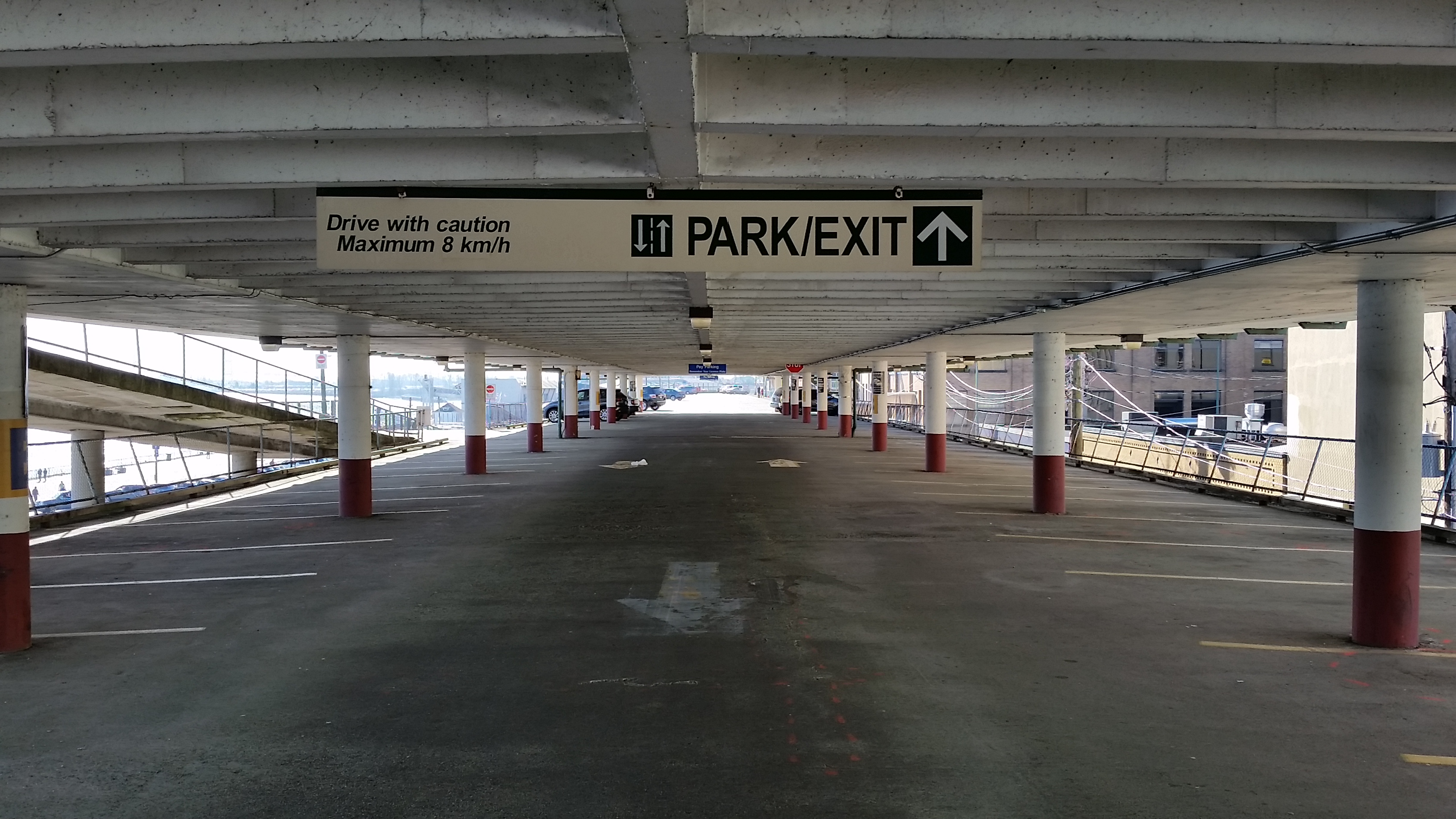
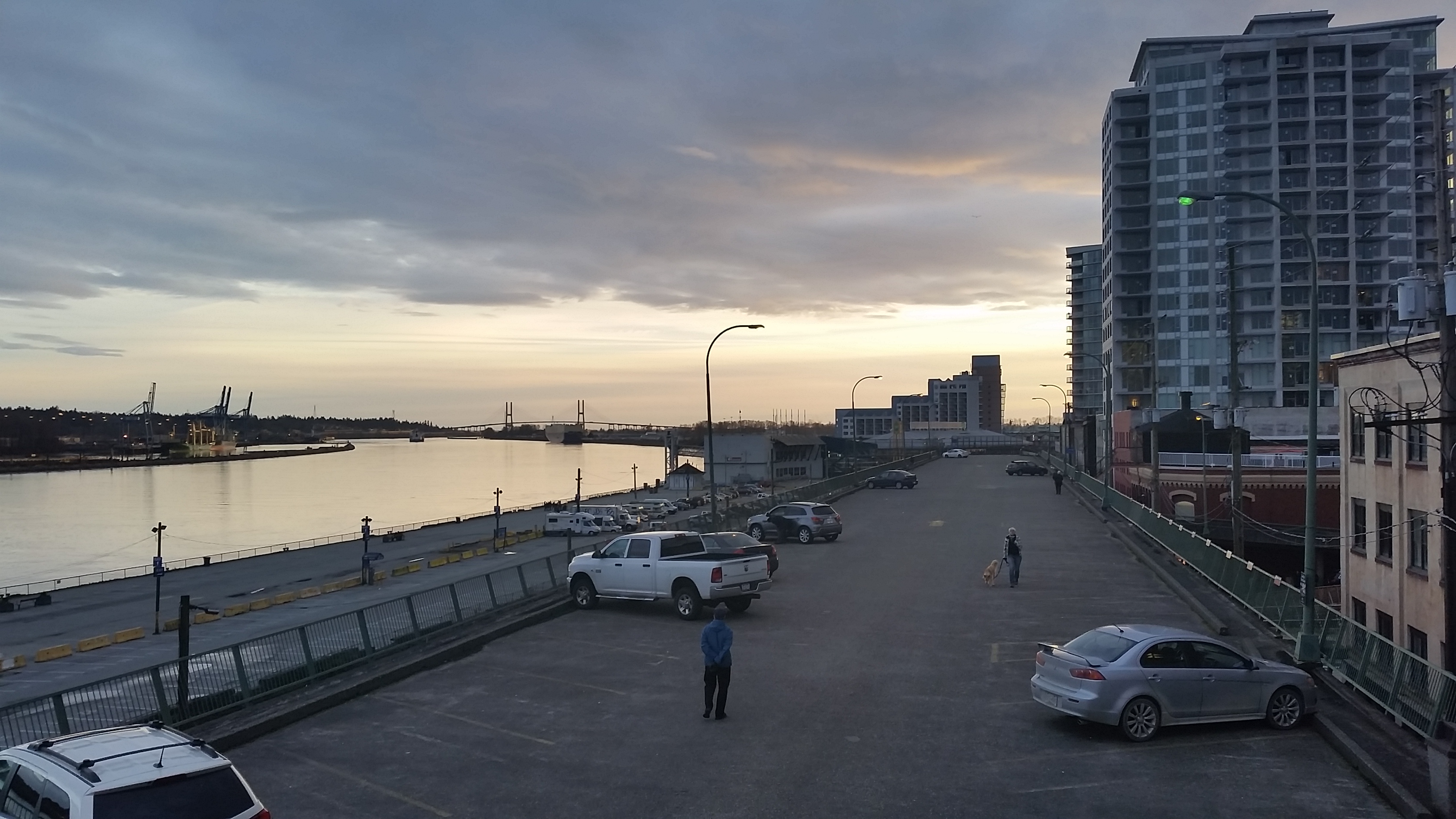
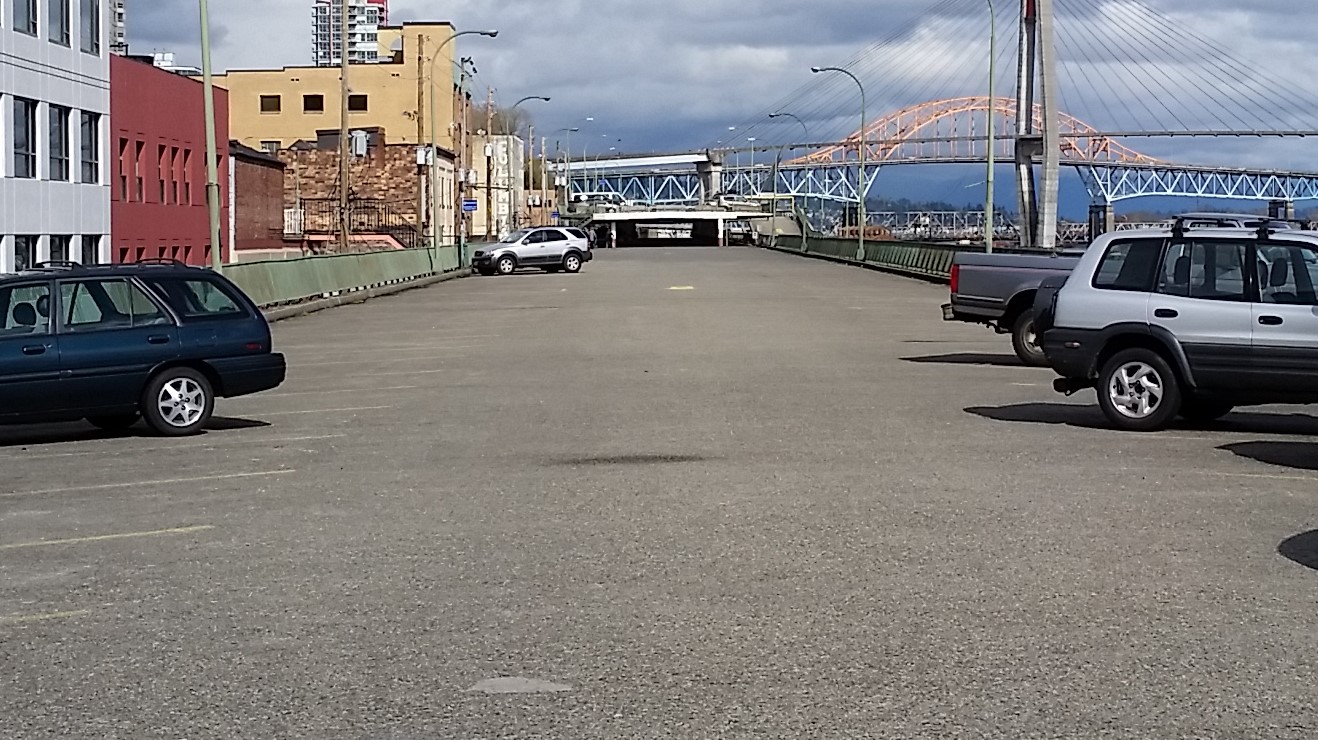
There has been quite the recent resurgence in interest in the Front Street Parkade, led by a three-man crusade to derail the City’s new waterfront vision. I applaud their passion and the work they have done to create a media buzz around a topic that had been settled in most people’s minds years ago, but I am unconvinced by their arguments, and don’t think the City is going to change direction on this project.

Before I am accused of being dismissive of a grassroots campaign being led by three very enthusiastic citizens, I want to suggest the opposite is true. I have heard two sets of delegations in Council, had several conversations at a community OCP Open House, and have taken a 2+ hour walk-around of the Parkade guided by the gentlemen leading the charge. I also attended the Rally on the Parkade last weekend, have been involved in lengthy Facebook conversations in regards to the proposals, attended RA meetings where the proponents have spoken a length about their plans, have received (and responded to) dozens of e-mails on the topic, and have been interviewed by radio, tv and print media answering the same questions in as many ways as I could. I dug back into the City records from before my time in Council so I can better understand the convoluted path to where we are now. I have done everything I can to inform myself about this issue and see the vision these gentlemen are offering. I have asked and answered many questions. After more than a month of discussions, I remain unconvinced by their arguments, not dismissive of them. And I am afraid this is going to turn into an extended rant, so pour yourself another coffee before you proceed…

PARKEXIT

The idea of partial (or at that time, complete) removal of the Parkade came about years ago, when earlier models for the New Westminster Waterfront that included upward towards nine towers on a large pedestal began to be questioned. With the results of the road diet on Columbia Street, the resurgence of the River Market and desire for better connectivity to the waterfront, the development of the Westminster Pier Park and cancelling of the North Fraser Perimeter Road waterfront-freeway concept, the City began to redraw the waterfront, turning a 1970’s freeway-and-closed-community model into a modern open-space-mixed-use one. This coincided with the years-long development of the regional growth strategy (finally adopted in 2011) and its companion Regional Transportation Plan, which changed how the entire region looked at transit-oriented city centres, mixed-use development and the introduction of freeway growth to our region.

As part of re-examining the waterfront, the City of New Westminster looked at the largest structure in the waterfront and tried to determine what to do with it – the fate of the Parkade was going to decide on the fate of the waterfront over the next 20 or 30 years, merely by its existence – so the first step was to put a business plan to its continued existence or removal. This involved two things: an engineering assessment of the life-cycle cost and revenue opportunities of the Parkade given various repair/removal scenarios; and a Downtown Parking Study that informed a long-term parking strategy (adopted by Council in 2013) to assure that parking needs in the downtown could be met to the satisfaction of Downtown businesses and other stakeholders even during the current growth cycle. This is a rational, good-governance approach to long-term planning, one I cannot take any credit for as I was not on Council at the time.

From an engineering and costing perspective (including revenue opportunity and eventual deconstruction costs – so a true “life cycle cost analysis”), the best solution was to repair half of the Parkade so it could provide revenue over the long term, but to deconstruct the other half to reduce the cost of maintenance and upgrades. It makes sense: fix the part that makes you money, get rid of the part that doesn’t. Now that is only the dollars-and-cents side of the argument, and if we were a business called Waterfront Parkade Inc., we might have ended it there and gone ahead with the demolition the business case suggested 5 years ago.

However, we are a City, so we need to think bigger. We need to engage stakeholders, talk to the people who use the Parkade, those who would benefit or be inconvenienced by its removal and those whose tax dollars we would be investing (or not) in the long-term viability of the Parkade. Fortunately, the Downtown Parking Study also supported the removal of half of the Parkade, given a number of conditions, which were rolled into the strategy. There was also much discussion about what the removal of half of the Parkade would mean to the waterfront, to Front Street, and the future developments in the area. The consultations and opportunities for public and stakeholder engagement were plenty- I remember attending many of them. There have been numerous open houses, stakeholder meetings, and Council Reports since the serious discussion around Parkade removal started around 2011. I have been blogging on this topic since (checks his archives) December 2011 on this very topic, including attending an earlier “Save the Parkade” movement that seemed to have lost steam as many of the valid issues they raised were addressed through the consultations. A quick perusal of the Googleable record of this project shows the City has engaged, adjusted plans, worked with the BIA, adapted and developed a comprehensive vision over several years.

Almost a year ago, RFPs were prepared and a consultant was hired to develop a process to get the works done. As there are three separate but integrated projects going on at the same time, it was important that they be coordinated to assure that parking is always available and the interruptions to adjacent businesses are mitigated. That work is on-going, and tenders are out for the first part of the larger project.

I should also note that I am not unbiased here – I have been on record going back to at least 2011 that I agree with the City’s ongoing waterfront vision as it has developed, and think the Parkade is something that is hindering the development of our downtown and waterfront, not helping it.

For the record, the current plan (yes, it is subject to change, as engineering and construction plans usually are) is to first do most of the necessary repairs to the east half of the Parkade. During that the east side will be mostly closed to traffic, but the west side will be able to accommodate the current parking needs. Following the repairs, the demolition of the west half will proceed. This will take up to 12 weeks, and traffic closures on Front Street are expected during that time (a traffic management plan is being developed as we speak). Once the demolition is completed, work on the Front Street Mews, from utility relocations to sidewalk, planter and pavement repairs will be completed. Hopefully, everything will be completed by spring 2016, with the exception of the application of a sealant to the surfaces of the east Parkade, which will occur in a sunny week over the summer (requiring likely closure of portions of the Parkade at a time)

FROMCOLUMBIA

That is the plan. Council has approved the plan, and sent the job out to tender. Tenders closed this week, and we anticipate moving forward with that plan. You may say “plans can change”, and I agree – Council should be amenable to changes in tack if a good case is made for doing so. However, as compelling and passionate as the current campaign messaging is, I do not hear a case compelling enough to turn over 5 years of planning and consultation.

As such, I would like to go through the relevant points of the “Rescue our Parkade” campaign and address their specific concerns.

“The City should not waste $11 Million on a demolition project”.
I have tried many times to correct this fact, yet like a zombie it keeps on coming back. The demolition of the Parkade will not cost $11 Million. That is the estimated (and I emphasize “estimated”, as contracts have not yet been awarded for the work) cost of the entire waterfront project. The demolition of the west half of the Parkade will cost approximately $3.85 Million. The repairs and refurbishment of the east half of the Parkade, to get another 20 or 30 years out of it, will cost about $5.2 Million. Restoration of the streets, building of sidewalks and utility works related to the Front Street Mews will cost about $2 Million, and the installation of an art project to soften the outside of the remaining Parkade will cost about $200,000. The cost of upgrading and repairing the west half would be much higher than the demolition costs, so at that basic level, demolition saves us money when factoring in true life-cycle costs.

“There is no rush to do this”
As I hoped to outline above, this is anything but a rushed process. This is the end of a 5-year vision development: through three City Councils and two Mayors, through studies and consultations and capital budget preparation and planning. In February, this council unanimously endorsed the plan and approved the moving ahead. This project is not rushed, it is overdue.

“There is no need to repair the Parkade”
The City has had several professional evaluations of the condition of the Parkade over the years, and the consensus is that extensive maintenance work is required very soon if we are to keep it for the longer term (more than 10 years). Concrete is currently spalling and creating a hazard to vehicles below, there is evidence of water intrusion through the concrete and rusting of the steel reinforcement. There is evidence that enough chloride has leached into the concrete to the depth of the steel that the corrosion-inhibiting properties of the concrete are inhibited. The railings, lights, stairs, wheelguards, and other “jewellery” are past their service life and fall far short of modern safety codes. If we don’t do these things now, we will need to do them soon, and there is no reason to believe things will get less expensive as we wait. “Just doing nothing” right now is not an option I would support at Council.

“Things on Front Street will not improve”
As was noted during a delegation to Council – there is a reason they held the rally on top of the Parkade and not under it. The same reason CBC would not interview me under it, but beside it. The same reason the underside of the Parkade has represented various dystopian or post-apocalyptic futurescapes in films. It is dark and unpleasant under that thing, and light and fresh air can help.

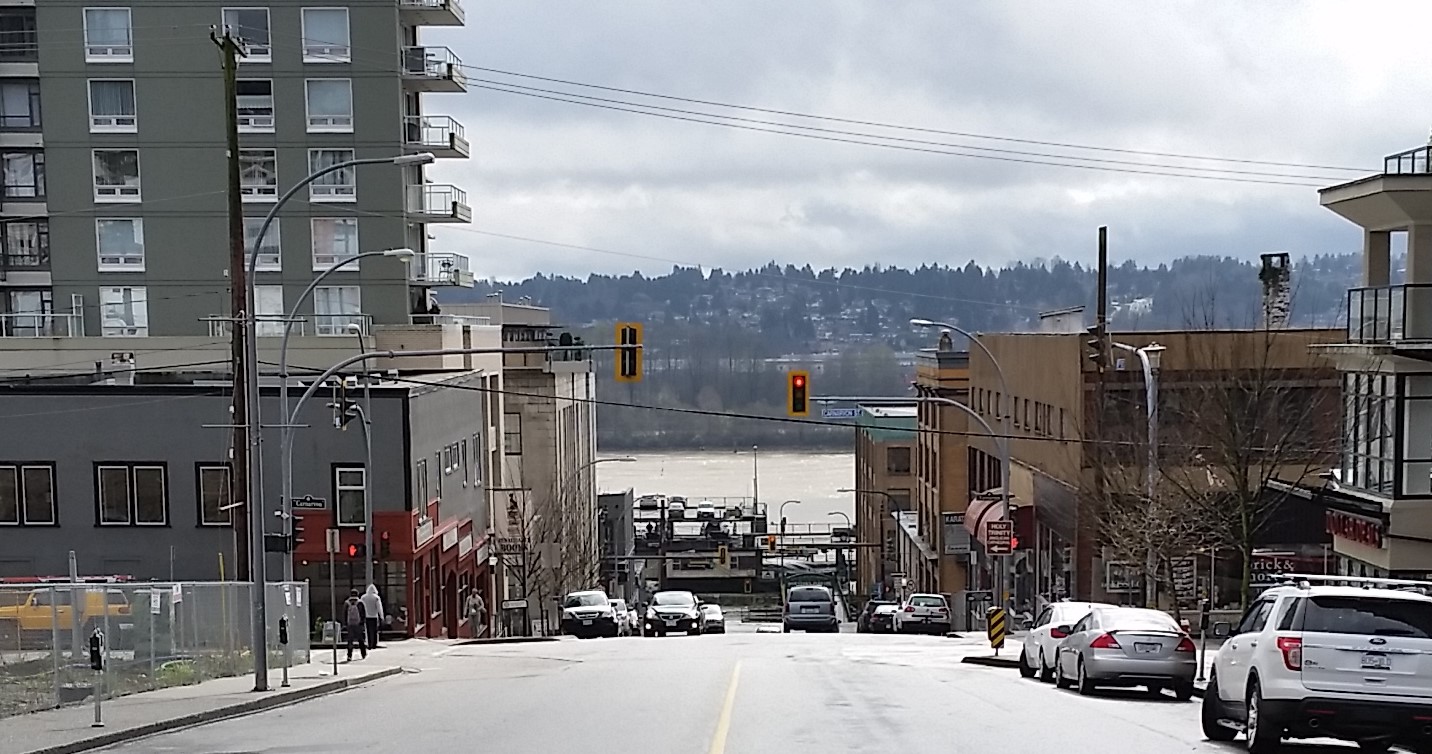
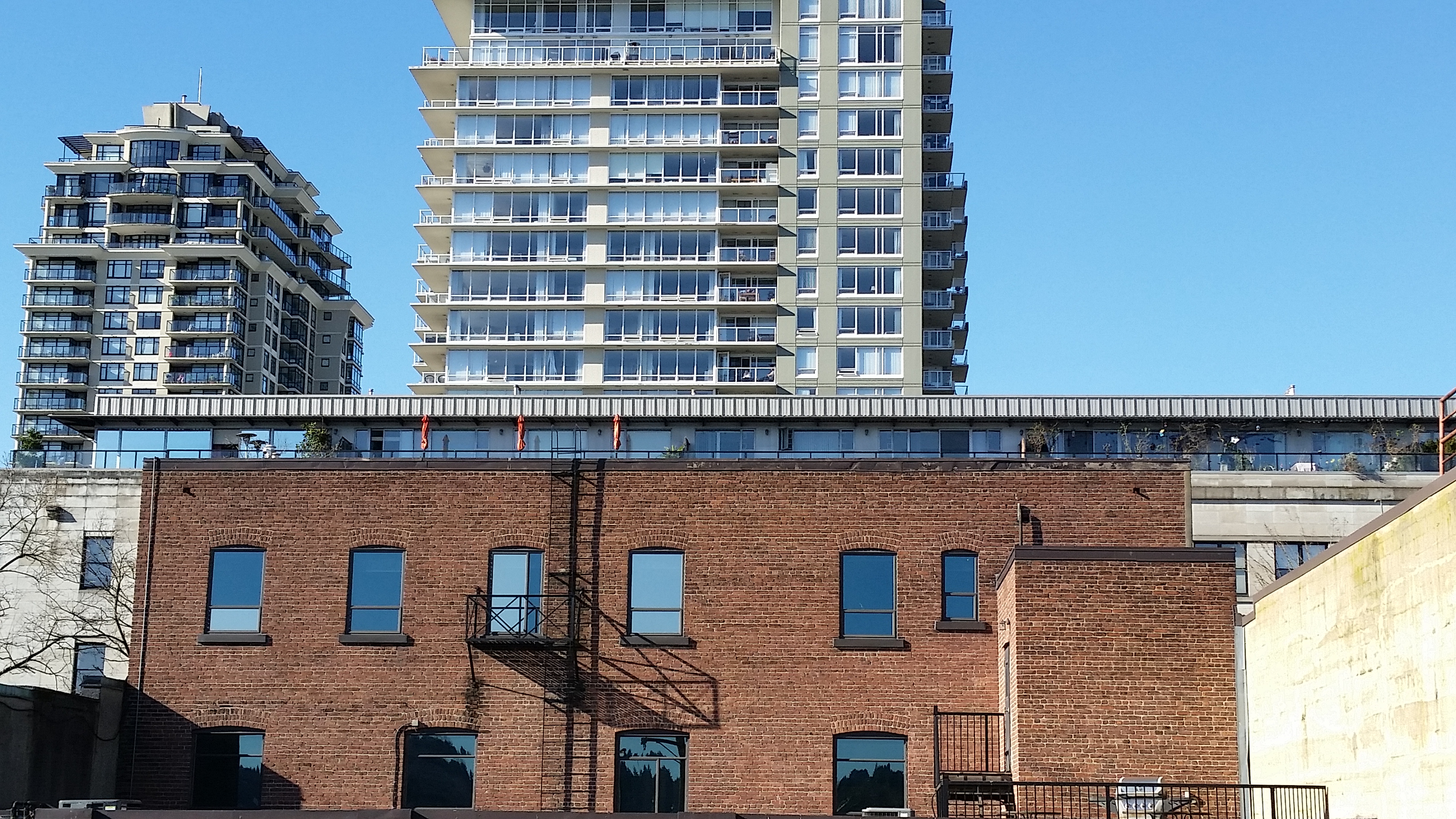
But this is not just about Front Street, it is about the entire waterfront. The views of the water from all of the intersections on Columbia will be better, there will be a safer level crossing at 6th, the enhanced level crossing at Begbie, and all the pick-a-views in between. Not to mention the view back from the waterfront – the new parks existing and planned – will look back at a row of heritage buildings, now with enough retail appeal and viability that their windows can be unboarded and their facades improved.

lookbACK

“Why tear it down when it earns revenue?”
The Parkade indeed earns revenue for the City, something like $400K per year, and will continue to do so once the work is completed. The number of parking spaces being preserved (450 or so) far exceeds the number normally occupied, and even exceeds the number occupied during the busiest events downtown.

“Save it for the benefit of the Trapp+Holbrook folks or the Larco folks”
The developers of the Trapp+Holbrook building are not only in favour of this decision, they advertise it on their website to make sure that people thinking of buying at their building know what is going on, and make the eventual removal and re-imagining of the Front Street Mews part of their marketing. To quote their marketing materials; “There is no doubt that the reconstruction of Front Street is a step in the right direction for downtown New Westminster.” Similarly, the developers of Larco went through a recent Rezoning of their property fully acknowledging the waterfront vision endorsed by the City. Indications are that they see the enhanced Front Street Mews as an asset for their development.

“An elevated park would be an asset”
Yes! I can see that vision. An elevated park could very well be a welcome asset on New Westminster’s waterfront. The idea of a High Line-type elevated park above the Pier Park is intriguing. However, very little of the “Rescue our Parkade” vision depends upon preserving the west half of the Parkade; the remaining east half might actually be a better location for this type of use. Of course, we don’t have any money to do that right now, and if people ask me if an elevated park adjacent to Pier Park is a higher priority than connecting the Pier Park upriver to Sapperton Landing, building a Q2Q crossing, or even planned improvements to the Canada Games Pool or the Gas Works Site… then I will say no.

bigview

When I raise the issue of the cost of building a facility like the High Line, the proponents reply “We are not asking the city to create a park, just to save the parkade”, which might have been the moment when I decided this lengthy rant was necessary. Because a High Line-style park is exactly what they are selling. They show photos of it on their website and in their presentations, they emphasise the park in their presentations, they invite landscape architects from UBC to opine on the possibilities. They may not be asking for a park, but that is definitely what they are selling to the people they are engaging with, and (by language or inference) they are suggesting that we can have that for less than the price of the demolition of the west half of the Parkade, which is patently false.

“Why is council not listening?”
We are listening, and we are hearing. After several years of discussing the Parkade, we have heard many different opinions on it. I have been spending the last two weeks asking people I run into all around town what they think of “Saving the Parkade”. A few people have come to Council, and they have been given a forum to express their views. We have received correspondence from people who support their ideas, and we have received correspondence from people who cannot believe we are having this discussion now. I can quote a few of the letters I have received:

“[demolition] cannot happen fast enough”… “I think it is clear how much Front Street will be improved once the western half of the Parkade is gone”… “I am so thankful you are tearing down the Parkade”… “please stick to the plan of tearing it down”… “I took part in the 2012 and 2013 open houses, I then and now support the decision”… “stick with your guns and let’s get on with the business of connecting Downtown with the Waterfront”… “I urge you to follow through so we can be rid of this 1960’s era relic”…

But ultimately, my job is not to tally up the yeas and nays on a spreadsheet – plebiscites are a terrible way to conduct leadership. My job is to make better decisions for the people who elected me, based on a serious analysis of the data available, and to set priorities with the money that citizens and businesses entrust in the Council. This decision was based on a long-term vision, developed through extensive public and stakeholder consultation, that was found to meet a number of long term goals for the community, and made the most economic sense. That is what we, as a Council, were elected to do for the community. During the election I talked to thousands of people, and exactly one person asked me to keep the Parkade if elected – and he was running for council against me at the time!

EMPTYISH

Would an elevated park be better than a parking lot? Perhaps. Is this something the City could explore for the east half of the Parkade after it is repaired? Sure. I have been to the High Line, and loved it, but it is a unique experience in a unique part of Manhattan. For New Westminster, we would need to look at the viability, figure the costs, and have a discussion with the community about whether that is a priority right now, and what other projects we might drop to make it a priority. I am not afraid to have that discussion, and I hope these three gentlemen will bring their obvious passion and energy to that discussion if the community really wants to consider this for the remaining east half of the Parkade.

But none of these ideas are currently costed, none of them have been evaluated by an engineer who will put her stamp beside her assessment, none of them have seen regulatory review, none of them have been through any form of public consultation, and none of them are currently in the capital budget for the next 5 years. We can make these things happen (pending technical and engineering concerns, of course), if people want them to. I just hope that if we spend a few years developing a vision like this, find the budget money, and do several years of public consultation and revision based on public input, a grassroots group doesn’t crop up at the end of it all to oppose it by saying “Where the hell did this idea come from? What’s the rush? White Elephant!”

But it probably will.

Ask Pat: Rejection!

Mona Boucher asks—

Hi Pat. Another development question for you, this one with regards to The Urban Academy expansion proposal. What if the proposal is rejected and UA decided to sells the 2 properties they own? What is that site currently zoned for and is the heritage mansion currently protected? I fear that the mansion could be legally razed and the entire site replaced with a 20 plus storey condo building. Just want to know what could happen without a rezoning or heritage revitalization agreement. Thanks.

You know, Mona, I think I am going to avoid answering this one for now. Those might be good questions to ask planning staff or even the proponents if you are interested in the Urban Academy project, but I want to avoid speculation on outcomes on that project. This project will be going before a public hearing, I don’t yet have access to the Staff Reports that will inform that public hearing, and I don’t want to prejudice that process at all.

Council Meeting – March 23, 2015

I was Acting Mayor last week for a few days, as Mayor Cote took a short vacation. As such, I got to enjoy media attention around the “Rescue Our Parkade” issue. This Meeting of Council included several delegations around that issue, so I guess I will need to write another blog post about that. The main decisions around the Parkade were already made months ago, so I will save this blog post for writing about the issues on our agenda.

We had a few announcements (interesting procedural note than one cannot both provide a Presentation and Chair the meeting, so The Mayor relinquished the Chair role to me as Acting Mayor, which caused general hilarity all around). After announcements and delegations, we started the meeting with an Opportunity to be Heard:

Development Variance Permit – 111 Wood Street
There were no delegations and no correspondence received on this Permit application, which was to develop a set of Townhouses in the southern part of Queensborough. This construction aligns with the adjacent developments, fills a bit of a gap on the South Dyke and obviously raised no hackles in the neighbourhood. We moved to issue the Development Variance Permit and the Development Permit.

We then moved on to Recommendations from the Committee of the Whole meeting of March 9, 2015:

YVR Request
Representatives of Vancouver International Airport sent us a letter requesting an opportunity to meet council and discuss their plans and visions for their operation and impacts on the Region. Council moved to formally invite them to our May 11th Council Meeting.

ICBC Representative to ACTBiPed
We formally approved the naming of the representative from ICBC to the Advisory committee for Transit Bicycles and Pedestrians. Welcome to the team (officially) Karon!

We then moved on to Recommendations from the Committee of the Whole meeting of March 23, 2015:

 KUDOZ – A City of Learning
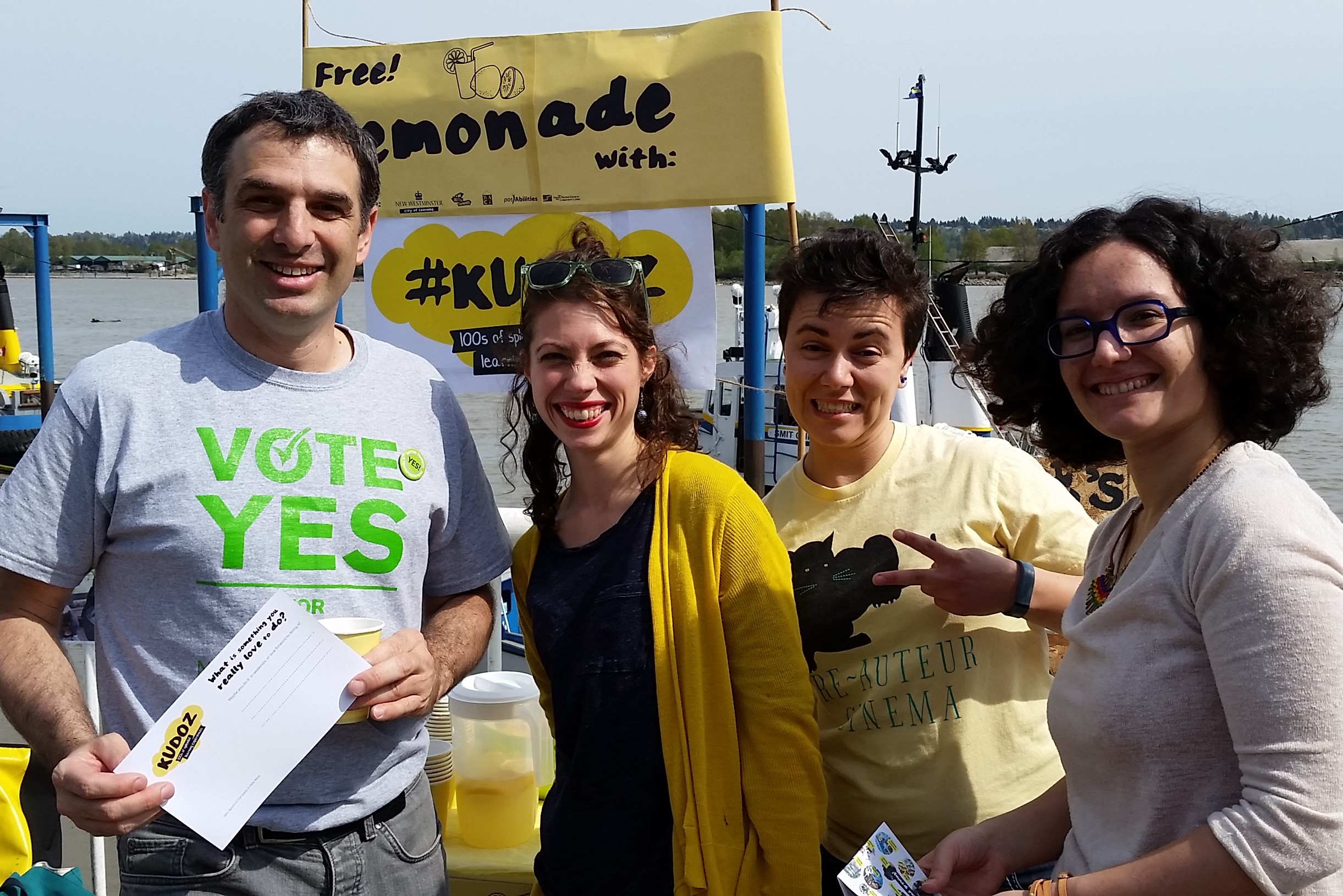
We had a great presentation during the Committee of the Whole meeting from an organization that is working to get people who have employment or other social barriers into learning experiences throughout the City. We were happy as a council to endorse the project. If you want to make a meaningful change in someone’s life but just sharing an hour of your everyday work or volunteer life, you should definitely check out Kudoz at this link!

Amendment of Council Schedule
Legislative Services wants to adjust our schedule to accommodate a few larger projects that are coming to Public Hearing. Although Public Hearings typically happen at the last meeting of the month, the April Hearing looked to have a couple of high-profile projects, and staff are concerned that people’s ability to be heard will be limited by the schedule. They first suggested holding a second Public hearing on April 20, but the project proponent did not like the shortening of their schedule while they are still doing public outreach, and trying to address some concerns. Therefore, we have added a May 4 Public Hearing date. Mark your calendars!

Nomination to the FCM
Councillor Williams was unanimously nominated by Council to represent Mayor and Council at the Federation of Canadian Municipalities for 2015.

318 and 328 Agnes Street
There is a proposal to put two new dedicated rental housing buildings on the old school property and empty lot 314 Agnes Street (kitty-corner from Qayqayt School). We moved agreement with the principles of the Housing Agreement, then the required Zoning Amendment passed first and second reading, and I will hold off on offering comment as this will go to Public Hearing on April 27, 2015. Come on out and tell us what you think.

26 East Royal Ave (Victoria Hill Parcel E)
This is one of the final pieces in the Victoria Hill neighbourhood development. This building will bring a bit of ground-based retail to provide some basic services to the Victoria Hill neighbourhood for the first time. This site has seen significant review since 2012, and the current design (two 4-story buildings with a walkway between them, mostly 2- and 3-bedroom units and 113 parking spots for 64 units) definitely reflects earlier concerns expressed about the earlier plans. This is a preliminary report, as the development will be going out to community consultation, design panel, etc.

Sewerage and Drainage Regulation Bylaw
Staff is also updating the Bylaw that regulates the City’s sewer systems. I deal with these types of bylaws in my regular working life, so I went through this with more interest than is strictly healthy. The good news is that I do support it.

An interesting note related to this bylaw and the provisions for source separation. The City of New Westminster is encumbered by a very old sewer system, a legacy of our being a 150 year old City, and a lack of infrastructure investments in the second half of the 20th Century – we have a lot of catching up to do. We have 70 km of storm drainage lines (21km in closed storm sewers, 49km in open watercourses – or “ditches” as they like to call them in Queensborough). We also have 33 km of sanitary sewers, all relatively new. The problem is the 150km of “combined flow” sewers. These are sewers that collect sanitary waste from houses and businesses, but also collect storm water from roof leaders and roadways.

The problem with “combined flow” sewers is that they have to be treated at the end of the pipe like sewage (because of all the nasty stuff we flush). When it rains, there is a huge volume of water that enters the system and is mixed with that sewage, causing us to have to treat it all. The sewer treatment plants in Metro Vancouver don’t like this – it costs them a lot of money to treat all of that volume (and they pass that cost on to us). Environment Canada doesn’t like it either, because occasional very large rains can overwhelm the system and allow some untreated sewage to enter the River.

The City has a decades-long plan to separate the City’s remaining combined-flow sewers, and we are putting some of your annual sewer bill away in a reserve fund to use for this work when it makes sense to dig up a road. However, separation also had to happen at the source. Many residences (like mine) have a single “out” pipe that directs relatively clean roof leader and perimeter drainage water to the same place as that decidedly unclean sanitary outflow goes. If the City wants to separate the systems, then homeowners are going to need to separate their systems as well. Doing the necessary in-ground work to install two pipes and an inspection chamber on residential properties is costly 9up to $10,000, which can be a surprise to homeowners who just want to repair their perimeter drains. The City takes a long view on this, and is not forcing people to do this work until they are performing major renovations, building new structures, or actually repairing the outflow pipes on their property.

Yeah, I probably care too much about sewers.

Statutory Right of Way for FortisBC
Fortis want so provide utility service to supply utility service to a development in Victoria Hill. Not much to discuss here.

Energy Save New West
New Westminster has an energy save program that is pretty cutting-edge. The report received shows they are meeting and exceeding their targets. You should go to their fancy new web site and see how they can help you save money on energy use for your home or business in New Westminster, and help you get rebates for the cost of those energy saving renovations. It’s good stuff.

Do I show my age by even using the phrase “fancy new web site”?

2014 Election – Disqualification of Candidates
A couple of candidates in the recent Municipal election failed to file financial disclosure statements. That’s against the law. There are penalties under the Act, including big fines, but that is the province’s problem. The part the City is responsible for enforcing is a one-election ban from running for local office again. Remember, these candidates are not in trouble for filing false or incomplete declarations, but for not putting anything at all in. They could have downloaded the form, left it blank and signed it, and they could have avoided this (at least until the review of the declarations is completed by ElectionsBC). The issue that one of these two candidates clearly shared advertising with a couple of people who were successfully elected, and those people did not disclose any such shared expenses, is also something I suspect ElectionsBC will deal with when they start reviewing the declarations.

This is separate from the concerns raised by Council around some of the concerns about polling stations last election. It seemed there were one or two polling booths that were not well organized and had long line-ups, some machines that did not work, and a few procedural and/or logistical problems around people needing assistance at the polling station, such as language interpreters. We have asked that there be a report brought to council to review what went right or wrong during the election, so we can do a better job in 4 years.

410 Columbia Street Upgrades
The building on the south side of Columbia at 4th is an eyesore. The owner is going to renovate and reduce the soreness. This is a good thing. I kind of hope it waits until after May 2, as there are some ugly, but interesting, rocks attached to the old façade.

Family Friendly Housing Policy
The City has been working on a policy to assure a supply of family-friendly housing. I wrote a bit about this previously, as we did some work-shopping on the topic. Council decided to endorse the recommendations in the staff report and take the Bylaw to Public Hearing on May 25, 2015. C’mon out and tell us what you think.

We received some correspondence.
The one from the Ministry of Transportation rather irritated a few members of Council. At some point, people are going to start to think that the Minister wants the Metro Vancouver Transportation and Transit Plebiscite to fail. I’m not saying that, because that would suggest he wasn’t being honest when he repeatedly said that he supports the YES side. But I cannot square that with the idea that the week we receive our ballots to decide if we will ask the Province to please allow us to invest $750 Million a year of combined Local, Provincial and Federal money to keep our struggling transportation system operating the right time for the Minister to announce he will be spending $2.5 Billion over three years to build bridges and pave highways and buy busses for everywhere in the Province except the Lower Mainland. You are paying for all of that $2.5 Billion, you are not allowed to vote on it, nor will you be allowed to vote on a similar amount spent on a Massey Tunnel replacement, just as you didn’t vote on a Port Mann bridge that is now $3.6 Billion in debt. Yeah, this is a rant, but as local leaders are busting their asses trying to get the word out that we need a little transportation funding here, he is taking a “hands off” approach while handing money over to Kamloops and Kelowna and Chilliwack. So yeah, that letter arrived at a sensitive time.

And that’s all I have to say about that, except maybe Vote Yes: at least that way some of your taxes will go to building something near where you travel every day.

Bylaws: 
The Electrical Utility Amendment Bylaw which saw three readings on March 2, 2015 was adopted – it is now the Law of the Land.

Zoning Amendment Bylaw 7740 (318 and 328 Agnes Street) as discussed above, had two readings, and will go to Public Hearing on April 27, 2015.

Zoning Amendment Bylaw 7741 (Family Friendly Housing) received two readings, and will go to Public Hearing on May 25, 2015.

Sewerage and Drainage Regulation Bylaw No. 7746, as discussed above, received three readings.

And after a few Notices of Motion which will be discussed later, we were done for the evening.

Big important notice: The March 30th Meeting of Council will include a Public Hearing at 6:00pm. At 7:00pm, we will have an opportunity for Public Comment on the Draft 2015-2019 Financial Plan for the City. That’s usually a good one. Background info here.

Ask Pat: Middle school playground.

Someone asked—

We just moved in to the neighbourhood last summer at Queens and 9th across from the new middle school. We have a baby at the daycare. Are there any plans to replace the playground that was at the elementary school or do any upgrades to the park? I know the playground was enjoyed by many in our neighbourhood.

That site is partially School Board land and partially City Land. Much of the park is City-owned, and there is an agreement between the School Board and the City to share the play/ park/ sports field space. The City actually stepped up and contributed a bit of money for programming of that space, and the School Board has reciprocated by providing maintenance. I have only seen preliminary plans for the eventual park space, and during the construction phase that is solidly in the School Board’s control (for very good reasons). As I understand it, the play areas will be improved on the school grounds, though I suspect the nature of any play structures on School lands will change in that we now have a Middle School instead of an Elementary School.

As for the City part of the land, Parks staff tell me they are working on a strategic plan process for Simcoe Park (as it is called) after the school work is complete and there is a better understanding of how the new space and configuration will be used. There has also been some discussion in the pedestrian and access community about assuring the low-grade diagonal walkway connecting 8th and Royal to 9th and Queens be preserved, so there are many pressures with making the new school fit that site. However, top priority right now is working with the School Board to get that school up and running so that their long-term Capital Plan (read: New High School!) can be realized.

Ask Pat: Brewery at the Brewery District?

Someone asked—

Is there still talk of a brewery opening up at the Brewery District, or is just a name now in reference to the old Labatt Brewery that was once there? It seems like a microbrewery would be perfect compliment for the development, but it seems that only residential and office blocks remain.

I think the commercial space component of the development is done – what you see is what you are going to get.

Yes, the name is about the history of the site – but I agree it was an ideal spot for a new microbrewery or brewpub. I can’t claim to know a lot about the industry (although I have spent a lot of time at Steel & Oak), but I understand that it is hard to fit a brewery into a mixed-use development like that because a lot of what a brewery does (using lots of water, storing raw materials, creating brewy smells, operating through the night, etc.) more suits light industrial settings. I also hasten to mention that a brewery takes up a lot of space, and new breweries are generally challenged in cash flow in the start-up stage because of all the equiupment they have to buy and install long before they can sell their first pint. The lease rates per square foot at a new development like the Brewery District might pose a bit of a challenge for anyone without deep pockets and a tried-and-true business plan. Hence Brown’s Social House .

However, the OCP is looking at ways to leverage the potential growth of RCH into a revived retail strip on both sides of Columbia from the Brewery District to Braid, and If I had the knowledge, money, or time to open a “Craft”-style Tap House within walking distance of the Sapperton Station, I think the neighbourhood is due…

RCFM

Absolutely, positively, my favourite regular community event in New Westminster is the Royal City Farmers Market. I admire the work that community builders like Andrew Murray, Jen Arbo, and (seen here next to a posing politician) Melissa Maltais have put into giving the Community this place to meet, mingle, shop, and share every couple of weeks. One more month of “Winter Markets” to come, then a (6th? 7th?) summer in Tipperary Park.

If you like the Market, there is a great chance next weekend to go to a fun event and support both the Market and the new “Seniors to the Market Shuttle Program”, where the RCFM is working with Seniors Services to break down barriers to access to farm-fresh food.  Go! Have Fun! Do good!

Fresh-Paint-Poster