Can ya help a City out?

People who read this blog are, I presume, more interested than most on how the City of New Westminster operates. Unless you are here to correct my grammar (note this sentence fragment), or out of some sense of obligation (Hi Mom!). Since I got elected, there isn’t even that “What crazy thing is he going to say next?!” aspect, and I hardly even swear anymore. So unless you are just stockpiling my comments to undermine my political future, I am thinking you care a little more about the City we know and love than the rest of the masses.

Since you care so much, I also presume you want to help make things better, or at least shape aspects of the City into something more to your liking. According to some guy named Ipsos, New Westminster residents are a pretty contented lot (except when stuck in traffic), but if we don’t strive for improvement, stagnation sets in, and we and up like Eddie Murphy zipping up a fat suit, wondering where the it all went wrong. So here are three things you can do in the next couple of weeks to make this City better, with increasing levels of commitment.

The Survey: The City is currently running an on-line survey around Public Engagement. We are asking people how they interact with City Hall, and how they want to. This includes the full range of “engagement”, from informing residents and businesses about what the City is doing all the way to collaborative decision making, where we assure that stakeholders in the community are truly listened to in making plans and forming policy. Hit that link above, and give 5 minutes of your time to answer some simple anonymous questions, it is the least you can do, so do it now!

The Workshop: The City’s “Our City” Official Community Plan update project is ongoing, and we are now at a point where we need to have a conversation with the community about housing types. Currently, 95% of the housing units in New Westminster are either apartments or Single Family Detached houses. We have a distinct paucity of the “in between homes” – townhouses, row homes, du-, tri- and quad-plexes, or carriage/laneway homes. The new OCP will hopefully open more opportunities for these types of housing options.

I live in a Single Family Detached in the Brow of the Hill, one of the more affordable parts of New Westminster. When we bought it something like 8 years ago, I joked “it’s a little old, in a slightly sketchy location, but we can almost afford it”. Truth be told, it has turned out to be a sold house causing us very few problems, and I absolutely love my location halfway between Uptown and Downtown, with a 5-minute walk to the SkyTrain (alas, the walk home is 10-minutes – can’t do much about the hills in this town), and have great neighbours. Recently, however, three relatively modest 1930’s vintage homes on my block, ones you would have traditionally considered “starter homes” for young families or “fixer-uppers” have sold for more than $800,000. The ongoing regional housing affordability crisis keeps creeping up into higher and higher income brackets, and New West is not immune.

One approach to help young families grow in our community is to provide a rich diversity of housing types, those “in between” types that balance affordability with a large enough living space for kids and their accoutrement, and maybe just a small patch of grass or garden, without the bells and whistles (and costs) of a single family detached.

However, the process of fitting these housing types into our exiting single family neighbourhoods is concerning to many people who already have their Single Family Detached dream. They worry about parking, about green space, about visual intrusion and proximity, and about the oft-cited but difficult to define “character” of residential neighbourhoods. This is the conversation we need to have right now.

It should be a good conversation on November 7th, whether you are a young family looking to move out of the two-bedroom apartment and into something roomier, or you are a family in a Single Family Detached wondering what carriage homes or duplexes would mean to your block, you should come out and help the City understand your needs and concerns. It is free, you will get fed, but you need to register to take part. Do it now.

The Committee. Finally, if a 5-minute survey or a 6-hour workshop (with lunch!) isn’t enough for you, the City is currently doing its annual call-out for Advisory Committee volunteers. There are no less that 22 separate Advisory Committees, Boards, or Panels where you can serve the City by showing up to anywhere from a few to a dozen meetings per year (depending on the committee, see the 2015 schedule here to get a sense of the workload). You get to give us advice on specific policy ideas or other happenings in the City, and can really influence how decisions are made, mostly by having closer contact with the people (staff and elected) who are making the decisions about how our City runs.

Go to that list above, check out the Terms of Reference for the Committees, and see what might pique your interest. You can serve on more than one, and as competition for some of the Committees is pretty fierce, you might want to apply for several.

So if you are tired of sitting on your front deck, shaking your fist at the passing clouds, and writing angry letters to the editor, start making the City yours by taking part in shaping it. You will feel much better, learn a bit more about how the City works, and maybe meet some new , interesting, like-minded people.

UPDATE: I was told that this Saturday’s Our City event is completely booked full, which fills me with joy. That so many people are willing to spend their Saturday talking “Urban Planning” and helping inform the future of the City reinforces my love for this community and its desire to engage! If you didn’t book, don’t panic, because after the Workshop, the show is going on the road. The dates are:

Nov. 10, 1:00–4:00pm            Century House

Nov. 12, 5:00–8:00pm            Sapperton Pensioners Hall

Nov. 14, 1:00–4:00pm            New Westminster Public Library

Nov. 18, 5:00–8:00pm            Unity in Action Church

Nov. 21, 9:00am–12:00pm     Sapperton Pensioners Hall

Nov. 28, 9:00am–12:00pm     Connaught Heights School
Stroads

Can we avoid a stroad problem in New West?

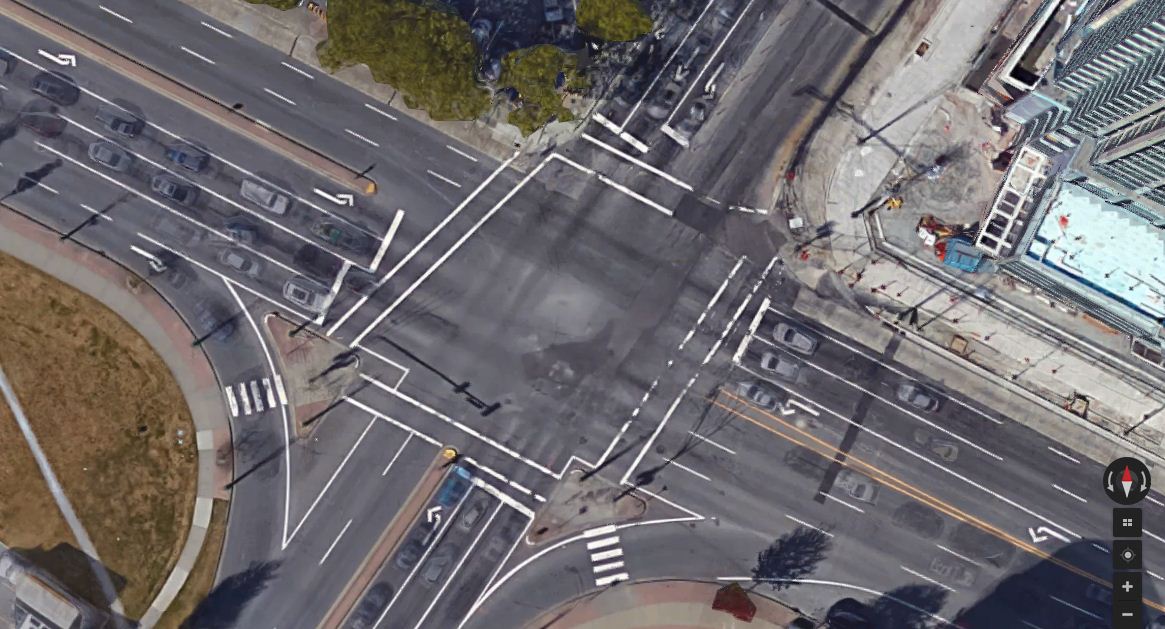
The word “stroad” is a slightly tongue-in-cheek portmanteau combining “street” with “road”, and it is becoming such common parlance in city planning that even small towns in Pennsylvania are talking about how to deal with them. The term came from people who understand the difference between how a “street” operates, and how a “road” operates. The former is a place where people do things, like socialize and perform commerce; the latter is a conduit for travel to get somewhere else. The term “stroad” pinpoints the problem created when you try to combine those two mutually exclusive uses into the same space.

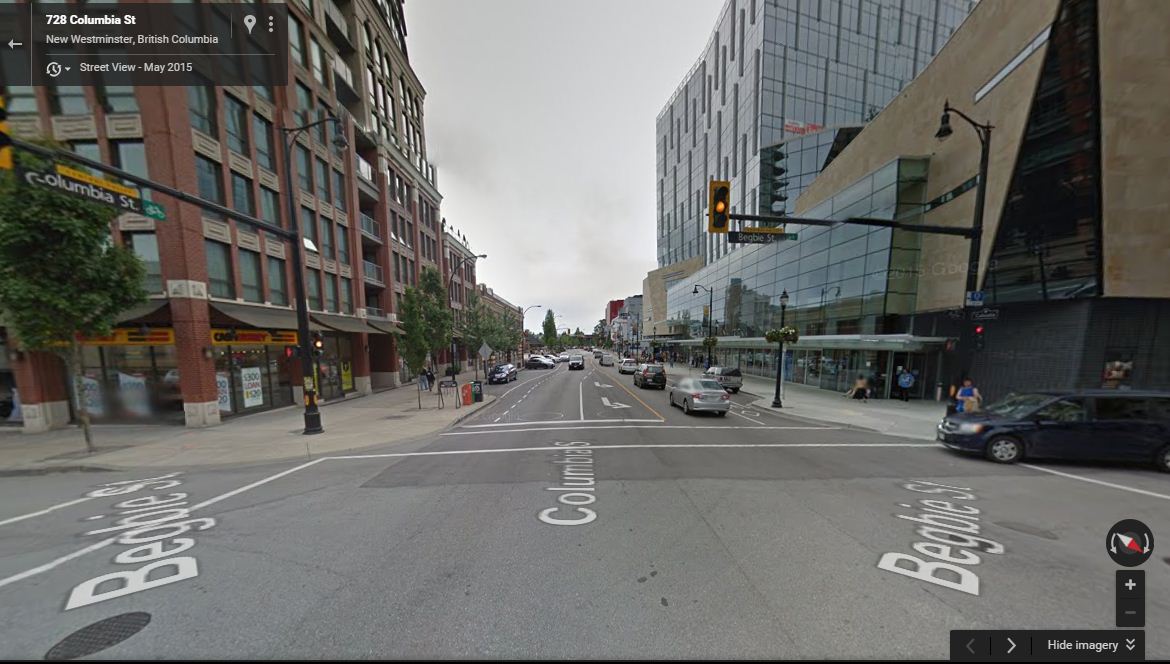
I would argue that New Westminster has very effectively dealt with one stroad in its midst when the Council of the day put Columbia Street on a road diet. I remember the boo-birds talking about the disaster that would befall the City, and many of them still pop up to complain about pedestrian bumps or crosswalks or any other thing the City does to make the pedestrian space safer. Columbia is not back to being the Miracle Mile of the 1940s, and it never will be. However there is no doubt it is a better place for walking, for shopping, for living and for driving, than it was in the 1990s.

stroad5

Stroads are rarely created intentionally, they evolve into existence, with a bunch of small (and at the time, seemingly rational) decisions. Most commonly, a city finds one of its shopping streets is increasingly used by through-commuters. In hopes of eking some value out of this apparent windfall, automobile-oriented development happens along the route, displacing the existing landuse with the intent to capture the fleeting attention of through-commuters. This (often strip-mall commercial) development also attracts local drivers who used to shop on the street, and now blend with the through-commuters. Congestion is exacerbated, and the engineering solution is to increase capacity. You widen the road, removing on-street parking if necessary, which requires you to build parking lots, further separating the road from the businesses, and creates in-out driveways or more light-controlled intersections, which slows the through-drivers. To fix this, you put in a left-turn lane or two so the through-traffic doesn’t get stuck, then a right-turn lane to get them even further unstuck. Which kind of works for a while (see Byrne Road and Marine, or Kingsway at Metrotown), as long as you have a bottomless asphalt budget.

stroad3

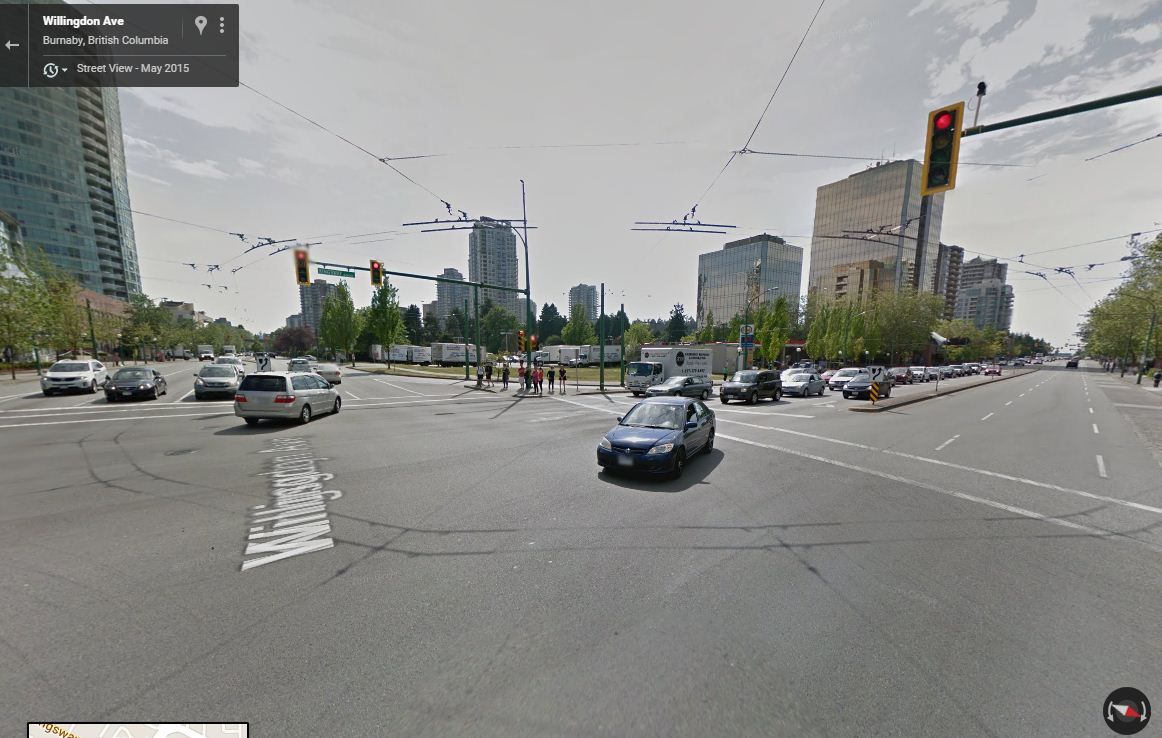
All of the sudden, you have a road in the middle of your City right in the middle of the street in the middle of your City. Anyone who wants to try to put value into the street by using their local commercial businesses discover the shops are behind expansive parking lots that are hard to get into or out of, and walking across the street means braving 40 metres of asphalt where the people trying to turn right through the crosswalk are separated from the people trying to pull a left turn across traffic by the people in between speeding along to be the first to get to the next red light, frustrated by all the traffic. So, complicated light timing, “pedestrian islands”, or expensive overpasses are required to make the space marginally safe for people who failed to bring along 3,000lbs of metal when they went to buy a loaf of bread. And we have built a stroad.

stroad4

Stroads are expensive to build and maintain. They move traffic poorly, yet provide the appearance of moving it well, which paradoxically increases induced demand while not actually increasing capacity. They are dangerous for all users, but especially for cyclists and pedestrians, who end up avoiding their chosen mode because the stroads are so uninviting. Worst of all, they strip away the value of expensive and precious urban land space, and contribute less to the local economy than an active street. They represent a planning failure, an engineering failure, and a leadership failure that must be avoided in modern urban areas.

So when you hear about plans for East Columbia Street, 12th Street, Ewen Avenue, 6th Street or 20th Street, or any of the busy streets in New Westminster, think to yourself: do we want this to be a street, or a road? Without first making that distinction, we will inevitably hedge towards a stroad, and end up with neither.

Opening Streets

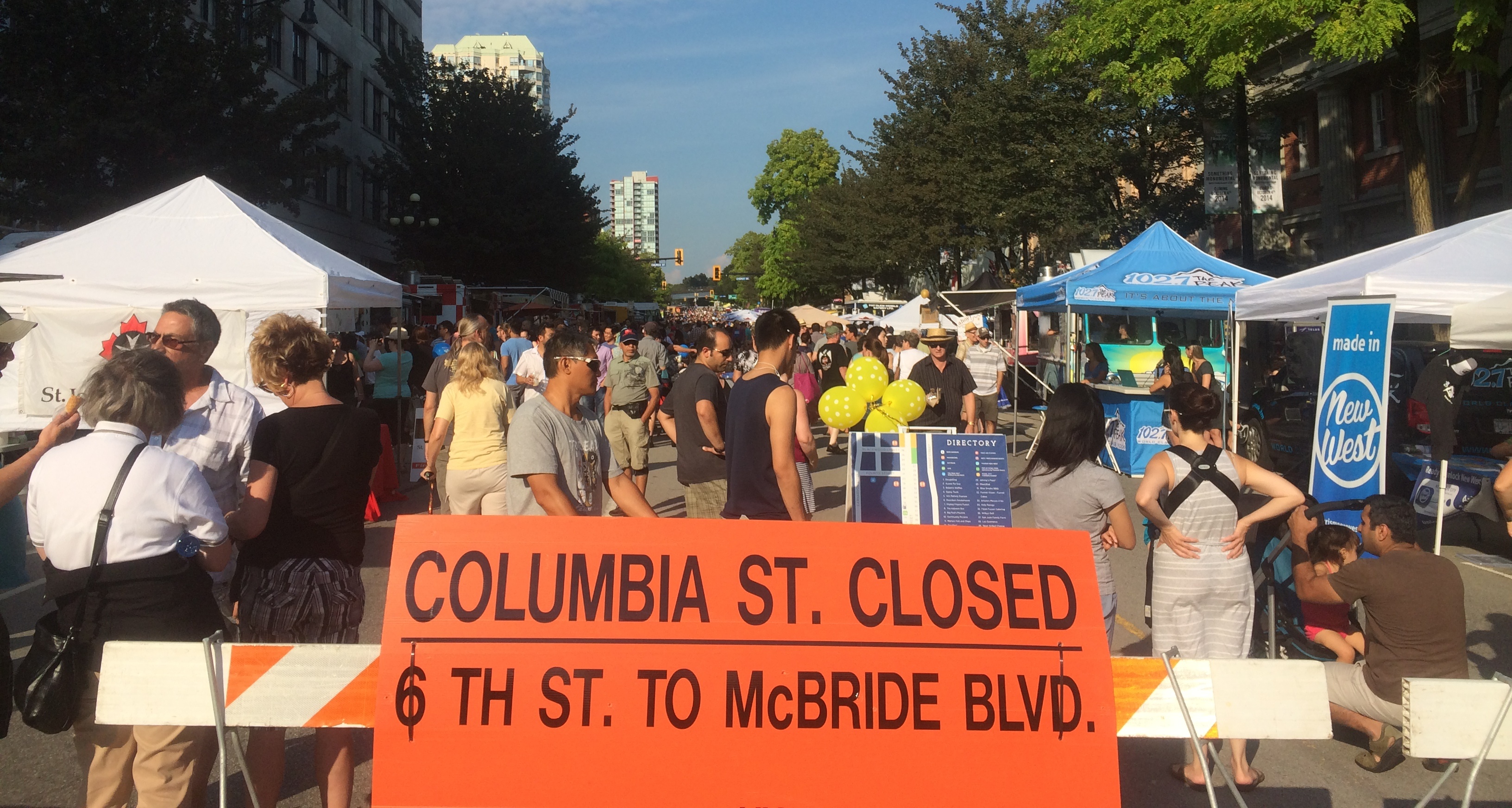
Much like this earlier post, I want to address a common use of language that has been bugging me of late: that around “closing” streets to hold events. It is a convenient term we use in a City to organize traffic management, emergency planning and engineering needs, but it is wrong. It implies that our streets are only there to serve people driving along them, or for temporary storage of your vehicle while you are off doing other things. There is so much more we can do with our streets when we stop worrying about “closing” them, and start creating better ways to “open” them.

Last weekend, I was at the New West Pride Street Party on Columbia Street, where two lanes of road was indeed closed for 10 hours so that people could walk, sit, talk, drink, dance, shop, share, eat, sing, and celebrate. I defy anyone to look at this picture of Columbia Street (which I borrowed from Bif Naked, because her view was better than mine!) and tell me that street is closed:

A photo posted by Bif Naked (@missbifnaked) on

This weekend, we are doing it again, with 70 food trucks and (if last year’s event is any evidence) tens of more thousands of people will be enjoying themselves on Columbia Street. These are not just New Westminster people, but folks from around the region coming to New Westminster to add to the vitality of our downtown, support local businesses and entrepreneurs from around the region, and hopefully discover that Downtown New Westminster is a great place to spend some time, not just a place to drive through.

closed

I also noted a news story this week about the Royal City Farmers Market plans to move uptown for their winter market season. The story mentions “Belmont Street will be closed to traffic from 11 am to 3 pm”. This statement is only true if you define “traffic” as cars. I am willing to bet that there will be more people using Belmont Street for those 4 hours every second Saturday than on any other day – it is just that the “traffic” will be on foot. By being on foot, they are more likely to stop, to shop, to talk to their neighbours and enjoy a laugh. People can, just with their presence, bring several hundred square metres of dead asphalt to life by making it a place of human interaction and commerce, not  just a place for cars to drive and park.

Language matters, so let’s stop talking about a day where tens of thousands of people flood onto our streets as a “Road Closure”; let’s start calling it a “Street Opening”.

Pride

When the City decided to support our growing Pride Celebration week this year by painting a crosswalk with the rainbow symbol of Pride, the reaction was immediately positive. Aside from mentions in the local and alternative media, and a huge splash on social media, there was no big press rush or ribbon-cutting unveiling. It was a small but meaningful gesture, and we are far from the first community to do it.

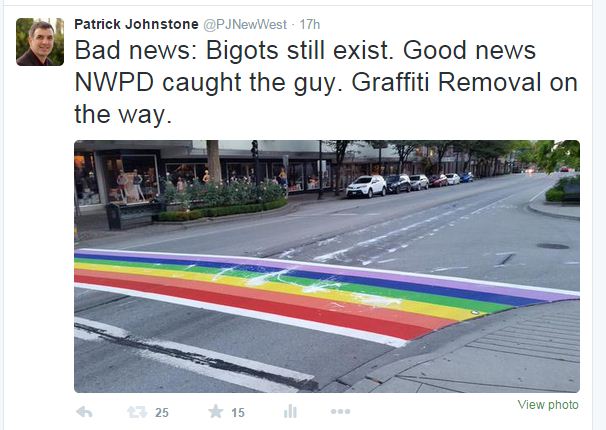
@MsNWimby and I decided to take walk by after dinner yesterday so she could see it for the first time, and I was at first buoyed, then dismayed, to see a small crowd gathered taking pictures. Yes, somebody had splashed some household paint on the crosswalk, and all of the sudden, the regional media was interested.

I think it says something about where we are in Canada in 2015 that a City displaying an important symbol of inclusion, diversity, and acceptance is smaller news than someone defacing that symbol. Some might use this to critique modern media’s tendency to tell us what is bad in the world instead of what is good. I prefer to look at it from a more positive side.

The symbol of the Rainbow Flag was once a revolutionary one, born of the historic struggles for acceptance of homosexuality. The rainbow as a symbol of diversity and inclusion grew out of San Francisco as that City became the bulwark of “Gay rights” in the post-Hippie era. As is typical with symbols that challenge orthodoxy, many tried to ban it or belittle it. Fortunately, through the struggle of new generations of activists and community leaders, our society evolved, and the meaning of the flag has evolved with it. It is not just about “Gay rights”, or even homosexuality anymore; it is about recognizing that people are different. Colour, size, age, sexual orientation, gender identity, kinks – nobody is “normal”, because in a society of individuals there is no “normal”. Even I, as a hopelessly Wonderbread white, straight, monogamous, middle-aged, cis,  professional male, exist within a spectrum. The rainbow flag reminds me that the privileges once bestowed only upon those within my narrow band of the rainbow must now be enjoyed by all, or we don’t live in a just world. Unfortunately, we do not yet live in that just world.

The good news yesterday was that several people were around the crosswalk when the elderly vandal started slopping paint on it. They were quick to contact the NWPD, who were quick to react, and the gentleman was quite literally caught white-handed. A couple of quick phone calls, and City engineering staff were able to get a clean-up crew out there before the paint had fully dried, minimizing the damage. I’m really proud of our Police and Engineering staff for their quick response, such that by the time the first TV camera arrived on scene, the mess was already disappearing.

I was also happy to see that when the vandalism lit up the social media, the reaction was again almost universally supportive of the rainbow sidewalk. Many people were disappointed that the vandalism had occurred, and some even expressed anger about it. My first Tweet was this:

Capture

In hindsight, that probably sounded angrier than I was, as mostly I felt disappointment. It was later I learned the vandal was an aged man whose faculties may not have been completely intact. There is no doubt the act was deliberate, and the man should have to pay restitution to the taxpayers who paid for the policing and clean-up, but I mostly felt sorry for the man who felt so desperate to remain in his own, narrow band of the Rainbow.

With the benefit of 24 hours, and thinking about the elderly gentleman who performed this flaccid protest, I’m reminded of the words of a great leader:

“Love is better than anger. Hope is better than fear. Optimism is better than despair. So let us be loving, hopeful and optimistic. And we’ll change the world.”

Perhaps, as some have suggested, we shouldn’t be angry at the gentleman who saw this as his only way to express himself. Instead, we can be hopeful that he will see that he is only fighting against a more just world. We can also be optimistic about a future where we don’t need this symbol anymore. We aren’t there yet, but we have come far enough that an act against the symbol is bigger news that the displaying of the symbol itself. We are moving in the right direction, and if we handle this right as a community, the step backward represented by this gentleman’s rash act can be far offset by the steps forward taken by the conversation his act precipitated. As was posted on Facebook last night by another New West resident: “We all need to paint more rainbows in the world.”

I hope you all come out and enjoy New West Pride August 8-15th. It is going to be a great series of events, culminating in the Pride Street Party on Saturday the 15th. Get your picture taken with the crosswalk, and use it to start your own conversation.

Loitering

I hate that word. Second only to my hatred for the term “jaywalking”. Both terms imply that there is a better use for a public space that you being on it, even if you are not actually stopping those better uses from being exercised. They are (semi-) legal ways of saying “go away kid, ya bother me”.

But I don’t want to defend loitering (a very, very good essay on that topic, with that very title, was already written by Emily Badger), I want to talk about a specific place in New Westminster, where we have completely lost the plot on loitering.

The New Westminster SkyTrain station is the defacto heart of our City. Speak all you want about Queens Park, the Quayside Boardwalk or the Coffee Crossing in Uptown, I will argue that our central downtown transit hub is the centre of our new City. This is where compact, mixed-use, transit-oriented new urban development is centred. When Hyack Square was built to better connect it to the River Market, when hundreds of residential suites and thousands of square feet of retail were developed right on top of it, when the Anvil was conceived as a new community gathering space, it was all about the SkyTrain and New Westminster Station. It is the centre point in the “big vision” for New Westminster, and it is the new “front door” to our Downtown and waterfront, a mix of our Grand Central Station and our Times Square.

As such, New Westminster station needs to be a space where people are comfortable hanging out, walking through, meeting friends, having chats. A place people want to be in, without a particular purpose, which is pretty much the definition of loitering.

It has always been a little tough to love New Westminster Station. It is far better now than the empty parking lot ringed with marginal businesses it was in the late 80s when I first moved to New Westminster, but for the best part of the last decade, it has been a station under construction. Plaza88 / The Shops at New Westminster Station has taken a bit of time to find its character, but is now mostly leased up with an interesting mix of businesses, and is attracting customers. The Kyoto Block (the empty lot between the shops and the Anvil Centre) is still an empty lot and a signficiant missing connection, but despite some dreams I may have had, I’m afraid they will never be realized now that it has been sold. With the Anvil construction just wrapped up and now a year-long construction project on the SkyTrain station, followed by potential expansion of the McInnes Overpass to occur with the River Sky development, and building of the 4th Plaza88 tower, there is more construction to come.

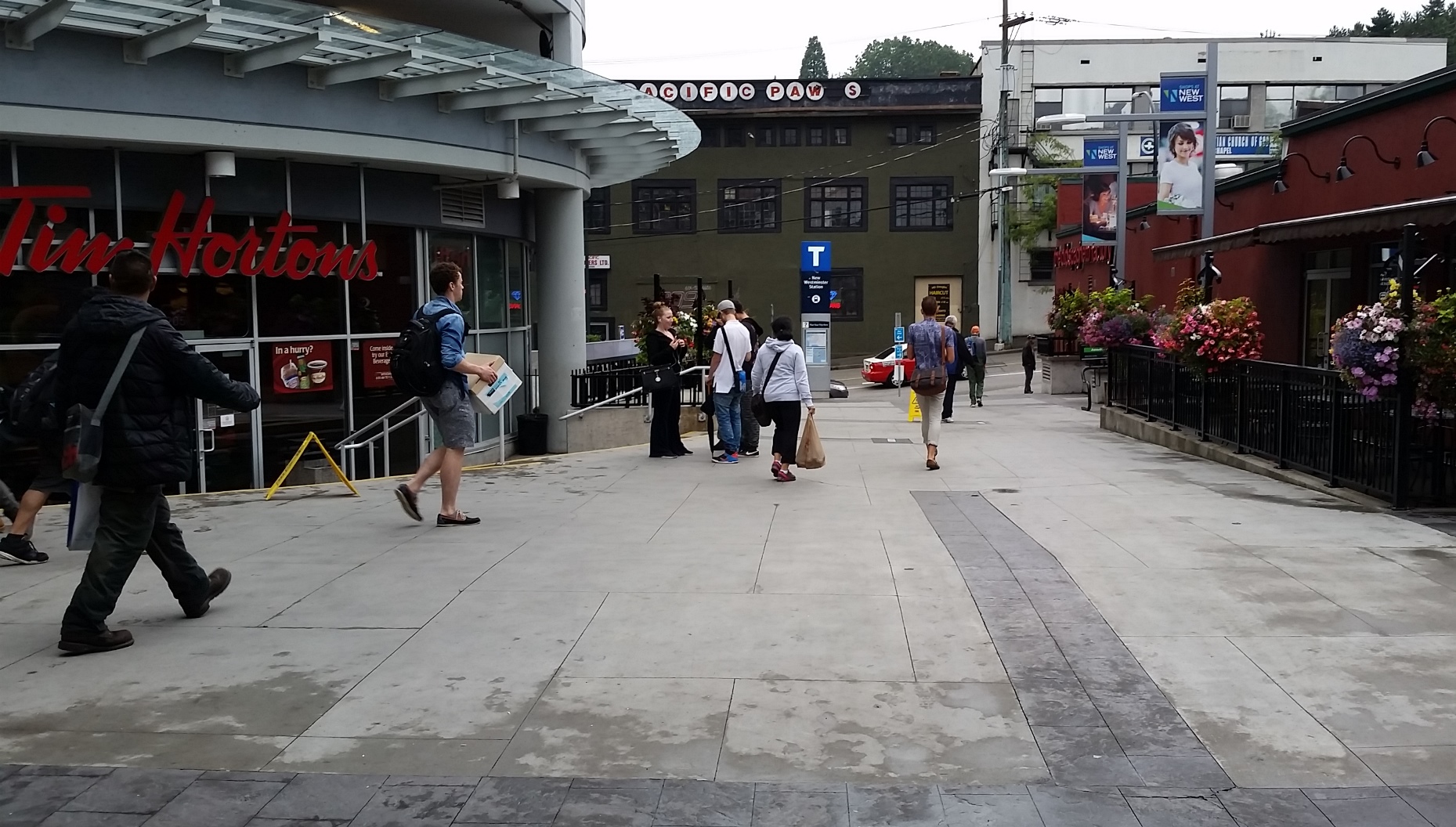
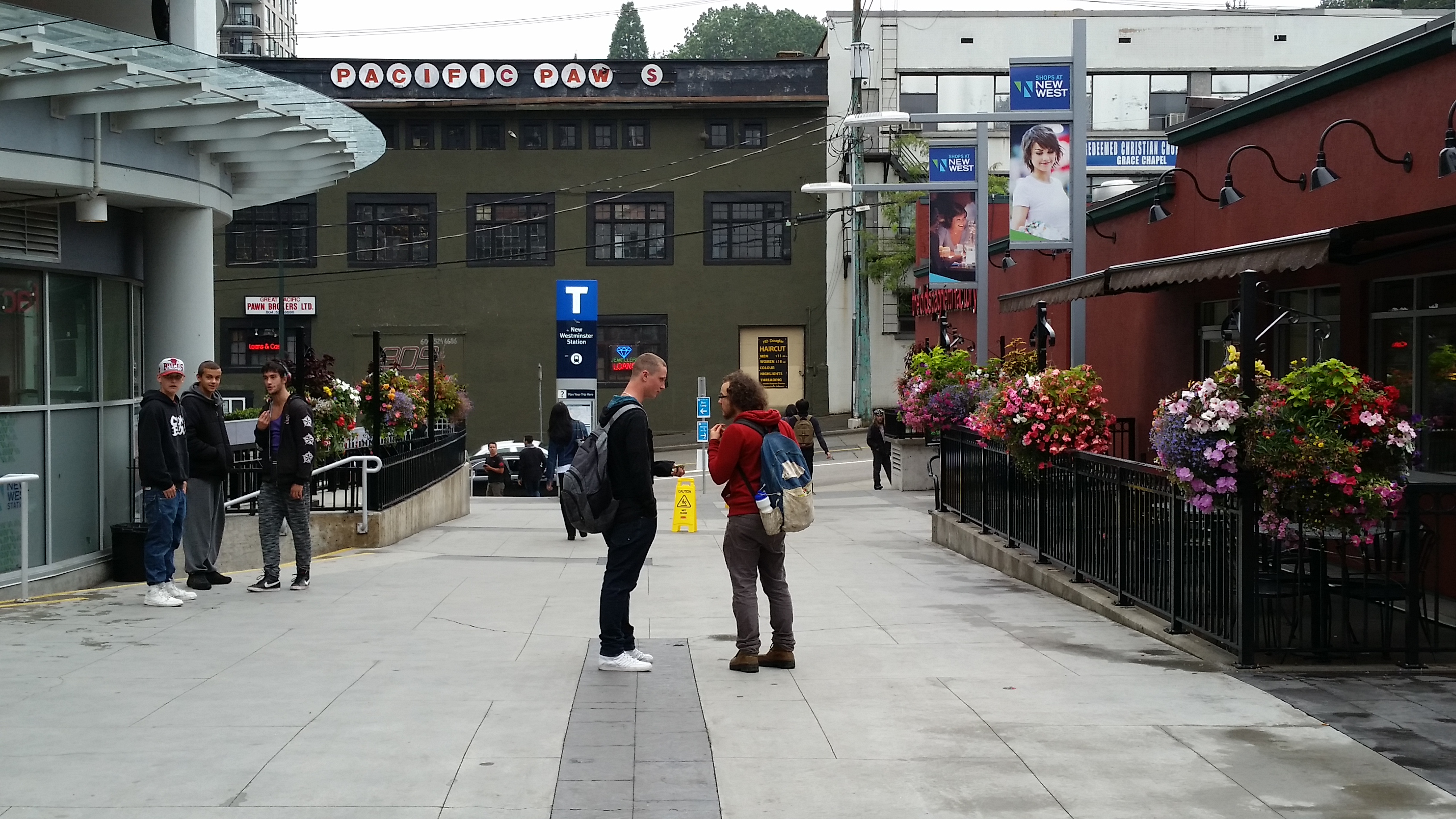
Meanwhile, the plaza opening up to Carnarvon between the front of a Tim Horton’s and the back of a Spaghetti Factory presents you the best-used “grant entrance” to New Westminster. With all due respect to the fine people in the Pawn Brokering industry – is this really the best we can do?

entrance

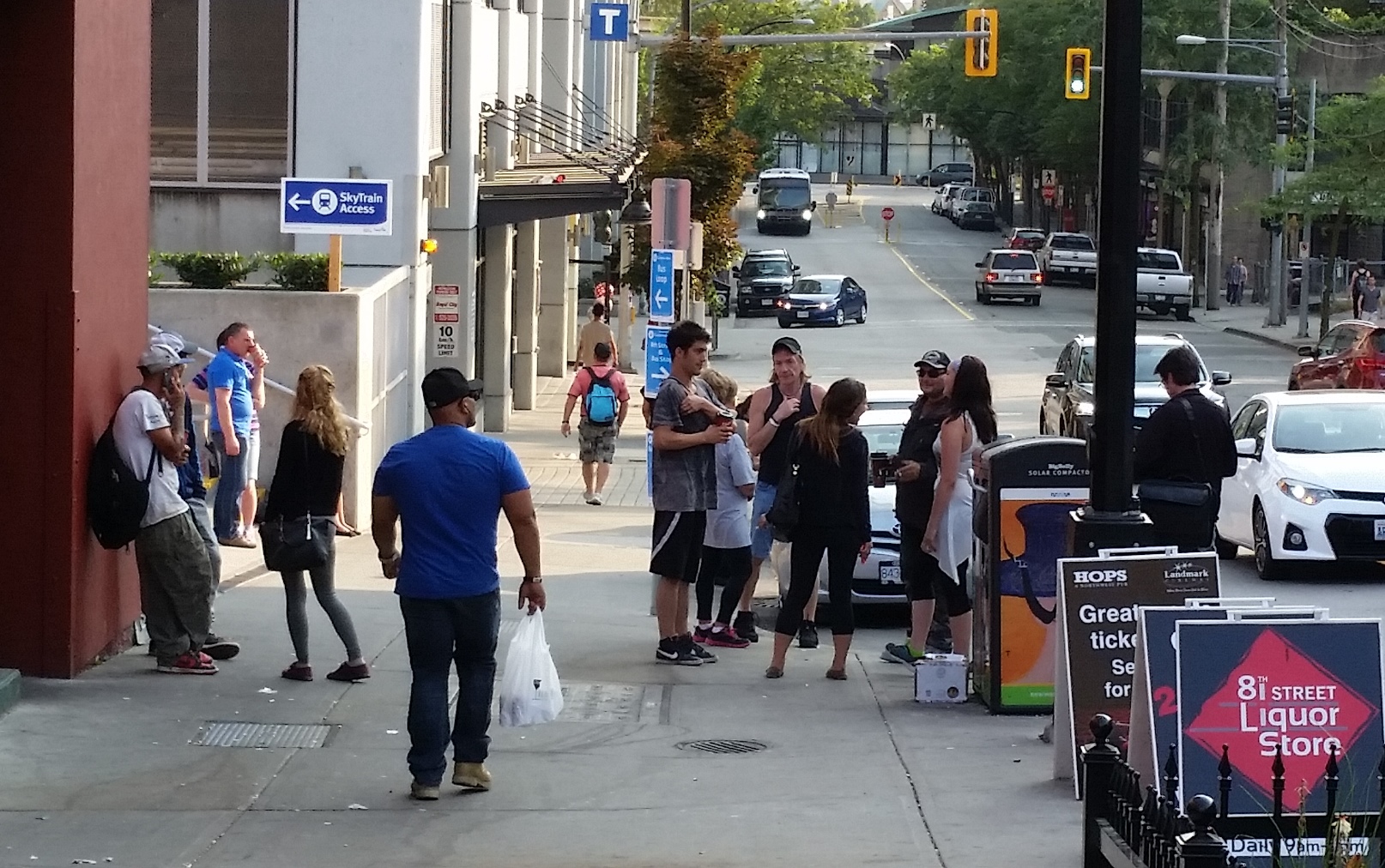
However, it isn’t the walls around the space that we interact with as much as the space itself, and I have had two very different e-mail exchanges of late with New Westminster residents I respect about the “problem” with that plaza space. The interesting part is that they were two very different conversations. One complained about the loiterers and “gauntlet of smoke and dirty looks” they have to endure when walking through the station, the other spoke of all the unfriendly spikes and security presence that is making a presumptively public place less friendly for people to linger.

sidewalk

(it just occurred to me that I should get these two people together for a coffee at the Tim Hortons there and let them come to a solution instead of writing this blog…)

I am very much on the side of the second person: public spaces with people in them are safer, more friendly, better for business, and more fun. It is clear the space in that plaza was initially intended to be lingered in – the architect built bench-height structures around the periphery and decks in front of the restaurants, there was even initially some funky plastic chaise-lounges and benches on the site when the shops opened.

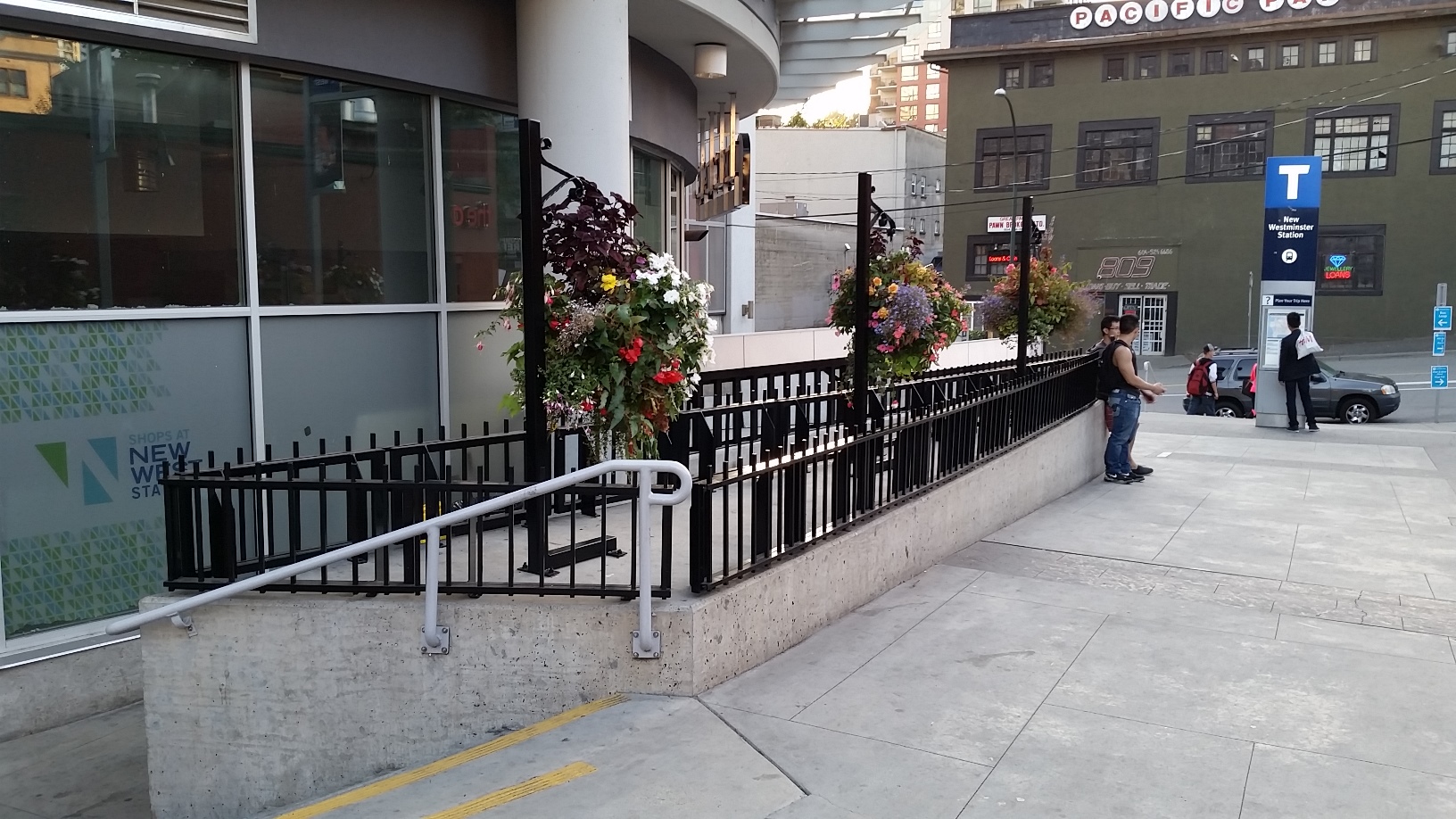
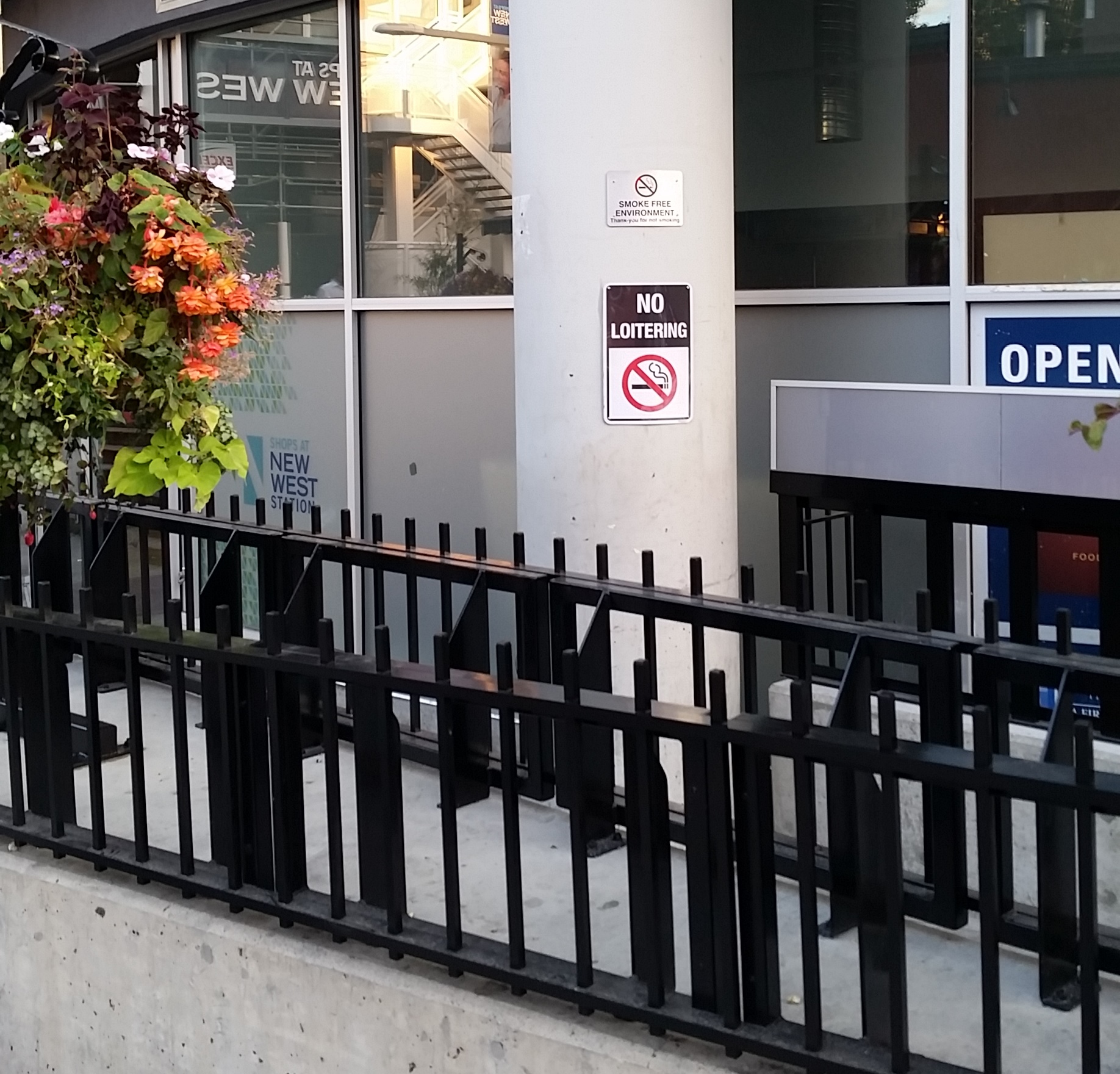
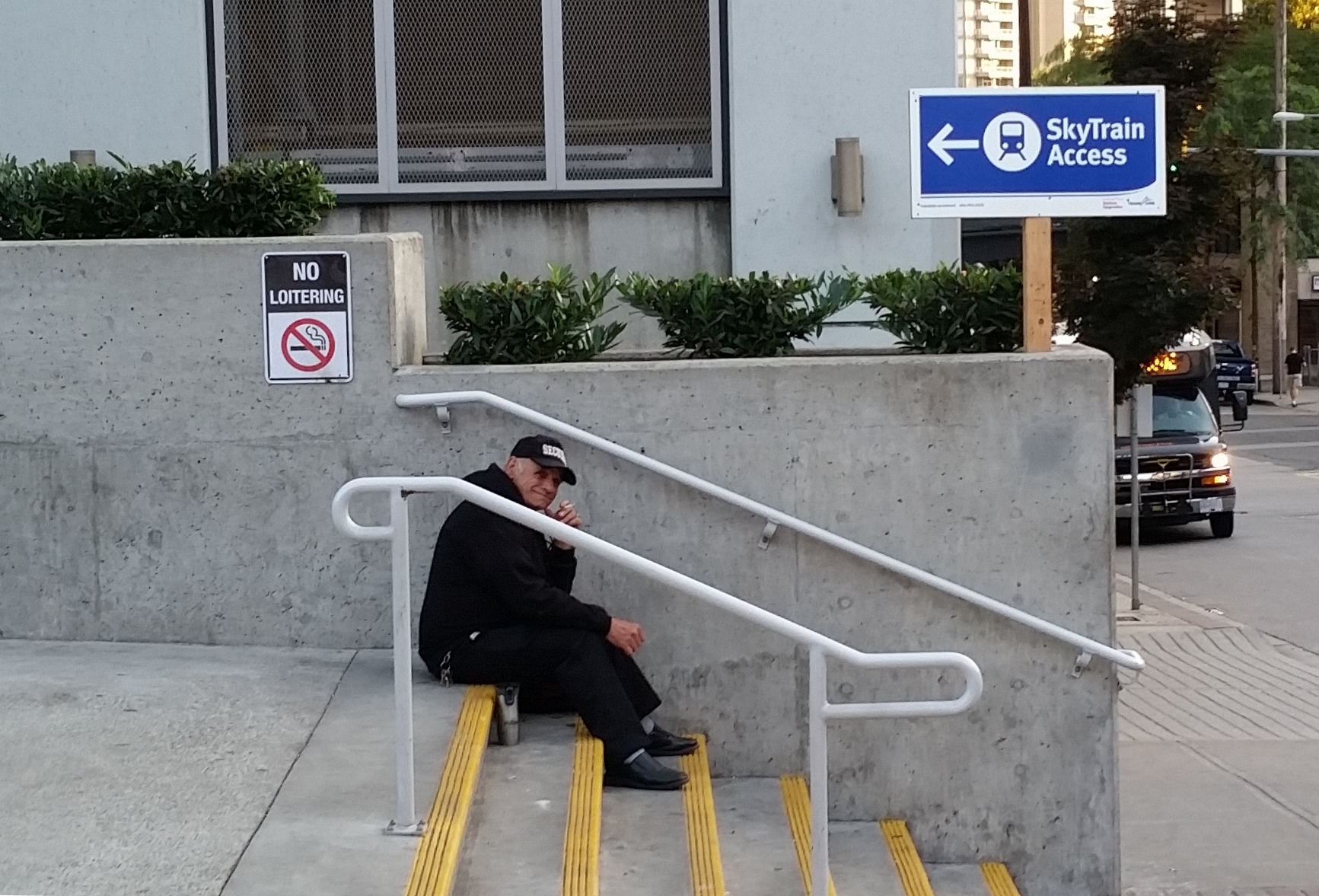
Now, the benches are gone. Metal fences have been installed to prevent sitting on one set of benches, glass wall installed ot prevent sitting on another. And in case you didn’t get the message, the ineffective No Smoking signs have been supplemented with No Loitering signs.

spikes
This concrete bench is no longer a place to sit.
glassstep
Similar to this space, which was once somewhere you could sit.
noloiter
And the sign is there in case you don’t get the message from the spikey metal.

Get away from me, kid, ya bother me.

I remember a talk I heard last year by Susan Briggs, a prof at Douglas College, who discussed the loss of the public realm. We have replaced the town square with the shopping mall, the playground for the McDonalds Playspace, the urban space for the corporate place. Cash-strapped governments are only too happy to have private industry provide the plazas, the parks, the gathering spaces that governments cannot afford to buy, develop, or maintain. This space off Carnarvon is a prime example. It is the only access from the public street to public transit, yet the space is private, and beholden to the rules of the owner. In this case, the owner doesn’t want smoking teenagers and other ne’er-do-wells hanging about.

transit

Actually, I as I went down to the area yesterday to take a few photos for this blog, I was approached by one of thee young toughs. He was not very polite in asking who I thought I was taking pictures and suggesting I might prefer a punch in the face. He was clearly posturing more than threatening, but the demonstration was pretty clear that this space is not a friendly one for many people.

20150724_184234

I’m the first to admit I don’t know what to do about this. I want the entrance to New Westminster to be a welcoming space. But I have two suggestions, one in the control of the City, one not, and both successful in other cities.

The first is soft community policing. I don’t want to be in a place where we send cops down there to bust skulls or push “the wrong people” (whoever decides what that means) out of public space in New Westminster. However, the presence of community policing officers downtown could make it a better place for everyone. Police on foot, talking to people, saying hello and just being present and visible without being threatening, can make a big difference to how people experience the space. But the balance is hard to find, and this approach needs to be very cautious around that balance.

The second (and more promising) approach is to activate the space. The best way to make loitering (the pejorative term) into lingering is to give people a reason to linger, making the space “sticky”. This can include introducing some interactive public art, blending the restaurant seating space with the pedestrian space like you would recognize in the Spanish or French streetscape, or adding buskers or events into the space. The go-to reference for this type of urban space activation is Jan Gehl, and his writings about the “human spaces” between buildings.

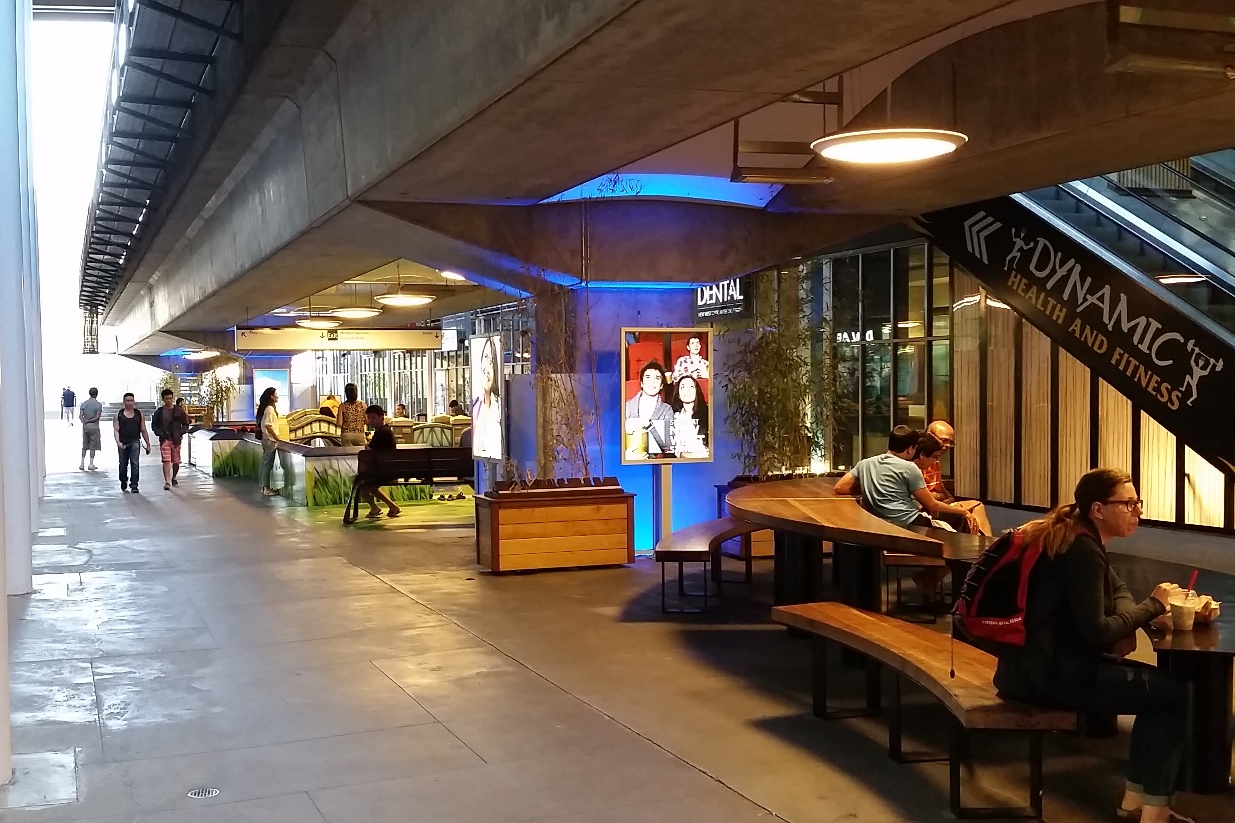
Nuggets of these ideas can be seen in the slightly half-hearted attempt of placing the chaise-lounges in the square when it originally opened. A surviving example is the kids’ play area under the SkyTrain in the middle of the plaza level of the Shops, which (despite the shadowy look and roaring trains) has managed to remain an inviting space.

playplace

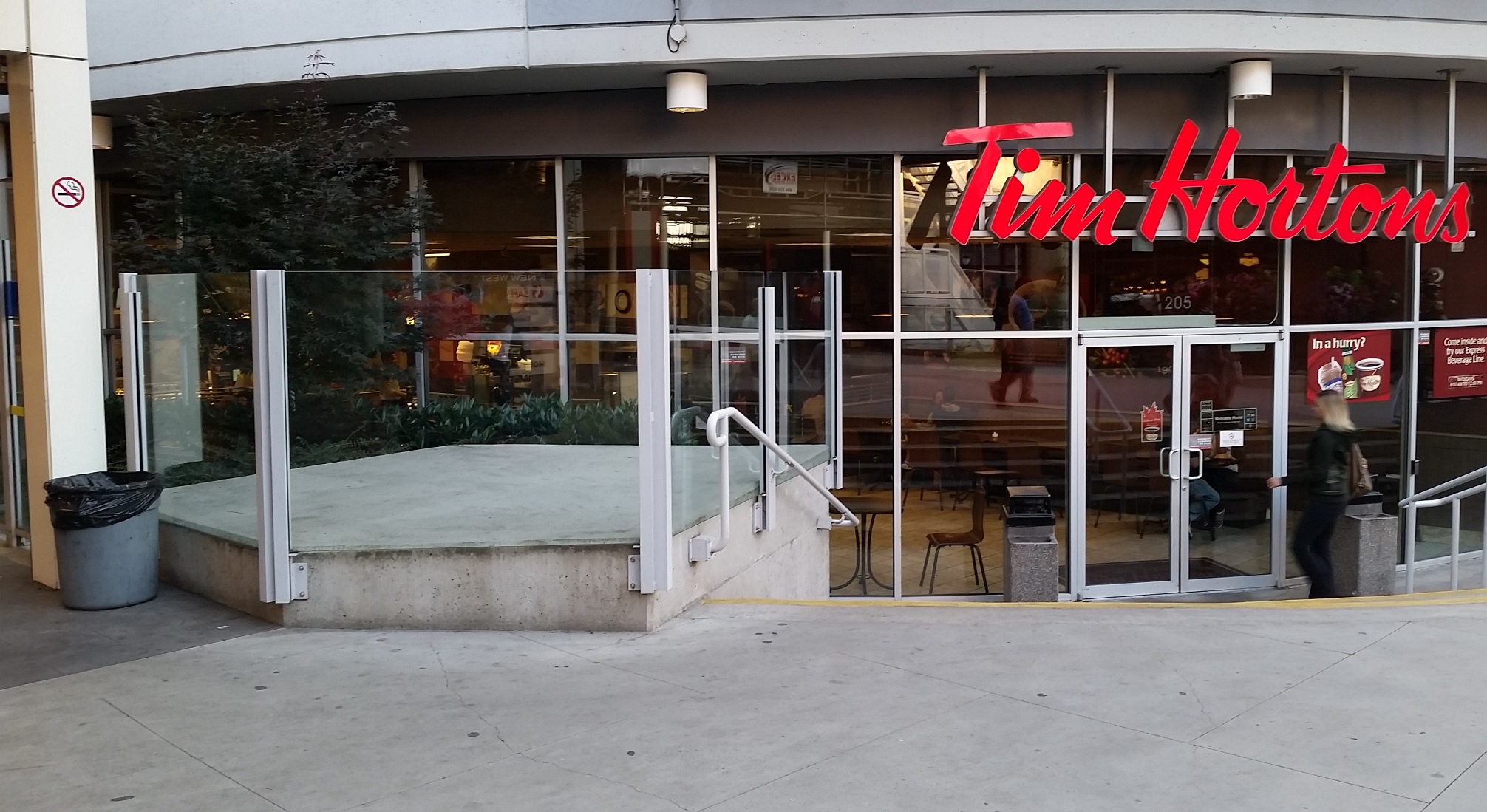
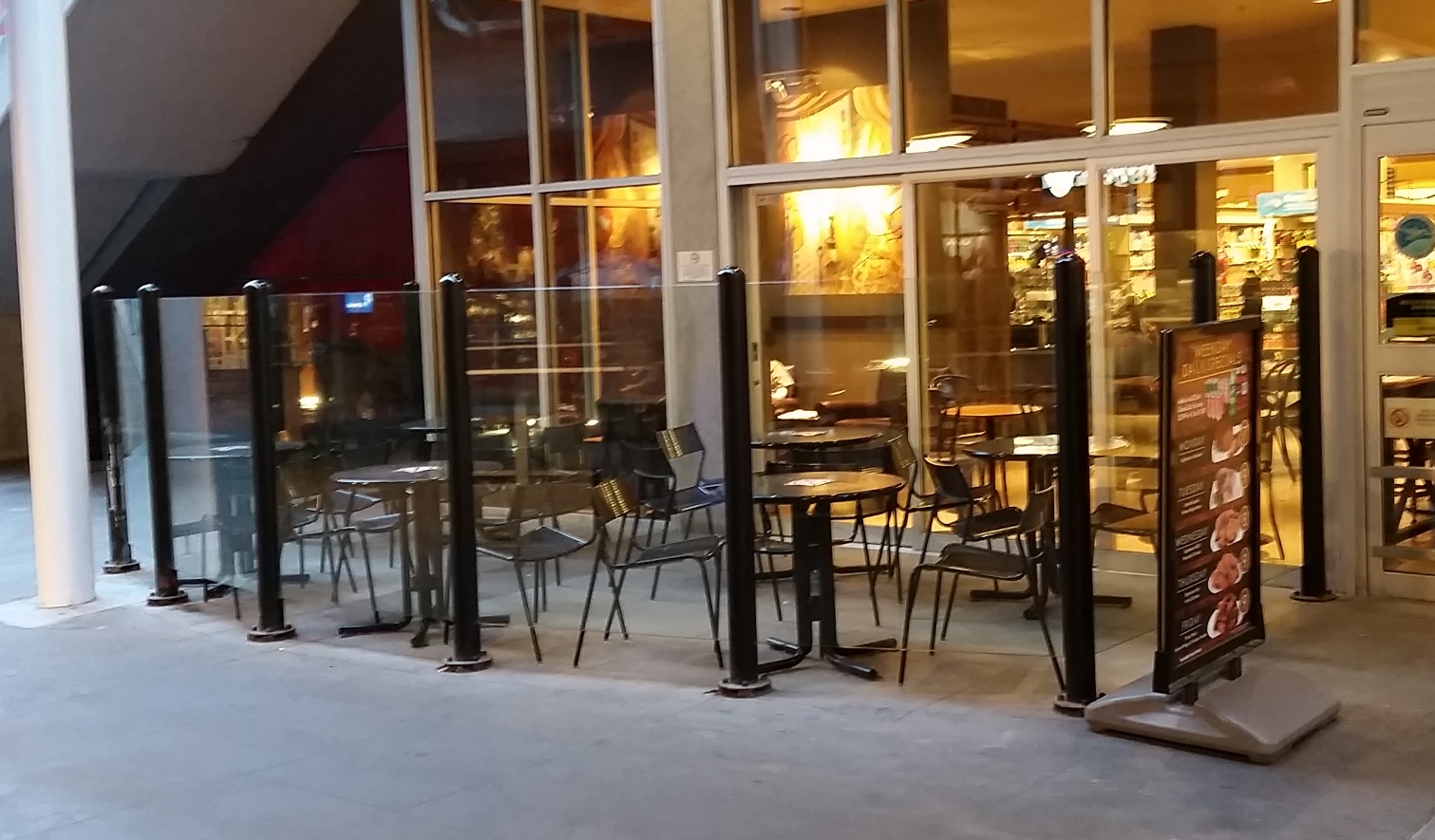
Unfortunately, the exact opposite of these ideas can be seen in front of the Safeway, where a “stickiness” opportunity is lost, and what could have been an active part of the public plaza became the best-defended coffee patio in history. What is the point of this glass wall? To keep people out, or in?

the cage

I’m not sure I know what type of “placemaking” can make this place more welcoming as an entrance to the City, but whatever it is, we will need to work with the owners of The Shops at New Westminster Station to make it work, because if it helps the City, it will help them as well. They need loitering for their businesses to be successful, and we want to be a City where people want to loiter.