A little idea around Daytime Savings

We all hate springing forward. This week is full of stories of people sleeping in, hating the loss of sleep, having to drag their kids out of bed for school. Let’s put aside for a bit the idea that we are so stressed as a society that losing as little as one hour of sleep causes irreparable harm to our consciousness…

Yet we all love gaining that extra hour of sleep in the Fall. So the problem isn’t daylight savings, it is the “springing forward” part. So let’s fix that.

I propose we move the March time change from 2:00am on Sunday to 2:00pm on Friday.

Think about it. Instead of losing and hour of sleep, we miss an hour of “wake”, effectively increasing our proportional sleep time over the weekend. And by doing it on a Friday afternoon, everyone gets a well-deserved hour off of work/school, and gets to go home 1 hour earlier to enjoy the longer days. What’s more, everyone is awake, so none of this being late for stuff because you forgot to change your clock when you went to bed. No need to change the “Fall Behind” part, as everyone likes more sleep, and showing up an hour early for something gives us all-important self reflection time.

I would even sacrifice Premier McSparkle’s just-in-time-for-election “Family Day” for this smallest of all mid-March vacations.

Tell your friends, tell your elected officials. You heard it here first. Let’s fix Daylight Savings for the good of society.

Trucks on Royal

This is an issue that bubbled a bit during the last election. Most notably, Council Candidate Vladimir Krasnogor raised the issue of heavy truck traffic on Royal Avenue throughout the campaign. The issue didn’t seem to have legs, though.

I used to live on Royal Ave and 10th: a great condo in a great building. Our first experience with Condo ownership was a surprising success, mostly because the Strata Council was proactive, with a few very sharp members who were able to manage the books and keep the ship running. The only downside of the place was intersection of Royal and 10th. The pavement was pretty beaten up, with a huge volume of heavy trucks causing the asphalt to ripple dramatically. Although the route is only a “daytime” truck route, it only takes a few scofflaw drivers to give people the impression it is a 24-hour truck route. Laden trucks grinding up Royal between 10th and 8th were bad enough, but the crash bang of (seemingly empty) container trucks rattling over the rippled pavement while racing through the intersection on the downhill route can shake you filings out, and that one-in-a-hundred jake-brake user during a quiet summer night paints all drivers with a bad brush, even from 20 stories up.

I sympathized with the folks at City Hall even when I was phoning to complain, yet again, about the guy in the Celeste green wood chip truck with the wailing brakes who drove down the hill, wailing away, yet again, at 5:00am. The City Bylaw Officers did what they could with enforcement, but it was an endless game of whack-a-mole.

What are you going to do? Trucks are necessary for the operation of our society. Royal is on the Major Road Network, and therefore Metro provides money to maintain it, and they are not likely to remove this route from the MRN unless viable alternatives are provided. I hear people at the Master Transportation Plan open houses talking about how “cut and cover” is the solution to all truck traffic issues, without acknowledging the costs and other logistical issues (not to mention the tradeoffs) that come with those types of hard, expensive, engineered solutions in urban areas.

This intractable issue has come up again, as part of the discussions around the Pattullo Bridge. Like many lightly-scabbed-over intractable problems, an off-hand comment from Matt Laird peeled it open again, and got me thinking about the problem in a different way. While looking at the various off-ramp designs TransLink had offered us for their new Bridge, Matt asked why trucks had to turn right onto Royal from the bridge. I’m not sure anyone in the room got what he was talking about, but for the last couple of weeks, that question has been stuck in my head like the baseline of “The Lion Sleeps Tonight”. There. Now it’s in your head too.

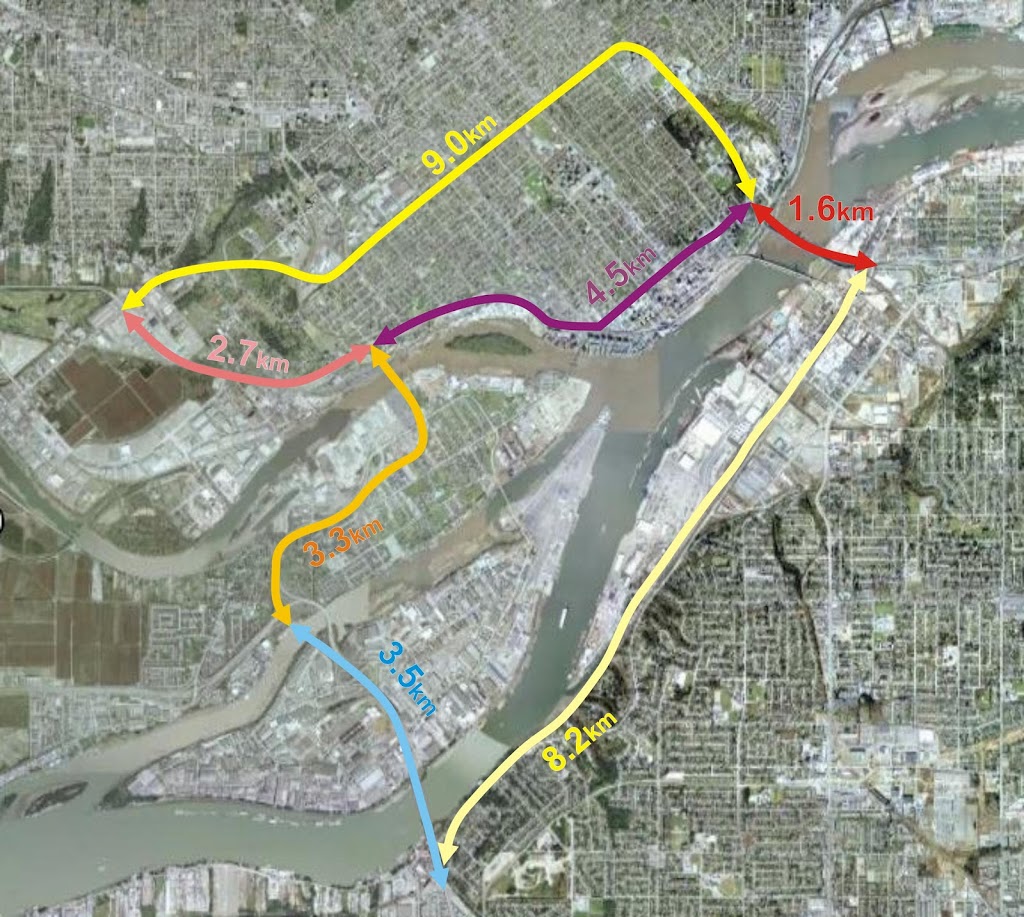
So I got thinking about the question, and came up with this handy little diagram.

This measures the distance between key points relating to truck movements around Royal Avenue. I’m assuming that the South Fraser Perimeter Road will be completed and the Pattullo Bridge (in whatever shape or format) will continue to connect to East Columbia and Royal near McBride. The numbers indicate the distances between the important node points. So the distance from 124th and King George in Surrey (the intersection of the SFPR and Highway 99A) to the north foot of the Queensborough Bridge via Royal is 1.6km + 4.5km, or 6.1km.

So let’s look at what options truck drivers have while crossing the Pattullo Bridge (for the time being, lets ignore the trucks that have specific business in New Westminster, and talk about the through-traffic only).

Arriving at the Hwy99A/SFPR intersection from any direction, any truck heading to the TriCities is pretty likely to take the Pattullo, as the asshats at MOTI have decided not to connect the two most expensive road-building projects in the Province (Port Mann 2 Hwy 1 and the SFPR) with an intersection where they cross. These trucks will therefore be forced to cross the Pattullo, take East Columbia, and get mired in the Brunette / Braid intersection and Brunette overpass hijinks. (note, the UBE would definitively NOT have solved this problem, as the trucks want to get to the 8-lane Lougheed or the 10-lane freeway, not to a driveway-laden 4-lane service road through big box retail and casino entertainment hell)

Trucks heading to the northwest will typically stay on 99A up McBride. The only trucks taking Royal would be those heading west to the Queensborough Bridge intersection: the aforementioned 6.1km trip. If their destination is along Marine to points west, the logical alternative is to continue up McBride to 10th, then go down Southridge Drive to Marine at Byrne Road: a trip of 10.6km, which is only slightly longer than the Royal route (which is 8.9 km total). If their destination is the East-West Connector, then their option is the SFPR – Alex Fraser route, which is 11.7km compared to 9.4km along Royal. Considering the SFPR route will all be separated freeway, and not involve stop-and-go traffic lights, even most destinations in Queensborough might be better serviced from the southern route.

Now what about trucks coming from the E-W Connector? The only reason for them to use the Pattullo is to access the TriCities if they choose the longer Alex Fraser – SFPR – Pattullo route, which is quite a bit longer (13.3km) than the Stewardson – Columbia route (7.8km), so not likely. More importantly, if their destination is south of the River, they might be best off to cross the Alex Fraser right away, as they will get to Surrey sooner (11.7km of freeway vs. 9.4km of City streets), so no Pattullo access needed at Royal.

Coming from Marine Drive, the only reason for trucks to use the Royal-Pattullo route is to get to Surrey, and Royal is only one of the three options (Royal is 8.9km, 10th and McBride is 10.6km, and Queesnborough is 17.7km).

So again, except for local traffic, why do trucks need to be able to access Royal from the new Pattullo? Is a 10% longer route along less-restricted roads faster than a shorter route with hills, stoplights and commuters?

I guess one point to take out of this is that we need to understand the ultimate routing of these trucks, in order to service them adequately, not just whether a truck is “local” or not. If only 5% of the trucks are using Royal Avenue because it is a significantly better routing than any alternative, but because of that 5%, we build Royal into the quickest route, then that will attract trucks off of the alternative routes that are only slightly longer. We also have to ask the hard question: is accommodating those 5% of trucks worth the cost to the livability of our City?

These questions require better data to answer. As does the “local truck question”: are there better alternatives to service the trucks whose destination is New Westminster, separate from the through-traffic? Remember, “truck routes” only apply to through traffic (trucks with local business are not limited to these routes, but can use service roads to access businesses that are not on truck routes).

Maybe Matt and Vladimir are right – maybe it is time to start talking about taking Royal off of the MRN. Could such a move be timed to coincide with the opening of the SFPR? Would such a move put the Pattullo replacement project into a new light?

Queens Park Master Planning

I love Queen’s Park. Not the neighbourhood I can’t afford (although that is very nice), but the Park itself. Sitting in the beer garden during Hyack, jogging the Centennial Trail during my occasional brief forays into fitness, walking though the hazy park after midnight on my way home from the Curling Club, even the occasional NWEP open-air meeting during the summer. Just looking at New Westminster from space (via Google), it is the square rectangle of green in the middle of Urbania that sets the geography of the City- even as it contrasts with the angry sharp finger of green that is Glenbrook Ravine.

It is the contrast with Glenbrook Ravine that speaks to the meaning of the word “Park”. The word is used to describe any generically green space in a urban environment, or otherwise protected space in other environments. There has always been a bit of dichotomy between park space being “preserved”, or set aside for nature, and park space being “programmed” for human appreciation of nature. Look at the protests about a rather innocuous walkway in Jasper, or the “No National Park” signs throughout the Similkameen Valley for examples of the conflict between how “Park Space” is valued or not by groups in our society.

Glenbrook Ravine is a pretty wild place, all trees and brush, a green sanctuary for flora and fauna (and overrun by invasive species), where few people wander off the one or two trails. In contrast, Queens Park has seen 125 years of poorly-planned development, the result a criss-cross of playing fields, paved and unpaved trails, parking lots and buildings. Even much of the Green Space is not actually plants, but painted plastic.

The City’s Parks and Recreation Department recognizes that much of the development of the park has been rather ad-hoc, with little long-term planning. So they are looking at changing that, and are launching a Queens Park Master Plan process, to make sure the park’s utilization is optimized in the future.

Much like the Master Transportation Plan, this process is going to take a few months and involve various steps and lots of public consultation. This first step for public input is this coming Saturday, with an “Ideas Event”.

Parks and Rec are encouraging everyone to come out an provide some ideas about the future of Queens Park – what do you like or not like about the current Park? What do you want osee happen to the park?

I have my own loves and hates with the park. I think the long-term preservation and management of the Really Big Trees is important for all sorts of reasons. I am less particular about the rest of the manicured gardens: I know the Rose Garden has a proud tradition, but I would love to see an area dedicated to the growing and preservation of important threatened species of native plants.

Upgrading the driving and parking areas to make them a little more, uh… “park like” would be a nice. Unfortunately, the area between the Stadium, the Arenex and the Arena is a pretty dismal asphalt jungle now, and that is (for many people) the first impression of the park that people get.

The Parks works areas are also a little disappointing in a setting as beautiful as Queens Park. The entire fenced-off maintenance areas both disrupt the park-like setting, and make wandering around the park less pleasant. I would add the petting zoo area to this list of strange disruptions. Again, I may be in the minority here, but I think the petting zoo concept is an idea well past it’s prime.

I like the idea of the Bandshell more than I like the actual Bandshell. Having enjoyed great concerts at the Malkin Bowl and Deer Lake Park, I can’t help but think we need a better outdoor venue in New West. Maybe the Bandshell just needs and upgrade, or maybe these types of events will move to the new Pier Park?

The picnic areas are so well used in the summer, that it is sometimes hard to find a spot unless you book well ahead. I think a few other less-structured sitting-and-meeting spaces could be integrated all around the Centennial Trail.

I think the Stadium is spectacular and under appreciated for its setting. I wish I had more reasons to go see Games at it (oohhh… imagine a Single-A baseball team?!? Line me up for season’s tickets!)

Ultimately, I don’t think Queens Park needs any radical changes, but subtle upgrades as the aging infrastructure is being replaced. As population density to the east of the park goes up, and property values to the west stay high, there will be more demand on Queens Park. At the same time, the new Pier Park may draw a lot of the picnic and other “programmed” uses away. Connecting the two via greenway trails, including the upgraded trails through Glenbrook Ravine, would make a nice connected green region of the City… but maybe I’m dreaming now.

the Dollar Store Debate.

OK, I will wade into it.
This was touched off by a minor local Twitterstorm last week, when some lamented the opening of yet another “Dollar Store” in New Westminster. Some had the temerity to suggest that miscellaneous discount crap fresh off the container from East Asia was not a product category of which New Westminster was suffering paucity.

Ever-opinionated, usually correct, and fiercely local Twitterista Jen Arbo was quoted in the Record lamenting that this was the best our local retail environment could offer. The counter argument being, I guess, all hail the free market and the entrepreneurs for which it stands. I have to count myself on the Arbo side of the discussion, but had little to say on the issue. I don’t go into Dollar Stores, because they have nothing to offer me, although they apparently offer something to others: go, go, free market!

Then I noticed the Record article quoted a New York Times article thusly:

“We are awakening to a dollar-store economy,”

…and I shuddered. I cannot think of a more damning lament for our economy, or for our society. No I gotta comment.

This “Dollar Store Economy” is one where the retail environment is dominated by bountiful cheap choice. If you cannot find the quality or the features you want, that is offset by the remarkable affordability of what you don’t want. As the times article points out, it is the “Luxury of Quantity”. Tired of crappy stuff? Here is some more crappy stuff. This is the foundation of the economy that makes Wal-Mart the largest retail business in the world, and IKEA the largest seller of home furnishings in the world. This is the philosophy that brings us 5000-square-foot plywood McMansions in neighbourhoods without sidewalks, straining the City’s ability to provide basic services, while the homeowner laments outragrous 2.5% property tax increases. This is the philosophy that makes it profitable to burn the crap we import and pay a dollar each for more when we find a more pleasing colour the next day.

This also creates the market condition where it is difficult to shop in New Westminster if you want to shop locally and support the local economy. Outside of Wal-Mart, there is no place to buy sporting goods in New Westminster. We have two very good bike shops, but not one place to get a decent selection of running shoes. We host the Canadian Lacrosse Hall of Fame and one of the greatest Lacrosse teams in the history of the sport, but you cannot buy a lacrosse stick within our 15 square kilometres. The same lament for people trying to buy office supplies, gardening equipment… the list goes on.

The big-box merchants at our periphery provide a dizzying supply of low-quality replacements for all of the above. Think about it: one sure way to tell you are not an aficionado of something, but are merely a dabbler, is when you find yourself buying supplies for that thing at Canadian Tire. People who race bicycles (or even commute seriously on them) don’t buy tires at Crappy Tire; barbecue experts are not going into Home Depot to peruse the latest offerings from Broil-King; professional Graphic Designers are not picking up art supplies at WalMart. All for the same reason: these businesses sell crap for the masses who don’t know better (which also explains why I buy car parts at Canadian Tire, I guess).

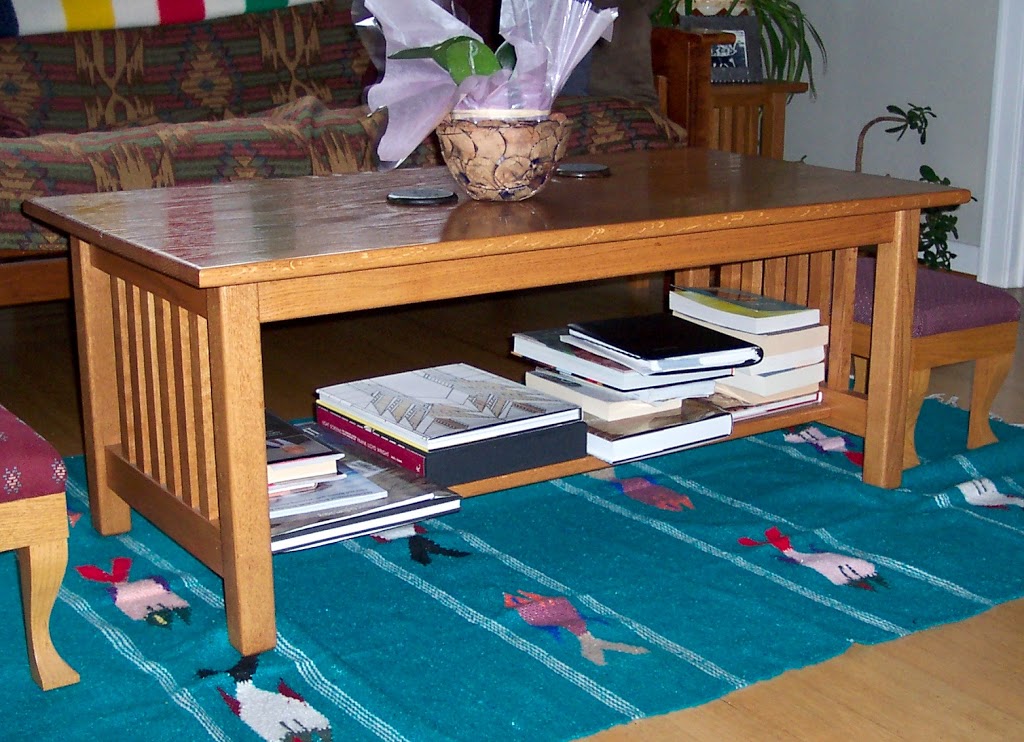
Which brings me to my favourite example of the unseen cost of cheap goods. Look at the coffee table in this picture:

It looks pretty non-descript, if boring. We bought it about 10 years ago from an Amish guy when we were living near Amish Country in the Mid-West, so it is hand-made of real locally-sourced hardwood. Real joinery, too, the thing is built like a tank. Barring housefire or natural disaster, this is probably the last coffee table I will ever own. But the wood was local, made by a local artisan, and we bought it right from him: cost us about $150. I seriously think this is the last coffee table I will ever buy in my life. In that sense, it is similar to the $80 solid wood cutting board I bought from Louie at the Royal City Farmers Market. Well built, local, durable.

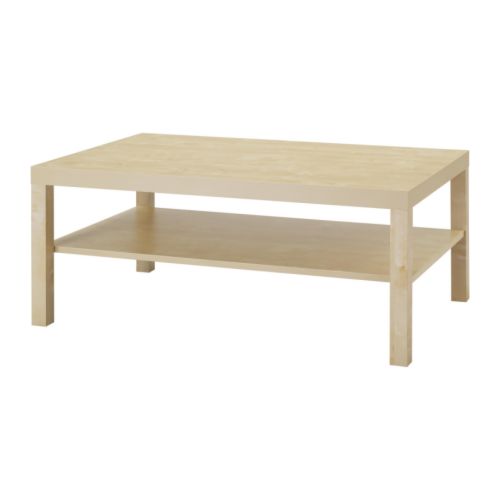
Now there is another way we could have gone. Drive down to IKEA, and see what they have to offer. They have a very similar coffee table, for about a third of the price; what a bargain. It is, of course, made from a compelling blend of particle board, fibreboard and plastic, wrapped in a provocative envelope of Melamine foil and acrylic paint. It is packed 3 inches flat in cardboard, with Styrofoam and plastic film, and comes with a little 4mm hexwrench to put it together.

But how long do we anticipate before the $50 coffee table starts to look tattered around the veneer edges? How long until those 4mm hexwrench fasteners start to wiggle loose in their particle board sockets, of the fiberboard shelf starts to sag? How long before this coffee table is headed for the landfill and another trip to the IKEA is required? 3 Years? 5 years? Then try to imagine how much of that $50 stayed in the local economy? The guy who sold it to you spent 3 minutes punching in the purchase, and gets paid $10 an hour. Your proportion of the money spent by IKEA that day in Coquitlam might total 10% of that purchase, and some of that will be eaten up by the landfill costs of the packaging…
That is the promise of the “Dollar Store Economy”: more cheap shit, sold by the lowest bidder, brought to you by mass production overseas, with no local content, and little contribution to the local economy, except what we can squeeze out in the form of taxes (with the resultant whining about how taxes are hurting “competitiveness” of business).

So thanks Jen Arbo, for running a local businesses that helps other local businesses succeed, and for all your work at the Royal City Farmers Market, bringing local goods directly to local consumers. You might not have thought about it this way, but you have been fighting against the forces of the “Dollar Store Economy” before you ever piped up in the Record.

Goodbye Green, Hello NWimby

Please excuse me while I engage in some meta-blogging.

Things around here are going to change a bit. I have been blogging as “GreenNewWest” for almost two years now, but I actually started blogging before that as a way to keep in touch with friends and family back home while travelling, something I continue to do at T’N’PotR .

Clearly, I didn’t put a lot of thinking into where this blog was going, or about the actual process of blogging, when I got into GreenNewWest. The choice of Blogger was make quickly, as it was free and easy. I didn’t want to waste time learning new software or interfaces, I just wanted to write. The same detailed consideration was taken in choosing the Blogs name. I literally went into Blogger, decided that no-one was going to read “Pat Johnstone.blogspot”, and that good names like “google” had already been taken.

My initial intent of this blog was to talk about New Westminster, politics, and the environment from a scientific viewpoint. This made sense as, at the time, I was fully immersed in the New Westminster Environmental Partners, I was getting into my new job as an Environmental Coordinator, and I was becoming more involved in local politics. To define my politics at the time into a simple category, “Green” seemed to fit the best, and “GreenNewWest.blogspot” was available. Design a banner and Bob’s Yer Uncle.

In hindsight, If I knew I was going to do this for more than a few months or weeks, or that anyone other than my Mom might read this, I might have put more thought into those initial steps, but I didn’t, so here we are. Hearing my blog name mentioned during a City Council meeting by someone who was clearly neither me nor my Mom, got me thinking: If I’m going to keep doing this thing, I gotta make it mine, no borrowed labels. Therefore a name change is in order.

Why change? Part of the problem is that “Green” is one of those words that acts like baggage: makes life easier at first, people can figure out where your niche is.  Eventually any niche just slows you down. The word “green” is so loaded with preconceptions and alleged linkages, that it seems to define the viewpoint before it is expressed. I didn’t vote for the Green Party last election (although I do think Elizabeth May is doing an excellent job in Ottawa, and is punching well above her weight hitting issues that the other opposition parties are missing, mostly as they stare inwards during their respective leadership races). If you mention “Green” to anyone who doesn’t immediately make the Green Party or Greenpeace association, they will think either of money (if they are over 40), or pot (if they re under 40).

Forthe record, I quit smoking pot years ago, and all my money is tied up in a mortgage on a 70-year-old house (its kinda small, a little sketchy, and pretty old, but I can almost afford it…)

I also want this blog to continue to explore parts of my life here in New Westminster that are not necessarily “Green”. Even for an environmental scientist, environmental coordinator, and environmentalist like me, putting a Green spin on every story gets tiresome. Sometimes, I just want to talk about my back yard.

“NIMBY” is a term commonly used to describe many environmental arguments, an acronym for “Not In My Back Yard”.

Like scare tactics based on complex conspiracy theories and logical fallacies, the NIMBY approach to environmental issues is one I try strenuously to avoid. Some local issues such as the United Boulevard Extension and the burning of Metro Vancouver trash can easily fall into NIMBYism, but I have always tried to make it clear that what is good for my gander is good for others’ geese. Moving the Metro Vancouver incinerator to Crofton does not end my opposition to the idea of burning trash for profit. It is precisely other municipalities’ successes with limiting the growth of automobiledom that encouraged us to say no to UBE, and in the end, I wanted to see the UBE money spent on real, sustainable transportation improvements (like Evergreen, or Rails for the Valley) even if they are not in New Westminster. I am a lot of things, many of them irrational, but a Nimby I’m not.

Ultimately, New Westminster is my back yard, but so is BC, from the Gulf Islands where my In-laws live to the Kootenays where my Parents live – I spend a lot of time in both places. And I like to travel to futerher off areas. I also recognize that everything I do in my literal back yard – that 1,500 square feet where my compost and my green cone and my fig tree and my carport are – impacts the City, the Province, the Country and the World, just as the rest of the world impacts my back yard. This is why we “act locally and think globally”.

So, as of now, GreenNewWest is no more. Bring on NWimby.blogspot.com , because New Westminster Is My Back Yard. (I’m thinking the “W” can be silent in acronymic conversation.)

Clearly, I am no internet whizz, so hopefully, if you go to GreenNewWest it will prompt you to come here instead. I moved all of the GNW archive over here, so you can still scroll through and search the horror of my past, but of course links and such probably get screwed up, and your links will probably need updating. Maybe a year from now, if I’m still here, that won’t be such a problem, but until then, thanks off the patience, and update your links.

All Pattullo, all the time.

I missed my first NWEP meeting in a couple of years to attend the TransLink Pattullo Bridge consultations in Surrey. I stepped back and did not take part in the “consultation” part (TransLink got a page full of notes from me at the New West meetings, let them hear from someone else for a change), I really just wanted to see how the other half lived, and get a sense of what the mood is on the Surrey side of the River.

Exposing my cultural biases, I walked into the meeting assuming that people in Surrey were all for the bridge, and the bigger and more toll-free, the better (which seems to be the position of their Mayor). Instead, I found there was a lot of diversity of opinion in the room. Admittedly, there was more discussion of getting rid of traffic lights in favour of onramps and overpasses in Surrey that I heard in any New Westminster meeting, but there were still a lot of people concerned about the need for the bridge, and the impacts on their community of yet another major highway expansion. Perhaps this should not be surprising, as these people are currently watching the installation of South Fraser Perimeter Road in their neighbourhood – highway expansion is not a hypothetical to them.

One of the issues I heard a lot of (that was new to me) was the encroachment of industrial and commercial development in the Bridgeview Neighbourhood. There are a lot if single-family homes in the area between King George Highway and the new South Fraser Perimeter Road, and the residents are feeling squeezed by the commercial properties along King George, the industrial lands to the east and west, and the new truck route to the north. One resident of 124th was concerned that the proposed expansion of 124th to accommodate truck traffic linking the SFPR to King George was going to bring trucks through the middle of this neighbourhood, and within 20 feet of his house. His house is built on “60 feet of peat bog”, and every time a truck drives by now “I get shaken from one side of the sofa to the other”.  Naturally, goods movement through his front yard does not seem like a good idea to him.

For many Bridgeview residents, the “Upstream” vs. “Downstream” question, which I kind of made fun of for the New Westminster side as an example of a completely irrelevant question, is not at all irrelevant. Downstream means the bridge will extend over a small area of waterfront park space (a limited, and therefore valuable, commodity in Bridgeview), but the Upstream option will move the elevated parts of the bridge closer to their homes, potentially increasing noise and view impacts.

Another thing I learned is that TransLink is actually listening. Many of the issues raised by residents in the first consultation in New Westminster two weeks ago are now being brought up by TransLink during the introductory discussions. This has even resulted in more complete answers being provided to address some of the uncertainties I raised in my earlier posts about this project.

And example is more detailed explanation of the 6-lane bridge decision. Frankly, I still think the “increased safety” argument is a red herring, but the argument for 6-lanes is more fleshed out now with discussion of the business case made back in 2008, and subsequent reviews of the business case. It would be great if the metrics of those analyses were available on the consultation page. Especially as I heard one interesting discussion at this event about how the value of the existing bridge was assessed.

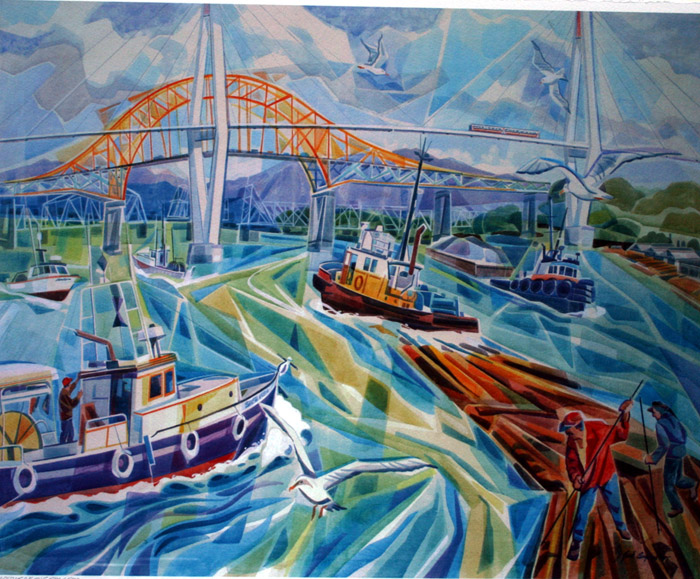
I had something like this question bouncing in my head recently, but I didn’t know how to frame it. Luckily, one of the participants in Surrey was very eloquent on the idea (more than I will be in this paragraph): what about the social and economic value of the existing bridge? Like it or not, the Pattullo is an iconic structure, a steel arch-span bridge similar in age, height and length to the Sydney Harbour Bridge (though less than half as wide). It’s arch has loomed over New Westminster for 75 years: the same age as the Lions Gate Bridge and the Columbia Theatre – two structures of which no-one would argue the heritage value. Surely this has a socio-economic value to the City, and to the region. If Translink wants to replace it with another dull, cookie-cutter, concrete cable-stayed bridge built by the lowest bidder, what value is lost? Honestly, I don’t know how we estimate that value (or if we can), but this is a question that a City that prides itself on its Heritage Values needs to address: What will New Westminster look like without the Pattullo?
?

Thank You Jack Campbell!

? Another interesting question was raised by one of the participants at the tables rising from the data provided by TransLink. If the daily truck volume is 3,000 and the daily vehicle volume is 60,000, then less than 5% of the volume is actually trucks. 20 cars per truck. So why are we building a 24-hour dedicated truck lane each way? How much do we anticipate truck volumes growing? 3,000 a day is only 1 or 2 each way per minute. This seems like a lot of extra money for very few trucks. Or more frightening, does TransLink think the increase in trucks will be much, much larger? What impact will this have on New Wesmtinster?

Maybe I am getting mired in the details too much, and am missing the fundamental point here; and if so, perhaps TransLink is doing the same thing.

At all of these consultations, I have had friendly chats with TransLink Roads and PR staff, the consultation team from HB Lanarc Golder, and the representatives from the engineering firm that provided the conceptual design work. All of them say the same thing: we need to build a bigger bridge because traffic volumes are going up. Some people in the room disagree with this (as do, apparently, some members of New Westminster Council). So perhaps TransLink should not have sent their roads guys to come and consult with the City of New West on the topic of offramp shapes, but should have sent the Policy Guys to come and discuss the need for a bridge.

Perhaps the fundamental question we need answered is this: What is Translink’s Mandate? Is it to create the transportation system that people want, or that Kevin Falcon wants? Or is it to set transportation policy for the region? I always thought the latter, but the Act seems to suggest they carry both responsibilities. If so,  shouldn’t the Policy part come before the building part?

TransLink’s policy document right now is Transport 2040. So before they send people to New Wesmtinster and Surrey to talk about offramps, they should come to our communities and have a discussion about how Transport 2040 fits our local conditions. Then we can talk about the type of bridge to build. As it is, building an expanded road bridge while Surrey and the Broadway Corridor wait for their long-promised mass transit investments seems to be a demonstration of a policy very diffrent than laid out in Transport 2040. 

Michael Mann in Vancouver

As part of the AAAS meeting in Vancouver last week, Dr. Michael Mann gave a talk for the Pacific Institute for Climate Solutions. Not this Michael Mann , but this one.

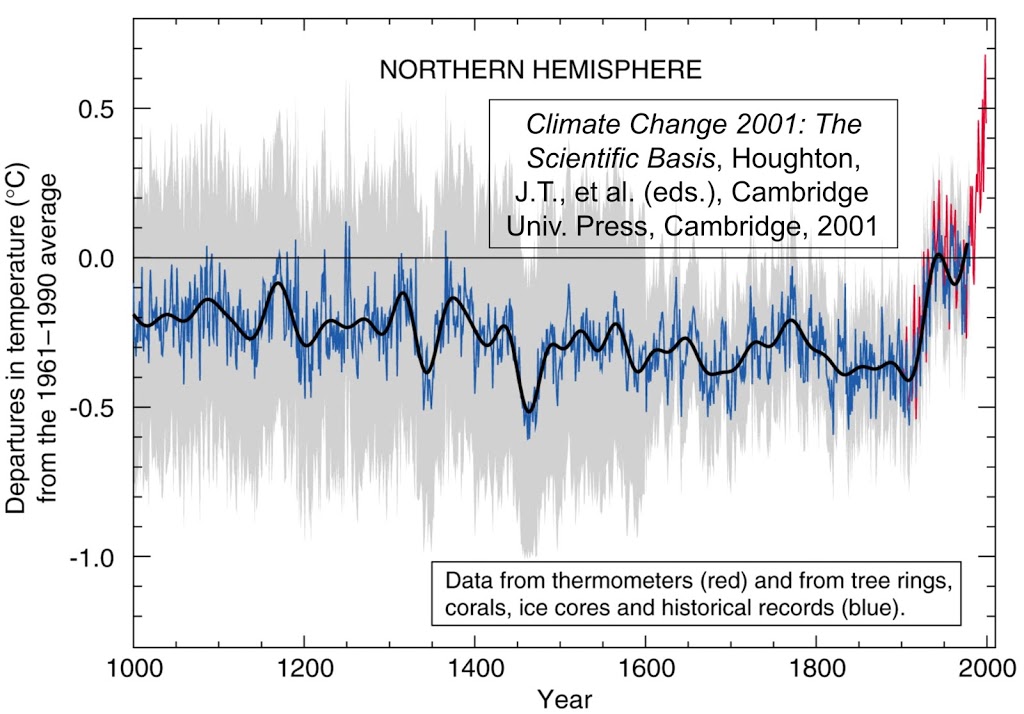
You could Wiki this, but the short Bio is thus: Dr. Mann is a geophysicist and geologist who worked with a team of scientists who used a variety of proxy climate indicators (tree rings, coral growth patterns, ice cores, stalactite layers, etc.) to measure climate over the last 1000+ years. turns out the graph showed a sharp rise in temperatures in the Northern Hemisphere over the last 100 years. The graph was compelling enough, and the data robust enough, that I was included in the UN’s International Panel on Climate Change Third Assessment report.

Around that time, one of Mann’s co-workers used the expression “hockey stick” to describe the curve on the graph, borrowing the nickname from an older graph of atmospheric Ozone made by other scientists 20 years ago during another global atmospheric debate.

The graph was such a stark image, displaying our current situation in such clear terms, that is simply could not be left unaddressed by those who see Anthropogenic Climate Change as some sort of conspiracy.

Included in those people are several Canadians: Steve McIntyre ( a retired mining engineer) and Ross McKitrick (an economist) tried their hand at Climate Science and wrote a paper in a a fake science journal claiming the graph was the product of flawed science, and the battle for “Mann’s Hockey Stick” was on.
From the beginning of his talk, it is clear Dr. Mann is exactly what you would expect: a science geek, and a reluctant public figure. His speech was not polished or slick, the images not particularly compelling to a non-science audience, but it was an entertaining talk about how one guy doing proxy climate measurements can somehow become an enemy to some, just because he collected a little data on a topic that would become a political football.

In the last 10 years, this PhD Geologist who spends most of his time counting tree rings and teaching Earth Systems Science at Penn State, has had his e-mails stolen and publicized, Has been summoned to congressional hearings, investigated by his State Attorney General, been subject to academic kangaroo courts at his university, and accused of everything from perpetuating the “greatest hoax in the history of science” to outright fraud. Numerous investigations later, no-one has found any evidence of fraud or scientific misconduct.
But that doesn’t even matter, because one thing none of the people criticizing the “hockey stick” have done is collect any data that refutes it. They have instead spent so much energy and time trying to cast doubt on the veracity of the “hockey stick” that they have failed to acknowledge that there is an entire hockey league of sticks that are the same shape: measured atmospheric anthropogenic CO2, sea level change, ice extent, ocean temperatures, the list goes on.

In the end, Michael Mann is still a reluctant public figure (partly evidenced by his reluctance to take legal action against the people slandering him: he would rather just do science and find solutions). All he can do is keep reporting what he and other people doing the actual science have found. The scientific case is relatively straightforward; the greenhouse effect has been known for two centuries; we know human CO2 numbers are going up, and we know it is anthropogenic; we know earth has warmed more than 1 degree C over the last 100 years,and the trend is up. if you choose to ignore the thermometers, there are literally dozens of other lines of evidence: surface temps, permafrost loss, ocean stratification, and numerous observed biophysical reactions consistent with rapid warming. combine this with a distinct paucity of evidence against the trend, and it is remarkable anyone is still debating this.

The final point was one I have heard a lot recently: this is no longer a scientific debate, it is an ethical one. We need to make the ethical decision of whether we will burden the next generation and the one after with the unforeseen consequences of what we are doing today in the interest of Business as usual”. However, that’s s not a scientific question, it is a philosophical one. Once science has provided the data, what you do with it is not up to the Scientists.

Mann was quick to point out that the issue is not, as some suggest, the “politicization of science” (inherently, science is immune from politics, as its self-regulating mechanism will win out in the end), but the “science-ization” of politics, where a political position or immediate pragmatic need of a political group is mistaken for a scientific fact.

To beat this, we may need more reluctant scientists like Mann to take a more active part in the popular media, and provide the factual information we need to make rational decisions, informed by our ethics.
It’s the best hope we have to get past this strange, anti-science phase we are in right now in North American society.
Which is kind of what I think Neal Stephenson is getting into here:

Pattullo and the City

Having attended both New Westminster workshops on the Pattullo Bridge Replacement being held by TransLink, and being on the Master Transportation Planning (MTP) committee for the City, I noticed there is a o lot of misunderstanding about what the City’s position is on the TransLink process, and how the City’s MTP process fits into that.

Big caveat here: I am but one member of the Master Transportation Planning committee, representing the Advisory Committee on Transit, Bicycles and Pedestrians. The MTP committee has 20+ members from various City committees and outside agencies, and is only one part of the entire MTP process, being run by City Staff and outside consultants, under direction from Council. Therefore, nothing I say here is in any way the official position of the MTP committee, City staff or Council, or anyone else other than me. It is, however, based on what I have heard said at various official meetings and unofficial conversations with staff and council.

At the TransLink meeting at the Quay on Thursday, I talked to School Board members and several other people in the community who are usually very much in the know, and I found myself trying to explain what the relationship between the MTP and the Pattullo Bridge consultation is. Unfortunately, it has been cast a bit in the media that New West is once again being obstructionist, engaging in Nimbyism, refusing to take part, and being generally petulant spoilt brats. This despite the attempts by City Council and TransLink to broadcast that this is not the case.

So I am going to presume to interpret how the City sees this process happening, based on conversations at the (public and open) MTP meeting and with City Staff and Council members (so interpretation ahead: Staff or Councillors please correct me if I am off the mark here!)
I don’t see New Westminster missing the boat at all here, but I see the City taking a pragmatic, responsible and measured approach.

The first thing you need to keep in mind is that this round of consultations on the Pattullo is the first round of a very long process. TransLink will be taking the results of this consultation (preliminary design characteristics) and then entering an “operation analysis” phase. The preferred design out of this process will be tested at both ends for everything from how it manages traffic flows, how it fits the existing traffic patterns, how bikes and pedestrians will be accommodated, etc., etc. TransLink will also start the (potentially lengthy) joint Provincial and Federal Environmental Assessment process. Both of these steps will include significant public consultation and discussion. Then they will have to deal with the financing model, hiring a concessionaire, negotiating land swaps, etc. Even after this initial consultation, TransLink is at least 4 years from any shovels getting into any ground, and at least 3 before we know whose shovels it will be, and where they want to put them.  In other words: there is no rush to provide all the answers right now.

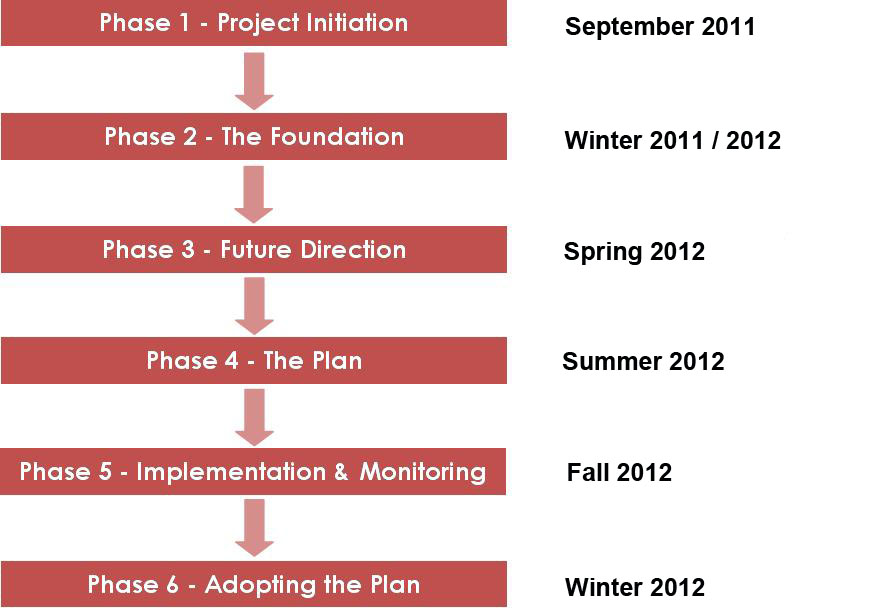
As for the City, they are updating their Master Transportation Plan, last completed 13 years ago. The MTP process will take about another 12 months. If you look at this diagram, it shows the steps for the MTP:

The City is currently completing Phase 2 (information gathering) and is about to embark on Phase 3. That is the phase where the City looks at where it is today, transportation infrastructure-wise, and determines what the Goals, Values, Objectives are for the coming decade or two. It is the big “visioning stage”. In a couple of months, after some public and stakeholder meetings, and likely workshops, the City will come up with a set of Values and Goals that define what type of transportation infrastructure the community wants to see in the foreseeable future (and in this case, by “the community”, I mean the residents, the businesses, the staff and the elected officials; everyone involved in the MTP process).

Then, when those Values and Goals are determined and formalized, the City will be in a position to approach TransLink and say: “Here you go. Make your plans address this”.

I don’t think there is yet a concrete idea of how that discussion will take place: will there be public consultations? Will the City report out to TransLink or do a joint consultation and reporting? No idea., but the point is that the City will take a bit of time right now to get a better understanding of that the community of New Westminster wants in a transportation system, then they will be armed with that knowledge when they go into negotiations with TransLink on how the bridge they want to build fits those parameters – or if it can even be made to fit them.

In the meantime, TransLink will be continuing to work on their process, but New Westminster will not be missing any boats here. We will be through that Phase 3 work in only a few months, TransLink will not likely have any operational plans in place for a year. When the MTP is at a point where useful data is available for TransLink, TransLink will be in about the same position as they are now. More importantly, TransLink knows and understands that this is the route the City wants to take, and seems to respect that decision.

So, if you really want to influence the Pattullo Bridge design? My advice is to get involved in the Master Transportation Plan process. Come to the meetings, attend the workshops, follow on-line, and provide your input at every opportunity.

Pattullo Bridge Consultation – Day 1

First off, you think TransLink would learn their lesson.

During their last foray to New Westminster to consult on highway expansion, the turnout was at first completely overwhelming, then Standing Room Only in the subsequent hastily-assembled  4- or 5-step consultation proccess. This month’s public open houses for the City’s Master Transportation Plan had a higher turnout than the consultants have ever seen at a similar event, more than 100 people each for the first phases of what, for most sities, is a dull planning document. The Lesson? Have a public meeting about Transportation issues in New Westminster, and people are going to show up! There is no excuse for having too small a room and not enough chairs for the participants.

I’m not going to talk too much about what Translink discussed at the Workshop at Centennial Centre on Tuesday. Daniel at City Caucus sums up the spirit of the room pretty well, and we were not really offered any info that isn’t available on the TransLink website for the consultation.

Instead I am going to talk about what wasn’t discussed at the meeting, and why that is a problem.

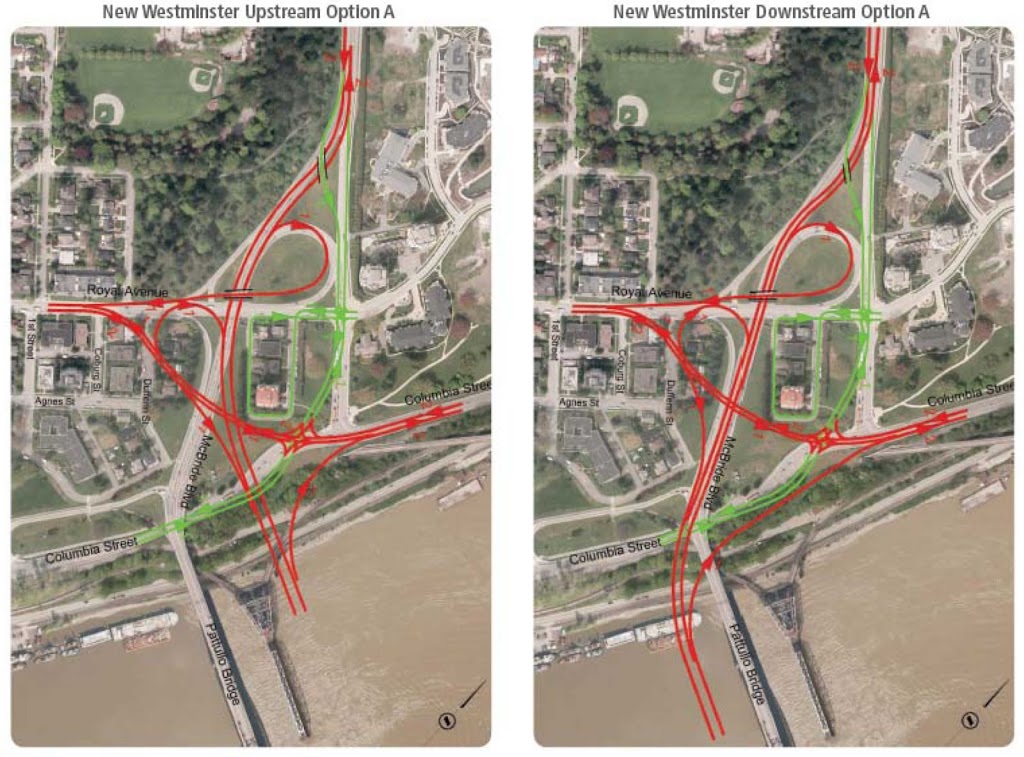
The first topic that was not up for discussion was the number of lanes. TransLink has determined they will build a 6-lane bridge with two of the lanes (apparently) dedicated to trucks only. No business case is made for this (for perspective, a transportation expert once opined to the NWEP Transportation Group that the difference between a 4-lane and 6-lane bridge could be as much as $300 Million). When pressed on the question of lane count, TransLink suggested 6 lanes was the only option on the table for “safety reasons”. The somewhat convoluted justification being that keeping trucks on the outside lanes keeps them from needing to change lanes on the bridge, or mix with the cars on the inside lanes, increasing safety for all users. That sounds good, unless you are paying attention. Take a look:
click to embigginate

All of the designs deal with on ramps the same way, but I’ll use this one as an example, because it is first alphabetically.

Say you are Dave the Truckdriver entering New Westminster from Surrey, over there in the rightmost lane. If you want to go east to Highway 1, you take the first offramp, if you want to go towards the Queensborough, you take the second offramp, if you want to continue north towards Burnaby, you stay on the main route to McBride. All are options, as all are on the Major Road Network and designated as Truck Routes. It is unclear where the main route changes from three to two lanes, but it is presumably at the first or the second offramp. If it is the first, then you will need to change lanes before then (unless that is your destination). If it is at the second, you will still need to change lanes before that. Trucks going North will always need to change lanes. So lane changing is inevitable unless all trucks are forced to a single offramp going in one direction, but that would significantly reduce the usefulness of the bridge for “Goods Movement”, wouldn’t it.

The same situation happens for trucks heading south down McBride onto the bridge, or entering the on-ramps from the other roads, they are either going to have to change lanes to get to the outside lane, or merge onto the outside lane, and there will be inevitable mixing with cars. Oh, and cars using any of the offramps will of course need to move into the lane with the trucks in it, presuming the exit ramps are all on the outside lane. It is inevitable that cars and trucks will need to move lanes, and will need to at some point share lanes. Mixing of cars and trucks in inevitable.

This is the important part: These inevitabilities do not change at all between a 6-lane or 4- lane structure. The argument that a 6-lane bridge is “safer” is a complete wash.

The second point that was not discussed was the bigger picture around how we will manage the extra traffic once it exits the off-ramps of the bridge. TransLink pointed out one of the arguments against locating the bridge in another location (such as upstream at Sapperton Bar, downstream at the Tree Island location) was the integration with the existing road network. However, the current road network on the New West side is built to accommodate a 4-lane bridge, and already fails at times to accommodate that traffic load. Increasing the bridge by two more lanes will increase traffic capacity at the City boundary by 50%,. Currently, there is no plan to accommodate that. Think McBride is backed up northbound now? Think Brunette and Braid is an issue today? Think the Stewardson-to- Queensborough connection is a mess today? How will increasing traffic 50% to these locations help?  This is unfortunately and eerily like the UBE discussion again.

Tranklink responded to this saying: we’ll design the bridge first, then figure that out. Not surprisingly, few people in the room were satisfied with that answer. That answer shouldn’t be acceptable to anyone in the region who is funding TransLink; even those that believe building roads can solve traffic problems. TransLink wants to spend a Billion of your dollars to move a traffic pinch point 100m up the road. This is an example of a build-then-plan mentality that has them currently building a $4 Billion 10-lane Port Mann Bridge / Highway 1 Widening Project and a $1 Billion South Fraser Perimeter Road project, two major new Goods Movement routes that actually cross each other but do not intersect, forcing trucks to drive through New Westminster to get between them.

Oh, and that Billion dollars? That was the third topic not discussed. According to Translink, there is currently no funding source for the bridge. They are therefore presuming that it will be funded by tolls, likely through a design-build-operate concessionaire, much like the other 16 lanes of Fraser River crossing traffic that have been built in the last decade. They won’t say it is tolled, but they won’t say if there are any other sources.

This creates another area of uncertainty that needs to be addressed before we go any further. The BC Liberals have, as few as two weeks ago in that strange radio-interview-mini-throne-speech-event, suggested they are against tolling. The Mayor of Surrey doesn’t like tolls for this bridge. However, the senior governments are not lining up to dump a billion dollars on TransLink, and TransLink can’t raise taxes. So how are we paying for this thing? TransLink says let’s design it, and get approvals, and the money will arrive. One significant problem with this, of course, is that we cannot establish the business case or the demand for the bridge without knowing if it will be tolled.

TransLink representatives after the meeting admitted their estimates for future traffic demand on the bridge are based on tolls being collected. They provided some demand estimates based on population growth: increased vehicles from 60,300 today to 94,800 in 2041, but didn’t make clear in the presentation part that these estimates are based on a 6-lane, tolled bridge. How do these estimates change if we build a 4-lane bridge? Or if we don’t toll? Or if this same $1 Billion is invested in rails and/or SkyTrain for Surrey and Langley? Or are we, once again, just going to build it, then plan?

We have learned from the Golden Ears bridge example that tolls are effective Transportation Demand Management tools. People have avoided paying them, by driving around the long way or by reducing the number of trips. We have also learned from the Golden Ears that traffic estimates for tolled bridges can be overly optimistic (not the same story for new rapid transit infrastructure).

So without demonstrating the need for increased lanes, without explaining how these increased lanes will be accommodated on our already crowded and built-out streets, and without telling us how the bridge will be paid for, TransLink has taken to time to ask us which side of the old bridge we would prefer the new ramps?

Sorry TransLink. For some reason, the people of New Westminster are not feeling like they are “Part of the Plan”.
Cluffy and the Bridge

It is not going to surprise any CBC Radio1 listener if I admit to being a firm Anti-Cluff-ite.

Rick Cluff is the morning show host in Vancouver on the Flagship Mothership, and comes to us after a long history of sportscasting in southern Ontario. This explains why the only thing he approaches with any intelligence or enthusiasm is sports. When talking to the Sports Guy in Toronto (whoever that is this week), he is in his element. And food; he seems to really be into talking about food. For pretty much any other topic, he is hopeless.

It is worst when he is interviewing someone on a topic he is less versed in, like, say, this morning’s interview with TransLink’s Sany Zein about the Pattullo Bridge. (you will be able to hear it here, February 21, just before the 8:00 news, so about 1:50 into the 2:35 program). Rick’s technique is to prepare for the interview by finding the conflict, then writing down a bunch of questions probing that conflict. That way, during the interview, he can read the questions off the page (and the cadence he uses make it clear he is reading through the bottom of his bifocals) and not have to worry about listening to or understanding the answers. It is especially funny when an interviewee provides the answer to the question before Rick asks it, and Rick just can’t break the script and have a conversation, so he boldly charges ahead and asks the question just answered…

In this morning’s conversation , the conflict narrative was New Westminster being a roadblock to replacing the aged Pattullo. Sany Zein tried to clarify and explain that New Westminster was in the middle of their Master Transportation Plan and that the two consultations would work in parallel, and together. There is no conflict there. Then he has a canned input from Wayne Wright saying the same thing, followed by Mr. Zein repeating it, but Rick kept on narrative- How can they move forward with New Westminster being so uncooperative? It was painful.

The worst part is that Rick’s blind devotion to the conflict he wrote down on his crib sheet kept him from asking questions most of his listeners wanted to have answered. How big will this bridge be? Who is going to pay for it? Will it be tolled? How can the public get involved in the consultations? You know, useful information that the news could provide, instead of trying to find a simple conflict narrative to attach sports metaphors to.

Contrast this to Stephen Quinn’s interview approach, where he carries on a conversation, responds to the previous answer, and prepares himself ahead of time so that he can follow the conversation wherever it leads. He also has a knack for fitting in that one slightly uncomfortable question that the public wants to hear answered. Quinn is clearly the best interview talent on the local CBC. Yet again, I digress.

In the case of this morning’s interview, Rick Cluff continues his trend of seeing the world through a windshield. He is of the generation that thinks you can solve traffic problems by putting more roads down, which is a frankly ridiculous approach in the year 2012. This might be because he drives in from White Rock at 4:30 am when the roads are empty, then listens to the traffic reports all day and can’t imagine the cars are the problem.

Regardless, Sany Zein is, in my experience, an approachable and thoughtful guy. So you should feel comfortable asking him questions directly during the open houses coming up this week. Starting tonight!