Council – June 11, 2018

After all of that excitement, it was back to work on Monday at New West Council. We opened the meeting with presentations of plaques for the newest Registered Heritage Buildings in the community. This was followed by a couple of presentations that were emotionally charged. It is Salmonbellies Day on June 17th, but the usual celebration was subdued in light of the recent loss of a treasured member of the SalmonBellies community. This was followed by acknowledgement of World Refugee Day on June 20th, which we marked with a harrowing presentation by a New Westminster resident who is himself a recent refugee from Syria, which put many of our issues in New Westminster into a stark perspective.


Our regular agenda began with a Report for Action:

Modular Housing Update: Further Analysis on 200 Fenton Street
This report is a summary of work done to evaluate a site on Fenton Street in Queensborough for Temporary Modular Housing (“TMH”). This is a follow up report on last meeting, as we had many delegates speaking to the 838 Ewen Avenue TMH proposal, and some suggested the Fenton Street site as a better alternative for TMH in Queensborough. We asked staff to provide more details to the evaluation that was done of Fenton, and to revisit some of the assumptions that went into it being not selected to make sure we haven’t missed something important.

The short version here is that the Fenton Street site is indeed a viable location for modular housing, but there are some significant challenges for the site that impact the timing, cost, and project risk. The site would require pre-load and other ground stabilization works, and would need significant on-site and off-site landscaping and other works. In comparison to the Ewen Avenue site, the access to services is not as good, and making the site more accessible for pedestrians will come at an extra cost. Nearby transit service is less convenient and less frequent, and shopping is twice as far away. In summary, the Fenton Street site works better for a more permanent affordable housing project so the timing and costs to make it work can be absorbed into a longer project timeframe, but it is not a viable location for the current Rapid Response TMH program being led by the Provincial Government.


The following items were Moved on Consent:

2017 Statement of Financial Information
This is our official release of financial information for the year. Most of the spreadsheet stuff shouldn’t be a surprise to anyone who has watched our budgeting process. This report also includes how much you paid me and my Council colleagues for our work ($45,646 for me, plus $5,539 in expenses, mostly for the conferences I attended, which is why I report out on them here), a list of all of the companies we paid more than $25,000 for goods and services, and a list of the wages paid to all of our employees who earned more than $75,000, as required by law.

No doubt, the regional media will report out on peoples wages, without much effort to putting those wages into context of what those people would be paid in the private sector for similar responsibilities and skills, instead framing those wages as opulent. Alas.

Recruitment 2018: Arts Commission Appointment
We have an empty seat on the Arts Commission, and this person is willing to fill it, and she is a consummate volunteer in the City, whom I thank for her service.

Street Naming Bylaw for Roma Avenue in Queensborough – Bylaw for Three Readings
As reported earlier, the name Roma Avenue will be sued for a new street in Queensborough. This is the official Bylaw that makes that happen. The actual installation of the road sign will come after the road is built and put into service. Hopefully it is good timing to coincide with a grape-stomp.

406 – 412 East Columbia Street (Market Rental) Housing Agreement Bylaw No. 8000, 2018 for Three Readings
The project planned for an empty lot on East Columbia will include Purpose Built Rental, and in order for the City to secure that rental, we need a covenant and a Legal Agreement. This agreement needs to be supported by a Bylaw. This is that Bylaw.

Amendment to the Tenant Relocation Policy: Changes to the Residential Tenancy Act
The City has a Tenant Relocation Policy to do what we can to make sure that people are not displaced from their housing unnecessarily, and to assure that when evictions are legal and required for significant renovation of a building, the residents have as much support as possible in this impossibly tight rental market. The provincial government recently updated the Residential Tenancy Act to give renters more protection from demovictions, such that their “fair notice” minimum is now longer than the one in the City’s policy, so we are adjusting our policy to match. This is a constantly evolving file, and more work is being done by local governments and province, this is a quick shift of our local policy to keep up, but not the end of story!

Proposal for Public Realm Improvements in Brow of the Hill at Seventh Street and Fourth Avenue
This is a proposal to create a small public green space improvement in the Brow of the Hill, a neighbourhood notably lacking in public green space. Up to now, our Parklet Program has been oriented to improving the streetscape in our retail areas, where this one is adjacent to a church in a relatively high-density neighbourhood. This creates some opportunities, but also a different potential set of conflicts. Like other Parklets, this is meant to be temporary, but any opportunity we have to reduce the amount of paved space dedicated to cars and re-purpose that space into something greener that all people can use is a positive.

New Westminster Arena Operations and Ammonia Safety Update
The tragic incident at Fernie last year, where three refrigeration workers were killed by an ammonia leak at their skating rink, has cause all municipalities in BC to review their safety practices around ice plants, working with WorkSafe and the Technical Safety Board, There were some changes done at both of our arenas, mostly around how TSBC have changed the application of “risk assessment” measures. The changes come with a small operational cost increase (more frequent testing, increased staffing levels to oversee ammonia plant operations) which are consistent with changes being made at most ice arenas in the province. Short version is that were up to snuff when it comes to safe operation of our ice plants, and with emergency procedures, with a some increase in operational costs.


The following items were Removed from Consent for discussion:

620 Third Avenue (Westminster House): Temporary Use Permit for Youth Residential Recovery Program – Consideration of Notice of Opportunity to be Heard
This is the notice that an Opportunity to be Heard will happen on July 9 for a Temporary Use Permit for a residential recovery program directed at younger women recovering from addictions. It is best practice that I recuse myself from this discussion as the application is only a few doors down from my house.

Electric Vehicle Readiness Policy for New Residential, Commercial and Institutional Buildings
Electric vehicles are coming, and they are coming on fast. The largest disruption caused by them will be the change in how people “fuel” their vehicles. Gas stations are going to go away, and distributed charging systems will replace them. We are not, however, building that distributed charging infrastructure fast enough. This policy would help push the City that direction, requiring that new buildings with off-street parking spots are built to have the background infrastructure (conduit, wiring, and adequate electrical capacity) to support installing charging stations.

The cost of making this a requirement in new builds is relatively small, well under $1000 (compared to the $40,000+ cost per stall of providing underground parking). Other cities (Vancouver and Richmond) have already made this move, and many others across the region are about where we are in in putting their policy together.

As *most* EV charging will happen at home, if an adequate charging system exists there, there is less demand for making these stations mandatory in commercial buildings. The standard practice regionally is to require 10% of off-street commercial parking be ready for an EV charger. Staff are planning to report back to us with a fully-cooked framework for how to manage the commercial sector.

Amendments to Animal Care and Control Bylaw and Associated Schedules in the Bylaw and Municipal Ticket Information Bylaw
The City is waiving Dog Permit fees for Therapy dogs, and updating some language in the Animal Control Bylaw without any major policy changes.

Queen’s Park Arenex Replacement
The replacement of the Arenex has been a difficult process. We were initially optimistic that a replacement structure could be quickly acquired that would provide greater space, and along with the Canada Games Pool replacement project, we would finally have a home for the gymnastics and trampoline programs that didn’t quite fit in the Arenex as it was. Regrettably, best laid plans ran into some procurement issues, as the tight construction market and relatively high project risk related to the geotechnical conditions resulted in no adequate responses to the Request for Proposals. In the public procurement process local governments are required to use, that often means back to the drawing board.

With some revision of scope, and more work done on the soils conditions at the old Queens Park reservoir site (where the old tennis courts and soil storage area are), we are now in a position to re-start procurement.

Honestly, it is a bit of a disappointment that it took this long to get this far, but we have reviewed the process to date and there was every reason to suspect the first procurement should have worked. It may have been our rush to get a replacement facility done as quickly as possible that (ironically) resulted in this delay. The good side is that this failure has led to the City to re-evaluate some of our project management practices, and bring in some new resources. We have an aggressive capital program, with the Library, the Animal Care Facility, the CGP replacement, and more projects charging ahead, at the same time that some senior staff is retiring, so the learning from this will be valuable. However, in the end all we can do is apologize that this project ran into the challenges it did, and move ahead aggressively to get it done as soon as possible.


On a related topic, we had a Staff Presentation:

New Aquatics and Community Centre Feasibility Study, Public Engagement Results
Regular readers (Hi Mom!) will recall we are moving ahead with the Canada Games Pool replacement, and took a proposed “program” out for public comment back in late April. This report gave us a summary of the public engagement results. I have a lot to write about this, so will hold off for a second blog post, but the short version is that we have developed a pathway where we may be able to accommodate a higher-level competition pool while not taking away from the community focus of the new community centre.


As always, we closed the evening program processing our Bylaws:

Street Naming Bylaw No. 7984, 2018
This Bylaw that makes the name of a new street in Queensborough “Roma Avenue” was given three readings.

Housing Agreement (406 to 412 East Columbia Street) Bylaw No. 8000, 2018
This Bylaw that secures the agreement that this new development in Sapperton will be a rental building was given three readings.

Animal Care and Control Bylaw Amendment Bylaw No. 8026, 2018;
Bylaw Notice Enforcement Bylaw Amendment Bylaw No. 8027 2018; and
Municipal Ticketing Information Bylaw Amendment Bylaw No. 8028, 2018
The amendments to these three bylaws that will allow us to not charge license fees for therapy dogs and make other small changes in our Animal control Bylaw, were given three readings.

Five-Year Financial Plan (2018-2022) Amendment Bylaw No. 8020, 2018
As discussed last meeting, these updates to the 5-year Financial Plan were adopted by Council. It is now the law of the land.

Automated Voting Machines Authorization Amendment Bylaw No.
7994, 2018
As discussed last meeting, this Bylaw that is required by Elections BC to use electronic ballot-counting devices in our civic election was adopted.

Building Amendment Bylaw (Building Permit Exemption for Hoop Greenhouses) No. 8018, 2018
Also as discussed last meeting, this Bylaw that removes the need for a building permit for some types of backyard greenhouses larger than 100 square feet was adopted. May your tomatoes enjoy a warmer fall.

Heritage Revitalization Agreement (306 Gilley Street) Bylaw No. 8007,
2018
and
Heritage Designation (306 Gilley Street) Bylaw No. 8008, 2018
These Bylaws that secure permanent protection of a heritage home in the Brow of the Hill were adopted by Council.
Ask Pat: Elections?

Ed Sadowski asks—

When will we know if you will be running again in the upcoming municipal elections?

Yes, I am running for Council again. Sorry for the delay responding to you, but I did have to do a bit of serious thinking and also put a few things in place so that when I announce my intention to run again, people have a way to contact me and I don’t lose that initial campaign bump on that is (apparently) important.

If you want to read about my campaign, why I am running, what I want to do next term, and why I think you should vote for me, please go over to my campaign website (PJNewWest.ca). It is a little bare-bones right now, but I will be updating and improving it as the campaign goes on. One of my challenges with “launching” my re-election campaign is trying to figure out how I can keep this conversation – 8 years of blogging, hundreds of blog posts, its gotta be a million words by now – and keep it a little separate from the rhetoric necessary for campaigning. The election is in October, but I still have 4 months of work to do before then, so here is my strategy.

This website will pretty much stay the same, with blogs, updates on City stuff, random opinions on topics that interest me, and Ask Pats answered when I get a chance. My Campaign website will talk campaign, will have all of that campaign “why you should vote for me” stuff. My regular Facebook Page will be pretty much as it always was, and my Campaign Facebook Page will have campaign Facebook stuff like updates on where I am going to be, special campaign events, and probably a fair amount of campaign-related opinions. There is no way I am managing two Twitter accounts, or two Instagram accounts, so those are staying as is.

In the meantime, I’ll be out in the community as I have always been, ready to talk about the City and sharing ideas with the citizens of New West. It’s going to be a busy 4 months, but let’s take the time to talk.

LMLGA 2018 part 2

As a follow-up to this post, here is the second half of the LMLGA Conference in May. This may not be as interesting for my regular readers (Hi Mom!) as me ranting about traffic, but I think it is important that I report out to the community what I learned during the conference, because the community paid for me to attend the conference. As I am on the LMLGA Board, the cost for one of my nights was covered by the LMLGA, but the City still paid my registration for the conference, and paid part of the travel cost (I car-pooled with other attendies).

As I mentioned last post, a big part of the annual conference is the Resolutions session. This is when the members of the LMLGA vote on resolutions to be forwarded to senior governments, asking them to change policy or prioritize spending to meet the needs of our communities. The 2018 session included more than 40 resolutions, with about half of them at least slightly debated. This was an unusual year in that three separate resolutions or proposed amendments were defeated in tie votes (which is pretty unique with ~100 voting members present). If you want to know the results of all of the votes, you can read them here.

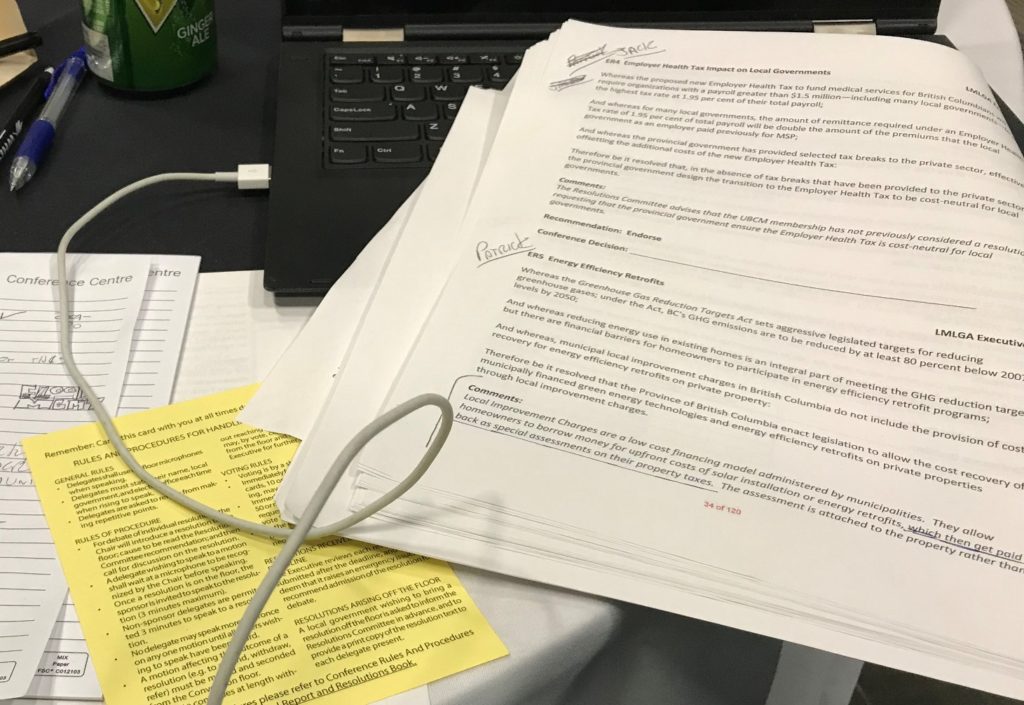
In brief, the two resolutions put forward by New Westminster were endorsed. The first was to ask the provincial government to prioritize the funding and support of the Community Health Centre model for providing general health care in communities across BC. The second was to ask the provincial government to update the BC Motor Vehicle Act by addressing the recommendations of the Road Safety Law Reform Group of BC to better protect vulnerable road users ( as I talked about in this report earlier in the year). Both were endorsed by the LMLGA Executive, and passed by the membership without debate.

Day 2 Featured a session on Digital Connectivity that started with a presentation from a technology director at Amazon, talking about what they see as the future of retail. Depending on your outlook on the world (or possibly your age), he either described a stunning future where your computer will know exactly what hammer you need before you even go on line to shop for it, and one click later the hammer arrives at your door within two hours, or a stark dystopia where every decision you make is predetermined by algorithms and every human interaction or social aspect of purchasing goods is scrubbed away as “friction” that interferes with the efficiency of the market. So that was interesting.

Hotels
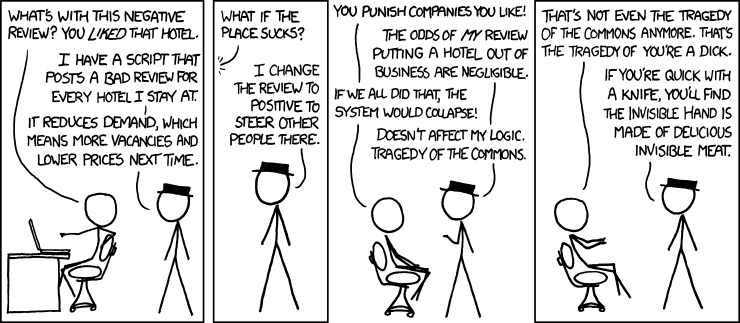
XKCD, as always, predicts the most logical end result.

This was followed by another ying/yang tech discussion by Mayor Greg Moore, directed at the elected officials in the room. He talked about the positive opportunities that Social Media provides to engage with your electorate, both during campaigns and while you are in office. He then described, step by step, how a single person with a bone to pick, a couple of hours to kill, and $20 can use a social media platform like Facebook to create a powerfully disruptive disinformation campaign using the same tools, and make themselves look like a large crowd of people to amplify their voice. It was stunningly familiar, and a valuable lesson to all of us who seek to engage meaningfully in decision making. If you don’t know who you are talking to on-line, it is quite possible they do not actually exist.

This led us into a closing plenary session on Human Connectivity, which brought together several aspects of making human connections in a time of digital disconnection. We had presentations about the power of volunteering, about working for sustainability within a community framework, and about thinking deeper about the everyday interactions we have, and what underlying the narratives we often miss may be telling us about ourselves and our community. It was inspirational, but also challenging – we are so busy “doing” or “planning”, that we are sometimes forgetting to take the time to listen, look, and understand the interactions in front of us.

I’ve given a bit of a summary of my learnings/rememberings from LMLGA, but there was more. The Minister for Local Government and Housing gave us a great update on where housing policy is going in the province, the Leader of the Official Opposition told us all of the things that the current government has not accomplished in 9 months, seemingly forgetting his government had 16 years to do the same things. Of course the networking, both formal and informal, with local government leaders across the region are valuable, and the LMLGA executive met to discuss next steps, including developing a better plan to present the resolutions to government members in Victoria. Altogether an informative, inspiring, and crazy busy 2-1/2 days.

LMLGA 2018 – Part 1

I’m out in Halifax at the annual meeting of the Federation of Canadian Municipalities, which is a nation-wide conference for local government types. However, I don’t want to report on this yet, because I still haven’t reported on my trip to Whistler last month for the LMLGA. Sorry, things have been busy!

The Lower Mainland Local Government Association is a networking and advocacy group that serves the local governments of the southwest corner of the mainland of BC, which I talk about a little more in my report on the 2017 meeting here.

The 2018 conference was at Whistler in the first week of May, and it was a full couple of days. Here is a quick run-down of what kept me busy over that time.

Pre-conference Sessions
There were two plenary workshops on Wednesday afternoon (I am on the LMLGA Executive, so I had to go up early for Wednesday morning executive meetings). One was on challenges that cities have in attracting and retaining family doctors, the second on the latest updates on cannabis legalization. I did not have a lot to say about the first session, as there was a lot of details about the problem (from how we teach Doctors to how we pay them and how we attract them from other jurisdictions – all firmly in the Provincial realm) and the solutions local governments could apply were a strange mix of making your city more livable and selling the benefits of your community to young professionals and their families.

The second session was more compelling, as there was a lot of new information about how other local governments are approaching legalization. There is a strict division between what the federal government and provincial government will be regulation, and there is a fairly well defined role for local government. As always, our role is land use (where will these businesses be able to set up?), business licensing (how will a local business operate –hours, signage, staffing, etc.), and nuisance management (where will we enforce smoking, growing, etc.). In New West, we expect to have a report back from Staff early in the summer to set up our local rules, though it seems obvious that the roll-out of federal regulations will be delayed from the July deadline set up by thr federal government.

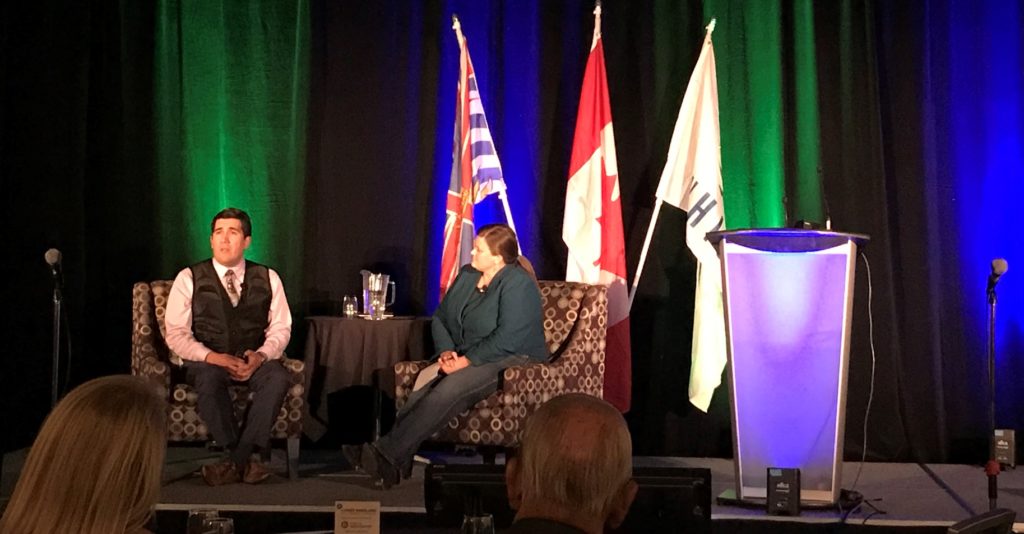
The opening day ended with a Keynote by Chris Syeta’xtn Lewis from the Squamish Nation, who gave a informative and poignant summary of the history of his people, and the context of where the amalgamated Squamish nations exist today, and what they see for the future of their region. A follow-up discussion with Mayor Patricia Heintztman of Squamish talked about the opportunities all Cities have for not just starting reconciliation, but finding a respectful space to have conversations about our shared future. It was an inspiring evening.

Day 1
Our Morning Plenary was a talk by author James Hoggan, whose discussed his book “I’m Right and You’re and Idiot”. It was a long dissertation on the current problem of public discourse (including there are too many people intentionally disrupting it for personal or political gain), and some techniques to address this (“speak the truth, but never to punish”). Any summary I give here will give short shift to his great multi-faceted talk that covered what Hoggan calls the “social pathology” of our natural predisposition to form teams, the opportunity to be found in embracing cognitive dissonance, and how all of us on every side of every issue think we are David and the other is Goliath.

I then ran a Transportation Connectivity session, which was in two parts. First, Don Lidstone gave a talk on the autonomous vehicle and vehicle-sharing future from the perspective of local government legal issues. Don is, among many I have heard on this topic, at the techno-optimist side of things, anticipating that our entire vehicle landscape will shift dramatically in the next decade to something we do not recognize. He switches quickly to pessimist, however, when he talks about how completely unprepared the province and local governments are. Nothing in our Motor Vehicle Act addresses driverless vehicles. The liability that falls on a Local Government if our infrastructure is not read correctly by an autonomous vehicle (say, if someone vandalizes a stop sign or road lines are buffed off) is uncertain and untested. There is also the not-minor problem that every local government has its own Street / Traffic / Parking Bylaws, and there is no system to an autonomous car to know this, or even any understanding of who is responsible for teaching a car that drives into New Westminster from, say, California, what a flashing yellow light means here or what the local parking restrictions are.

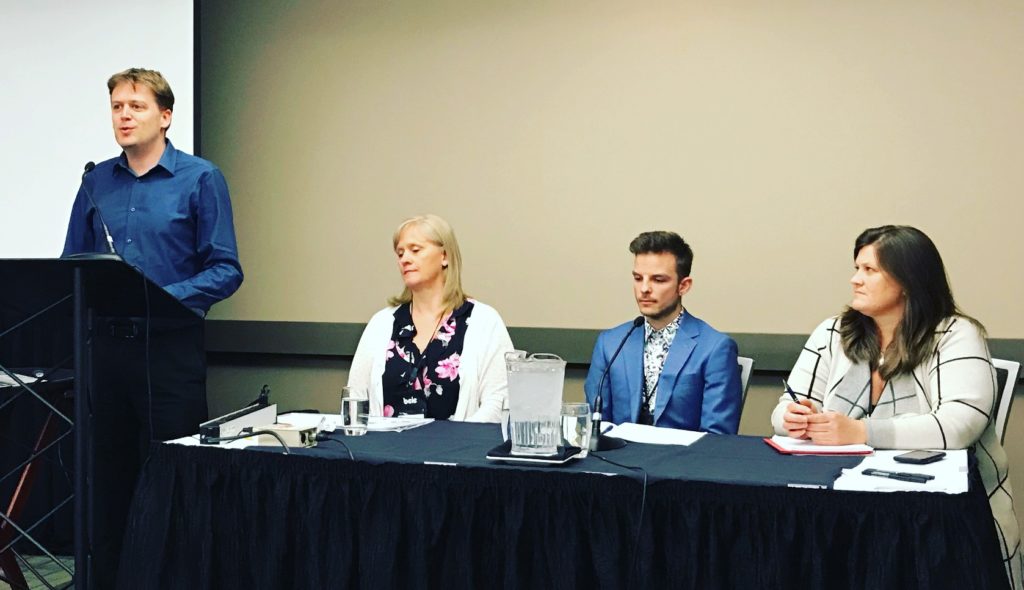
The second part was a panel discussion moderated by Mayor Cote, where a Planner from the City of Abbotsford, the Mayor of Squamish and a staffer from BC Transit discussed the opportunities and challenges of connecting the entire Lower Mainland (Hope to Delta to Pemberton) with Public Transit. Abbotsford and Squamish are both growing quickly, and both are becoming denser, more –transit oriented communities well served by Transit, but barriers exist between the area served by TransLink and those served by BC Transit. This is a bigger issue for Squamish, where up to 4,000 people a day commute to Vancouver, but Abbotsford is all about connecting local communities as opposed ot getting people to the “core”, as job growth is being pushed out to Abbotsford in a major way. So clearly, needs differ around the region, but the need for coordination does not.

We then had a unique program element: An actual honest-to-goodness debate. Seth Klein and Josh Gordon each had teams debating the question: “Does the Speculation Tax go far enough?”, which was fun to watch and quite informing about the strength of the tax as public policy (which resulted in the audience shifting somewhat from slightly in favour of the tax to slightly more in favour of the tax).

The rest of the Day 1 was spent doing AGM-type activities, including Bylaw updates, passing a budget, and electing officers for the upcoming year. You may now congratulate your new Lower Mainland LGA Second Vice President. Jason Lum of Chilliwack has been an excellent President for the last year, and Jack Crompton from Whistler will no doubt fill his shoes well, as he has already been a real driving force behind some of the new initiatives LMLGA has brought into assure it serves its members. We also had resolutions, which I will talk about in Part 2 of this report, which will be arriving soon…

Council – May 28, 2018

The Council meeting of May 28th was a long one, partly because of two lengthy public delegations, neither of which I am going to talk about at length here. This is because I already blogged at length about the first one here (and that post needs an update that will have to wait until I get back from the Maritimes), and the second because the topic will be going to a Public Hearing, so aside from mentioning it below, I am going to hold my opinions in respect for the process.

So it is perhaps ironic that we started the evening’s Agenda with three Opportunities to be Heard, for which very few came to be heard:

Five Year Financial Plan (2018-2022) Amendment Bylaw No. 8020, 2018
We have already been through the big discussions of the City’s budget, but it is good idea to adjust our Financial Plan so it closely tracks where our budget is going. We are therefore making the following changes to the 5-year plan adopted in March:

• Adding $6.25 Million to our Capital budget, as the Electrical Utility is getting ready to buy a piece of land in Queensborough for a new substation. This is debt financed, as was approved in the 2016 Loan Authorization Bylaw, so it is not new unanticipated debt, but an expense already planned for;
• Taking $3 Million from reserves to pay for expanded City Hall renovation costs;
• We are accelerating some work and doing expanded design on the Canada Games Pool replacement, meaning we need to move some capital spending from 2019 to 2018;
• Changes to anticipated borrowing cost related to the above changes.

Council moved unanimously to refer this Bylaw for three readings.

Development Variance Permit DVP00646 for 323 E. Sixth Avenue
The resident wants to maintain front-access parking on this house that was recently renovated, which requires a variance. As a general rule, the City is moving away from front-entrance parking for residential lots that have an alley. This improves the streetscape of the neighbourhood, and makes the main road safer for pedestrians, cyclists, and drivers alike. As this lot has a back alley, this would normally apply to this significant renovation of the building, but they have asked for a variance related to the shape of the lot and slope, which makes a rear garage significantly less accessible.

Council received two letters in support of the variance, and no-one came to speak to the variance. Council moved to grant the variance.

Development Variance Permit DVP00644 for 330 Johnston Street
There is a rule that any City lot shouldn’t be more than 4x as long as it is wide, as a general planning principle. However there are a few blocks, especially in Queensborough, where the lots are extra long, meaning that typical lot widths violate this rule. This is one of those cases, and the proponent is asking for a variance of this requirement. There was no correspondence, and only the proponent came to speak to the application. Council moved to approve the variance.


After some award-presentation, the following items were Moved on Consent:

Investment Report to April 30, 2018
The City has $141.5 Million in the bank. This isn’t just money stuffed away, but is in Reserves, most of it earmarked for specific purposes. (I recently wrote more about how the City manages reserves here). Some are in a higher-interest bank account, but most is saved with the Municipal Finance Authority, where we get a pretty good return. The report is that we are not going to earn quite as much from our savings as we anticipated, as bond markets are softening a bit, but things are generally ticking along.

Major Purchases January 1 to April 30, 2018
Every 4 months, the city reports out on all major purchases, in an effort to provide better clarity of where your money is being spent. This also assures our procurement process is transparent to show who bids for work at the City, and who won, and how we did at setting budgets for that procurement.

Recruitment 2018: Remembrance Day Committee Appointment
The City’s Remembrance Day ceremony is organized by a volunteer committee. Here we are filing a space on that committee.

Queen’s Park Heritage Conservation Area: Zoning Amendment Bylaw for Incentives to be Implemented in the Short Term – Bylaw for First and Second Readings
As discussed at some length during our May 14 meeting, Staff is working with the community on a suite of incentives to support heritage conservation in Queens Park – the “carrot” to follow up on the “stick” of the Bylaw that prevents the demolition of heritage homes. A total of 16 incentives were discussed last meeting: 5 that the City is not pursuing further at this time, 4 that will be coming after a bit more policy work, 3 that are going to be implemented City-wide, and the 4 in this report which the City intends to implement as soon as possible. For two of them, that means a Zoning Bylaw Amendment, which will go to a Public Hearing. I will talk more about them then.

218 Queen’s Avenue: Temporary Use Permit – Consideration of Notice of Opportunity to be Heard
An owner of a large lot in Queens Park with a heritage home on the front of it would like to subdivide the lot, and receive a type of conditional pre-approval of locating appropriate heritage houses on the new lots, when houses available for relocation come on the market.

This is a bit of a strange request, and not something that works easily within our existing land use regulations, but when heritage homes come available for relocation, there is often not a lot of time to do all of the regulatory things needed to make the relocation work, so the landowner would like to prepare ahead of time.

This looks like a creative way to make the rather rigid parts of the Local Government Act, and will result in preservation of several heritage houses, while turning a really big (22,000 sq ft) lot into three more typically sized lots. There are some obvious controls that will need to be in place to avoid real or perceived stockpiling of abandoned homes, but I think we can work something out here that lets these assets be preserved and add to our community. This Temporary use permit will go to an Opportunity to be Heard.

838 Ewen Avenue (Modular Housing Project): Official Community Plan Amendment Bylaw and Zoning Amendment Bylaw to Facilitate a 44 Unit Housing Development with Support Services for Women – Bylaws for First
and Second Readings

The Provincial government will build temporary modular housing to be operated by a not-for-profit in several cities around the Lower Mainland, as part of a Rapid Response to a serious homelessness crisis across the region. In this first phase, they rely on Cities to provide temporary use of city-owned spaces to site the structures. As you may have seen of Global Newz, the City has offered the site of a former gas station on Ewen Avenue adjacent to the Queensborough Community Centre.

The City bought the property back in 2016 when the remediation of the site was complete, and up to now have used it primarily for construction staging for the Ewen Street reconstruction project. It is still zoned for Commercial use, and is designated for parks/community amenity in the community plan, so we need to rezone the property if we wish to have people living on it, even on a temporary basis. Despite the many conversations at Delegation and in the media, this will require a Public Hearing, so I will hold my comments until then to respect the process.

Council moved to give the proposal First and second reading, and set the Public Hearing for June 26th.

New West Hospice Society Update
The relatively new Hospice Society has been incredibly active since its founding less than two years ago (I am a little biased, as Ms.NWimby serves on the board). They have a good strategic plan, and will be looking for the city to support their vision (along with many others, from Fraser Health to community members). They are also working with City Staff to determine the steps and requirements for the City to be designated a “Compassionate City”. You will be hearing more about this in the year ahead.

Building Permit Exemption for Hoop Greenhouses: Building Bylaw Amendment – Bylaw for Three Readings
The current Building bylaw says any accessory building bigger than 108 Square feet needs to comply with the Building Code to assure human occupancy is safe, from surveying the foundation up. The Bylaw also calls greenhouses “accessory buildings”. Put this together, and you can’t have a greenhouse bigger than 108 square feet unless it is structurally robust to survive an earthquake, host a party, and keep you warm at night. We are relaxing a small part of that to allow hoop-style greenhouses that don’t present the risk or occupancy issues that the building code is meant to address. May your tomatoes be warmed by this.

2018 Child Care Grant Application: For Douglas College Early Childcare Centre
The City has a grant program to help child cares operating in the City. This Daycare applied on time, but we had a paperwork snafu and their application got skipped. We did not exhaust the funds this year for this grant, and the application is valid, so Council agreed to award the grant. A little late is better than never!

Interim Alternative Development Review Process: Proposed Terms of Reference
The rate of development applications are making it difficult for the City to keep up. This is not a New West specific issue, it is a common theme across the region, but one we are feeling. Our turn-around time on these types of applications is one of the better in the region (according to the Fraser Institute, so maybe take that with appropriate grains of salt), but we are always asking our staff to find better ways to provide customer service, and this report suggests an interim measure to get past a current logjam.

There is a reason applications are complicated. The City has a tonne of policy and requirements for new development, be it a laneway house in the West End or a mixed-use commercial-residential building in Sapperton. The larger projects have to be assessed against our Family Friendly housing policy, our affordable housing and secured rental policies, opportunities for Community Amenities, and fit into our overall community plans. Design elements are impacted by our Zoning Bylaws and Official Community Plan, details from the size of sewer hookups to the turning radius in parking garages have to be evaluated to assure they meet building code and other requirements. Buildings are complicated, and it is a responsibility of a City to make sure they are built in compliance with regulations and policy. They also need to be designed and presented adequately that public processes like open houses and Public Hearings are based on good data. This is the work of civic engineers and professional planning staff, and the City simply doesn’t have enough of them right now to manage the work load, leading to delays. The same forces that are leading to a logjam are making it difficult for us to hire the professional staff to help address the logjam – there aren’t that many experienced development planners available right now in the Lower Mainland labour market, and (despite what the Fraser Institute says), Cities are getting outcompeted by the private sector, especially on wages and benefits.

Staff are suggesting we allow the proponent to have their own professional staff do some of the work currently done by staff internal to the City, such as policy analysis (writing a report on what City policies the new project intersects with, and how it meets those requirements) or technical evaluation of regulatory needs (like parking counts, etc.). City staff would still review and sign off on the resultant analysis, so we would not give up oversight, but much of the busy work to get to that final oversight could fall back directly on the developer instead of being done by City staff and charged to the developer via fees.

This will be an interesting trial, and Council agreed to have staff test this out as a temporary measure to address our current backlog. I am challenged a bit by this appearing to represent “outsourcing” of jobs, and am concerned that we have strong measures in place to assure no loss of oversight. I am willing to give staff a chance to try this out, and appreciate the work they are trying to do to find a flexible way to be ore “customer oriented”, but we will need to use caution here, and look forward to the evaluation of it after this one-year trial wraps up.

1011 Ewen Avenue – Sale of Portion of Land – Queensborough Fire Hall
A developer is interested in developing a piece of vacant land at the entrance to Queensborough, but there is inadequate site access to support the best use model. The solution is to provide a second entrance off of Hampton Street, which requires them to purchase that land, half of it currently belonging to the City, the other half belonging to the Ministry of Transportation.

There are a few complications yet to work out with this development, it has only received preliminary approval from the City, and will need to go through an extensive public process. The impacts on the Firehall operations are also still being evaluated. However, a fair market price of the land has been determined, and the proposed sale is conditional on the other work being done successfully to make this new road access necessary.

647 Ewen Avenue (Slovak Hall): Heritage Revitalization Agreement to Convert Hall for Two Residential Units and Add Three Townhouse Units – Preliminary Report
This is a preliminary report on an interesting project to revitalize a perhaps underappreciated heritage asset in Queensborough. It will also bring in some gentle infill density (three townhouse units or a total of five housing units). This I preliminary report, and will go to a public open house, the RA, and all of the other committee and such reviews. As this will eventually go to Public Hearing, I’ll hold my comments until then.


The following items were Removed from Consentfor discussion:

Queen’s Park Heritage Conservation Area: Special Limited Category- Official Community Plan Amendment Bylaw for First and Second Readings
The somewhat byzantine structures of the Local Government Act when it comes to Heritage Conservation Areas mean we need to set up a blanket area of protection and secure that in our Official Community Plan, then if we have a good reason to exempt specific properties from protection, we need to amend our OCP after the fact. During the HCA set-up, we recognized there was a group of properties that don’t fit snugly within the two end-member “valuable heritage asset worthy of protection” or “no heritage value whatsoever” categories. As a stop-gap, we set up a special category for all 85 of these properties, and put them under full protection with the intent of doing more detailed analysis of the properties to determine which ones may have been inappropriately included within the protected category.

After Phase 1 of this analysis, Staff is now able to recommend 34 of these properties be removed from the “Protected” category, and have drafted a n OCP Amendment Bylaw to support this re-classification. Of the 34, one property owner declined to be removed from the protected category. This Bylaw will go to Public Hearing, so I will hold further comments until then.

Draft Environmental Strategy and Action Plan
The City has been working on an update of our Environmental Strategy for a couple of years. This is a little close to my heart, perhaps, formerly being an Environmental Coordinator for a local government, and a long-time advocate for local government environmental sustainability. I have watched how local government environmental strategies have evolved from anti-littering campaigns to energy and emissions plans to more integrated ecological network services models, including the emergence of things like tree protection strategies, re-greening of built spaces, and the Step Code.

This document outlines the proposed Environmental Strategy that staff has put together through public and stakeholder consultation. It is important to note that this strategy ties together many things already happening in the City, as our larger sustainability vision requires that the environment is considered in all City policy development. So the OCP, our Integrated Stormwater Management Plan, our Urban Forest Management Strategy, and Master Transportation Plan all inform this strategy in some way, as do various parks and community planning policies.

The plan, as it is, will be going to a Public Open House in June. I hope those interested will come out and let us know what we are doing right, and where we need to make improvements. I also hope I will have a chance to blog a little more about this topic then.

Council approved to going out for public comment, but added two aspects for discussion with the public. First, we want to know what the public thinks a local governments role should be when it comes to advocacy for environmental measures. Secondly, we want more about how we plan to measure success. The performance indicators are an important part of this, which are mentioned in the strategy, but not a lot of detail. I hope the public consultation can help inform what types of metrics we can use to assure we can measure progress.

620 Third Avenue (Westminster House): Temporary Use Permit for Youth Residential Recovery Program – Preliminary Report
This application is for a residence very close to my own, so it is best practice if I recuse myself from participating in the discussion about it because there may be perceived or real conflict of interest.


We also had three items that were Added to the Agenda late, because that was the kind of week it was:

Recruitment 2018: Restorative Justice Committee Appointment
There is a position open for a person who could bring an Indigenous perspective to the Restorative Justice committee, and a great candidate has been found! Council moved to appoint her.

Changes to the Strata Property Act: UBCM Resolution
There have been some concerns raised in the community about recent changes to the provincial Strata Act that makes it easier to sell a Strata property and dissolve it. This includes increased risk of eviction not just of renters who may rent from strata owners, but effective eviction of owners themselves, without and of the protections from unreasonable eviction that renters may have. Council moved to provide our concerns to the appropriate members of the Provincial Government, and to take a resolution to the UBCM meeting in September asking for these issues to be addressed.

New Westminster Urban Solar Garden Project Update
The first Urban Solar Garden in the Lower Mainland was proposed late last year, and quickly sold out when the City started selling shares. It looks like the cost for installation of the panels will be at the low end of our estimate, and the Queensborough Community Centre will be the host building for the first Solar Garden. Installation services can now be procured, and photons can start exciting electrons into doing our bidding!

1400 Quayside Drive (Poplar Landing / Muni Ever Park): Work Plan for Conceptual Site Design
He grass field adjacent to the Third Ave overpass at the west end of Quayside Drive is jointly owned by the City and Metro Vancouver. It has a Combined Sewer Overflow tank on it that was built about a decade ago through a combination of Federal and Provincial grants and is jointly operated by New West and Metro Vancouver. This former industrial land was remediated as part of that project, and the long-term vision was always to host the CSO Tank, have some public park space (the CSO Tank actually has public washrooms on top of it that have never been made accessible because the surrounding land has been in limbo), and to develop some combination of market and non-market/affordable housing.

After a decade of no much happening, and with the Provincial purse strings for affordable housing projects seemingly loosening, the City wants to start moving ahead with this project, and Metro Vancouver has agreed to work with the City on some conceptual planning. There is *a lot* of work to do here, and all designs are currently conceptual, but staff want to take them out to the public in an open house and give people a flavor of what may be coming, and get some feedback.


Finally, we went through our Bylaws for the week:

Official Community Plan Amendment (To remove Heritage Conservation Area Related Protection from Phase 1 Special Limited Category Study Properties) Bylaw No. 8025, 2018
As discussed above, this Bylaw that acts to remove some properties from the highest level of protection in the Queens Park Heritage Conservation Area was given two readings. It will go to a Public Hearing on June 19. C’mon out and tell us what you think.

Zoning Amendment (Queen’s Park Heritage Conservation Area: Bylaw for Incentives to be Implemented in the Short Term) Bylaw No. 8024, 2018
As discussed above, this Bylaw that supports a couple of the incentives being introduced to promote the protection of heritage homes in Queens Park was given two readings. It will also go to a Public Hearing on June 19. You now have incentive to show up for that meeting and tell us what you think.

Official Community Plan Amendment (838 Ewen Avenue) Bylaw No. 8021, 2018 and
Zoning Amendment Bylaw (838 Ewen Avenue) No. 8022, 2018
As discussed above (and at length during Public Delegations, and consequently in the media, social and otherwise), these Bylaws that support the construction of a Temporary Modular Housing project at 838 Ewen Avenue in Queensborough were given two readings. This will go to a Special Public Hearing on June 26. Please show up and tell us what you think.

Five-Year Financial Plan (2018-2022) Amendment Bylaw No. 8020, 2018
As discussed above, and given an opportunity to be Heard at Council this evening, This Bylaw to amend our Budget was given three readings.

Building Amendment Bylaw (Building Permit Exemption for Hoop Greenhouses) No. 8018, 2018
As discussed above, this Bylaw to relax building code requirements for hoop-style greenhouses that exceed 108sqft was given three readings.

Housing Agreement (813 – 823 Carnarvon Street) Bylaw No. 8001, 2018
As previously discussed, this Bylaw to formalize the housing agreement with the developer and secure below-market rentals for perpetuity in the proposed building on Carnarvon Street was adopted by Council. It is now the law of the land.

Heritage Designation Bylaw (220 Carnarvon Street) No. 7958, 2017 and Zoning Amendment Bylaw (220 Carnarvon Street) No. 7959, 2017
As previously discussed, these Bylaws to provide permanent protection to the last house on this stretch of Carnarvon Street and in exchange for a change in land use to allow commercial and a secondary suite was adopted by Council. It is now the law of the land.

Council Procedure Bylaw Amendment Bylaw No. 7986, 2018 and Local Government Elections Procedures Bylaw No. 7985, 2018
As discussed back on February 5th, these Procedure Bylaws to adjust Council dates and language to fit the adjusted election schedule and language by the Province was adopted by Council. Vote accordingly.


At long last, we had one piece of New Business rising out of a Motion on Notice:

WHEREAS the City of New Westminster has identified and communicated
to the National Energy Board of Canada, serious concerns with the routing of the Kinder Morgan, Trans Mountain Pipeline through the sensitiveBrunette River watershed;
And whereas we have also raised concerns regarding safety, security, and contingency planning in the context of emergency response;
And whereas we have identified the social and economic impacts that a catastrophic pipeline failure would have, not only on New Westminster but on the entire Fraser River watershed;
Therefore be it resolved that the City of New Westminster supports the Province of British Columbia’s position in seeking clarification from the Supreme Court of Canada on the province’s jurisdiction to protect BC’s environment, including those matters which the City have identified to the National Energy Board of Canada.

I note that Council passed this resolution unanimously, only hours before said pipeline was announced to soon be the property of the taxpayers of Canada. Life moves at you fast when you live in a petro-state.

Council – May 14, 2018.

It occurred to me that I totally failed to provide a Council Report for our special meeting on May 14th. This was a special meeting we scheduled during the day to provide more time for Council to workshop the potential Heritage Conservation Area incentives for Queens Park. We had a very long meeting on May 7, and decided than that this topic could not be given a proper vetting at 11:00 at night after a long meeting, so we deferred for a week. Then scope creep started and staff added one more item to the agenda, which we moved on Consent:

Ministry of Transportation and Infrastructure: Outstanding Referral for Street Closure Bylaw No. 7935, 2017
As with an earlier discussion on the May 7th meeting, this is a Street Closure Bylaw that staff has discovered was not administered properly back in 2017 when it comes to consultation with the Ministry of Transportation. So we are rolling it back to permit MoTI to do their thing, in anticipation that we can re-adopt after then give us the thumbs-up.


We then had a good discussion for the main event of the meeting:

Queen’s Park Heritage Conservation Area Incentive Program: Proposed Implementation Framework
The Heritage Conservation Area measures in Queens Park are an ongoing initiative. Addressing the imminent threat of demolitions of important heritage assets related to land value increases, the City acted as quickly as it could within the limits of the local Government Act to bring in measures that allow us to pause those demolitions, and then spent a year determining how to make those protections more permanent.

As far as heritage preservation measures, creating legislation to curtail demolitions is definitely at the “stick” end of the public policy spectrum. From the start, the City has been committed to also introducing measures that provide the “carrots” that will incentivize better heritage protection, and have been undergoing extensive public and stakeholder consultations, along with legal and economic reviews, to see what works best to provide those incentives.

This report both provided a tonne of information on those consultations and studies, and also outlines some proposed policy and programs to provide meaningful and useful incentives. The discussion around the Council table was engaging and really productive (and I highly encourage those interested to watch the Video and see how consensus-building works when you have a collaborative team that often disagrees on points of policy, but want to achieve a common goal). Through the discussion, we reviewed a suite of 16 potential incentives, some we have asked staff to draft into a Bylaw immediately, others we have asked them to do more work to develop, a few we asked them to introduce City-wide, and some we agreed to not pursue.

As the Bylaws that support these incentive programs will be going to a Public Hearing, I don’t want to dive too deep into their relative merits or weaknesses (perhaps we can save that discussion until after the Public Hearing), but I do want to outline what were the principles I took into the discussion and tried to rely on to inform my decisions:

• These incentives are meant to make it easier and more attractive for people to invest in an preserve homes that are of high heritage value in what is a unique neighbourhood in that I has the highest concentration of pre-WW2 homes of any similarly-sized neighbourhood in BC.
• These incentives should encourage heritage conservation while also supporting other City policies, such as tree protection and providing more housing diversity.
• These incentives should not unfairly burden homeowners in other neighbourhoods by asking those residents of Queensborough or Sapperton to pay extraordinary costs to support the housing costs of Queens Park residents.

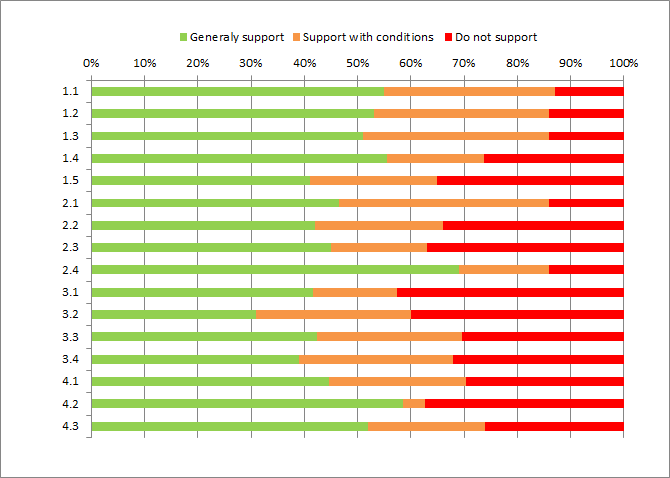
An important part of the discussion was the results of the public consultation. As there were 16 different incentive areas explored, the public opinion varied:

In the end, the incentives we move forward with will be going through an implementation period, and we will have more chance to talk about them at that time.


And that was all for our relatively short mid-day meeting, apologies for not reporting out sooner.

Counting Lanes

The Canada Games Pool replacement project is moving along. We have just completed a second round of public consultation, and one group have taken this opportunity to encourage the City to do more than the initial concept plan that resulted from the work to date. As they spent some time delegating to Council and have got quite a bit of messaging in the media (social and otherwise), I figured I would write a bit about how we got here, and my understanding of the request.

A couple of years ago, this Council made the decision to replace the Canada Games Pool (CGP) with a modern facility instead of investing tens of millions of dollars in replacing end-of-life components of the existing building and mechanicals. This has led to a lot of work on planning for a new facility, from figuring out what the “program” of the new facility needs to be, what it will cost, where it will fit on the site, and other technical and financial considerations. This has included two lengthy conversations with the public and stakeholders.

There are a few points that constrain our opportunities here. Council agreed with strong advocacy in the community that the existing pool cannot be torn down until the new one is built – we cannot afford to have a lengthy period without the swim programs and other amenities that the CGP provides. It was also determined that replacing the late-life Centennial Community Centre (CCC) at the same time would provide worthwhile synergies and assure continuity of programming. Finally, an extensive analysis of locations around the City brought the conclusion that the existing location had many advantages, and that the cost of moving the pool to a different neighbourhood just didn’t make sense, financially or for the disruption it would cause.

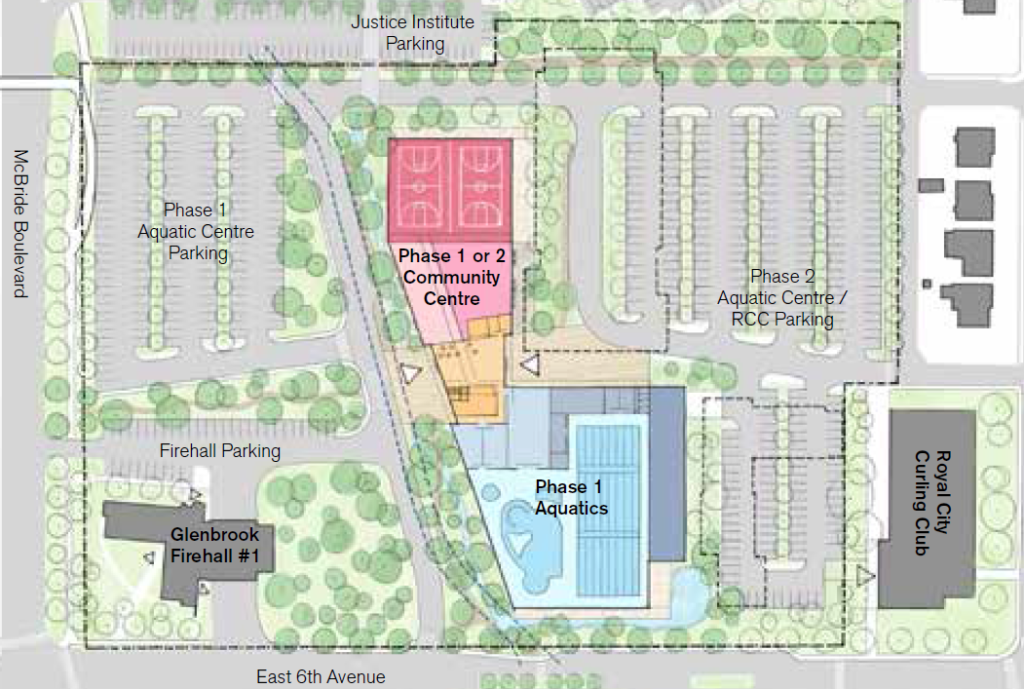
This is recognizing another limit on the current site, in that the front parking lot of the current pool was built on the upper reaches of the Glenbrook Ravine, which was filled in the 1960’s, burying a regionally-important sewer line under it. We cannot build above that sewer line (due to Metro Vancouver owning a right of way that excludes any construction), and moving it would cost a significant portion of what a new pool costs, so that further constrains the site. However, preliminary design and architectural work demonstrates that we can fit a decent-sized (~115,000 square foot) facility on the site immediately to the south and west of the existing pool.

Another thing Council did was tour new pool facilities across the Lower Mainland. We visited the Edmonds Community Centre, the Hillcrest Community Centre, the Poirier Complex, the West Vancouver Community Centre, and more. We also had an extensive tour of the current Canada Games Pool. On all of these visits, we are able to talk to the operators and project planners to talk about what works, and what doesn’t. Most interesting was to discuss what they would do differently if they were to start a pool replacement project from fresh. A few of us even scheduled a visit to a larger pool facility in Gatineau when in Ottawa last year, and have been tracking new pool facilities across the region to understand who is doing what.

Of course there have been a tonne of conversations here in New West with the pool user community, and people who don’t currently use the pool, but might like to except for its lack of serving their needs. There was both formal consultation and more informal meetings with stakeholder groups (such as the Hyack Swim Club). A few of us on Council also went out and did a few days of door knocking in the neighbourhoods around the pool to better understand what people think about the current pool, what they know about the replacement plans, and to hear if the budget freaks them out.

I have to say the most consistent feedback I received was that the current pool is not as inviting to families and community use as other more modern facilities. Part of this is the somewhat aged structure (described by some as dank and stuffy), but also the lack of play space and the colder water temperature (which makes it better for competitive swimming) that makes it harder for families to enjoy the space together. We also had feedback that the gym was too small and not comfortable because it shared humid and warm airspace with the pool. We also heard from a significant user group that they loved the humid, warm gym environment. A very small number of people valued the diving towers and the water slide, but most wanted more flexible spaces. The value of the pool as a community amenity and the programs run by our recreation staff were a consistent theme, but when it came to details, there was a wide diversity of opinions. I have no idea who you are reading this, but I bet at least one point I raised above is something you disagree with, as is the reality of public consultation.

The process to filter through this feedback included working with an architect experienced in building these types of facilities and measuring out what different program components would add as far as square footage and cost. The cost part, of course, includes the cost to build the facility, but also a business case based on the needs of a rapidly growing community. This means determining the capacity of pools, changerooms, gym facilities and such needed to accommodate (increasing) anticipated users. The operational costs are put into context of the potential for revenue generation and revenue growth. New Westminster is a relatively small city with challenging infrastructure needs, and it became clear that the budget was going to drive part of this conversation – we are going to build the best pool we can, but simply cannot afford to build everything that everyone wants. We knew hard decisions were going to have to be made.

Amalgamating the public feedback and other data, and coming up with a program to fit as many needs as possible, was a challenging process. The report on the first round of consultation and the reasoning that led to the proposed program, can be read here. It is this program that the City took out for a second round of consultation last month, and we have yet to receive a report back at Council about the results of the consultation; that is the next step here.

This is the background to the Hyack Swim Club’s appearance at Council to delegate on their needs and desires for the pool. I don’t want to put words in their mouth, but the message was that the proposed program is inadequate for holding the scale of meets that they think we can attract. We could still hold regional meets up to the level that the current facility can host, but we could not host national-level meets that are currently only possible at Kamloops and Victoria. In the media (social and otherwise) this has been characterized as requiring the addition of two more lanes, which sounds pretty minor, but there are hints it is more than this. So I’ll take a bit of time to put some context around that specific issue, recognizing this is at topic I am still learning about, so I stand ready to be corrected.

One big decision in any new civic pool facility is – do you build a 25m or 50m pool? The emphasis on fitness and lap swimming, including the legacy of the Hyack Club, is the reason the City suggested a 50m pool instead of a 25m pool (or even two 25m pools, which would be similar in cost to the one large pool, but provide much more user flexibility, which is the decision Richmond made with the new Minoru complex project). The demand analysis described above suggested that New West could meet anticipated swim demand by building a 25m 10-lane pool and a secondary leisure pool. It is the legacy of competitive swimming at the pool that led to the alternative 50m pool plan being considered.

The current pool is 8 lanes, and the proposed program would also be 8 lanes, with 2.4m lanes. The proposal also includes a much larger leisure pool that can accommodate some lane swimming, but also have the amenities people come to expect from a community pool serving families and other leisure users. So, contrary to some social media reports, we are not proposing a smaller pool that we currently have, but one with a functionally-similar main tank, and a significant second tank. It is my understanding (and I stand to be corrected here, as I have some reading to do!) that the Hyack Swim Club’s request is not just for two more lanes, but a deeper main tank, a much larger secondary tank with potentially less family / leisure useability, a significant increase in deck space for stands, and perhaps some other functional changes. The full proposal needs to be evaluated for fit and cost (capital and operational).

If I was to express frustration about this process, it is that the competitive swimming community always advocates for 50m pools whenever a new pool is built, but there never seems to be a pool built that satisfies their needs. Hillcrest and Grandview are just two recent examples of 50m pools that were built to accommodate a vocal competitive swimming advocacy group, but are(according to the presentations we received at Council) inadequate for competitive swimmers. The proposals for the new Harry Jerome complex in North Vancouver is going through a very similar conversation today (note – that “editorial” in the newspaper is actually a paid-for sponsored ad, which is its own weirdness), and I hear from the recreation operators that there are simply too many 50m pools being built in the region.

In summary, the conversation is ongoing here in New Westminster, and it is great that the Hyack Swim Club has been working to inform Council about their needs. I have had some correspondence from them since the Council delegations, and they have provided me some reading material to review. I hope to gain some better understanding about the details and (importantly) the business case implications involved in meeting the Hyack Swim Club’s expectations while not compromising what the rest of the community wants from a recreation facility. This conversation is not at all a setback for the project, but a perfect example of why we do public consultation. Our goal is (as it always has been) to have a project definition ready for when the Federal and Provincial government open the application window for infrastructure grants, and though there has been no confirmation of that date, we are in a good place to work out these details in time to make the window.

More to come!

MC Podcast!

A couple of years ago, a few new City Councillors from “the suburbs” of Metro Vancouver were invited to take part in a City Conversation at SFU, a program that brings people together over a brown-bag lunch at SFU Downtown to talk Urbanism. It was fun, and got us all speculating over a beer about how we can find an excuse to do this again. Then someone (I think it was Mathew Bond) said “Podcast”.

Two years later, almost to the date, we have a Podcast! It’s called Metro Conversations, and you can listen to the first 6 episodes at iTunes and GooglePlay. But first a little context.

Our initial idea was to repeat the City Conversations model: 1-hour conversations with a small panel of subject matter experts with an intimate audience, facilitated by the Council of Four (myself, Mathew Bond, Kiersten Duncan, and Nathan Pachal). We record these conversations, and put them out as Podcasts.

We also thought we could fill the space by also sitting down occasionally for a “Metro Chat”, where just the four of us discuss an Urbanism topic. The idea here is that we are elected people who are not subject matter experts, but can provide a bit of a bridge between experts and people interested in what goes into making a more livable city. We also bring context from our local parts of the region, as Urbanism too often emphasizes the urban centre and that is where it is more easily embraced. As we will explore, it is around the edges that the benefits and impacts of modern city-making are really felt.

As will be readily apparent to listeners, we are not professional broadcasters, but we are passionate about our communities, and love to talk about Urbanist topics and how they impact our communities.

We have a half-dozen episodes up and running, and a couple in the can that we are working on as far as making them audible. This is our first try (we could even call it “Season 1”?) and are hoping to hear form people about what they like, what we need to do better, or what topics you want us to tackle if and when a Season 2 is organized. So please tune in, and let us know what you think by going to our Facebook Page and providing us feedback.

There are People to Thank:

SFU Public Square for the grant and their (paid!) interns for doing a bunch of the busy work and coordination that we simply would never have completed if you left it to four City Councilors who live all over the place and have full time jobs and long lists of commitments that make our working together on anything difficult. This was only possible through the Public Square.

Michael Alexander from the City Program at SFU for pulling us together and giving us the inspiration to try something different.

Random #NewWest peeps Wes Kinna (for masterfully helping with sound at live events), Stephen O’Shea (for creating a cool distinctive sound for intro/outro), and Christa MacArthur (for lending us her distinctively non-distinctive accent).

The Network Hub in New West, the District of North Vancouver, City of Langley, City of Port Coquitlam, and City of New Westminster for hosting spaces for us to hold conversations.

And all of our guests and audience members who made the live conversations work.

Ask Pat: Arenas

Jeremy asks—

What is the current usage rates of our arenas? I see calls for a third area, but I don’t know how often our current arenas are empty, or how many groups trying to book ice time would be unable to do so.

Simple answer is I don’t know, but my reflex answer is that our arenas are well used, rarely empty, but not bursting at the seams. As usual, that answer needs to be put into context of how the City plans and builds new and replacement facilities.

A new facility, be it a swimming pool, a skating rink, or a skate board park, has a capital cost (what it costs to build the thing on the day we build it and over the long term in upkeep and maintenance), and an operating cost (what it costs every year to keep the lights on, staff to maintain the ice and run programs in the facility). Those second costs can be small, like a skate park, which costs very little to maintain once built; or very high, like the old Canada Games Pool, which is a real energy and resources hog.

Conversely, many facilities earn revenue from pool or ice rentals and program fees, but it is almost a fundamental principle of public recreation facilities that the revenue never covers the capital and operational costs. For every person who walks into the Canada Games Pool to swim, take a fitness class, or drop heavy weights on the heads of change room occupants, the City subsidizes their visit by about $2. There is no financial model where a pool with services like the Canada Games Pool even breaks even on earned revenue (otherwise private business would be competing us out of the business, no?),  and models where private companies run ice rinks rarely provide a high level of programming without significant support from clubs and local governments. Many facilities, such as the library, the skate park, or a playground, earn little or no revenue, but are nonetheless important amenities to improve the quality of life of people in a community.

I mix all of these together because building a new facility is never a stand-alone decision. It is *always* about placing things in a priority, which means both understanding the (perceived and actual) demand, and recognizing how existing and new facilities impact your capital and operating budgets.

The demand part can sometimes be recognized by the public and user groups before it comes to the attention of Council, who ultimately hold the purse strings and have to make the priority call. However, lacking a very motivated special interest group, it is much more common that staff who operate these facilities recognize capacity issues or unmet need and bring these challenges to Council through strategic and budget planning. This is the situation with library upgrades, with the Canada Games Pool and Centennial Community Centre replacements, with the expansion of the Queensborough Community Centre, and with the decisions we have made to invest in more flexible (but much more expensive) turf field replacements.

Sometimes, those priorities get shuffled by events. A neighbouring community building a new pool or an event like the Arenex collapse can shuffle the deck, causing us to move priorities in order to assure our program needs are met, and to assure we have the capital flexibility to deal with unexpected needs when they occur. The Arenex is an example of something that we now have to add to our capital budget, and to our planning. The capital cost of its replacement is covered for the most part by insurance, but it still needs to be included in a budget, and we still need to take staff off of existing projects to go through the replacement planning, project management, procurement and design work to make sure we replace it with the right thing. Again, staff time is one more thing that has to sit in a priority list – what work do we delay to rush the replacement of the Arenex?

So back to answering your question. We have not heard from staff that there is a huge unmet demand for ice in the community or the region, at least not in comparison to other unmet needs that have been placed higher in the capital planning priority list. And they would know better than I would, as they are the ones managing the day-to-day resource needs of the community.

That said, with recent requests from some members of the public, Council has asked staff to do a bit of work and better define for us where a third sheet of ice (or other ice allocation improvements) fits on the capital plan priority list, and whether there is a compelling demand case for moving it up. This has to also include some analysis of where ice demand is regionally so we can better understand how the two new ice sheets on our border in Burnaby and two more sheets in Port Coquitlam will impact regional needs. So staff are going to add this work to their work plans, and prioritize it alongside ongoing work to support the Arenex programs and plan the replacement, getting the Canada Games Pool project ready for senior government grants, and all of the other capital works already in our plans. This is a responsible way to approach new capital funding requests, whether they come to us from staff’s understanding of need, or from a data-gathering petition at the beginning of an election campaign.

Council – May 7, 2018

Our Council meeting on May 7 was long and a little chaotic. It included several announcements and proclamations, and large numbers of people coming to Public Delegations. Because we were aware some people were delegating on agenda items, the schedule was mixed up a bit so Council could hear from them before we made any decisions (I will blog about these delegations in a future blog; they are topics we will be talking about more in the upcoming weeks and months). This means the order of things that happened over the 5+ hours is not really reflected in the agenda you might read online, and I honestly don’t want to sit through a 5-hour video recording to make sure my blog is in order of occurrence, especially as I am editing this up almost a week after the event because I was helping run a conference in Whistler all week… all this to say the following may not be in the order of occurrence, but I think it covers all of the decisions we made.

This Council Meeting included an Opportunity to be Heard:

Amendment to Construction Noise Bylaw No. 6063, 1992 (Amendment Bylaw 8013, 2018)
We talked about this a bit during First and second reading at the last meeting, but the City is updating its construction noise Bylaw to reduce some allowable weekend work hours and bring our construction schedule more in line with what other Cities do. It is a crazy construction time right now, with the regional economy booming and many housing projects of every shape coming on line. Residents are definitely feeling (hearing) this, and hopefully this will provide a little relief. That said, the change is modest, and it is really hard for us to create too many limits of construction noise within business hours.

We had one letter from a concerned developer, but no-one came to delegate during the Opportunity to be Heard, and the Bylaw Amendment was given third reading by Council.


Fire Escape Stairs at 642 Columbia Street Public Art Integration
A few months ago, we tasked our staff and the Public Art Advisory Committee with exploring ideas to make the fire escape on the Front Street a more appealing part of the Front Street Mews, and approved some budget from our Public Art Reserve Fund to pay for it.

There where 42 (!) proposals received from the Public Art community across Canada and the world. A panel made up of arts professionals and the local community shortlisted this to 4, who provided more detailed proposals, from which the PAAC recommended a piece from a team in Victoria called “Floralume”.

The goal here is to take something that was necessary as part of the Parkade removal and re-imagining of Front Street into a public space, and turn it into a place-making opportunity. I think this interactive multimedia sculpture has the potential to do this – and actually become a regional showpiece that will draw more people to Front Street. It also came in a little under budget, which is a bonus.


The following items were Moved on Consent:

Uptown New Westminster BIA Renewal Bylaw No. 8019, 2018
This is an update on the Bylaw that empowers the Uptown BIA to operate. This also updates the tax rates and overall plan to better support the BIA’s new Strategic Plan. The Uptown BIA does a lot of great stuff, from supporting the Winter Farmers Market to installing branded bikes racks to the Uptown Live music festival. It is great to have such a positive partner in the business community in the City.

Recruitment 2018: Amateur Sports Grant Program Appointment
Recruitment 2018: Parks & Recreation Committee Appointment and
Recruitment 2018: Restorative Justice Committee Appointment
We needed to replace a few members of these volunteer community committees, and did so!

813 – 823 Carnarvon Street: Housing Agreement Bylaw for three readings
This is the housing agreement that will secure 66 below-market rental units in the smaller of the two towers at the PALS development on Carnarvon. There are a couple of levels of non-market housing that will be operated in this building to support seniors with limited incomes (with an emphasis on those from the performing arts community). 39% of the units will be “housing income limit” where rent is based on the occupant’s income so not to exceed what is considered affordable, and the other 61% of the units will be below market, but based on markets cost, at what is called “CMHC Level 1 Affordability”. Council moved to approve the Housing Agreement.

514 Carnarvon Street (Holy Trinity): Official Community Plan Amendment Section 475 and 476 – Consultation Report
This is a report on the ongoing consultation with the community on this unusual development project, which would see a largish but narrow tower built adjacent to the Anglican Cathedral on Carnarvon. This project has seen quite a bit of adjustment and re-imagining as it has gone along. The proponent (the Anglican congregation) wants to see some combination of market, secured rental and non-market (affordable) rental, but mostly want to rasie some money for the restoration of their historic cathedral.

The consultation is ongoing here, and this report is more of an update than anything else.

New Westminster Transit Priorities
As a regional centre in the center of the region, New Westminster has a role to play in regional governance, and making the use of transit as reliable, accessible, comfortable and convenient as possible in our city is fundamental to the success of our Master Transportation Plan, our Official Community Plan, and regional plans for growth and transportation sustainability.

New Westminster is already a region-leader in transit use: our residents use transit more than any other community excepting maybe the City of Vancouver itself. But we can do more, and this document outlines what the City recognizes as priorities to make transit work better for more people in New Westminster. The idea here is to provide clear policy guidance when we are working with our transit partners (TransLink, the Ministry of Transportation, and our neighbouring communities). We have identified areas where we need improvement – such as the overall dismal service to rapidly-growing family-friendly neighbourhoods in Queensborough, and bus speed and reliability issues that impact our most important routes.

This is a planning document, but also an advocacy document, and part of the great foundational work being done by our Transportation department that may not be flashy or avail us of a ribbon cutting, but will provide tangible benefits to the community in the long run.

2018 Q to Q Pilot Ferry Service
The big news of the meeting is confirmation that the Q to Q ferry is back in 2018, with an improved service based on feedback from last year. The pilot service being offered this summer will have longer hours and be more accessible, and will have the same fare structure, but more option for how to pay (including a monthly pass). I will write more about this in a future blog, but I am really proud of the hard work our staff put into this, and am excited about the service. I expect May 19th will be crazy!

Recruitment 2018: Electric Utility Commissioner Reappointment
The City’s Electrical Utility is not actually run by City Council, but by a Utility Commission. We have a representative on that Commission, we set their budget, we approve their Strategic Plan, and we appoint Commissioners, but the day-to-day running of the utility is up to this commission. We just re-appointed one of the excellent Commissioners.

323 E. Sixth Avenue: Development Variance Permit to Vary the Off-Street Parking Requirement – Consideration of Opportunity to be Heard
This residential property in Upper Sapperton is located on a steep slope on a cul-de-sac wants to vary zoning by continuing to have front access to parking after renovation. There will be an Opportunity to be Heard on this on May 28th. C’mon out and tell us what you think.

330 Johnston Street: Development Variance Permit to Vary the Minimum Frontage – Consideration of Opportunity to be Heard
This is one of those long properties in Queensborough where subdividing to a typical width for the neighbourhood means it will be more than 4x as long as it is wide, which requires a variance. There will be an Opportunity to be Heard on this on May 28th. C’mon out and tell us what you think.


The following items were Removed from Consent for discussion:

New Westminster Public Art Plan
The PAAC and staff have been working on a Public Art Plan to provide clearer policy guidance when considering and approving new Public Art. I raised a few inconsistencies in the plan as presented, and hoped that more clarity could be provided within the Themes presented. After a bit of discussion, Council agreed to send the plan back to the PAAC and staff for a little more work prior to approval. More to come here.

Naming of a New Street in Queensborough
This report proposes that we name a new road in Queensborough “Roma” (-Street or -Road) in honour of the important role the Roma Hall played in the history of the Q’Boro community.

I have recently had occasion to learn more about the history of the Roma Hall, thanks to Emma Canil, as she spoke about the important role it played in her extended family’s immigrant experience in New Westminster. This is a landmark built by a community who came to Canada from across the sea to escape economic depression and geopolitical strife, in order to support their community and honour their heritage while contributing to Canada’s mosaic. So I approve of the name, in honour of the organization and community it represents.

This, however, raised a question for me that I asked staff to follow up on. I am not sure where we are in the progress towards updating our street naming policy. That we have not adopted a policy that puts our history of colonization in context or addresses the underrepresentation of women in place names in our City. I think the process that got us towards this name included many proposed names which would not represent that spirit. I hope we can move forward on those fronts before too many more of these applications come to us.

Queen’s Park Heritage Conservation Area: Special Limited Category Study Progress Update
There are 80 properties in the Queens Park HRA that have “Special Limited” protection, somewhere between fully protected and not protected at all. The plan has always been to eventually migrate all of these properties to either protected or not based on assessment of the heritage merit and zoning entitlements. Of those, we are providing an opportunity for some of them to do a bulk sign-up for extra protection so they can avail themselves of the incentive programs being introduced by the City to encourage heritage restoration and protection. This report gives an update on that evaluation process and efforts by staff to reach out to homeowners to let them know this is happening.

Interim Fees and Securities Provisions for Small Market Strata renovations
One of the principles of how Cities collect revenue is that “fees” are not “taxes”. The latter we can use for any purpose, the former are meant to only exist as a cost-recovery for services the city offers. In that sense, building inspection fees should be on a cost-recovery basis, not subsidized by taxes or other revenues. This proposal balances the desire to maintain that standard, but find a way to reduce the cost for renovations of small market strata renovations, and many of these smaller multi-unit buildings are seeing increased need for extensive envelope or structural repairs, but are challenged by the cost of these repairs as there are fewer homeowners to share the load.

Again, I love that our staff are identifying initiatives to support more affordable housing all across the spectrum, this (relatively affordable market strata in older buildings) is just one piece of the puzzle, but an important piece, as they all are.

I have an ongoing issue with how we manage security deposits for these small-unit buildings and homeowners. Often these works require the City collect security to assure legally required works are done, and those security requirements can sum up to tens of thousands of dollars that the City holds, and returns at the end of the project after final inspection. I think that having to provide tens of thousands of dollars of security to the City – essentially tying up a bunch of money at a time when a homeowner is feeling significantly stressed about costs – seems a real deterrent to people doing renovations and building improvements, and I’ll include the deposits in the Tree Bylaw with this.

I have asked Staff to review if there is a better way to provide security to the City. Perhaps (and I am spit-balling here ,as there are probably regulatory issues I am not aware of) through a legal agreement where the owner is required to pay the City if the security conditions are not met, and if they, after the fact refuse to pay, we can collect through our taxation process? Council approved the motion here ,ans asked for Staff to report back on security options.


We also addressed some specific correspondence:

District of Houston letter dated March 29, 2018 regarding a Human Trafficking Task Force and
Cathy Peters email to District of Houston dated February 26, 2018 regarding Child sex trafficking in BC Municipalities and how to stop it:
We moved to receive this correspondence, but I asked that we no move to take the recommended actions in the correspondence, that is to make specific policy requests to senior governments.

Cathy Peters is a strong and vocal advocate for the protection of children, and I support the protection of youth from exploitation and some measures Mrs. Peters is suggesting to better protect youth in our community, but do not agree that all the measures she is calling for will achieve these goals.

The “Protection of Communities and Exploited Persons Act” is one of those Harper-era Orwelian-named pieces of legislation that instead of acting to protect people who may be exploited, further stigmatizes and criminalizes them, and does little to increase the protection of vulnerable people in our community. Organizations such as the Pivot Legal Society have argued this legislation is unconstitutional. So I cannot agree to us advocating for its implementation.

We then, late at night, got into a slightly modified Bylaws shuffle:

REGARDING Zoning Amendment Bylaw (1050 Boyd Street and 1005 Ewen Avenue) No. 7700, 2014;
REGARDING Zoning Amendment Bylaw No. 7917, 2017;
REGARDING Zoning Amendment Bylaw No. 7920, 2017; and
REGARDING Zoning Amendment Bylaw No. 7944, 2017
Our staff were doing some diligence as part of the updates of our zoning bylaws, and discovered a discrepancy in how we consulted with MOTI (which we are required to do when a rezoning happens within some prescribed distance with a freeway entrance). So we are rescinding these adoptions, and will re-adopt once MOTI checks the box they need to check. There is no shift in land use happening here, but this type of detail may matter to someone at some point down the road, so we are stepping back to make sure we do it right.

Housing Agreement (813 – 823 Carnarvon Street) Bylaw No. 8001, 2018
As discussed above, this Bylaw that secures housing in a proposed development on Carnarvon Street as below-market rental was given three readings by Council.

Heritage Revitalization Agreement (318 Fifth Street) Bylaw No. 7977, 2018 and
Heritage Designation (318 Fifth Street) Bylaw No. 7978, 2018
As discussed at the Public Hearing on April 30, these Bylaws that permit a laneway house in Queens Park in exchange for restoration and protection of a heritage house was adopted by Council.

Heritage Revitalization Agreement (312 Fifth Street) Bylaw No. 7979, 2018 and
Heritage Designation (312 Fifth Street) Bylaw No. 7980, 2018
As discussed at the Public Hearing on April 30, these Bylaws that permit another laneway house in Queens Park in exchange for restoration and protection of a heritage house was adopted by Council.

Heritage Revitalization Agreement (224 Sixth Avenue) Bylaw No. 7989, 2018 and
Heritage Designation (224 Sixth Avenue) Bylaw No. 7990, 2018
As discussed at the Public Hearing on April 30, these Bylaws that permit the subdivision of a lot in Queens Park and the building of a second house in exchange for restoration and protection of a heritage house was adopted by Council.

Heritage Revitalization Agreement (520 Carnarvon Street) Bylaw No. 8004, 2018 and
Heritage Designation (520 Carnarvon Street) Bylaw No. 8005, 2018
As discussed at the Public Hearing on April 30, these Bylaws that permit an extensive renovation and land use changes for the permanent protection of a heritage house in the Downtown was adopted by Council.

2018 Tax Rates Bylaw No. 8014, 2018
As discussed last meeting, this Bylaw that sets our property tax rates for 2018 was adopted by Council.

Downtown BIA (Primary Area) 2018 Tax Rates Bylaw No. 8015, 2018;
Downtown BIA (Secondary Area) 2018 Tax Rates Bylaw No. 8016, 2018; and
Uptown BIA 2018 Tax Rates Bylaw No. 8017, 2018
As discussed last meeting, this Bylaw that sets the rates of the parcel taxes we collect on behalf of our three BIAs was adopted by Council.


And that, at something like 11:30 at night on a day where I was at City hall at 9:00am for a Task Force meeting, was tiredly that.