Ask Pat: Bridges?

Matt asks—

What’s the deal with bridges?
Why are some bridges run by MOT (Ministry of Transportation), others by Translink, and still others by municipalities? For example, why is Pattullo a Translink bridge and not an MOT bridge. You get the idea… Thanks!

This is an easy one.

Let’s start with the Major Provincial Highways. All bridges on those Highways are owned by the Province and managed by the Ministry of Transportation (or, more commonly, their contractors). Highway 1 includes the Port Mann and the Second Narrows; Highway 99 the Deas Tunnel, Oak and Lions Gate; Highway 91 the Alex Fraser (and with the qualifier 91A, the Queensborough); and Highway 7 the Pitt River.
At the other end of the scale are the bridges that were within a City and both feet land within the same municipality: the Burrard, Cambie and Granville within Vancouver and the Dinsmore, No 2 Road, and Moray/Sea Island within Richmond. These belong to the City and are maintained by the City (although through the Major Road Network, many of them get funding from TransLink to help pay for maintenance). The Granville is also part of Highway 99, so I would not be surprised if MOT pitches in some maintenance money there as well.
The Laing is the freak bridge, as it connects Vancouver to federal land on Sea Island, and is owned and operated by the Vancouver Airport Authority.
That leaves 3 bridges that connect two separate municipalities, yet do not carry a major highway: The Knight, the Pattullo, and the Golden Ears. When TransLink was formed in 1998 to manage all regional transportation in Greater Vancouver, these bridges (well, actually two of them and the Albion Ferry, which was replaced by the Golden Ears) that had no other category but huge maintenance costs were unceremoniously dumped on TransLink. The Province threw in the 100-year-old one-lane wooden Westham Island swing bridge for good measure, although it is wholly within Delta.
Make sense?

Council Meeting – June 1, 2015

Another Monday, another exciting edition of City Council.

This week we started with our annual Environmental Poster Contest, where Councillor McEvoy and I, as Co-chairs of the Environment Committee, got to present prizes to the three winners. The posters will be displayed at River Fest in September.

We then had three presentations: one from the Canadian Federation of Students, concerned about recent cuts to adult basic education funding by the provincial government; a Proclamation of Access Awareness Day coming up on June 6; and one from City Staff outlining the Priority Capital Program that the Mayor’s Transportation Taskforce has brought to Council.

This was followed by a couple of Open Delegations, then a trip down the ol’ Recommendations from Committee of the Whole lane:

Zoning Amendment Bylaw 7759 – 210 Durham
This is an application to divide a full-width lot on Durham Street in Glenbrook North into two narrower 33’ lots with a separate home on each. The designs initially  proposed were not met well by the Residents Association or the Advisory Planning Commission, for several reasons. One complaint I heard (and agreed with) was that the proposed houses addressed the street with wide driveways and two-car garage doors, which was really “out of character” with the neighbourhood. There was also a concern about the removal of the significant boulevard tree in front of the house. Both of these issues have been addressed through revision of the design.

Council gave the required Bylaw first and second reading later in the meeting (see below) and the Bylaw will go to Public Hearing on July 13, 2015. C’mon out and tell us what you think!

Zoning Amendment Bylaw 7765 – Commercial Above Grade at Brewery District
This will change the zoning at the Brewery District to allow commercial development above grade in the future buildings, which will provide more flexibility as far as work/live space combinations go, which might be really helpful as the Health Care Cluster and residential parts of the Brewery District develop.

Council gave the required Bylaw first and second reading later in the meeting (see below) and the Bylaw will go to Public Hearing on June 22, 2015. C’mon out and tell us what you think!

1258 Ewen height variance
This is the first notice that a single-family home planned for Queesnborough wishes to exceed it’s maximum allowable height by 10 inches. Council received this report, and will allow the application to go through the proper process.

BC Seniors Games
New Westminster was approached earlier in the year by the BC Seniors Games organizers, as they are looking for host cities for upcoming years. After reading the staff analysis of the requirements, commitments and timelines, Council agreed we are not really in a place right now to host these. With a series of ongoing initiatives straining for prioritization, and being a few locale/facilities short of what we would need to host these games without a partner city, it is just not a good time for this.

We have, however, taken this as an opportunity to ask staff in Economic Development to work with the other departments and our community partners like Tourism New Westminster to assess how Sports Tourism in general fits into our overall economic development plans.

302 Fifth Street Development Variance
This resident is asking for a height variance for their garage, as they wish to build one that matches the unique roofline of their house. The intent is not to build a second story on their garage as a living space, and the internal truss design is specifically made to prevent making the upper part of the garage occupiable space.

This is a preliminary report, and council voted to receive. The application for the variance will go through the usual process.

Front Street Mews consultation
The City is starting to do design work on the roadway and sidewalks along Front Street where the western half of the Parkade is soon not to be. The preliminary drawings look promising, and two separate options were shown.

I actually prefer to have all of the parking away from the sidewalk, and with a nice pavement treatment, raised intersections, there are other ways to control traffic flow. I think this creates a much better buffer between the sidewalk and the Front Street through-traffic, and maximizes the amount of sidewalk space that can be activated in front of the businesses. I also think clearly defined parking on one side makes for a safer cycling environment.

Stakeholders downtown will be looking over the designs this week, and after possible tweaking, there will be a Public Open House on June 18th, 5:00-7:00pm at the Anvil Centre. C’mon out and tell staff what you think!

Parklets Pilot Program Launch
Parklets are great ideas, and they can really improve the pedestrian and retail space in a commercial district. The City is piloting our first Parklet this summer in Sapperton, with plans to introduce another annually (at least) for the next couple of years. Staff has been given a modest budget, but a lot of flexibility to find partnership opportunities, design ideas, or creative innovations to make the Parklets fit local needs in our different neighbourhoods.

I was really happy Council endorsed this program, and that staff is not only excited to implement it but have provided a really nice design for New West Parklet #1 (see top photo).

Clear Garbage Bag Pilot program
This is an interesting idea that will support the City’s and region’s long-term targets of waste diversion – boosting recycling and diversion of organics from landfills and the incinerator, so that 70% of our waste is re-used, not tossed away.

Metro Vancouver is currently concentrating on organics diversion, such that as of January 1, 2015, it has been illegal to put food scraps in your garbage. Typical for a big, regional, lifestyle-challenging initiative like this, enforcement will be slowly implemented, ramping up over a longer period of time with extensive education programs. Enforcing this ban is a challenge, but other jurisdictions have successfully done so, and there are existing models from which to learn.

Metro Vancouver has proposed a pilot to test the idea of making clear plastic bags (or no bags at all) mandatory for garbage bound for the landfill or incinerator. This allows inspectors at the waste transfer facilities to quickly and more accurately assess the presence of organics in the waste stream, so that Metro can target education and enforcement. It has worked in other cities, but will it work here?

Participating in this pilot costs the City very little as Metro provides all of the education materials, does the data collections and reporting. They even supply to the bags for the residents and businesses involved in the pilot.

I am happy to support collecting more data and testing out an innovative system like this, and really happy that New Westminster can help out with the bigger regional goals for waste diversion – we want to continue to be regional leaders in sustainability, and this is yet another opportunity for us to do so.

Correspondence
We received correspondence form the Royal City Humane Society requesting that Council release some of the grant funds that had already been allocated as part of our Partnership Grants, so it could be used to expand the veterinary care types we can offer to cats in the City. Council approved this shift in the language of the grant.

Bylaws For Adoption:

Bylaw 7756, 2015
This Bylaw saw third reading last meeting, and simply expands the definition of “Commercial Schools” in our Zoning Bylaw. It was adopted, and is now the Law of the Land.

Bylaw 7741, 2015
This Bylaw saw third reading last meeting, and upon adoption, it makes our Family Friendly Housing policy the Law of the Land.

Plus we moved the two readings for both 210 Durham and Brewery District bylaws mentioned above.

Issuance of Development Permit
As discussed last meeting, we moved to approve this Development Permit on Kamloops and 13th Street.

Announcement!
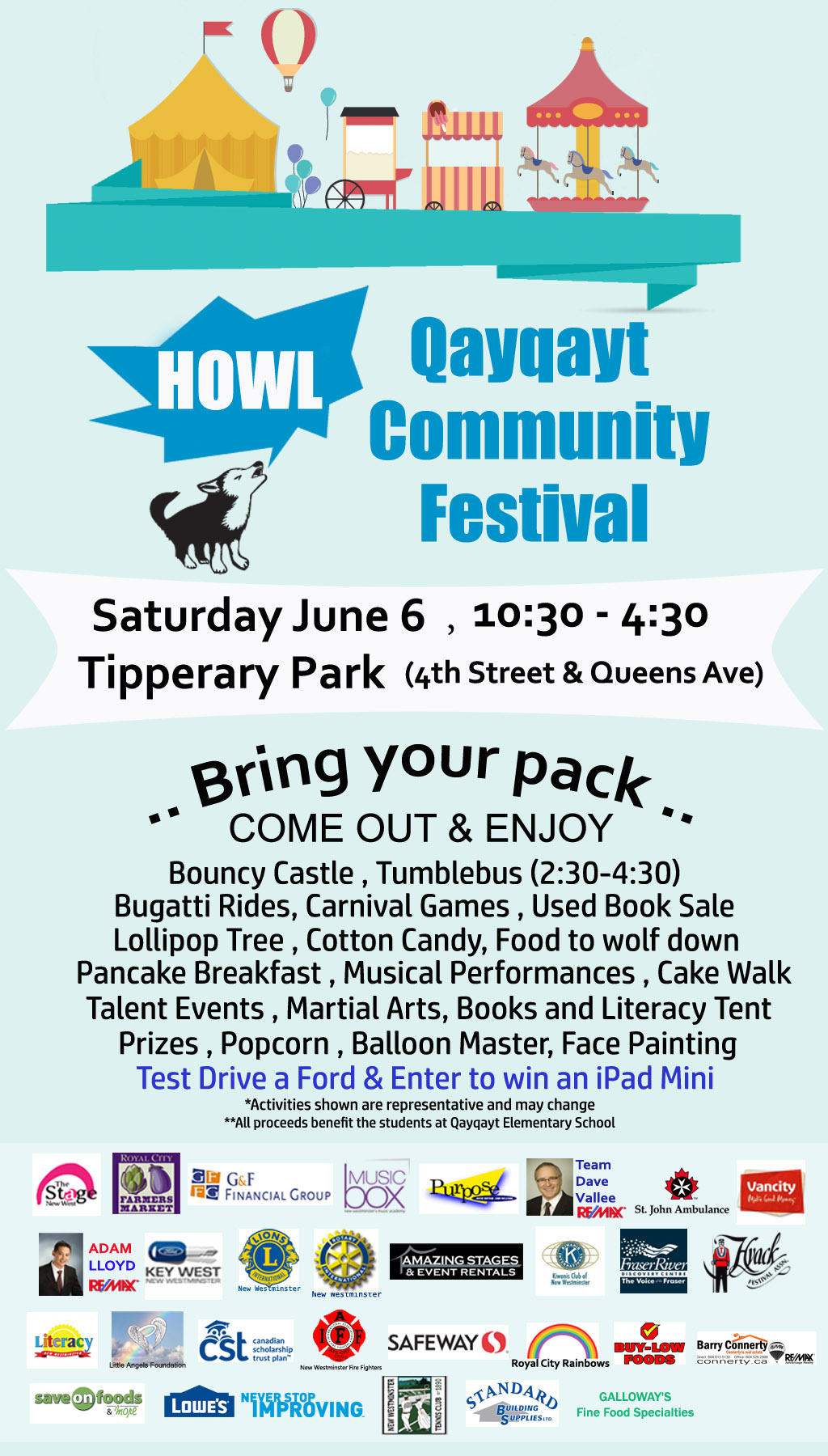
Finally, an announcement of a community event this weekend! The Qayqayt Community Howl is both a community-gathering fun event for families, and a fundraiser for the Qayqayt playground space. They are a new organization trying to build on their exciting new community, so drop by and give them some support while entertaining your family!

HOWLeflyer

Ask Pat: Change Table in Pier Park?

Someone asked—

Is it possible to ask city to put back baby change table in family washroom at pier park in downtown area? There is no change table in the park right now.

This is probably one of those questions that should go straight to the Parks Department, or even on SeeClickFix. But I asked a few questions, and here is the best I can tell (again, contact the Parks directly to get what is probably more accurate info!

The Men’s and Women’s Washrooms at Pier Park do not lock (except at night) but the Family room does, as that better reflects it’s one-at-a-time use. Apparently, this ability to lock the door empowers some undesirable activities, possibly (but not certainly) related. First, it seems that some people with limited other options have used the room to grab a few hours of secured sleep in the early morning or evening hours. There has also been quite a bit of vandalism in that room – much more than in the unlocked “gender-specific” bathrooms.

Parks is working on a bit of a strategy to address the main concerns here, but in the meantime they are reluctant to replace the change table yet again, anticipating it will be destroyed again. I’m not sure what that strategy looks like, and although spot security enforcement might get lucky catching a perp, I don’t see 24-hour security being a viable option. There are meant to be change tables in each of the Men’s and Women’s washrooms, which may be suboptimal for some families, but it might be the best we can offer in the short term. I would love to hear if anyone has a suggestion on how to make this work better.

Short note on progress.

It was such a beautiful weekend in New Westminster. I had a couple of events downtown on Saturday, and enjoyed my time wandering around between them, and something occurred to me.

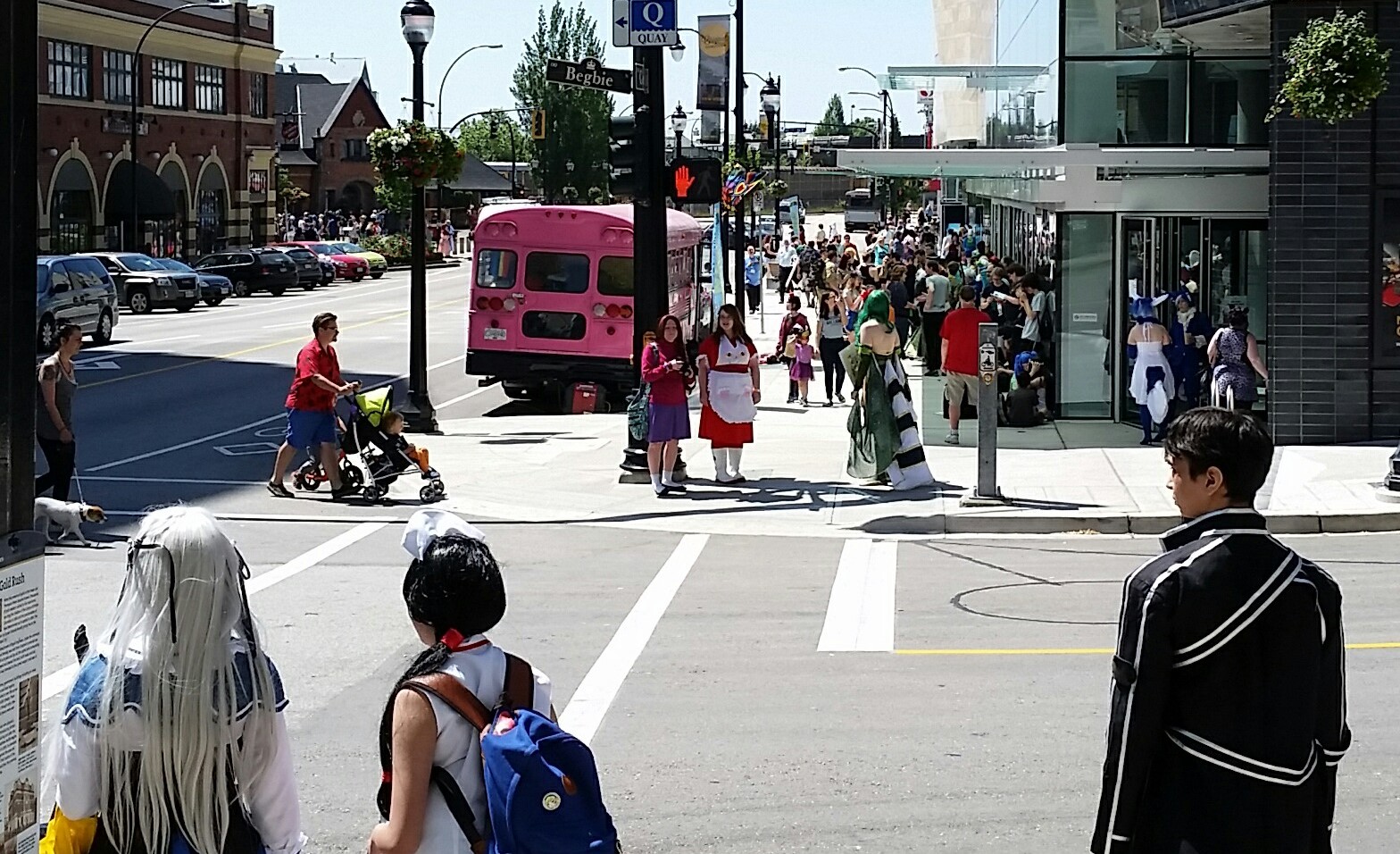
The Northwest Fan Fest was occurring at the Anvil Centre. There were something like 10,000 people drawn to downtown New West on the weekend, spilling out onto the street, filling the sidewalks and Hyack Square – geeking out and having fun.

fanfest

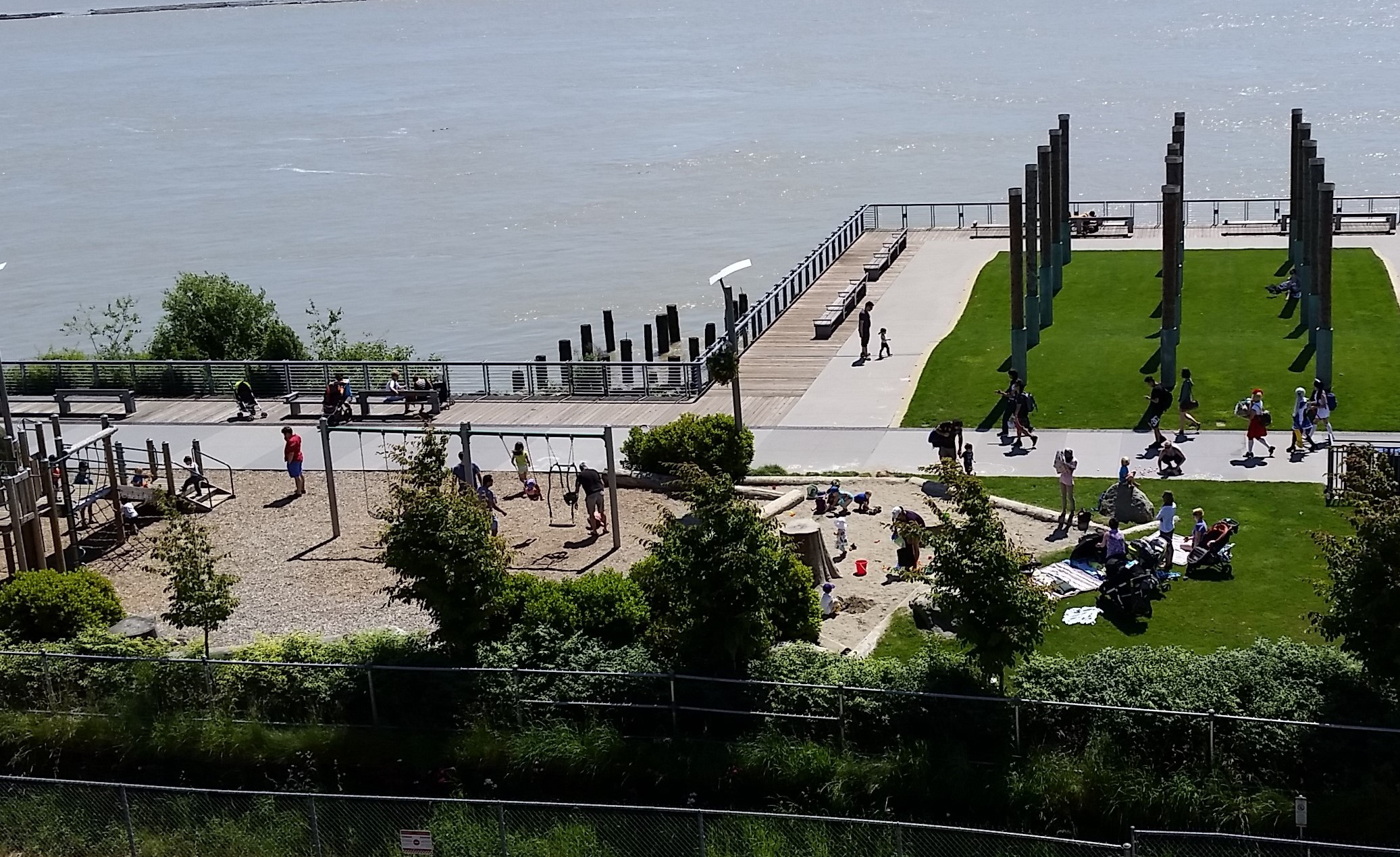
And they spilled over to Pier Park, to mix with the usual families and locals using what is coming to be seen as one of the great public spaces in the lower mainland.

Pier Park2

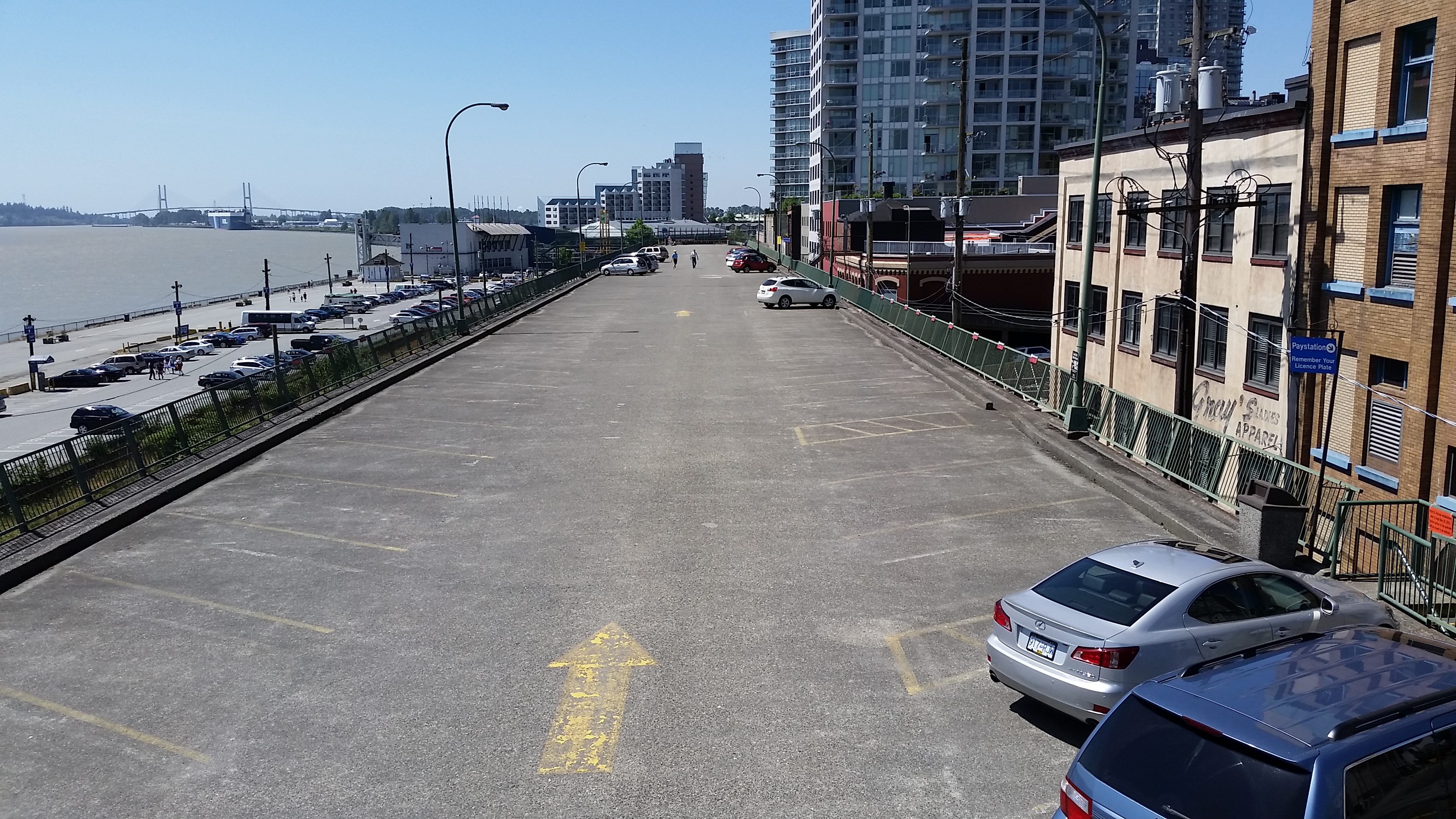
Yet this is the weekend when a full half of the Parkade was closed to start the repairs, which will eventually see the west side removed. Parking chaos? Hardly.

parkade
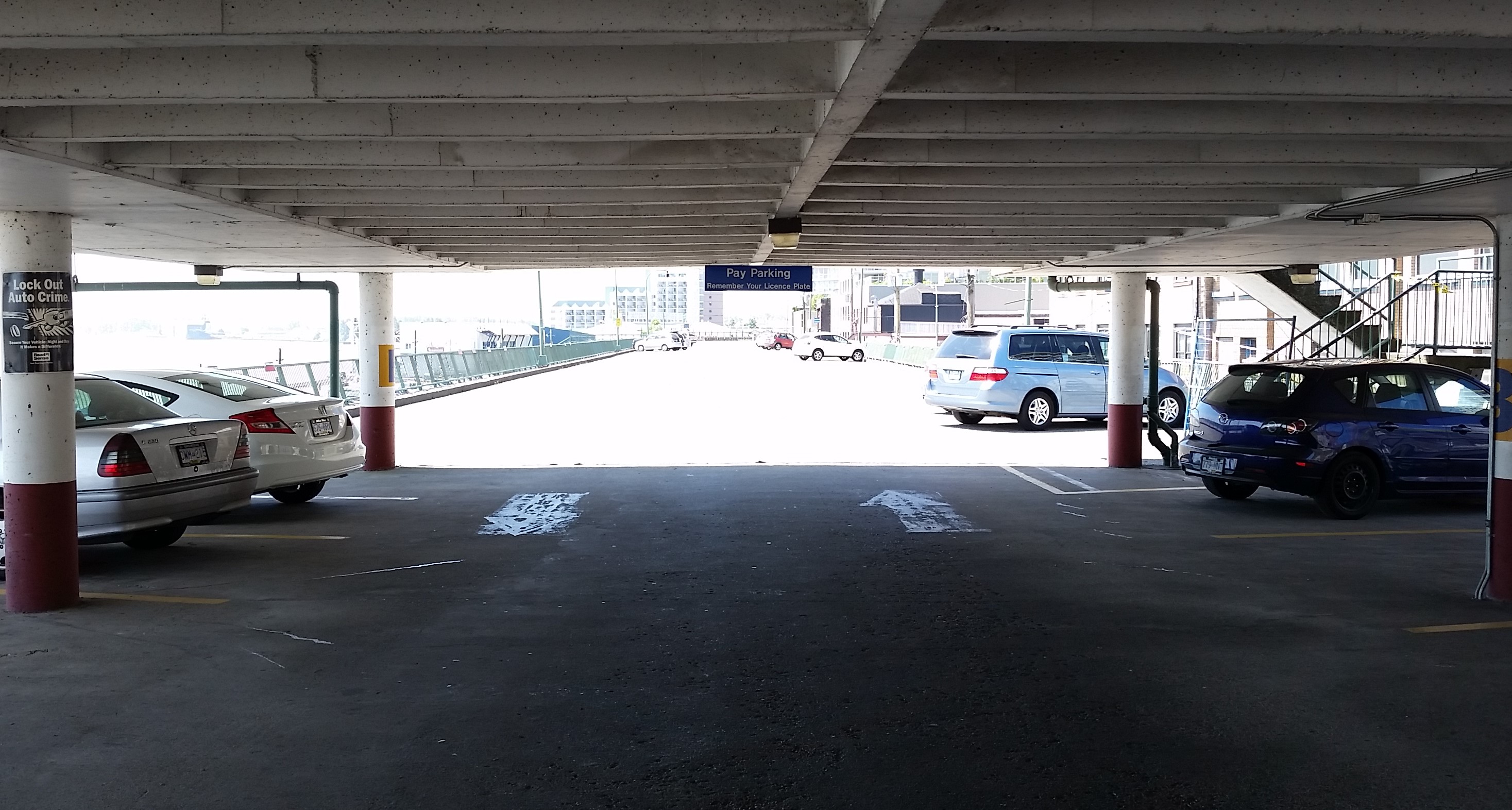
Saturday, early afternoon. Yes, every parking spot behind me was closed for construction.

And I was reminded why I ran for Council. This City is on such a positive path. We are moving forward, setting plans and reaching for a better future. There are bumps along the way, some tough decisions to make, and some difficult setting of priorities.

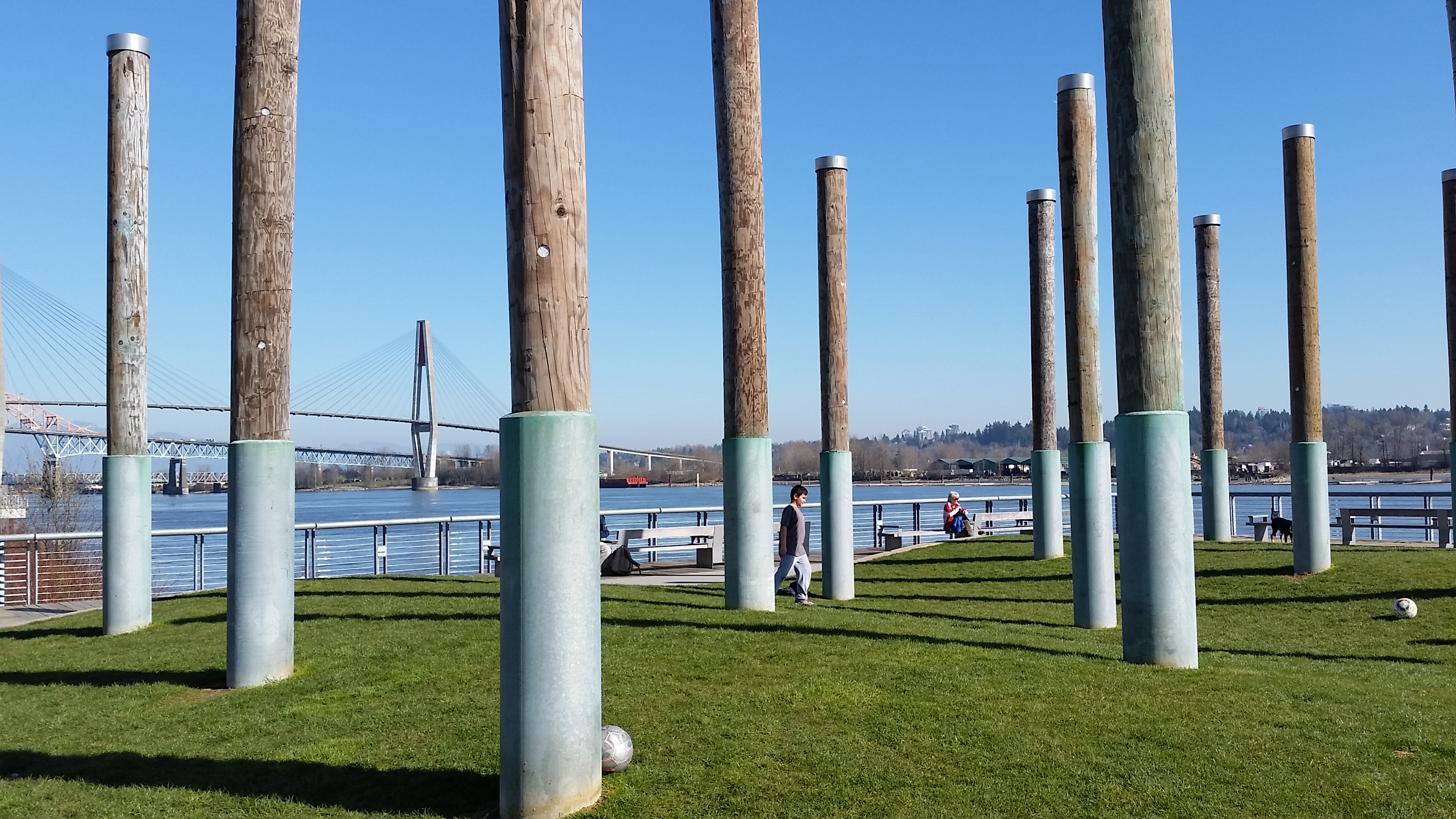
But during the last election, not 6 months ago, there were people running who thought this was a waste of money that no-one would ever use:

20150530_121234
Westminster Pier Park. Saturday, May 30. Early afternoon.

Yet this was a valuable resource we cannot possibly afford to be without:

parkade empty
@HulkParkade, with all parking behind me closed and thousands of people in town for Fan Fest, Saturday, May 30, 2015, early afternoon.

I am happy to say I spent 10 hours in Council meetings today with people who see a more positive vision for the City, and we are moving ahead.

Predictions before Results

The polls on the Translink Transit Transportation referendum plebiscite are closed, the ballots are filled in, but the counting is only beginning. The message from ElectionsBC is that turnout was slightly higher than expected, so the counting is going to take a little longer. It is being suggested that it will likely be three weeks before we have results. The cynic in me suggests the Friday before the week where everyone is trying to decide which weekend to make extra long around the mid-week Canada Day is the perfect time for the provincial government to announce the results of something they really want to avoid talking about, so prediction 1 is that “results day” will be June 26.

I am a guy who likes the occasionally wager, but I’m not taking any bets on the referendum plebiscite result. I think the count will be closer than anyone expects (within 5% either way), but you would need to give me positive odds to make any kind of bet. The turnout is higher than we anticipated, which could be good (the YES side really motivated their voters) or bad (the NO side didn’t throw their ballots away in disgust, but made the effort to vote), and the spread regionally is a lot flatter than I thought.

If you really want to speculate, you can have some fun sticking numbers into Brad Cavanagh’s Plebiscite Predictor tool (my two-minute guess via that tool? 52% No).  Aside from that fun, I’m not going to pretend any kind of ability to predict the result, but I am going to try to predict what happens after the result.

If the result is a YES, the predictions are much easier. The provincial government will cob together a bit of self-back-patting for having such foresight, and will wait until the last possible second to produce some sort of enabling legislation so the PST increase can come into effect on January 1, 2016. Jordan Bateman will make some sort of “martyr against Big Government” reference, say the entire process was rigged and therefore invalid, will hunt for anecdotes of the new tax causing incredible hardship to some person, then will move on to attacking the healthcare system or public education or public toilets or whatever the next great evil is on the Fraser Institute list.

Meanwhile, the Mayors will get to work updating their local transportation plans to suit the new reality, and both the federal and provincial governments will find a way to open the taps so that they can cut the ribbons on every new project. Expect a lot of re-announcements. Municipalities (even those whose Mayors did not support the YES side) will start applying for the matching grants that are going to be available to improve their roads and pedestrian/cycling networks (such as the Q2Q Bridge) and more ribbons will be cut. Councils will update their plans to design future communities around the expanded Frequent Bus Network (in the shorter term) and the new light rail and Skytrain investments (in the longer term).

The Mayors will also continue (as they have for the last decade) to call for a complete re-vamping of TransLink, including a review of the “governance problem” to address the issues that were being raised long before the referendum plebiscite, but were thrown into brighter light by the referendum plebiscite process. I cannot predict if the province will take any action to fix those issues, as they are the only organization that can. Regardless, Mayors will still have disputes about who is getting more service or less and who is pulling their weight as far as regional transportation (i.e. Delta will continue to complain about getting no service, even as they watch a $3-billion bridge being constructed in their front yard), but at least we can move on to arguing about what is being built, and stop arguing about what isn’t. Overall, the region will move on with a good idea what the next 10 years (two council terms!) will bring.

If the results are a NO, the predictions are much more difficult. Of course, we know Jordan Bateman will make some reference to David slaying Goliath, say the process proves that the people are always right (at least when they are battling taxes), then will move on with new vigour to attacking the healthcare system or public education or public toilets or whatever the next great evil is on the Fraser Institute list. How everyone else will react is harder to see.

The Mayors have got a problem, because they need to keep their cities and the region moving, and it would be suggested that the last 2 years since the word plebiscite“referendum” first arose in the heat of the last provincial election, have been almost completely wasted.

Except they really haven’t been wasted. During that time, the Mayors put a plan together that (almost) all of them supported. They managed to put away the knives and agree on a set of priorities and principles. Even after a NO vote, few will argue that the vote was against the Plan (how many times did people say “I like transit and support it, but I’m voting NO because…”). The Mayor of Surrey thinks she can build light rail on her own; the Mayor of Vancouver has no such delusions about the Broadway line. Few are talking about the real meat’n’potatoes of this plan: the new busses, the expanded Frequent Bus Network, B-lines, and night busses, the increased capacity on the existing SkyTrain network, which will benefit every Mayor if the region, from Delta to West Vancouver to Maple Ridge. These things need to happen if we are going to have a livable region, and they need to happen soon. How do we get there?

And again, regardless of the referendum plebiscite result, the Mayors have to continue to press for the governance changes at TransLink that they have been calling for since the 2007 re-org that shuffled them aside from the real regional planning role.

The province has a couple of choices. They can see a NO vote as opportunity to open the TransLink can of worms, and create something new that the region can work with. However, there is no evidence this is actually something the province is desirous of.

Alternately, they can try to turn this back on the Mayors and say: You failed, live with it. They can march ahead with the Massey Tunnel replacement (no referendum) and step in to fund a larger 6- or 8-lane Pattullo (now that alternatives are off the table), and then, I dunno – a new Second Narrows? Rest assured they will beam of their commitment to transit when cutting the ribbon on the Evergreen Line, and if the fall election gives Dianne Watts any influence in Ottawa, maybe the new Mayor of Surrey will get a light rail bauble for her crown. However, without the comprehensive plan, without the commitment to new busses, more B-lines, higher frequency and more reliability on the existing Skytrain System, and a list of priorities something like the Mayor’s Plan, a functional Transit system we will not have.

Trying to understand the Province’s strategy by their public communications is like trying to read tea leaves. The most recent comments by the Premier are not particularly helpful. Allow me to parse:

“what ever happens, people in the lower mainland want more transit. I think everybody agrees with that. The question they are being asked now is how do they want to pay for that transit?”

Respectfully, no. That is not the question “they” are being asked. There have been more than half a dozen proposals about different ways to fund transit (and roads and bridges and cycling, but I’ll give it the pass here) expansion, from property taxes to road pricing to sales taxes and car levies –this proposal was the only one the Province took to the voters. The question “they” are being asked is actually: “Do you want to pay for this specific set of transit and transportation infrastructure through this specific and very limited method?” This is apparent in the many varying (and often self-contradictory) reasons people have provided for voting NO. Actually, if you follow the “no” side rhetoric closely, the question is more “would you like to take the food out of the mouths of struggling hard-working families to build a big cash vault for TransLink Executives to roll in?”

“I think that proposal is a sound one, and I think it would be great for job creation in the lower mainland… it would be great for transit and for the environment in the lower mainland but I think people have a right to make that choice.”

If it is imperative that people have a “right to make that choice” on a specific initiative that will clearly provide so many benefits, from the environment to job creation to the health of the region, someone has to ask why? If it is the right thing to do, and every elected person in the region agrees (with only very few exceptions), why are we intentionally throwing a taxpayer revolt at it? And please remind me again where this “right to make that choice” starts and stops, because no-one voted on the Port Mann, the Massey Tunnel Replacement, LNG plants up the whazoo, MSP premium increases or education budget cuts. Ugh, there I go, criticising the process again… Let me get back on track here.

It seems the one place the Premier and I agree is that the Mayors Plan, or something like it, has to happen, and very soon. As a region we cannot afford to balkanize our sustainable transportation system while the Ministry of Transportation pushes freeways through our neighbourhoods, because that is the only option left. The Pecha Kucha presentation by Gordon Price in February put it as clearly and eloquently as anyone could: Planning for a Sustainable Transportation Plan is an integral to what we are as a region, to everything we love about Greater Vancouver, Cities in a Sea of Green:

Cities in a Sea of Green (worth your 6 minutes to hear).

I think the Mayors would be best served by immediately coming out after a NO announcement and saying “this is still the plan”. Then ask the province, in no uncertain terms, to live up to what the Premier is quick to reiterate: This region needs transit investment, and it is the Province’s responsibility to get it done. We tried the referendum plebiscite route, we still have a viable plan here: What next?

Because there will be finger-pointing and blaming here if it goes to a NO, and the Mayors need to stand together, or they will fall apart, and the people hoping for a sustainable future of the region – those of us who want this City to be livable for the coming decades – will be the biggest losers.

Council Meeting – May 25, 2015

If you tuned into your TV at 7:00 and noticed there was no Council Meeting being televised, rest assured, we didn’t take the day off. We actually had a Public Hearing day, and two Bylaws went to the public for comment. But no-one appeared to speak on either (in contrast to the last Public Hearing night we had!). As is the practice, Regular Council started as soon a Public Hearing ended, and with a relatively short agenda lacking in controversial issues, we were actually done the week’s business before 7:00.

I don’t feel bad about the “short day”. My Council Monday started at 9:00am with a 2.5 hour Mayor’s Transportation Taskforce meeting, then a closed Council Session from 12:00-3:00, the Committee of the Whole at 3:00 for about an hour, then back to another hour of Closed meeting, a quick hour for dinner and then Public Hearing. So by 7:00, we were 10 hours in.

I should talk about the Public Hearings first.

Zoning Amendment Bylaw No 7756, 2015
This change in the Bylaw language broadens the definition of what a “Commercial School” is, from strictly business-clerk-type schools to include healthcare and other topics that are more common now in New Westminster and regionally than they were back when the Zoning law was created. This brings some existing businesses in the City back into compliance, and opens the door for more business development opportunities, especially in Sapperton as the Health Care Cluster economic plan is developed.

No-one spoke for or against this Bylaw, and Council gave it Third Reading.

Zoning Amendment Bylaw No 7741, 2015
This is the formal public review of the City’s Family Friendly Housing Policy, which will now be adopted into the Bylaw. This has been in process for a while, and it is coincidental (yet perhaps apropos) that we have a Public Hearing on this topic in the same week that the affordability and availability of family housing is on the front page of newspapers, and on the front steps of the Vancouver Art Gallery.

Council has approved a Bylaw that will mandate a minimum number of 2- and 3-bedroom units that will be included in mutli-family developments, along with a few other details that will help increase the number of family-sized suites in the City.

We received no presentations on this, but did receive correspondence from the Urban Development Institute that supported the general idea of the bylaw, but made a few recommendations about small changes we can make to better balance the need for larger units with the need of developers to earn a return on their investment. Over the next few years, Staff and Council will be tracking the implementation of this Bylaw, and that on-going review will no doubt result in some subtle improvements. However, for now I am happy to support the City moving in this direction, and am happy that New Westminster is once again leading the region in an initiative that makes our City more livable for more people.

Council gave the Bylaw Third Reading.

After the Public Hearing, we dropped immediately into our regular meeting, starting with the Recommendations from Committee of the Whole meeting from earlier in the day:

327 Fourth Street HRA Application
This is a plan to subdivide one of the two remaining properties on the east side of 300 block of Fourth Street that has not yet been subdivided. Almost every house on this block has already been split up with a second home facing Pine Street.

Council referred this proposal for first and second readings, and sent it to Public Hearing on June 22, 2015. C’mon out and tell us what you think!

328 Holmes Street Subdivision Application
This is a plan to subdivide a 66-foot lot on the hilly part of Holmes Street with an older (but not “heritage”) home on it into two narrower 33-foot lots, so that two houses can be build under RS-5 zoning. There are a couple of other houses on this block where such a subdivision has been done.

Council referred this proposal for first and second readings, and sent it to Public Hearing on June 22, 2015. C’mon out and tell us what you think!

Rezoning of 646 Ewen Avenue
This plan is a little different. The property at 646 Ewen is currently vacant, but is zoned Local Commercial District. It is at a pretty central pedestrian “crossroads” in Queensborough, where Wood (with the Temple and Sukh Sagar Park are located, but any developed land within 250m is single-family-residential. The plan is to re-zone the lot to residential so a single family home (one that actually faces Wood, not Ewen) can be built.

Council referred this proposal for first and second readings, and sent it to Public Hearing on June 22, 2015. C’mon out and tell us what you think!

Development Permit application for 418 Thirteenth street
Finally, this multi-family development plan on the corner of 13th Street and Kamloops Street (just a block and a half above Stewardson and 13th) went through the public consultation and approval process back in the heady days of late summer 2014, when NWimby was a blogger and a hot race for the Next Mayor of New Westminster was just starting to bubble over. For whatever reason, the Permit was recommended for issuance, but that issuance never happened. We are approving the issuance now.

Regardless of delays, this looks like a pretty interesting project, with 13 primarily ground-oriented mid-sized townhouses/apartments that will address Thirteenth Street is a pretty creative way and hopefully provide some reasonably-priced family-friendly housing.

2015 Spring Freshet Update
Snowpack is still low around much of the province, although the melt-off is a little late. Barring a protracted heat wave until mid-June followed by an exceptional regional rain-on-snow event, we can probably put our sandbags away for this year.

New City-Wide Economic Plan
This is a proposal from staff to update the City’s Economic Development Plan. I was initially concerned about the timing of starting yet another planning process when we are in the middle of comprehensive OCP consultation planning process, and are working on a Public Engagement Strategy, MTP implementation, Economic Health Care Cluster plan, the Intelligent City initiative, and this council is still working on strategic planning objectives for the term. I was afraid we might approach strategic plan fatigue here.

However, chatting with staff, they feel that this is not an onerous task, and it is actually important to start right now, as there are many emerging opportunities for which we need to be ready to address from an economic-development front. Staff could use this plan to help set the framework for that. I can think of no better example than the just-announced launch of Phase 1 of the major RCH capital upgrade. This is the beginning of a decade-long development process that is going to re-shape Royal Columbian, and consequently much of the Sapperton commercial and institutional lands. From an economic development perspective, we need to have a plan to optimize the once-in-a-generation opportunity that comes with major expansion of your single largest employer.

Council voted to endorse staff’s suggested approach to the development of a new economic plan. Expect to hear some public consultation soon.

420 St, George Street HRA
One more piece of land-development business this week. This is a plan to subdivide a single-family lot on one of those little side-streets between Honour House and Queens Ave United Church, to build an infill house and do some restoration of the extant 1890 Burton Taylor house.

Council referred this proposal for first and second readings, and sent it to what is starting to look like a very busy Public Hearing on June 22, 2015. C’mon out and tell us what you think!

Policy for Disabled Parking in Residential Neighbourhoods
This is a an interesting policy idea that might make a big difference for a very small number of people, and have little impact on anyone else. In short, a resident can apply to the City to have a parking area on a residential street adjacent to or near their house designated as a “Disabled Parking Only” spot. This would, presumably, provide them a better opportunity for accessible parking near their home if they do not already have accessible parking on their property.

It is important to note that these would remain public parking spots which anyone can use when it is available, as long as that anyone has a SPARC permit on their dash. As a City, we cannot guarantee you exclusive access to the parking spot on the curb in front of your house, but we can take initiatives like this to make the parking supply better suit the needs of the community. I serve as the Chair of the Access Ability Advisory Committee, and that committee whole-heartedly endorsed this initiative. Council voted to make it policy.

Train Whistle Cessation Update
The City is working on getting rid of the late-night train horns  (and the day ones as well, thought we get fewer complaints about those). The approach involves consultation with the railways (who have final say) and investing in the capital improvements required to make the Railways say yes. After many years of individual citizens wrangling with the rail companies over several issues with such a confrontational approach that legal settlements preclude some of those residents from even talking about the dispute, a new approach adopted by City Council a few years ago is finally turning the tide and making progress on this issue.

Yes, progress is slow, as there are logistical, legal, and infrastructure details abound, but the City has managed to get a few crossings designated as whistle-free, and has a solid deadline for many others. The image up top shows the many crossing in the City, and which ones are administered by which of the three main rail operators. Read the report for more details (especially on the challenges at Braid and Spruce Streets), but short version is we now have a tentative plan for when they will be made whistle-free:

Downtown (Front Street at Begbie and 4th): September 2015.
Sapperton (Cumberland): August 2015
Sapperton (Braid and Spruce): To Be Determined
Quayside Drive: December 2016
20th Street: August 2015
Queensborough (Port Royal): Done
Queensorough (5 crossings along Ewen): April 2016.

And, as always, we blasted through a number of Bylaws for adoption or readings:

7761 2015 – Electrical Utility Commission Amendment Bylaw
As discussed last meeting, we adopted the Bylaw that named another person to the El;ectrical Utility Commission.

7765 2015 – Bylaw Notice Enforcement Bylaw Amendment
As discussed last meeting, we adopted the Bylaw that updated our Bylaw enforceability and fines.

7712 2015 – HRA for 327 Fourth Street
7713 2015 – Heritage Designation for 327 Fourth Street
7760 2015 – Zoning Amendment for 328 Holmes Street
7758 2015 – Zoning Amendment for 646 Ewen Street
7736 2015 – HRA for 420 St. George Street
7737 2015 – Heritage Designation for 420 St. George Street
As discussed above, these are the First and Second Readings for the projects going to Public Hearing on June 22nd.

And at a little before 7:00, just as all our fans at Dunwood were tuning in,  we were done.
Ask Pat: Age-restricted Condos

Brad asks—

There are a number of townhouses and condo units in New Westminster that are age-restricted to 19+ only. This age discrimination is legal under BC’s Human Rights Code (and purchasing property is the only area laid out in the Human Rights Code in which it’s legal to discriminate against age).

Is there anything that a municipality in BC can do to extend the Human Rights Code to make age discrimination when purchasing property illegal?

If so, might New Westminster consider doing this to improve the housing stock available to families with children under 19?

I remember back when @MsNWimby and I were looking to upgrade from our condo on Royal Ave several years back. We weren’t really hunting hard, as we really liked our Condo and the building, but with my continued obsession with bicycles and inkling of wanting to start a garden (this is before the New Westminster Community Garden Society got launched), living on the 20th floor was starting to get stale. So we started softly looking around.

Our shopping was 95% New Westminster, and we weren’t fussed about house or townhome, as long as we had a place for bikes and a bit of soil to put plants into. Walkability to SkyTrain was a high priority, as was being away from noisy traffic. We looked at a few of the spacious townhouses in the Fraserview area. At more than one, the seller looked at us (a couple close enough to their prime reproductive years looking a multi-bedroom units) and pointed out that this was an “age restricted” complex. No-one under 19 admitted… we weren’t thinking of starting a family, were we?

I remember specifically one relatively affordable 2,400 square foot 3 bedroom 3 bath two-car-garage unit opening to the ravine park where you were allowed to have two cats and two dogs, but no people under the age of 19. I thought “bullshit”. How could that type of discrimination even be legal?

Apparently it is.

Section 123 of the Strata Property Act (a provincial legislation over which a City has no jurisdiction) makes it clear that Strata Councils can pass Bylaws that restrict the ages of people residing in a Strata Lot, as long as it does not violate the Human Rights Code.

Section 9 of the BC Human Rights Code says you cannot discriminate against a person attempting to purchase a property on account of their race, colour, religion, or sexual orientation, but does not restrict discrimination based on a age.

Section 10 of the same Act deals with tenancy, saying you cannot refuse to rent to someone for the same reasons, but adds age and “family status” to the list of discriminatory factors.

So you cannot use a persons youth or a family’s children as a reason to refuse renting an apartment, but you can use those reasons to refuse to allow them to live in an apartment they own. Government is stupid.

There is a provision in the Act for 55+ “seniors housing”, but the 19+ part is not really spelled out anywhere in the Act, except that “age” in the act is defined to mean an age of 19 years or more – if you are under 19, you are not protected from age discrimination by the Act.

Of course, the Human Rights Code is, ultimately, superseded by the Charter of Rights and Freedoms, so I suppose some Constitutional Lawyer may be able to argue that the gaps in the Human Rights Code violate the Charter, but I have neither the black robe nor powdered wig to opine knowledgably about that.

One interesting point: the pressing need for family-sized housing is having an interesting effect on age-restricted condos. Prices for condos in age-restricted complexes are generally depressed (more than 10% in many cases), and CMHC are very reluctant to (or, according to some sources, completely refuse to) provide Mortgage Insurance to complexes with age restrictions.

Is there anything that a Municipality can do? Not directly. We could work through the LMLGA and UBCM to pass resolutions asking the provincial government to change the rules, but I am not sure there would be much political appetite in senior governments (or in local government, for that matter) to poke that hornet’s nest.

I would love to hear from people defending the 19+ restrictions – are they really a good thing for a neighbourhood, or for a community?

Talking Taxes (pt. 2)

A little while ago, I blogged about Property Taxes, and tried to put some context to where New Westminster compares regionally around residential property tax levels. I used this dataset provided by the Province, as comparing the financial documents of all 21 Lower Mainland municipalities from their on-line reporting is a bit of a challenge. I demonstrated (I think) that New Westminster is neither the highest of lowest taxes municipality, but was either in the top third (if you take a very raw measure) or right about in the middle (if you actually count how much the typical household or resident pays).

But what about businesses? During the last election, it was suggested in print by one of the (unsuccessful) candidates that taxes charged to businesses in New Wesmtinster are “the highest in Metro Vancouver”. This did not make sense to me at the time, but didn’t rise to the point, as I wanted to be able to put number to the issue. The simplest method, of course is to compare how much is collected from businesses of every type on a per-capita basis:

Table3

You can see that New Westminster is 8th in the crazy category of most taxes per capita from businesses of all types. If you look only at commercial businesses (blue), we are the 6th highest. This is where you can see some of land use choices affecting the numbers. Delta has huge tracts of industrial land on Annacis Island that provides almost half of its non-residential taxes, and Port Moody hosts a lot of major industrial use. Meanwhile, Vancouver is truly post-industrial, with their largest “industry” being non-industrial commercial businesses. There is nothing here that makes New Westminster anomalous.

However, this is a rather useless comparison. Unlike residential taxes, you cannot evaluate business taxes on a per-capita basis. With the varying levels of residential/business mix, you can’t really count up the number of businesses or business owners or leasable square footage and divide the taxes collected between those groups, as the variables are way too…uh…variable. So how do we compare apples in this diverse bowl of fruit?

One way would be to look what proportion of the total property tax revenue is paid by residents, and what proportion is paid by businesses. To index this, you need to compare it to the proportion of assessed land value that is zoned Residential vs. that zoned Commercial. This allows you to recognize anomalies like Anmore and West Vancouver (which have almost all of their land in residential use) and compare them to places like Langley City and Port Moody, where commercial land use is proportionally large.

First, compare the percentage of land value that is in residential property with the percentage of tax revenue drawn from that residential land:

Table1

You can see that in Anmore 100% of the property is residential, therefore that is the only source of revenue. At the other end of the “best fit line” is Burnaby, where 80% of the land is residential, but only 50% of the tax revenue comes from residential taxes. Note the green line, which represents an even balance between proportion of residential land value and tax revenue. The best fit around which all municipalities cluster is well above that, which makes sense as all municipalities charge a higher Mil Rate for businesses and industry than for residents. The amount more they charge is the “Multiplier”.

In New Westminster, our Multipliers in 2015 are shown on the table below. The first number is just New Westminster taxes, the second includes all the School, GVRD, MFA, etc. taxes that the City has no real control over.

Property use    Multiplier (City Only)     (all taxes)
Residential                            x 1                               x 1
Business                                x 3.475                       x 3.403
Light Industry                      x 4.566                      x 4.131
Heavy Industry                    x 8.102                      x 6.444

But back to the graph above. If a municipality charges less to residents in proportion to their property value than they do to business and industry in comparison to other municipalities, then they appear below the best fit line. For lack of a less-pejorative term, I’ll call these municipalities “resident friendly”. Those above the line are more “business friendly”. Langley City is anomalously “resident friendly”, where North Van City and Port Moody are more “Business Friendly”.

However, much of what controls the proportion of industrial land is structural to the economy and geography. Today’s Delta won the lottery in 1955 when the island was designated as the region’s first Industrial Park, and the high-multiplier property taxes started rolling in. Another way to look at the above graph is to flip it over looking only at commercial business taxes:

Table2

This time the best fit is under the (green) equality line because every business in every municipality pays more than its share of property taxes. The further under the best fit line, the less “business friendly” a Municipality may be considered. Vancouver is the obvious standout (the attractiveness for major businesses of being located at the central business district of the metropolis demands a premium), but New Westminster, Coquitlam, and the District of North Vancouver also appear a little below the line, and have very different land use proportions when looking at residential vs. industrial vs. commercial.

This raises a question which is completely rhetorical, but well worth asking: what should be the balance between residential and business taxation? Should a City like New Westminster give business owners a bit of a break to encourage job creation, or should we keep residential property taxes lower to manage the affordability of living here? Should businesses subsidize residents, or vice versa? If “neither”, what is the balance?

Just for the fun of it, I plotted every municipality’s details on the same graph. Population is on the X axis, and the total land assessed value on the Y axis. The area of the pies represent the annual tax revenue, and the colours of the pie charts represent the tax revenue by land use. Note that Vancouver and Surrey are both way off the chart here. Both their populations (640,914 and 504,661 respectively) and assessed land values ($221 Billion and $85 Billion) put them in a range that is out of scale with the rest of the graph.

Table6

I don’t have much to say about this graph except that New Westminster is snugly right in the middle on pretty much every measure. The amount of tax revenue collected and the proportion of residential vs. other types of taxation is pretty much right where you would expect for a City of our size and population. It is clear that we do not, by any measure, have the highest taxes in Metro Vancouver, nor are we the lowest, regardless of whether you are a business or a resident. We are somewhere in the middle, proportionate with our land use and population size.

All of this data is from 2014, and the new 2015 reporting to the Provincial government is starting to trickle in. This year, New Westminster Council approved a 2.42% tax increase, which is higher than the 1.3% increase in the Consumer Price Index over the fiscal year 2014-2015. This raises the question of whether our tax increases are happening at an anomalous rate. I’ll try to dig out some data for that and bring you a Part 3.

Ask Pat: Parking by phone.

Anonymous123 asks—

Will the city be offering pay by phone for parking? I thought that one of the reasons for these fancy new metres was so that this service could be offered. I personally find it far more convenient. I see exactly the same metres at River Market and Plaza 88 and they both offer pay by phone, yet the city does not. What gives?

Short answer: Yes. The new digital pay stations being installed are compatible with Pay-by-Phone applications. The removal of the old meters and the installation of the new ones is an ongoing process, however, and there are a few steps that need to happen in the City’s internal processes before full pay-by-phone comes on line. I hope it happens by the end of the year, and that would be a safe bet, but I’m not making any promises.

Council Meeting – May 11, 2015

Wow, we had a lot of work to do this week, but not until after a few proclamations were proclaimed.

We also, just before Council started, were given a grand tour of the New Westminster Hyack float (see above). The theme is a little cheeky, and the float has already won awards in spring Parades. I was also given a little background about the details of how a float operates. The New Westminster Hyack Float is actually electric, has a range of about 20km, and a top speed of about 35km/h. I was not, much to my chagrin, permitted to check it’s cornering. Anyway, this is an important reminder that Hyack week starts this weekend, with the Antique Sale and Anvil Battery Salute this weekend, the May Day dances on May 20th, and of course, the Parade and Uptown Street Fest on the 23rd.

After talking about airplanes with the previous Mayor, we received a presentation from Staff to update us on the process for the OCP, and the Visions and Goals developed through the first phase of public and stakeholder consultation. The report was great, and worth a look-through if you are at all interested in the Future of New Westminster.

A not-uncommon genre of complaint I hear is that the City is not managing growth appropriately. Although many are excited to see a more dynamic urban environment, others look at planned developments and say “what will happen with all the cars!?” or “how are we going to fit them all in the Library / Pool/ Community Centre” or “what does this mean for the character of my neighbourhood”?

The answers to those questions are in the OCP. We can, and will, plan to accommodate the growth, and can balance the need to accommodate people moving to the regions with protecting (or even enhancing) the livability of the places people live in today. But it takes careful planning, and community participation in that planning so we can understand what people are looking for when they say “livability” or “mobility” or “character”. The “Love Our City” event back in February brought a lot of good ideas forward, and started setting the table for what the community wants to look like in 25 years.

Because growth is going to happen. There are going to be a million more people in the Lower Mainland, and something like 30,000 of them are going to live in New Westminster. We cannot turn or back on that growth or prevent it, because we have agreed to a regional growth strategy with our Metro area neighbours, and because forcing those people to find a place to live in greenfields south and east of us will put unacceptable pressure on our ALR and employment lands, and will monumentally increase the tolls on our regional infrastructure (roads, sewers, water supply, etc.)

The rub here is how we accommodate growth in New West. To simplify, people seem to like (or at least accept) tower-oriented high density mixed use near SkyTrain Stations as the backbone of new urban development. We also have areas of New Westminster (Lower Sapperton, Queens Park, Massey Heights) where single-family detached will be the dominant land use for another generation at least, although opportunities do exist for “sensitive infill” like laneway houses, strata-dividing larger homes, or narrow-lot infill as long as the approach is diffuse and not to impactful on neighbourhood character.

The fun part is what happens in the middle. My neighbourhood of Brow of the Hill, Queensborough, Moody Park, and some other areas have already seem some moderate density increases, and may be ripe for more. The range that fits here would be wide, and where a lot of consultation may be needed: from duplexes to townhomes to fee-simple row homes and mixed commercial-residential buildings up to 6 stories. These types of developments can really add to the “street life” of commercial areas like 12th Street, bring more affordable family-sized options, while protecting a neighbourhood spirit where you know and trust your neighbours.

There is a lot more to come on this, and we should be looking forward to the Fall when all of the data collected up to here will be condensed into a few draft planning concepts – then we can really start to put a vision to New Westminster in 2041. Before that, watch this space, as there will be a public survey component to the current data, to see if you have ideas to improve it. Expect to see that out in the next week or two.

After these reports, we moved on to recommendations from the Committee of the Whole meeting from earlier in the day:

Council meeting schedule changes

We have been making adjustments to our Council Schedule, as there is an interest both with Staff and Council to have more “workshop” type meetings where we dig down into a project or issue at more detail and have a more complete discussion. Staff suggested we take three dates when Council is not scheduled to meet, and make those special workshop days. I have two problems with this.

First, I work for a living, and have had to make some accommodation with my employer to do my Council duties. We have an Annual Council Schedule, and I used that to work out the accommodation I need, and my employer has agreed to adjust to that (with unpaid time off). It is not fair to my employer for me to keep changing that schedule – they need certainty that I will remain a reliable employee. I am not the only person on Council who has a “real” job, and I shouldn’t be. Council does not pay enough to cover a mortgage in New Westminster, and I do not want to exclude working-age people in the making-a-living stage of life from serving on Council, so accommodation to our working schedules is really important in my opinion.

Second, these all-day workshop meetings take a lot of senior staff time. I do not want to take three more days from their already busy schedules to do these workshops. At least not until we have found a way to make our existing meetings as efficient as possible. There is a balance, of course, between having a meaningful and complete discussion, and running and efficient meeting. There are also two parts to that: the way reports are written to maximize the information and clarity of information, and the work that Council puts in preparing prior to a meeting so we are not reviewing information, but are enhancing our understanding to allow informed decision-making. We are a good team, Council and Staff, but we have some work to do to make our operation more efficient.

In the end, we compromised by adding a June 15th Workshop meeting, and asking Staff to recommend ways to improve the efficiency of our meetings or otherwise fit the other workshop topics into our existing schedule.

OCP Review, Draft Vision and Goals for OurCity 2041

We accepted the report from staff as discussed at some length above.

DP for 620 Salter Street

This is a development application for a 54-unit townhouse development on Salter Street in Queensborough. There will be an Opportunity to be Heard on this permit application on June 22, 2015. C’mon out and tell us what you think.

DP for 843 Ewen Ave

This is a development application for a 67-unit townhouse development on Ewen Avenue in Queensborough. There will be an Opportunity to be Heard on this permit application on June 22, 2015. C’mon out and tell us what you think.

DP for 188 Wood Street

This is a development application for a 65-unit townhouse development on Wood Street (the address used to be 702 Salter Street) in Queensborough. There will be an Opportunity to be Heard on this permit application on June 22, 2015. C’mon out and tell us what you think.

DP for 240 Jardine Street

This is a development application for a 34-unit townhouse development on Jardine Street in Queensborough. There will be an Opportunity to be Heard on this permit application on June 22, 2015. C’mon out and tell us what you think.

Editorializing Alert! Holy Cow. 4 separate developments in one week. 218 units averaging 1,330 square feet and including more than 600 bedrooms and 434 parking spots. 289,649 total square feet on 8.65 acres. Clearly, Queensborough is booming with the kind of family-oriented building that people on the elevated side of the river are clamouring for. What’s missing? Why are people in New West saying there are no affordable family homes being built? Is it one bridge too far? Not enough amenities nearby? Transit access? Lack of the urban feel? What has Queensborough got that the uphill neighbourhoods don’t?

New Westminster Healthier Community Partnership Committee

This was an update report on a Committee that was struck back in 2011 as a partnership between the City, the School District and Fraser Health. Recent actions include an agreement to integrate health goals in to the Official Community Plan, which is a bit of leading-edge as far as health policy for a City. You can read more about the goals of the Partnership at this link.

Council received the report for information.

Amendment to Bylaw Notice Enforcement Bylaw

This amendment coordinates the way several recent changes in various City bylaws interact with the bylaw that provides bylaw officers the legal ability to write tickets. Yeah, it seems kind of confusing that we need a ticketing bylaw that has to refer to every bylaw that refers to it, and it has to change when those bylaws do, but hey, no-one said government was simple.

Council referred this for three readings (see below).

2014 Filming Update

New Westminster is popular for filming, and it was rather fitting that this report came to council on a date when Tiperrary Park was filled with fog machines and period clothing as another film set day was occurring. 2014 was but down from 2013 (reflecting the volatility of the industry and the impact of a shifting Canadian Dollar on the market), but is up in 2015. The City charged film companies $313,000 in 2014 to work in the City, and it cost the City about $130,000 to provide services to accommodate that filming. The net profit to the City is modest in the scope of our annual $100M budget, but is a respectable return on investment.

More important to me, the negative impacts of filming on residents and businesses are being managed pretty well, and the positive economic impacts for local businesses (not to mention the sometimes-significant stipends paid to businesses and residents for the use of their property) are being felt across the City. New Westminster has great locations, but our great staff also helps make it a desirable place to film.

Electrical Utility Bylaw Amendment

The City has a bylaw that regulates its Electrical Utility. There are a couple of initiatives ramping up right now that have the potential to really expand the scope of the Utility – a potential district Energy Utility for the Sapperton/RCH area and the installation and operation of a dark fibre network to support the Intelligent City Initiative. Further, more of the Energy Save New West operation is involving the Electrical Utility, so the range and amount of work the electrical Commission will be required to do is going up. It was agreed by Council that a second representative be elected to the Commission to help spread the load.

The required bylaw change was referred to Council for three readings (see below).

Surrey Fraser Docks Amendment of Permit

As no-one could possibly have foreseen (/sarcasm), Fraser Surrey Docks is already looking to amend the permit they received from Port Metro Vancouver last year to introduce the import and trans-loading of thermal coal from the Powder River Basin in the US at their Surrey facility. They have not even started construction on the facility (as they are a little tied up with a couple of Metro Vancouver Permit snafus and a legal case), but they are asking to shift from loading barges to loading Panamax-sized ocean-going bulk carriers.

They are currently in the pre-application phase, meaning they are doing a bit of public outreach to decide if an application will go forward. If they go forward, they will need to update the human health and environmental risk reports, along with the marine traffic impacts and other studies, to reflect the new operation, then they will go through some level of stakeholder or public engagement.

Regardless, it is good to get your comments in early, as this phase of the public engagement ends on May 19th. Go to this web address and fill in the online form, e-mail your comments, or give them a phone call, They should hear from you, and reply to your concerns, after all, it is your back yard, and your climate.

Closure of the Pattullo Bridge Sidewalk

This was a concern brought to me by a constituent who commutes across the Pattullo Bridge on his bike to his job at Surrey Memorial Hospital on a regular basis. Signs went up recently announcing nighttime closures of the sidewalk for a month starting May 10th. I went to the TransLink website and saw no information about this closure (until this notice went up on May 10th), and it took City staff making some contact with TransLink to get some details.

The concern here is that the sidewalk is a vital transportation link for a lot of people, be they cyclists or pedestrians, and there are no ready replacements, especially at night when the Skytrain may not be running. Closures of a link with no ready alternative can by majorly disruptive, and putting a sign up a week beforehand is not optimum notice. Ideally, TransLink should be providing alternate means for those who rely on this crossing if the Sidewalk is going to be closed for a longer period of time.

I recognize that the works being proposed to repair the railing may be necessary, but there needs to be some recognition of the impacts on non-drivers when a vital link like this is closed. This relates not just to this project, but further repairs planned for the Pattullo in the coming months (at least according to their on-line tender documents) and, of course, eventual replacement if we get a YES vote. The Pattullo is not just a car bridge, but is a vital sustainable transportation link. If that link is not available for some time, TransLink really needs to come ot the plate with a plan to accommodate users.

Correspondence from DTRA

We also received correspondence form the Downtown Residents Association in regards to some specific and general traffic and safety concerns in their neighbourhood. I asked that Council direct these concerns to the Neighbourhood Traffic Advisory Committee and the Advisory Committee for Transit, Bicycles and Pedestrians so that they can review and send recommendations that Council may be able to act on.

Bylaws, Bylaws, Bylaws.

7749 2015 – Downtown BIA

This update of the BIA Parcel Tax saw three readings on April 27, and was adopted at this meeting. It’s now the Law of the Land.

7750 2015 – Downtown BIA – secondary area

This update of the BIA Parcel Tax for the other part of Downtown saw three readings on April 27, and was adopted at this meeting. It’s now the Law of the Land.

7748 2015 – Uptown BIA

This is an update of the BIA Parcel Tax for the Uptown BIA, which also saw three readings on April 27, and was adopted at this meeting. It’s now the Law of the Land.

7751 2015 – Tax Rates Bylaw

The bylaw that makes our tax increase for 2015 official saw three readings on April 27. Now that it has been adopted, it’s the Law of the Land.

7734 2015 and 7735 2015– HRA for 336 Agnes

As discussed back on the 30th of March, these are the Bylaws that support the HRA for renovation of Dontenwill Hall. Law of the Land, folks!

7761 2015 – Electrical Utility Commission Amendment Bylaw

As discussed above, this bylaw saw three readings.

7765 2015 – Bylaw Notice Enforcement Bylaw Amendment

As discussed above, this bylaw saw three readings.

And with that, we all went home.