In which our Hero Questions his mind

I had a dream last night that I had a panic attack.
This is interesting for several reasons. First, I rarely if ever remember my dreams. Second, I have never had an actual panic attack when I was awake. Third, I have been, if not half-heartedly, at most two-thirds heartedly studying for my Professional Practice Exam, the first real sit-down-in-a-classroom and fill-out-bubbles-with-a-No-2-pencil closed-book-exam I have had to write in something like 10 years.

Funny part is that it wasn’t the PPE I was panicking about in the dream: it was my 2011-2012 Hockey Pool Draft.

In my dream, it was Poole Draft Day, and apparently, I had drawn first in the draft. I was completely unable to make my first pick. Will the Sedins pull it off again? Which one to pick? Is Crosby back? Why can’t I remember the pre-season? Where did Stamkos end up after free agency? Did he get moved? How the hell to you spell Ovechkin!?! (it seems it was vitally important in my dream pool that the player’s name be spelled correctly). Everyone is staring at me, waiting for mee to fill out the form… in a panic reflex, I write in “Oveckin”. No problem. Plausible deniability. But then the 20 other guys all fill in their picks instantly and I immediately have to decide again. How did they do that so fast, and now they are all waiting for me again. Oh, the curse of the unprepared. Where is my draft sheet? Why can’t I see what they picked? I was completely paralysed in indecision…until I woke up.

Funny, I didn’t feel the least bit stressed about my exam. Maybe I should be?

If nothing else, I have resolved to be fully prepared for this year’s Draft. I’ll have my pick sheet prepared before the pre-season games start. Last year’s stats will be reviewed, all the player moves analysed for strength and weakness. I will make the appropriate adjustments during the pre-season based on how the lines are shaping up. My finish in the basement of last year’s pool will not be repeated.

A man has to set some priorities.

Oh, and I wrote my PPE today. No panic, I was prepared. There were a few very thought-provoking questions, a few that surprised me, but it all went well. I’ll know the results in 8 weeks, just in time for the NHL Pre-season.

Back to blogging.

Worth taking the time to read…

Thanks Stephen Rees for pointing out this article. This is well worth the read. There are a dozen killer quotes here, but I am going to threaten the author’s Intellectual Property Rights ad quote and entire paragraph, becuseh any editing of it would be a crime:

“Right now, there’s a war going on against science in Canada. In order to satisfy a small but powerful political base, the PMO is engaged in a not-so-clandestine operation to dismantle and silence the many credible opponents to the Harper doctrine. Why kill the census? Literally in order to make decisions in the dark, without the relevant data. Hence the prisons. Why de-fund scientific research? Because whole branches of the natural sciences are premised on things like evolution, a theory the minister responsible made it clear he doesn’t understand – and likely doesn’t believe in. Why settle for weak platitudes on climate change? Because despite global scientific consensus, elements of the Conservative base don’t believe human activity could warm the planet. Centuries of rational thought and academic tradition, dating back to the Renaissance, is being thrown out the window in favour of an ideology that doesn’t reflect reality.”

Even if you don’t care, or think our current government is the bee’s knees… read this article.

July Excuses

I am taking a bit of a hiatus, folks. I will be significantly reducing my Bloggy outputs for a few weeks.

Mostly this is because I have to write an exam near the end of July, and I really need to spend my limited spare time with my head down reading very dull material on the Law .

In the meantime, I recommend you all watch the Tour de France on TSN and cheer on Andy Schleck (who is my favourite to beat the Spanish FingerBanger), but also keep an eye on last year’s real standout Ryder Hesjedal, he is Canadian, and has only a narrow chance of winning, but he should finish in the top 10, and may some day replace Steve Bauer as Canada’s greatest Grand Tour rider.

…or feel free to talk amongst yourselves.

What’s the problem with burning trash?

Back in 2009, when I got involved in the public consultations on Metro Vancouver’s Integrated Solid Waste and Resource Management Plan (ISWRMP), I spent a lot of time thinking about the merits and costs of trash incineration, which is euphemistically called Waste-to-Energy, or WTE. In the end, I took a position against WTE, but not for the reasons that many others oppose it. With this subject coming up again locally with recent action at the Urban Woodwaste site, I thought I would clarify where my position is coming form.

Right off the bat, we should define some terms. WTE can mean a lot of things, including the use of heat from domestic sewage to make power, or extracting water heat from cooling towers at industrial sites, or using flare gas from a sewage plant to turn a turbine, to replacing fuel in a gas-fired boiler with wood scraps… most of my comments on this post will limit the WTE definition to burning domestic garbage to produce steam or electricity, as proposed in “Goal 3” of the ISWRMP.

This creates the distinction between the Metro Vancouver waste incinerator in Burnaby and the introduction of wood waste gasification plants at facilities like Kruger’s paper plant in New Westminster. In the former, an amalgam of biomass and fossil fuels mixed with non-consumables are burned to produce electricity to sell to BC Hydro, or steam to sell to neighbouring businesses. In the latter, a business is replacing the fossil fuel going into the boilers it needs to operate with locally sourced non-fossil carbon. The first is designed to make money burning fossil fuels; the second is designed to make money reducing the burning of fossil fuels. Big difference.

Metro Vancouver (and apparently, our Mayor) are bullish on WTE facilities. Although the public consultation showed a strong distaste for them, and the Fraser Valley Regional District was vociferous about Vancouver’s trash being added to its airshed along with Vancouver’s exhaust, the final ISWRMP included WTE (notably, that plan was not passed by the former Minister of Environment, who hails from the Fraser Valley, and is still on the desk of the current Minister, who hails from a riding much closer to the Cache Creek Landfill).

The arguments for WTE are almost all made in contrast to landfilling. Proponents argue that WTE is safe, is popular in Europe, has a lower GHG footprint, and turns the economics of waste from costing us money to bringing us profits. Opponents worry about air quality, the reality of the GHG equations, and about creating a “market” for trash that will need to be filled. There is also a healthy dose of NIMBYism in some of the arguments against: who wants 300 trucks a day dumping trash into an industrial site in their backyard? As always, I can opine on all of these points.

Much to the chagrin of many of my “green” friends and colleagues, I don’t worry about the safety of these plants. I think that the air quality impacts are measurable, and regulations exist to manage them. A well designed and property managed WTE facility should not put out any dioxins or furans (the carbons are heated high enough and the oxygen content is high enough in the combustion that the problematic volatiles like fluorine, chlorine and bromine will not form complex carbon compounds). Things like trace metals and fly ash can be managed effectively. There are less certain risks related to “nanoparticles”, but the science is up in the air (sorry) on that, and at the very least, they are not as dangerous as the Polycyclic Aromatic Hydrocarbons we pump into the air every day in automobile exhaust. An incinerator will never be “zero emission”, but it is likely to be no worse than any other point source in the City, and arguing against this point source on safety concerns seems to me a little disingenuous.

The same goes for landfills. WTE proponents will be quick to point out that this is not a “burning pile of trash”, but an advanced piece of technology that first heats materials to vaporization in an oxygen-poor environment, then combusts them with oxygen at a controlled rate to assure complete and clean combustion. Then they will refer to a landfill as “the dump”, like it is a pile of rotting garbage. A modern, well-designed and well-managed landfill is just as advanced a piece of technology as a modern WTE plant. There are engineered systems to separate the groundwater from the fill material, to first reduce, then control and trap any landfill gasses, and to trap and treat effluents. Much like the WTE, most of the negatives we associate with landfills are related to poorly designed or run landfills.

In summary, both landfills and WTE have negative impacts on the greater environment, both of which can be mitigated very effectively using technology and engineering know-how, along with the application of large sums of taxpayers money.

The next topic is greenhouse gas emissions. Depending on whom you ask (and how you ask), solid waste represents about 10% of the greenhouse gas emissions in Metro Vancouver. There are direct emissions from rotting trash (mostly methane and carbon dioxide, along with trace amounts of CFCs and other greenhouse gasses), and the gasses released from vehicles that move the stuff around. Proponents for WTE say that the savings in CO2 from the trucks going up to Cache Creek Landfill, combined with the virtual elimination of methane wastes by burning the trash, by far offset the CO2 output of the WTE plant. Opponents say: give us the math. Seems to me it is easier to look at the GHG streams separately.

As far as methane and CO2 from the trash material, pretty much 100% of the carbon that goes into the system is instantly converted to CO2 (assuming the system is operating optimally). For material that goes into a landfill, things are more complicated. The complex chemistry inside landfill means that waxes and oils tend to be preserved in an anoxygenic environment. Some methane is produced, but again if the landfill is operating properly, that should be a low amount, and it can be trapped and converted to CO2 (even allowing the production of power at that point). With the removal or organics from the general waste stream, the potential for methane is reduced even further. However, all of the wood, paper, and plastic that does not get converted to methane are effectively sequestrated for an indefinite period of time. Landfills are a form of carbon sequestration.

Transportation is the other part of this, and there is no doubt the current landfill at Cache Creek has a huge carbon footprint, mostly because we choose to use fleet of 28 diesel trucks to move a half million tonnes of our trash per year over 350km of public roads Cache Creek. However, the math on this is going to change by 2014, when WasteTech plans to convert the trapped methane to Liquid Natural Gas, and use that LNG to fuel their trucks. This will close the loop on much of the GHG stream, with the vast majority of the non-sequestered carbon going to replace fossil-fuel powered trucks. The GHG argument in favour of WTE is going away as technology gets ahead of it.

WTE proponents may make further arguments that by producing power from the trash (which is a mix of fossil and non-fossil carbon) they reduce the need to burn gas to make the energy. This is a fallacious argument, as anyone who needs energy can make the decision to take it from fossil fuel sources or more sustainable sources, and if the WTE is not producing the power, one could just as easily get that power from hydroelectric, biomass, geothermal, solar/wind or wherever. The discussion isn’t WTE vs. fossil fuel, it is WTE vs. any other potential source.

The NIMBY argument against WTE plants is also one I don’t Waste too much Energy on (get it? second pun this post; maybe I can go for the hat trick). As much as I don’t want hundreds of trucks a day and a noisy, smelly industrial plant in my backyard, I really don’t want them in anyone’s backyard. In fact, if I was setting up a waste management policy for the region, I would move towards making it illegal for domestic waste to cross municipal boundaries. If we make Vancouver responsible for its trash, and New Westminster responsible for its own,. If New West had to manage it’s own landfill on valuable space that it would otherwise be able to generate tax revenue from, that would be a strong incentive to reduce the waste we produce. The City would do that by making it very expensive to dispose of trash, and would provide strong incentives for recycling of all materials.

Which brings me to the reason I do not support WTE: it is lucrative. Metro Vancouver could continue to pump money into a landfill, and continue to charge increasing tipping fees to cover those costs, and people leaving large piles on the curb to be removed every week will have to pay higher fees. Alternately, they can build incinerators and eventually get paid to dump your trash into them (through energy sales), and the people dumping large piles of trash on the curb pay less for their removal. Or, more realistically, Metro Vancouver will charge the same amount or more, and sell off the profitable business of operating the WTE to a corporation, so we taxpayers are stuck with the tipping fees, and the corporation nets the profits. Regardless, the WTE becomes a money-generating machine, and that effectively removes all of the incentive to stop producing trash.

In the end, it comes down to this inescapable point: Importing tonnes of one-time-use hydrocarbon plastics, then burning them to make electricity is not a sustainable way to manage the hydrocarbon resource, and it is not a sustainable way to produce power. You may argue neither is landfilling, but WTE facilities actually provide real financial incentives to a non-sustainable practice in a way landfills never will. WTE is sold under the sustainability banner, but is exactly the opposite, as it acts to replace investment in energy production that is actually sustainable, and makes our society more dependant on the import of cheap, disposable plastic products that burn.

we might have made a big mistake…

It seems the City of New Westminster has decided to move towards single-stream recycling. This means that we will no longer be separating our paper from our plastics and containers, and will be throwing it all into one bin. The bin will be exactly like our existing black (garbage) and green-lid (organics) bins, and will be designed to be picked up by the same trucks.

At the time these ideas were floated, there was little feedback from the public. I didn’t comment at the time, as I felt that I was simply not informed enough to make a useful judgement about the merits of single-stream. I actually had lunch one day with the City’s Supervisor of Solid Waste, hoping he could explain the costs and benefits of going that way. It was clear to me after that meeting that I still didn’t fully understood the issue.

I was present at City Council on April 4 of this year when Allen Lynch , a New Westminster resident and Manager of North Shore Recylcing Program pleaded with council to not go down that path, but to consider the longer-term cost and sustainability implications of Single Stream Recycling. At the time, his issues seemed real, and I was happy to hear council direct Staff to address these concerns (most of which admittedly went over my head). I was equally happy to read a report from staff a month later that seemed to address all of the issues raised by Mr. Lynch. But it still stuck in my craw that somebody with a lifetime of professional experience managing recyclables was so convinced that the City was taking a wrong path going to single stream, and the main benefits to it were explained to me as saving money on trucks. When I feel underinformed, I tend to rely on experts in the field to explain the situation, and for the fourth time in this post already, I will admit I was not well-informed enough to take a position.

There was also quite a bit of discussion with the TrashTalkers group at NWEP, with some seeing the benefit of increased diversion promised by the Single Stream, and loving the idea of going to fortnight waste collection once it comes in, while others lamented the loss of 20 years of effective Community Based Social Marketing around the use of Blue Bins – we have taught a generation to separate recyclables, and recognize the differences in materials, are we going to lose some of that? Again, there were enough sides to this issue that the TrashTalkers could not come up with a consensus opinion, and therefore stayed out of the public debate.

I realise now that was a mistake. I should have met with Helen Spiegelman.

Tuesday, I attended a meeting of Zero Waste Vancouver, where Louise Swartz of Recycling Alternatives and Helen talked about single stream recycling, and the future of Extended Product Responsibility (EPR) programs in BC. It was a too-short 90 minutes, with a lively discussion amongst the participants, and I walked away with much of the information I was so lacking during my earlier ruminations on Single Stream Recycling.

Not to bury the lead; neither Helen (who has been involved in recycling and EPR programs since they began in the 80’s) nor Louise (who runs a very successful small business collecting recyclables from businesses and institutions) think that the move to single stream a good idea, for numerous good reasons.

Let’s see if I can summarise.

The justifications for going to commingling can be broken down to three “C”s: Cost, Convenience, and Capture. You can find them all mentioned here.

Cost is usually up front, and seems to be the main motivation behind New Westminster’s shift. By commingling recyclables, the same truck can be used for recycling as is used for trash, they just hose it out between loads. Therefore fewer vehicles are needed , and fewer crews to run the vehicles. The crews never leave the truck, so you only need one person per vehicle, and no-one is out in the rain physically tossing the recyclables. There is, of course, an upfront cost to buy the bins and the upgrade the trucks ($1.3 million in the case of New Westminster) , and there will actually be a small increase in the fee charged to residents (to cover the cost of the carts), but the City will save money in the long run, if all the other assumptions in the projection hold up.

“Convenience” is the assumption that separating your recyclables is a big hassle. I guess it is hard to argue that tossing everything in one bin is more convenient for the homeowner (… ugh….)

“Capture” is related to this. The assumption is that by making recycling more “convenient”, people will do it more, so a higher percentage of the recyclables will be captured, and diversion rates (the stuff at your curb that doesn’t go to the landfill) will go up. This has been measured in places that have gone to single-stream, and there is usually a slight increase in the percentage of materials going into the blue bins compared to the black bin (in the order of 5-10%).

Now let’s look at the alternative view on these three points:

The Cost savings are amortized over 20+ years, and are based on a lot of assumptions about fuel costs, about how we as a society are going to manage our waste, about where tipping fees are going, and about the future of recycling technology, markets for recycled materials, and producer extended product responsibility (EPR) programs. This is without even getting into the sustainability arguments around externalized costs relating to the down-cycling of materials and the loss of valuable materials, but let’s save that for another day, as this is already too long a rant.

The convenience gains are frankly ridiculous in New Westminster. Currently, the City asks that you separate your “garbage” (black bin) from your organics (green bin) and your recyclable containers and paper (blue box). We further ask that you separate your clean paper and newsprint from your containers by putting it in a blue or yellow bag along with your blue box. With commingling, you will still need to separate your “garbage” from you organics, and put your recyclable containers and paper in a blue bin. The only difference is that you can toss your paper in with the containers without having to put them in the bag first: hardly a massive time saver, and hardly a saving of hours of careful thought as people look at an object and wonder if it is a newspaper or a plastic container. So the increased convenience is a marginal gain at best.

However, what we lose by gaining this convenience is huge: and this is where the big lie comes in. Theoretically, there is an increase in “capture”; people will recycle more due to a mostly imaginary increase in convenience. However, this gain at the curb is very quickly lost at the Material Recovery Plant (MRF), and now we enter the murky world of Residuals.

Your recycled materials, either out of your blue box (plastic, metal and glass) or your new commingled blue bin (plastic metal glass and papers) go to an MRF to be sorted. (if you paper went in a blue/yellow bag, it is alreadt separared, so it goes through a separate process). At the MRF, the metal is removed using magnets and/or density-sorters, and the plastic and paper are sorted partially be mechanical means, and partially by hand. I wrote last year about touring one of these facilities in Iowa, but our MRF is in Surrey. Your recyclables are separated and bundled for shipping off to wherever they will be reprocessed (which is another whole separate Blog topic). At least most of it does. Some of the material that shows up in the MRF is not recyclable, either because it didn’t belong in the recycling in the first place (plastic bags, PVC, wood, BeeGees cassettes, etc.) or because it has been so contaminated and mixed with other materials it cannot be recycled (think a newspaper pressed up against a half-empty yoghurt container in the collection truck compactor). Depending on who you ask, and how you count, the residual rates in the MRFs can range from 5% to 50%. That is a big range. Clearly, even the most modest residual rates will offset any increase in “capture” you got from increased curb-side use. It also does not include the “down-cycling” component, that is the material that comes out of the MRF as much lower quality than it went into the blue bin, and consequently, cannot be used again for its original purpose.

The worst part is this residual rate going up (the 50% end oft he range as opposed to the 5% end) is largly the result of mixing fibre materials with containers, which is the only result of the New Wesmtinster’s commingling initiative! Of the materials being collected for recycling, paper is the one material that is at highest risk of being contaminated by other materials, and it is the material whose value as a commodity in the recycling market is most closely tied to its quality. A few shards of glass or a single sheet of soft plastic can turn a Tonne of paper fibre into a liability for the receiver, and can be stripped of its entire value. This is why the City currently asks you to separate your paper from the other products in the Blue box.

But it gets worse. I don’t know if anyone noticed, but Allen Lynch was quick to point this out at New West Council. As of May, 2011, The Province of BC added “packaging and printed paper” to their EPR regulation. That means that all packaging materials and all printed paper will be managed through an industry-led extended product stewardship program, the same type of program that now makes the producer responsible for refillable bottles, cans, tires, computers, paint, and all those other things you can take to a recycling facility and dispose of at no cost to you (because you paid for the recycling when you bought the product). What does this mean for the commingled recycling? Will the City get paid to collect the paper? Will the city send a bill to the EPR program operator (Encorp, or whomever)? Will all packaging (recyclable plastic and non-recyclable plastic, including films and blister packs) be mixed in with the paper? If so, how will we separate them? Simply put, the answers to these questions arw not known yet. The main point Allen Lynch was trying to make in April was that it may be irresponsible to throw a lot of money down this path until we know where it is going!

OK, one more point, just to throw gas on this fire. What happens to these MRF residuals? Traditionally, they go to the landfill, like the rest of your black bin trash, or potentially into the new incinerators that the region wants to install. However, with increased diversion, with an EPR program on packaging and paper, with organics in the Green Bin, there will continue to be less and less black bin trash. The fuel source for these incinerators is going away, even before they are built. However, residual waste from the MRF is excellent incinerator fuel! With the organics and wet materials out of it, it is low moisture, with the metal sorted out at the MRF, you are left with paper mixed with plastic film, heavy plastic, and a bit of broken glass: this shit will burn great! This I where the cynic says: The entire commingling move is a back-door way of diverting otherwise-recyclable materials to incinerators!

People who know me know I am not a conspiracy theorist, I always default to Hanlon’s razor. However, the implications of commingling are both unclear (in the real costing and in the fact that the metrics for diversion vs. residuals are very muddy from any City that has gone that way), and crystal clear (what the fate of the materials you put in your blue bin will be). The case for commingling is so poorly made, that I am waiting to be convinced that there is a sustainability component that I am missing. And while I wait, we are spending millions buying trucks and building incinerators.

I will come back to this theme in later posts. Mostly, I am confused about what we do next to deal with this issue. In New Westminster, we will be moving to commingling in 2012 unless we can prove to the Council prior to the November election that this is not the way we want to manage our recyclables. It is also an open secret that our Mayor is very interested in having a garbage incinerator installed in our City, in spite of the loud and ongoing public opposition to the idea.

To be continued…
Solution: Put the scientists in jail.

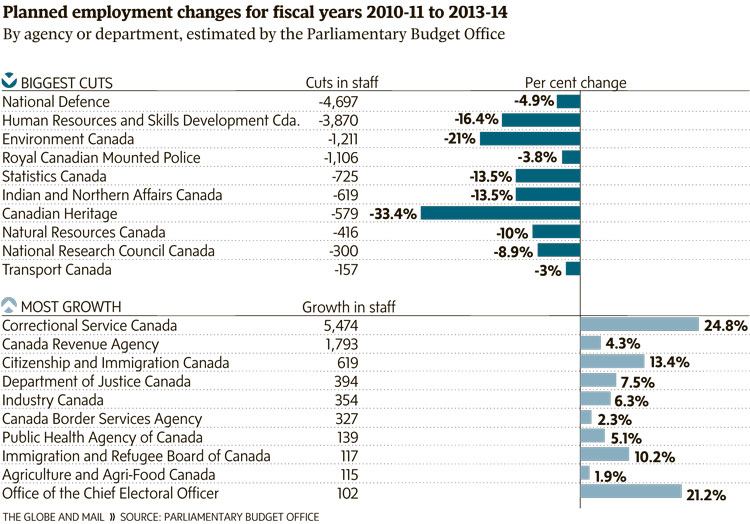
I’m not one of those people who feared Stephen Harper’s “hidden agenda”. I am one of those people who found his expressed agenda to be frightening enough. With the new budget that no-one seems to have noticed (what with Hockey Games and Gene Simmons and Hugh Hefner both having marital woes…), the Harper Government™ clearly outlines what their priorities are. The following graphic shows how he will distribute the 4000 federal job cuts over the next few years. The plan seems to be to put scientists in jail. But before I get all Godwin here, let’s look at the numbers.

Now this is from the Parlimentary Budget Office, and although they work directly for Harper, they have disagreed in the past, but these are the best numbers so far. Let’s start with the cuts.

The biggest cut (33.4%) will be in Heritage (sorry Minister Moore, but your portfolio is shrinking as fast as your credibility on the Evergreen Line). No surprise here, Heritage represents a lot of things Stephen Harper hates: media, culture, art, women’s equality, multiculturalism, the French language, etc. No hidden agenda here, he puts that depressing shit right out there on his sleeve and lets us sniff it.

Next in line is Environment Canada (21%). I guess we should not be surprised. It is the uppity Environment Canada types who irritatingly point out that tar sands development is annihilating large areas of the north, and is threatening two of the nations largest Rivers. As someone who works with EC enforcement officers trying to keep people from dumping oil into fish-bearing streams, I know those officers are overworked and their departments understaffed. Their ability to enforce the simplest environmental rules (like don’t dump oil into fish-bearing streams) is hampered.

These cuts also fly in the face of the Government’s own Independent Report released just before Christmas (when everyone was paying attention) stating that Canada had a responsibility to step up monitoring and enforcement to protect people and the environment from Tar Sands impacts. But that is just a bunch of science-talk…

Next comes Human Resources and Skills Development (16.4%). Good timing Steve. Bolstering our “fragile recovery” by taking away help for people whao are actually trying to get re-trained and find new jobs. What a Dick.

INAC will see a 13.5% cut. Again, ugly, but not surprising. Why continue to support people living in third-world level poverty, with inadequate housing, no clean water, and no access to jobs or education? I guess the thinking is that it is easier to provide for them in the new jails we are building…

The next three are Stats Can (13.5%), Natural Resources Canada (10%) and the National Research Council (8.9%). These are the agencies that actually guide government policy on the basis of facts and information. How in the hell do you govern an information-age country without access to the highest quality information? Admittedly, reality often gets in the way of Conservative ideology. The research is clear that Insite saves lives and saves the taxpayers money, but Harper hates druggies and wants it closed. This is why they keep bringing back mandatory minimum sentences for non-violent drug crimes, although no-one in criminology, including the former head of the US DEA who introduced the same laws down south, think it is a good idea. Every police force in the country says the Long-gun Registry is useful and saves lives, but the redneck base hates it, so it has to go. Crime is steadily going down across the country, but “Tuff on Crime” bills bring in the votes. A nuclear scientist tells him a nuclear reactor is unsafe, he fires her and opens it anyway.

When facts get in the way, get rid of the facts. This is the problem with ideology-driven decision making: it is what crippled the USSR and keeps Cuba impoverished, it is what is killing the US economy, and it is how the Taliban destroyed Afghanistan. This is terrible leadership.

The cutting of 4.9% of the defence staff is an interesting move. This likely will be met through retirements of soldiers who have been busy fighting oversees wars for a decade, and are about ready to get out. The budget doesn’t actually include the costs of the war in Libya, nor does it include the cost to buy his new jet planes, but that is prudent since no-one can agree with Mr. Harper on the price of those planes. So let’s call the defence budget even.

Cutting 3.5% of the RCMP also seems strange for a “Tuff on Crime” PM. However, a good friend of mine in the RCMP reminds me that their main role is not to put people in jail, it is to prevent crime. By preventing crime, they keep people safe, and save the taxpayers money. With crime prevented, who are we going to put in jail to keep the natives company? Scientists?

But it isn’t all cuts, Harper also plans to grow parts of the civil service:

Including a 24.8% increase in corrections officers. I don’t mean to be crass, but holy fucking shit. At the same time he is cutting Police officers, he is replacing them with almost 5x as many prison staff. The Harper agenda appears to be making us into a nation of Jailers.

I had a chat on the weekend with a family member who works in corrections, and suggested Harper guaranteed him job security. He agrees, with a laugh, but wishes that instead of building more prisons and hiring more staff, they put al ittle more money in to the prison programs that made his job easier: drug prevention, counselling, rehabilitation, fitness and education. When the prisoners are busy and are making progress towards a goal, they tend not to act violently towards guards, each other, or themselves. But the direction seems to be more towards warehousing now.

I just can’t figure out the increase in the Chief Electoral Officer’s office. It is not like we had a hard time running our elections or that election fraud was rampant. It also seems a strange place to save money at the same time you are cutting contributions to political parties… but I will have to chew on that one.
The next few seem to pretty obviously follow the trend, 13.4% increase in Citizenship and immigration, 10.2% in Immigration and Refugees, and 7.5% in the Department of Justice. Clearly, Harper does not think all prison population growth can be organic, but we will need to assure a good proportion of immigrants also find their way into our human warehouses.

Industry (6.3% increase) and Agriculture (1.9% increase) will assure subsidises keep flowing to his multinational partners, as will a large portion of the Public Health (5.1% increase) budget (Tamiflu anyone?)

There is no reason to fear a secret agenda here. It is right out front. When the Conservative majority was announced, I put a post out on Facebook that said “Bed Manufacturers of Canada, time to stop the production of your Hospital models, and start ramping up the Prison ones!”

Did anyone mention to these guys that by any reliable numbers, Crime is continuing to drop in Canada? Oh, yeah, I forgot, unreported crime is up. I guess getting rid of some RCMP officers and StatsCan will assure the unreported crime rate continues to grow. Who needs information when you have ideology?

Meanwhile, people in Vancouver tie themselves in knots of worry about the deeper meaning of a few broken windows, yet remain blithely unconcerned about our own government dropping bombs on civilians in Libya.

Discuss amongst yourselves.

My first actual Tree-huggin’ post

Tree protection?

?????????During the recent Royal City Farmers Market fundraiser at the Heritage Grill (great time again, you guys!), I had a short chat with Councillor Lorrie Williams. Somehow the conversation gravitated to Tree Protection Bylaws. This is a topic that has come up several times at NWEP meetings over the last couple of years, and the NWEP members who serve on the City’s Environment Advisory Committee have mentioned that it arises occasionally at their meetings. There are a few people in New Westminster who have been advocating for this type of protection in recent years, Bill Zander amongst the most persistent. But there has been a push-back from City staff (mostly around cost and logistical issues- admittedly there is not much point having a bylaw if they cannot enforce it!) and even from a few members of Council.

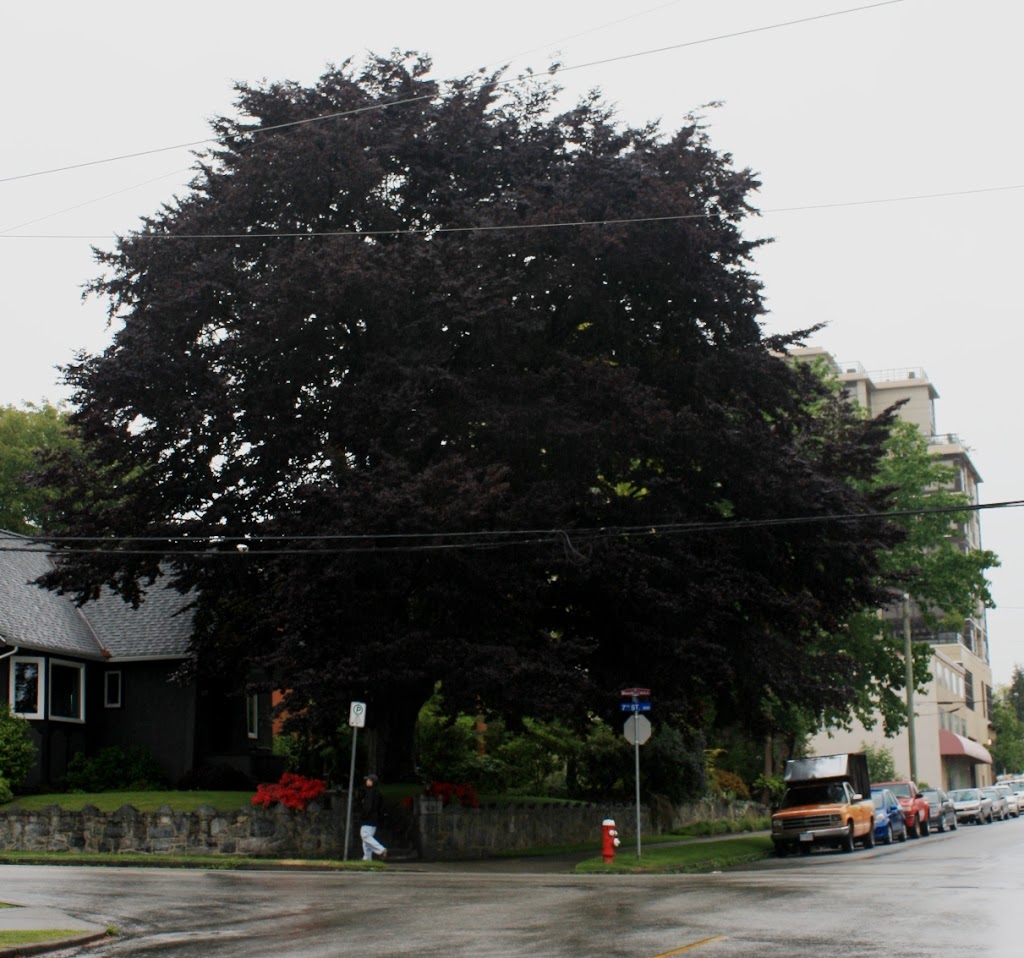
An historic beech tree in my neighbourhood.

I had a conversation at one of the fall’s TransLink open houses with another Councillor (who shall remain nameless to protect the cornered), and the topic of laneway housing came up. (S)he was concerned about the loss of green space, rainwater infiltration, etc., that might result if we overbuild our single-family lots. I agreed and suggested we shouldn’t allow laneway housing until we have a strong Tree Protection Bylaw. The Councillor’s response was to take a bit of a double-take, then bemusement that I had trapped the Councillor that way. (S)he then offered a rather meek “we have lots of trees”. The conversation ended shortly after.

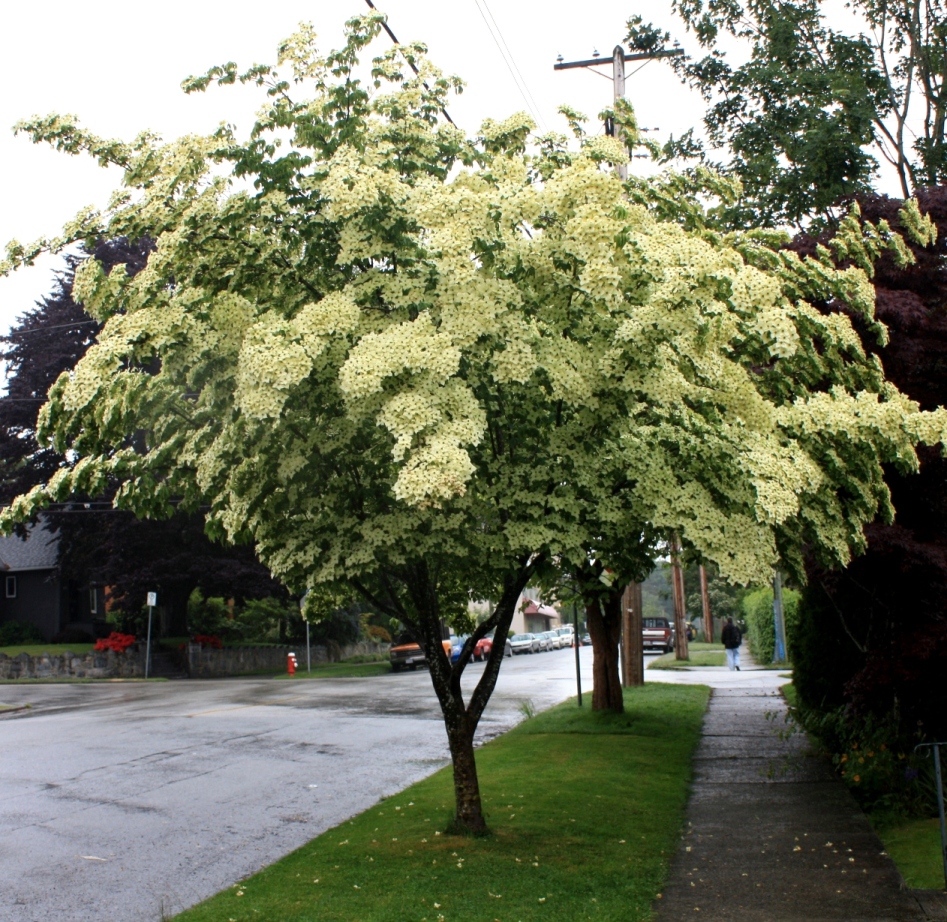
The beautiful dogwood in front of my home.

So I was pleased to hear that Councillor Williams has decided to bring this topic back to Council, and I decided to delegate to Council on the topic on Tuesday. No cameras were there, so I thought I would relate what I said for the record here.

Note that at Council, and in the excerpt below, I am speaking on behalf of the NWEP. The message below reflects the conversations the NWEP membership had at meetings, and the Directors of the NWEP unanimously approved my presenting this address to Council on behalf of the Group. Pretty much everything else you read on this Blog is my personal opinion, and is not necessarily the opinion of the NWEP or its members. Just so we are clear on the distinction.

The NWEP have discussed the issue of Tree Protection at length, and at our most recent meeting, agreed that a Tree Protection Bylaw for New Westminster was timely.

On many environmental, social and economic sustainability areas the City of New Westminster has taken a leadership position. However, this is an area, the protection of trees and our Urban Forest, where we have unfortunately been laggards.

Tree protection bylaws of varying strength are already in force in Vancouver, Burnaby, Surrey, Richmond, Delta, WhiteRock, North Vancouver , Coquitlam, Port Coquitlam, Port Moody, Maple Ridge, the Township of Langley, Victoria, Saanich, Nanaimo, Toronto…..well, the list goes on across the province, and across the country.

These bylaws vary in both their protection measures and the complexity of their implementation, but it is clearly within the Municipality’s authority to prohibit or regulate the cutting or damaging of trees, or to require that trees be replaced. Further, they all take into account the hazards caused by dangerous or diseased trees, and many designate significant areas (such as riparian areas around streams) or specific species or trees of historical value for special protection. Many use permit structures to become revenue-neutral.

I guess the point is we are not reinventing the wheel here, nor are the NWEP asking for New Westminster to be an exception. Tree Protection Bylaws are becoming standard practice in Canada.

The reasons Cities are establishing these bylaws are varied. Some Cities are rapidly developing and are concerned about habitat loss and the wholesale removal of forests at their edges. Others are concerned about greenway preservation and riparian protection for salmon-bearing or other ecologically-important streams in their districts, or are worried about slope stabilization in hilly terrain, or establishing green buffers between zoning changes.

However, most Cities simply recognize that trees play multiple roles in the 21st Century city. They shade buildings to provide energy savings; They buffer urban noise to make for a more peaceful environment; They filter CO2 and particulates out of the air while providing oxygen and acting as both humidity and temperature stabilizers in extreme weather; They absorb rainwater and reduce the load on stormwater drainage systems; They provide habitat for songbirds and other wildlife; They block light pollution and soften the “sharp edges” of a built-out urban environment. There is some evidence that trees actually prevent crime!

Here in New Westminster, trees provide all of these benefits, but additionally, we have our own specific reasons to have a very protective bylaw here. As one of western Canada’s most historic cities, it seems remarkable that we do not have a firm law protecting these historic landmarks. In my Brow-of-the Hill neighbourhood, there are several exceptional and well-preserved century-old trees. The loss of these remaining giants would be a loss for the entire community – but it is only to good grace of the current owner that protects this important natural heritage. Unfortunately, these examples are becoming fewer and far between as multi-family dwellings and densification have eroded our tree inventory over the last 50 years.

Development puts pressure on the City’s tree inventory.

And densification is clearly the way of the future. With New Westminster a signatory to the new Regional Growth Strategy, it is clear that New Westminster will become a more “compact” Regional City Centre, in order to accommodate the extra 40,000 people projected to live in our City by 2041. With this densification, the pressure will be on to replace single lots where our trees need protection the most with townhouses or multi-family dwellings and the normalization of laneway housing. Make no mistake, I think these changes can be a positive thing for building a more energy- and transportation-efficient housing stock, and are imperative if we are to build a more durable and sustainable community. However, these changes raise significant concerns about the preservation of remaining natural greenspace, about managing rainwater infiltration so we don’t overwhelm our stormwater infrastructure, and yes, maintaining the myriad benefits of trees. A Tree Protection Bylaw will not solve all of these problems, but it is an important first step to assuring the next generation will receive the same environmental, social, and economic benefit from tress that we do.

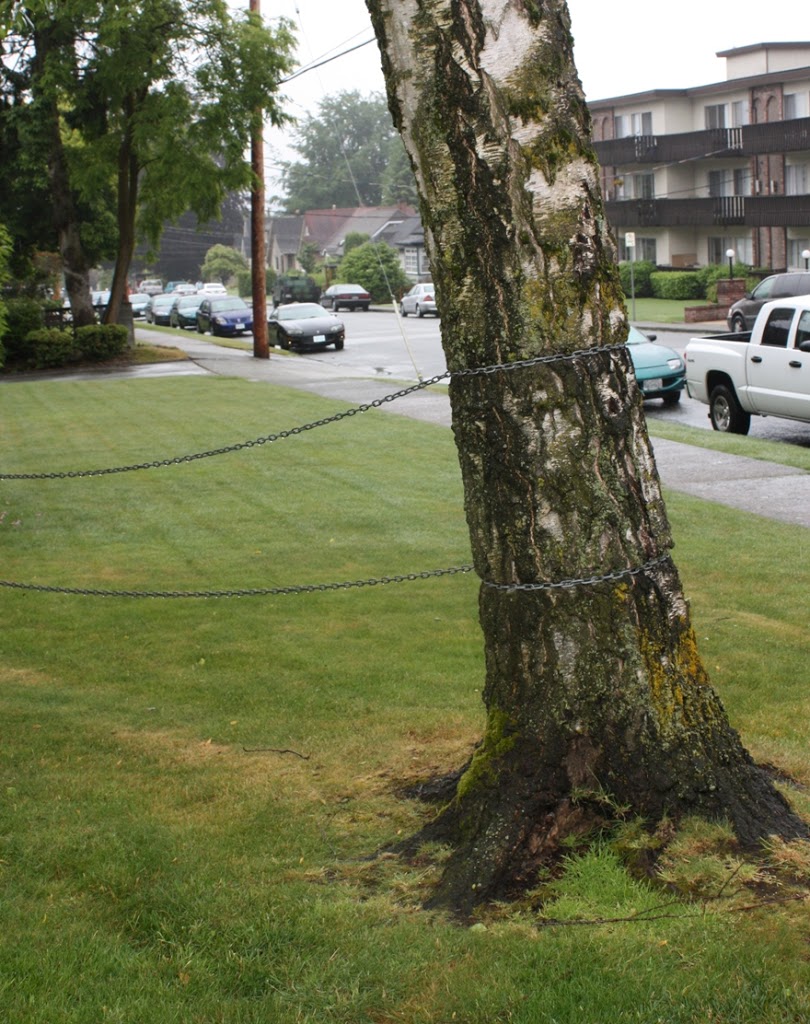
Trees are often removed to “improve property”, with no need to replace them. Note three trunks in this pic that were large fir trees a year ago.
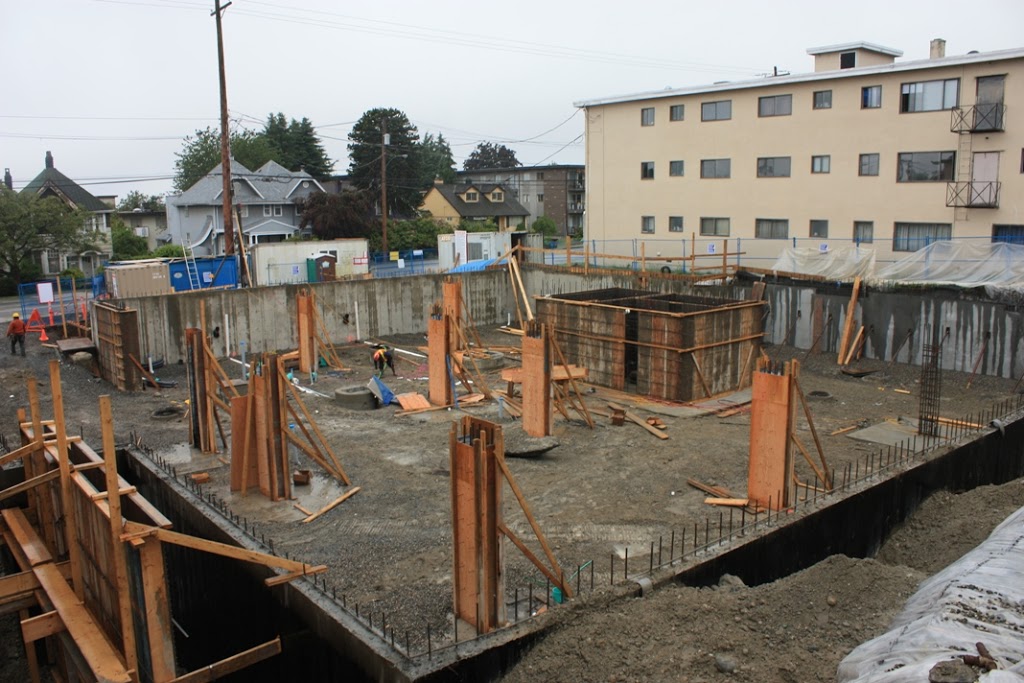
This lot on 8th Street used to have two single family houses, and trees.

For these reasons, the NWEP believe that the time is now for a protective tree bylaw in New Westminster, and we call upon City Council and staff to work towards developing a Bylaw that suits the City’s specific tree protection needs.

After my presentation, the Councillors asked a few questions, but seemed very receptive to the idea. Mayor Wright seemed the most cautious (his standard “we need to consider many things here….” line), but I did emphasize that there ware lots of resources available on line and through inter-governmental discussion groups, there are many Cities that have these bylaws, and I have confidence that City Staff can find the right mix of protection for the City. I also offered any help the NWEP could provide in researching tree bylaws, and in helping with public education campaigns about the value of trees in our urban environment.

Later in the Meeting, Councillor Williams’ motion was read:

“WHEREAS trees are essential to air quality, esthetics and quality of life;
BE IT RESOLVED THAT New Westminster develop a Tree Retention / Removal Bylaw for both public and private property.”

The motion received unanimous support of the Council (Councillor Harper not present).

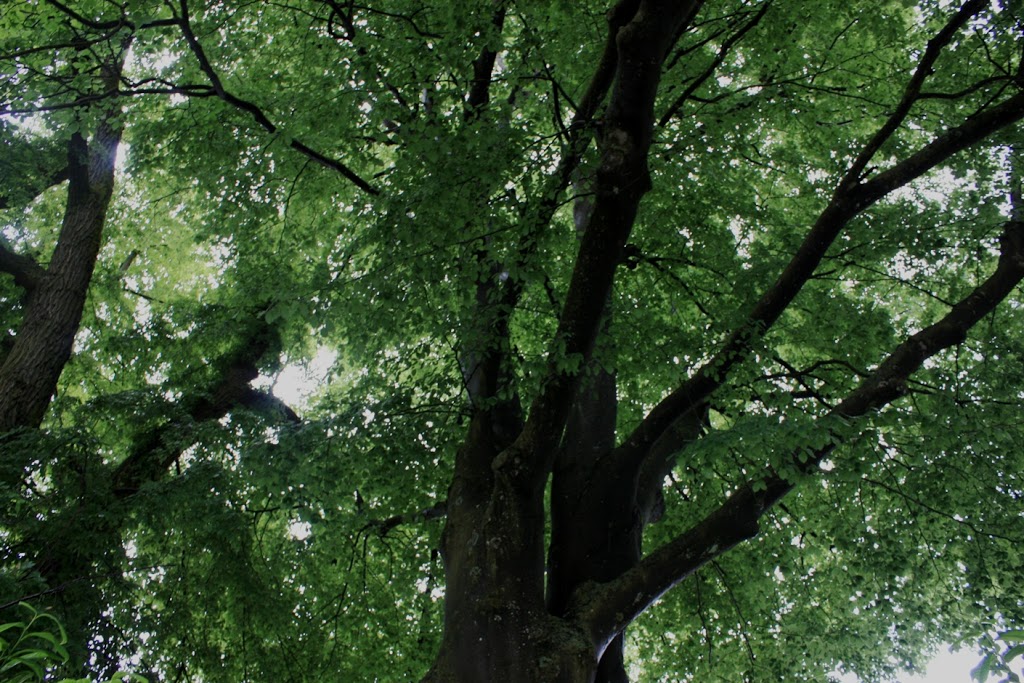
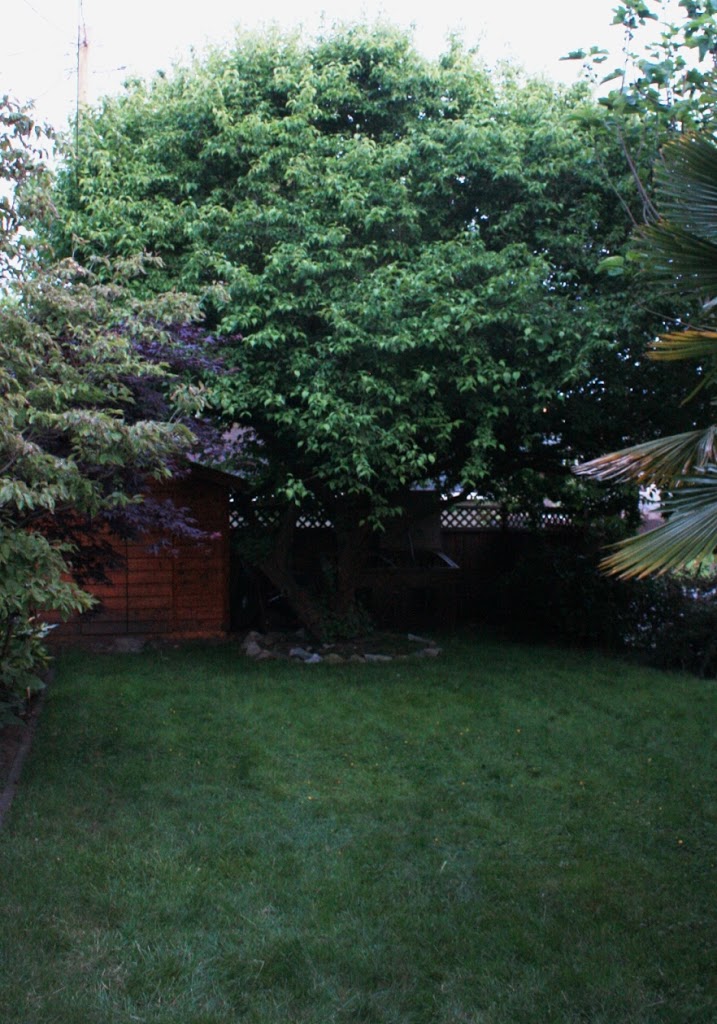
This decades-old Cornellian cherry dogwood dominates my back yard, but it isn’t going anywhere on my watch.

Community -updated!

I had such a fun weekend. One that reminded me how much I love my community.

I just want to add the note that back in December, I did an interview with the News Leader, and made my predictions for the 2011 Stanley Cup Playoffs. OK, I said Canucks-Habs, but Boston are an original six team that needed 7 games to knock Montreal out, so I’ll call that predition 75% accurate.

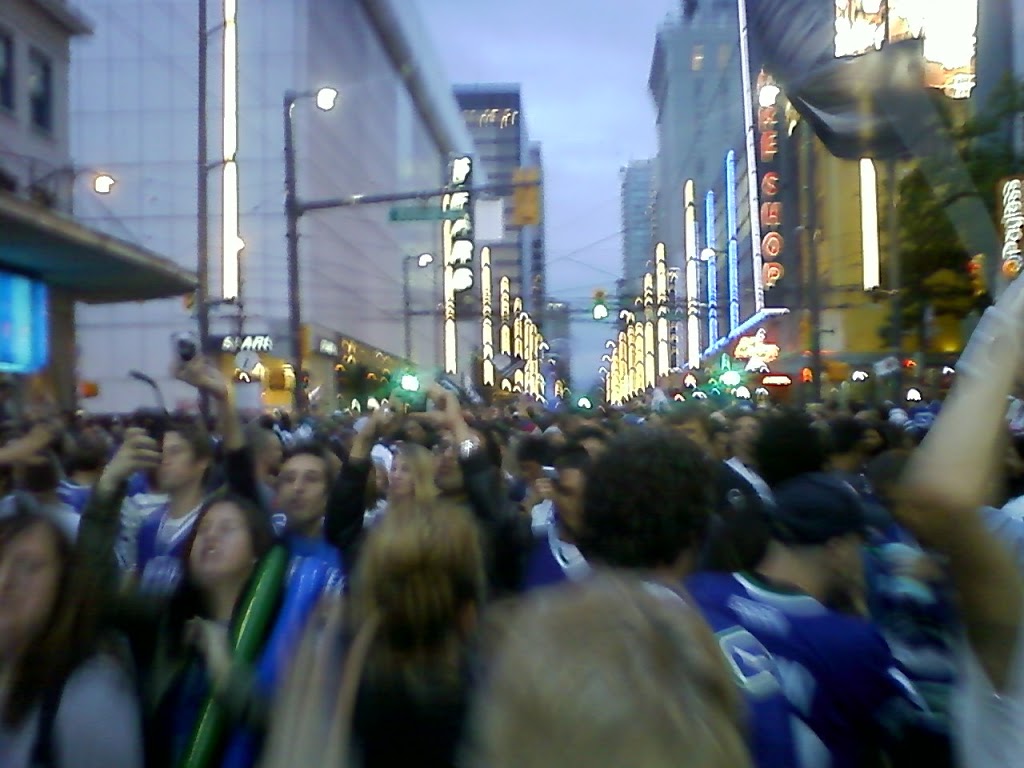
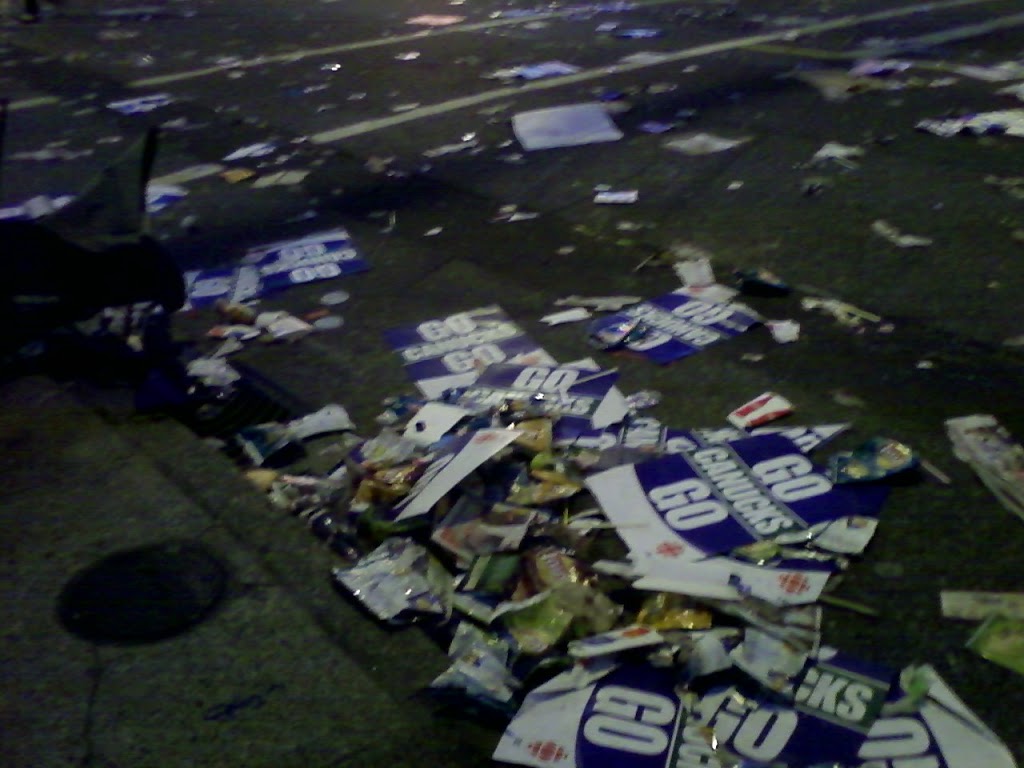
Friday evening was spent in Downtown Vancouver with some great friends, performing an unusual ritual for a life-long Canuck fan: drinking beer and watching hockey in the month of June. The sounds of the crowds downtown when the goal was scored, and when the final buzzer sounded, were amazing. I was lucky enough to be downtown during the Olympic Gold Metal Game as well, and the feeling was much the same. To be in amongst a crowd of tens of thousands, everyone throwing high-fives as they walk the street, the feeling was electric. Lots of cops in the crowd, but much like the olympics, they were present to make us feel secure, not to “keep order”, and they shared as many high-fives as anyone else. It was a great time.

It wasn’t the camera – it was actually this blurry out.

It is silly to try to explain it. Generally and really large crowd of like-minded individuals is inherently a dangerous thing, but the feeling was so positive. Why? Because, as XKCD so eloquently put it, a weighted random number generator just produced a new batch of numbers. Why care if the Professional Sports Franchise in my hometown is superior to the Professional Sports Franchise in another town? Is the only benefit to all the time and energy we put into ultimately meaningless entertainment just about feeling good, collectively, once in a while? Is this a better way to spend out time an energy than curing cancer or writing piano concertos?  Is this community building?

It occurred to me on the SkyTrain home; it might have been the beer.

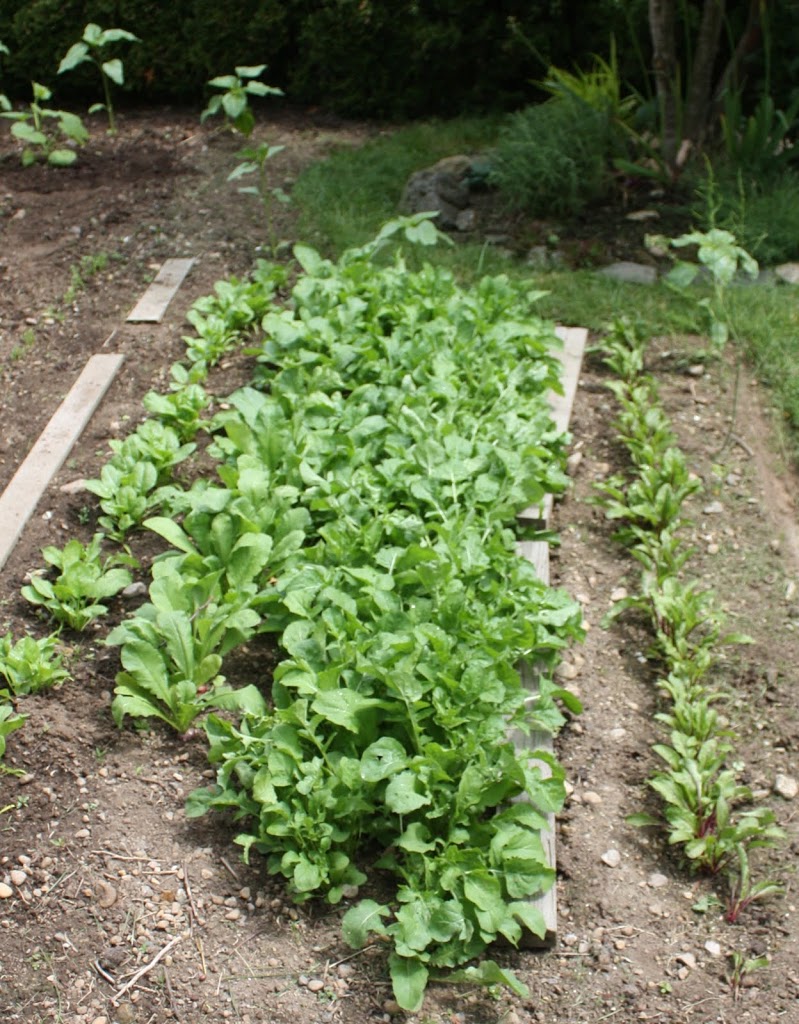
Saturday was mostly a garden day. Putting out a lot of the plants that I started indoors: the peppers, the tomatoes and the cucumbers, along with a few squash plants I was gifted from a friend. The radishes, lettuce and spinach are already out of the ground and into my salads, but with the cool spring we had, everything is starting late, and I have to fight the slugs, aphids and cutworms for every leaf. More bloggin on this to come, an ongoing summer project.

Finally, Sunday was spent at Sapperton Day, and it went off great. The event itself was incredibly well attended, the bands were great, the food was great (mmm…pulled Pork sandwich from the Crave/Ranch), and it was great to connect with many people I only see during summer events.

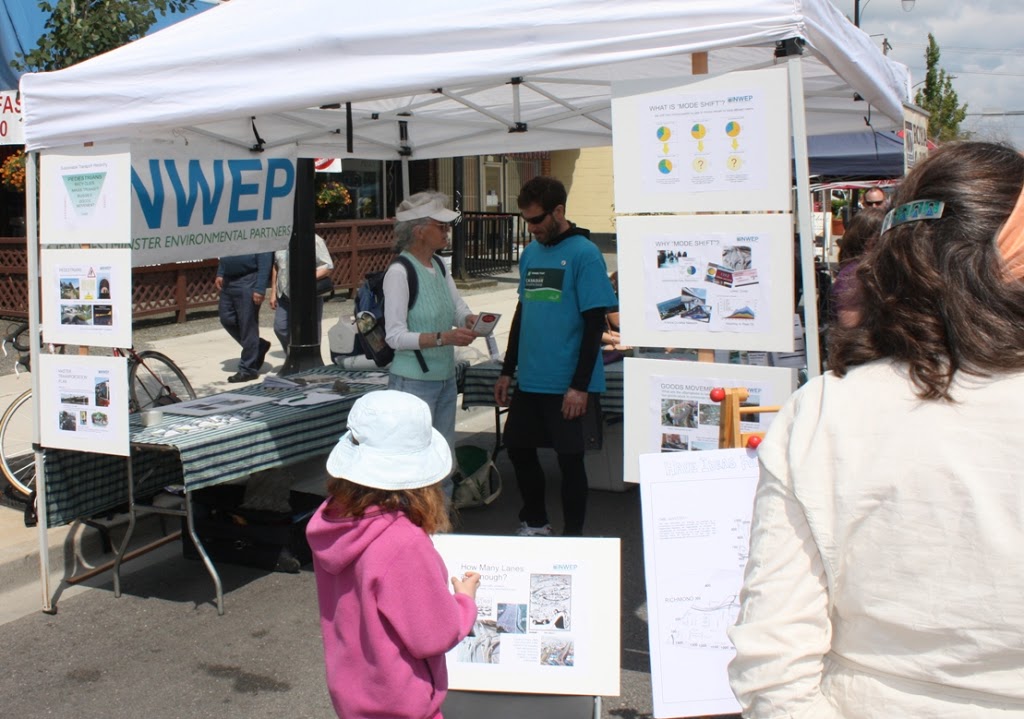
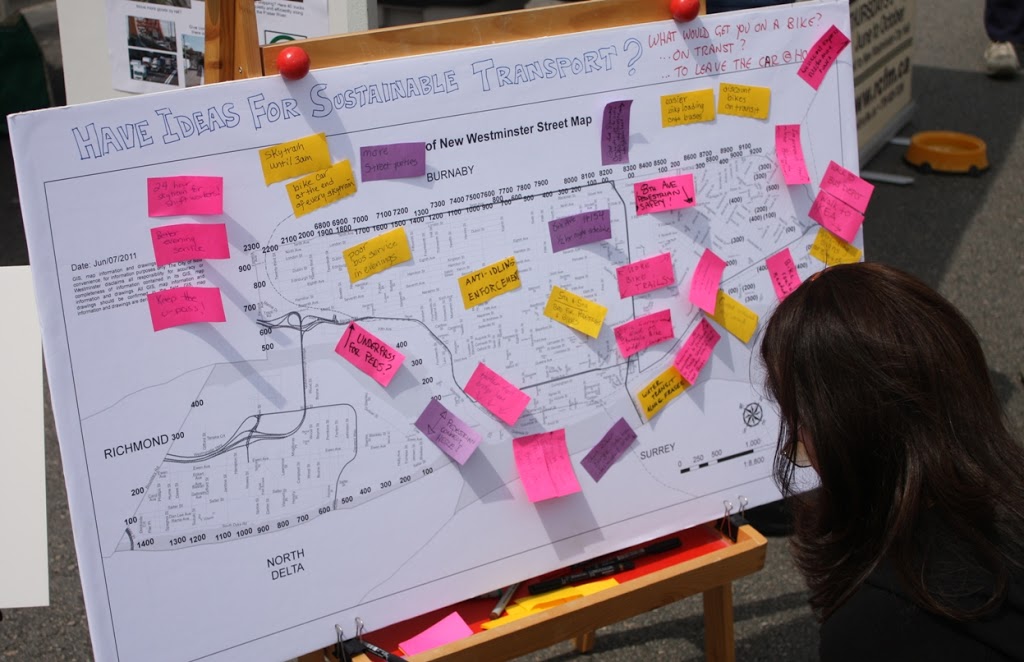
The NWEP booth was well attended, and there was lots of great discussion about the future of transportation in New West, post-UBE. We had a “blank map” to allow people to attach post-it notes with ideas about transportation in the City – What works, what doesn’t, pet peeves and points to ponder. Hopefully ,we can use this blank slate to collect ideas at all the summer events we are attending this year. It was great at facilitating conversation, and lots of great ideas were placed on the board. Notably, not all were NWEP member ideas, or even ideas the NWEP would endorse! The point was to start people thinking about transportation, as the City is getting into its Master Transportation Plan process. We hope that by starting the conversation, people will be informed and curious when the public consultations start.

But mostly Sapperton days is about getting together in the community to meet neighbours, catch up with friends, make new friends, get a little sunburned and have fun. Again, it is all about people coming together to community build.

…and have a little fun along the way.

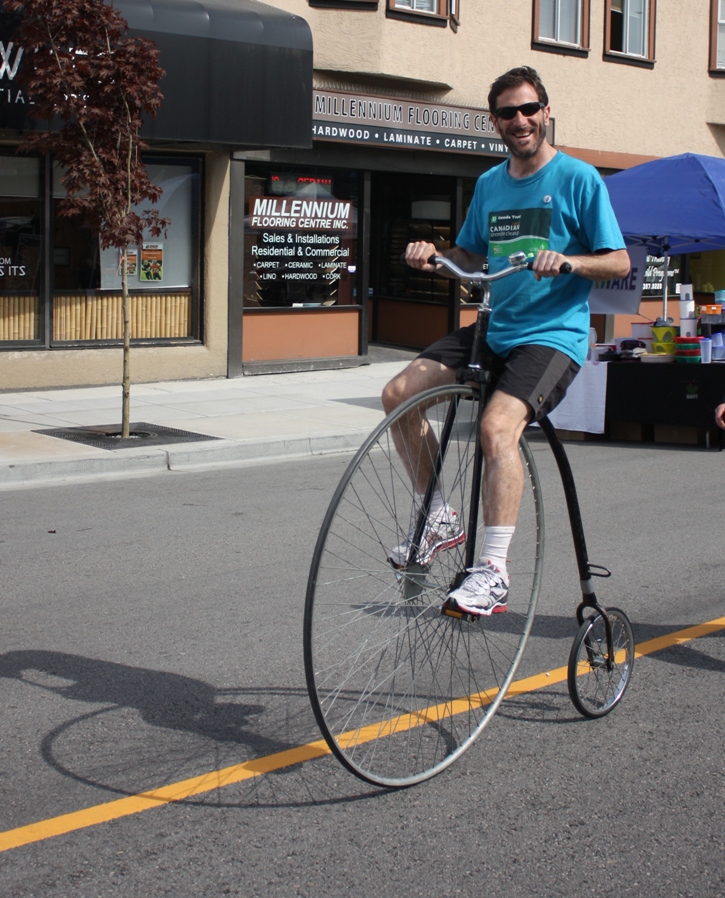
NWEP’s cycling wildman and Ryan Kesler look-alike Pete taking a few turns on his new bike?