Geology and Climate Denial

In one of my earlier lives, I was a geologist.

Once a geologist, you sort of always are a geologist. It gets in your brain. I am going down the Grand Canyon next week with a friend who happens to be a Professor of Earth Sciences, and we plan to spend a lot of time cracking rocks and talking stratigraphy. I have already downloaded geologic sections and taken prep notes on the major units, their interpreted settings and anticipated trace fossil assemblages. I do this stuff for fun. However, in an earlier life, I actually did geology for a living, not as a hobby.

 As a geologist, I was member of the Geological Association of Canada, attended several of their meetings, and even presented at one of them (and had my presentation topic expanded into a paper in a special volume of the Canadian Journal of Earth Sciences published by the GAC).
 As a sedimentology student, I also read a whole lot of Andrew Miall. His “Principles of Sedimentary Basin Analysis” is in every sedimentologist’s bookcase, along with a raft of his papers on fluvial sedimentology (the deposits left by rivers). I cited that book and two other Miall papers in my Masters thesis, relying on his descriptions of alluvial fan deposits to interpret some of the facies in my field area, his description of bi-modal clast distributions resulting from traction flows, and his interpretations of peripheral foreland basin deposit sequences. He is a giant on the subject of the geology of terrestrial sedimentary basins, and a petroleum geologist of significance world-wide, not just in Canada.
 So it is remarkably disappointing to read about this year’ Annual GAC meeting, and to see the symposium entitled “Earth Climate: past, present, and future”, chaired by none other than Andrew Miall.
 The subject itself is topical, interesting, and well within the scope of geology (Geologists are the most qualified to interpret historical climate indicators, working with paleontologists, palynologists, isotope geochemists, and other fields that fit loosely under the big tent of Geology- the study of the solid earth.) The problem arrives in the outline for the symposium . Every line of it makes me cringe: 

“The scientific debate about climate change is far from over.”

Lifting this language right from the Climate Denier playbook, it is clear from the opening line the approach that will be taken below. This line pre-supposes that there is a single debate about Climate Change, and by that supposition, the two positions are: A) humans are definitely causing unprecedented changes in the earth’s climate by their burning of carbon-based fossil fuels and the nations of the word need to take immediate and drastic action to reduce atmospheric CO2 or face significant social, environmental and economic consequences; and B) wrong. 

“Some of the projections of climate change and its consequences contained in the 2007 Report of the Intergovernmental Panel on Climate Change (IPCC) have been called into question.”

Ugh. Yes they have. Admittedly, the 2007 report put out by the IPCC got a few things wrong, or failed to fully support a few of the statements within. And there has been a lot of science done since 2007, some of which matches the IPCC projections, some of it that suggests the IPCC projections were pessimistic, and the majority suggesting the IPCC projections underestimated the scale of the problem. But the IPCC report is a single document in a sea of research, and of all the documents, it is the most politically tainted. Why single this one out for discussion in a scientific meeting in 2011?

“This symposium will address some of these issues and present a geological perspective on the scientific debate. “

Good, Geology has lots to say about historic climate conditions. Sounds like an important topic to discuss.

“For example, what is the relative importance of water vapour versus carbon dioxide as a medium of heat retention in the atmosphere?”

Huh!?! H2O vs. CO2 in the atmosphere? How is that a geologic topic? This is simple chemistry and physics, we know H2O is a larger greenhouse gas than CO2, no geology required. The only reason this topic is being brought up is because it is a favourite amongst climate deniers, even after it has been thoroughly debunked. This topic has no relation whatsoever to the “climate debate”, it is a red herring. 

“How important have variations in solar output and in sunspot levels been in determining energy input to the Earth’s atmosphere?”

Huh!?! Is this even a debate? More solar output means more input to the Earth’s atmosphere, the relationship is linear. This is not a debate (and not really a geology topic either, although some geologic methods allow estimation of historic solar output directly or by proxy). Another red herring. Of course, this is not in any way relevant to the current observed warming, but they digress. 

“Is the current global temperature regime now warmer than the Medieval Warm Period or the Holocene Hypsithermal?”

OK, This is an excellent topic for geologic investigation. We should be able to use our multiple lines of geologic evidence (although these events are so recent, it is more pedology than geology) to determine the straight-forward answer to this question. I’m not sure what the relevance is… oh, wait, here it comes….

“This is a significant question, given that many damaging ecological, faunal and weather changes have been predicted based on such warming. Yet Earth and its assemblage of life forms clearly survived these and even earlier exceptionally warm periods.”

Here is where the real intellectual dishonesty comes in. Yep, the Earth survived climate change in the past. Actually, at the end of the Maastrichtian, it survived a pretty big climate disruption. Of course nothing larger than a chicken survived, all the planet’s apex predators were killed, the dominant form of sea life was made extinct, along with 90% of vertebrate species, but hey, the earth and life went on. That said, I don’t think any of us want to experience that type of event in our lifetime.

As for the events he actually cited, the MWP was probably (and I say probably, as there is actually some debate in the mainstream scientific community on this) not warmer than today globally. It was certainly as warm as today in Northern Europe, and certainly cooler than today in regions of the tropical south Pacific, but the global temperature average is not as well established. It is also important to know that start and end of the MWP in northern Europe were gradual events, taking centuries for any change to become apparent, and they nonetheless cause huge disruptions to society, to food supplies, and to the natural environment. The current measured warming is happening at a rate 50-100x that rate. How will we adapt this time? 

“Is it possible that other causes, such as the density and ubiquity of the human presence on Earth, rather than climate change, may be the cause of the observed deterioration in many environmental indicators?”

Huh? Is this a geologic topic? Is this really what a bunch of mineral and petroleum geologists should be studying? And what the hell is implied by the question? That overpopulation and resource use are problems we need to worry about, instead of worrying about climate change? How about we worry about both, and recognize they are both the same freaking problem!

Ok, so Miall wrote a provocative abstract to attract an audience to his symposium. You don’t get to be an eminent Petroleum geologist with out a few sales skills. Luckily, the GAC provides abstracts on-line , so we can look through the actual presentations and pick out the real science here. Should be fun, and I will more in future posts.

But as a satart, let’s look at hte Keynote: Oh, oh. It started bad. I see the Keynote is noted Australian climate denier (and mining geologist) Ian Plimer . Looking at Plimer’s Abstract does not instill confidence. Check out how in the last paragraph, instead of summarizing findngs and speculating on implications, as one is wont to do in a scientific abstract, he uses it to pile up non-sequitor climate denier catch phrases…

“Humans have adapted to live on ice, in mountains, in the desert, in the tropics and at sea level and can adapt to future changes. During interglacials, humans have created wealth; populations grow; glaciation is heralded by famine, starvation, disease, depopulation. Humans, although not the dominant biomass of Earth, have changed the surface of the planet. Pollution kills, CO2 is plant food, H2O vapour is the main greenhouse gas. Climate models throw no new light on climate processes”

 In order, that paragraph can be summarized as:

  • Climate change isn’t a problem, we’ll adapt! (debatable) 
  • Global warming is good! (ridiculous) 
  • People have impacted the planet in many ways! (non-sequitor)
  • Pollution is bad! (generally true, but irrelevant)
  • CO2 is good, so it can’t be pollution! (does the same go for zinc?)
  • Water vapour is the problem! (demonstrably not true)
  • Climate models don’t work! (bullshit. how does he feel about mineral deposit models?

He actually pre-emptively Gish Gallops. Loads on the BS so thick, it would take more than a 40 minute keynote to address how wrong his thinking is.

I will opine more as I get time to go through the other abstracts, but I want to leave with an paraphrased quote I once heard from a paleoclimatologist I know:

“AGW is founded in Physics, all was can don in geology is test it. Unfortunately, every time geology and physics have disagreed in the past, it was always the physics that had it right”
more MSP

When I posted this story last week, I started by saying it needed more press. Well it made it to the front page of the Sun, but it seems to read like a good news story. The province saving money be “recovering health care costs”. What’s wrong with that?

I mentioned my concern that the Province could sue if you have an accident, to cover your medical costs. Not sue you (you are insured), but sue anyone who might be “at fault”. Of course they don’t have to prove the person is at fault, just make a compelling enough case that your insurance company pays them off to go away (“settles out of court”). If the person being sued has insurance. Anyone who has heard the frightening stories of tort-law craziness in the States should be looking at this.

I know what you are saying: if it is someone’s fault, they should pay! I explained in my earlier post how that person may be someone who you wouldn’t hold at fault, but the government might. My “exaggerated” examples were the company that runs a Mountain Bike Park that you like to use but where you crashed, or your grandmother if you slip and fall on her porch while shovelling it. I thought they were slightly silly examples that effectively made the “skinny end of the wedge” argument.

In fact, look at the story from the Sun:

“…a slip and-fall incident resulted in a $63,000 recovery and a mountain bike accident resulted in a $53,000 recovery. “

Yikes! They were way ahead of me. My exaggeration has failed to anticipate reality!

Do you have a business where the public may enter your store? Do you coach a softball team? Do you volunteer in a cycling organization? Sell bicycles? Manufacture or sell any product that might hurt someone if used incorrectly? Ever leave your house?

You should be very concerned about this.

Windows, part 4

One of the items that is pottentially included in the soon-to-be-renewed Conservative budget was an extension of the energy efficiency retro-fit program for residential homes. This is, IMHO, a pretty good program, in that it is not a direct subsidy, but is a tax benefit to those fortunate enough to have extra income and willing to spend some of it on reducing their energy use, as opposed to making “home improvements” that do not result in efficiency gains or pissing it away on more plastic toys. In that sense, it is both a tax break for the rich (So Steve is happy), and it helps the less than rich save a little money in home heating. It is about the only nod to the environment in the entire Tory platform.
Regular readers of this blog (Hi Mom!) would know that I took advantage of the combined federal-provincial efficiency program to have an energy audit done on our 1940 house, and came up with a priority list for efficiency improvements. We decided to look at replacement windows, and a few small other improvements mostly around improving sealing at a few key spots. I talked earlier about our decision to get new windows, about our options, and about our foray into the consumer replacement window market. Now I get to talk about the windows we bought.
As I discussed earlier, the shopping for windows was complicated by my interest in high energy efficiency, and The iCandy’s interest in protecting (or even improving) the look of the house with the windows. In the end, the only way we were going to solve this was by getting wood windows. That was when we met Jordan, the owner of Sashmasters.

Again, as I blogged a few months ago, Jordan was anything but high-pressure sales. He took the time to look at our windows and honestly assess our options. He was straight-forward about what would and wouldn’t work in our house, and even had some useful advice about how to approach some of the windows we didn’t really know how to deal with (such as the ugly 80’s re-fits in our basement suite). Then he gave us a quote.

To be honest, it was a little more than our budget, and The iCandy chewed him down a little (she is a tough negotiator), but it was an honest price. After the fact, I can attest that there were a few minor issues that cropped up during install, and he never took those as an opportunity to play the “out of scope” card for our budget: he got the job done on budget. He also committed to making me happy within the budget, and set a price that would allow me to pick the glazing options I wanted (double-pane, argon filled, low-e glass), even including laminated security glass in one of our more accessible windows. So we dipped deeper into our line of credit, and pulled the trigger.

?

(you can click and zoom into any picture)

?

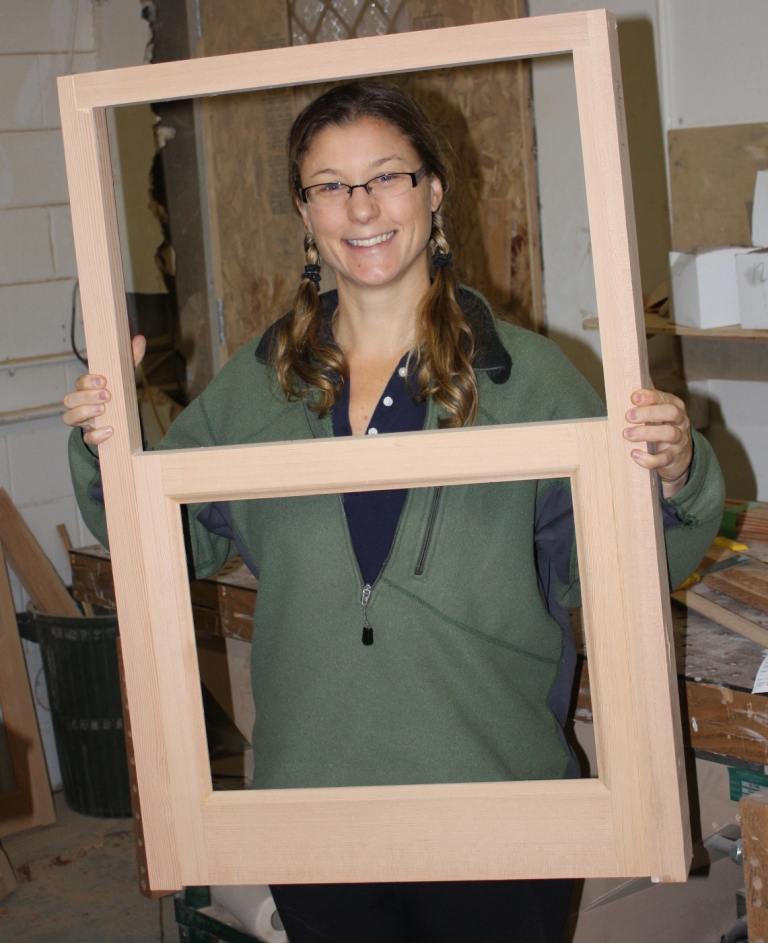
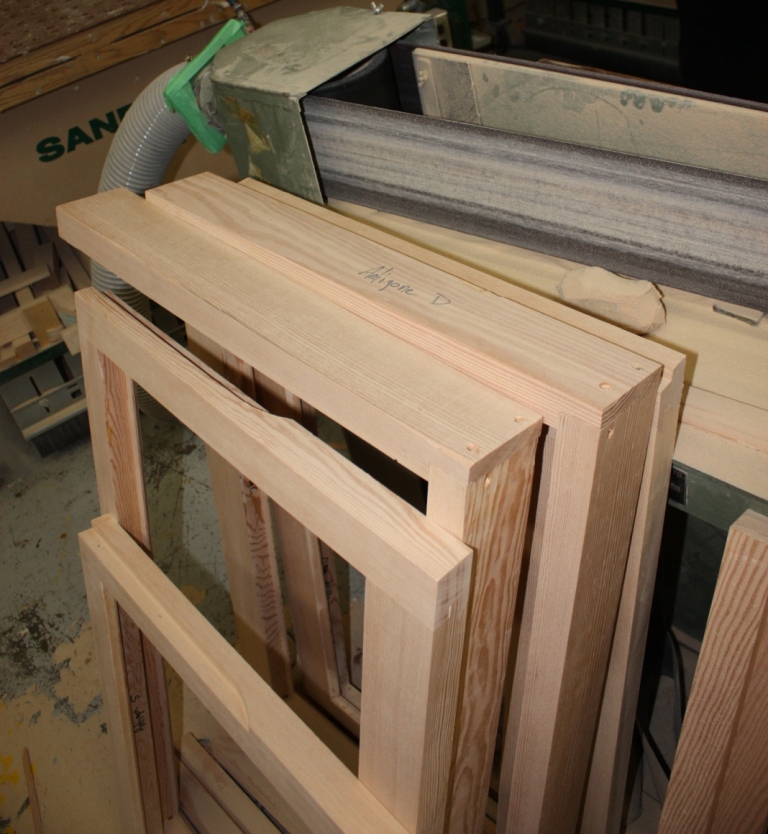
There were a lot of positives going in. They were a local company, based in Burnaby. They used Canadian Douglas Fir from BC mills, and a glass supplier from Coquitlam. Prior to purchase, we did a quick tour of his manufacturing facility in Burnaby, and he walked us through the window-making process. We got to meet some of the guys who would be making our windows, and the shop dog. Somehow, it always feels better writing a cheque in a local manufacturing plant than it does dropping plastic on the counter at Home Despot. And it is cool to see a raw window frame with your name on it (see left).

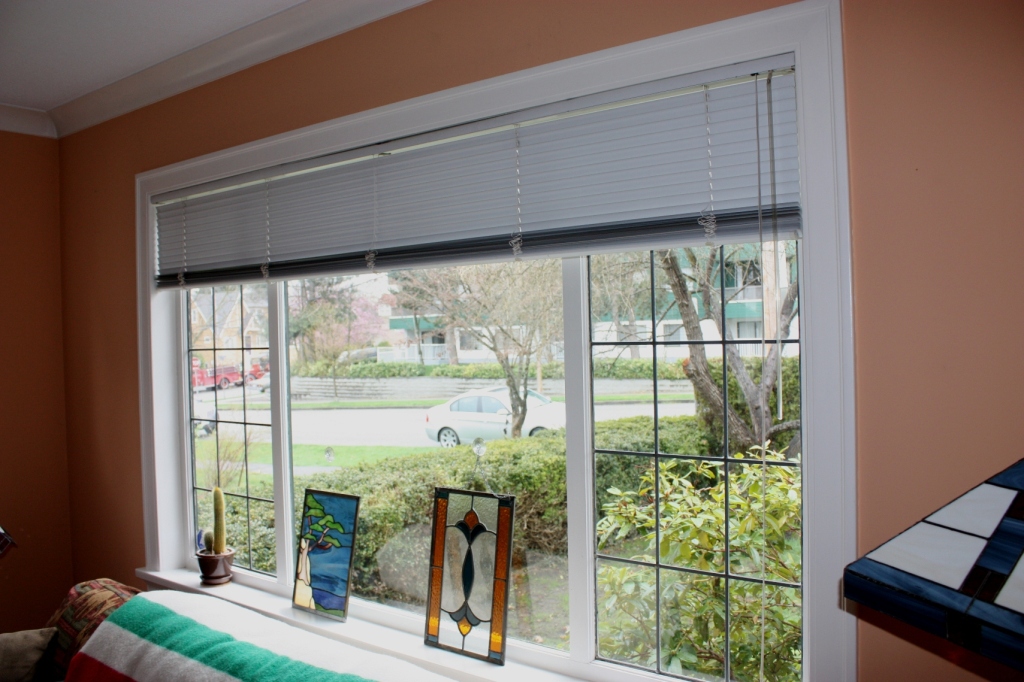
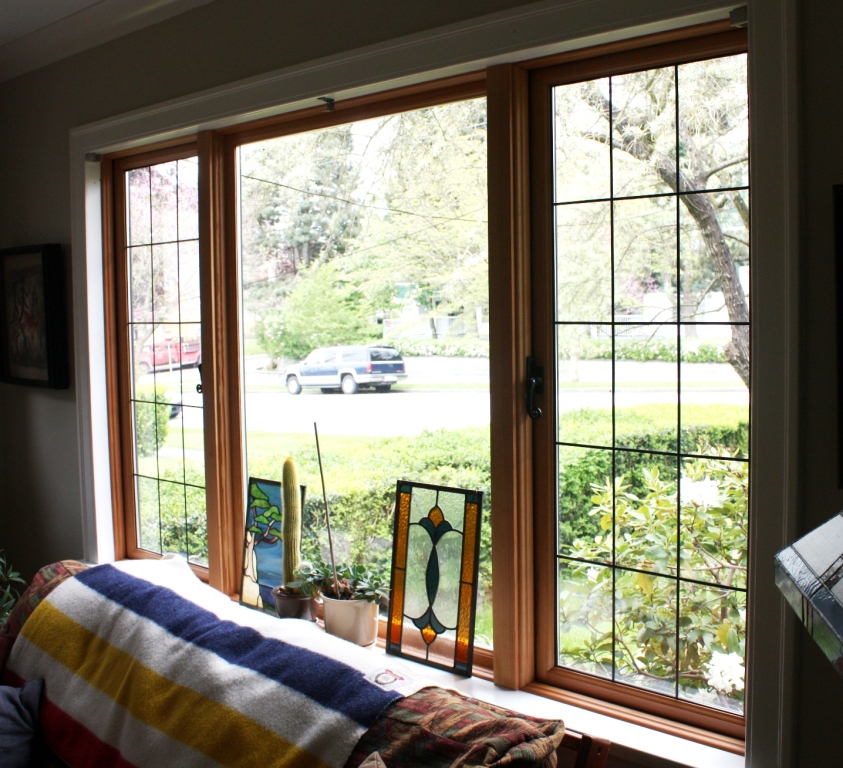
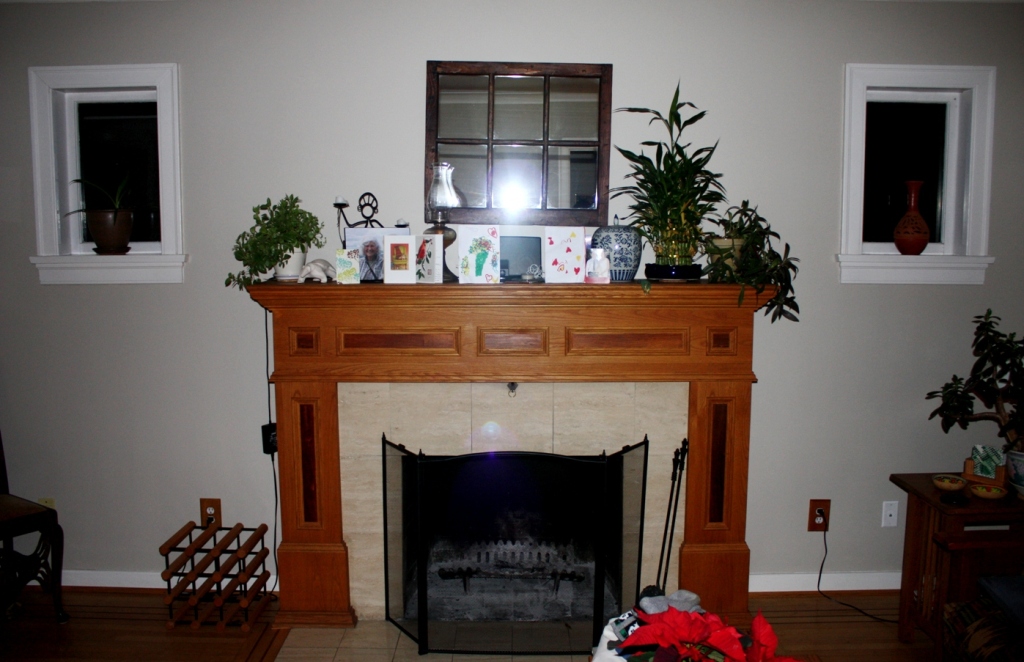
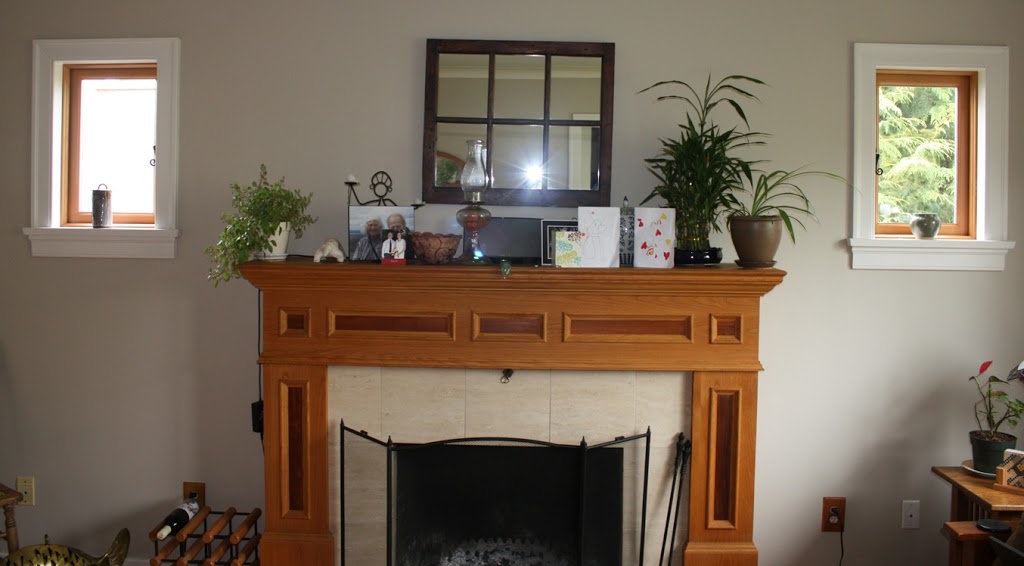
Also, since every window in Jordan’s shop is custom, he was able to find solutions for many of our windows that none of the other Sales folks could. There is a big manufacturer of wood windows (rhymes with Fella) whose kludged approach to two small windows in our living room would have reduced the glass to about the size of a CD case. Jordan was able to make a unit that fit great, preserving the original look of the windows. He also allowed us to do some creative leading of our main picture window and a few of the other windows, to maintain the original look of the house.

Once the deal was done and the designs were set up, Jordan started making windows. We were again lucky to be able to go to the shop and see our windows being made:

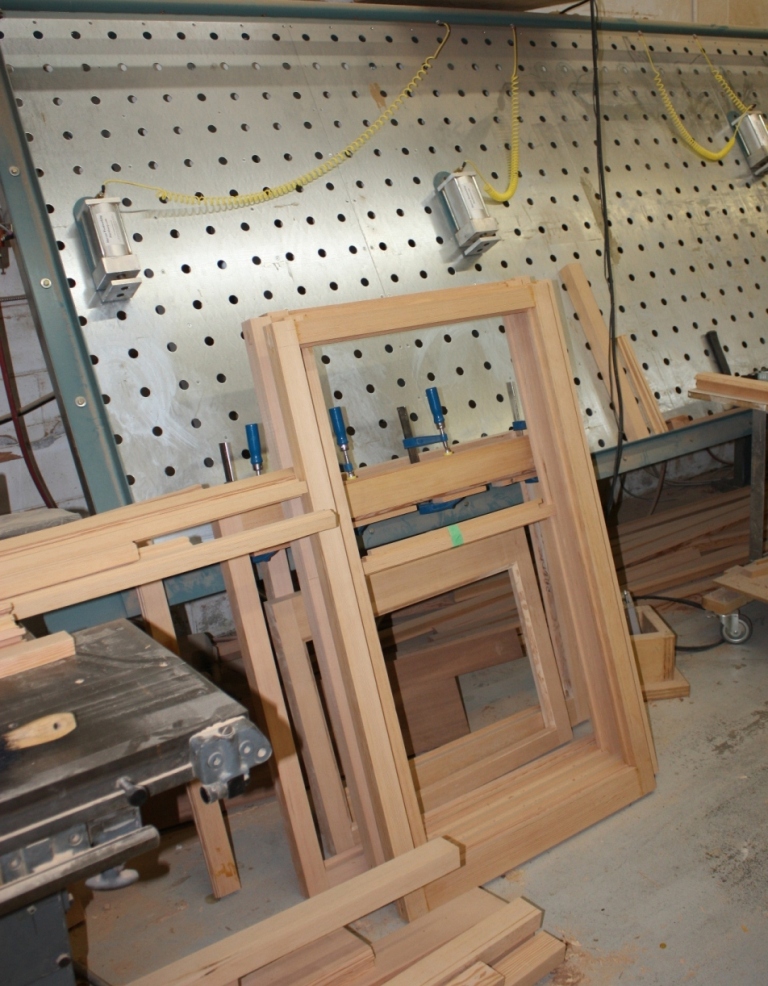
Jordan even walked us through the process, from 16-foot planks of Fir he buys from the sawmill to the planer, the cutting of the complex joints, the gluing of joints with hydraulic clamps, the sanding, staining, painting, the complex process to put leading in double-pane windows. It was fun to see. You can get a sense by going to his website and following the “shop photos” slide show.

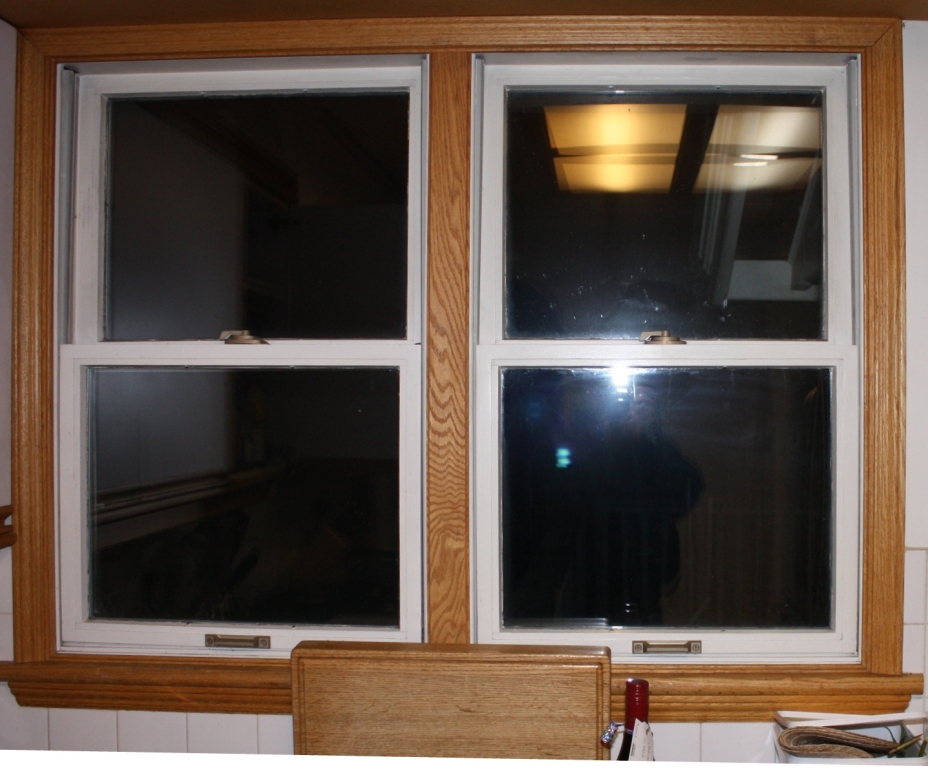
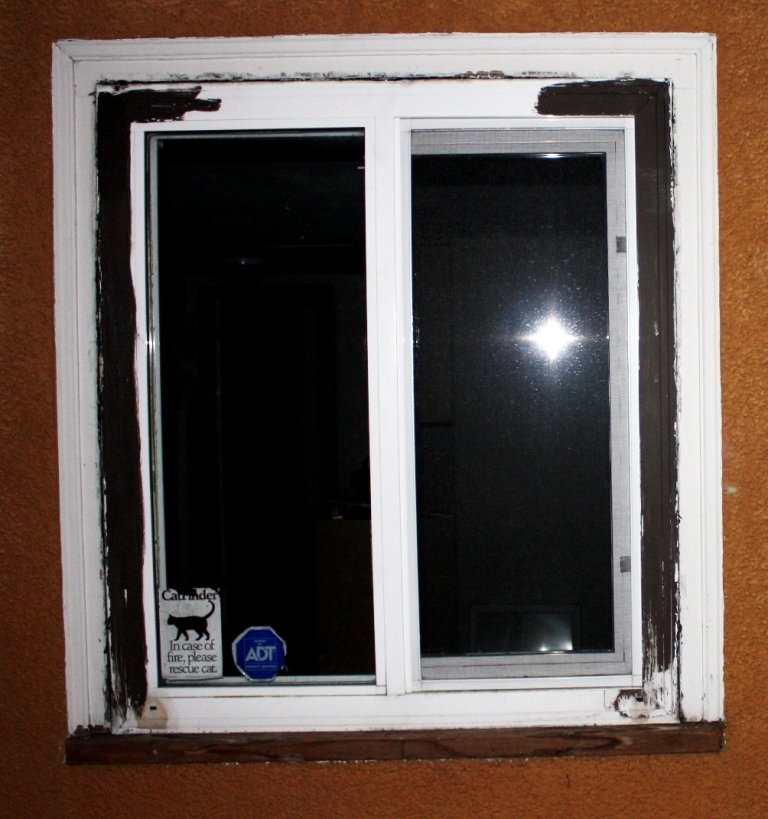
Here is the sequence for our kitchen windows (that had been previously replaced with rather drafty plastic units):

?

Before, drafty 80’s era replacement windows

?

?

Here is The iCandy with the new frames at the shop:

?
????????

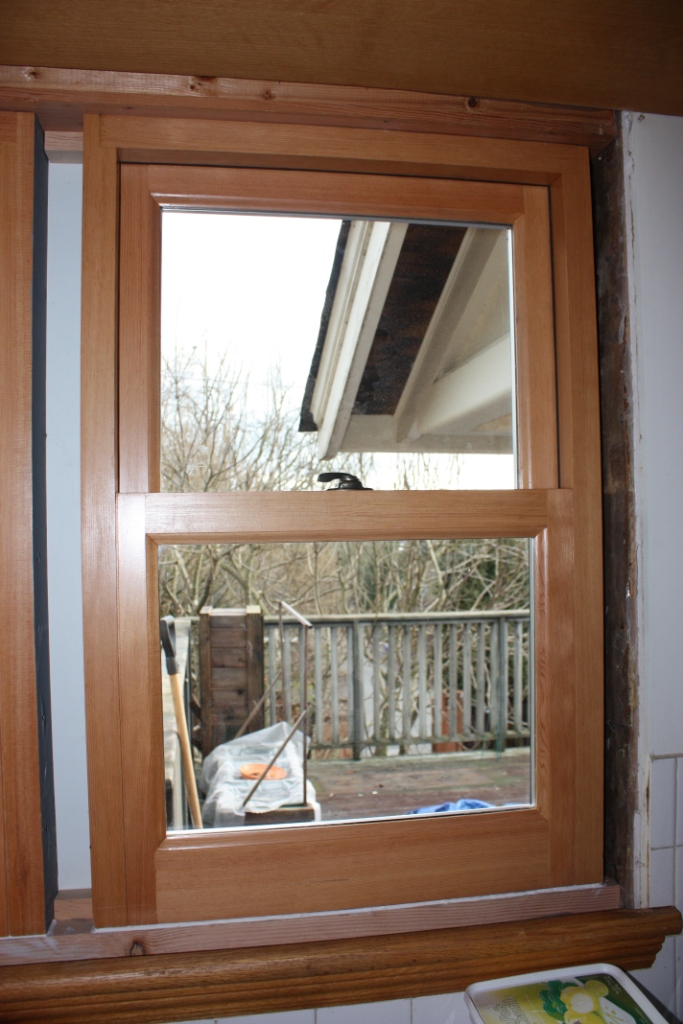
Here they are part way through installation. This was a slightly complicated install, as the previous replacement wasn’t exactly optimum, so they had to re-manufacture some of the wall.

?????????

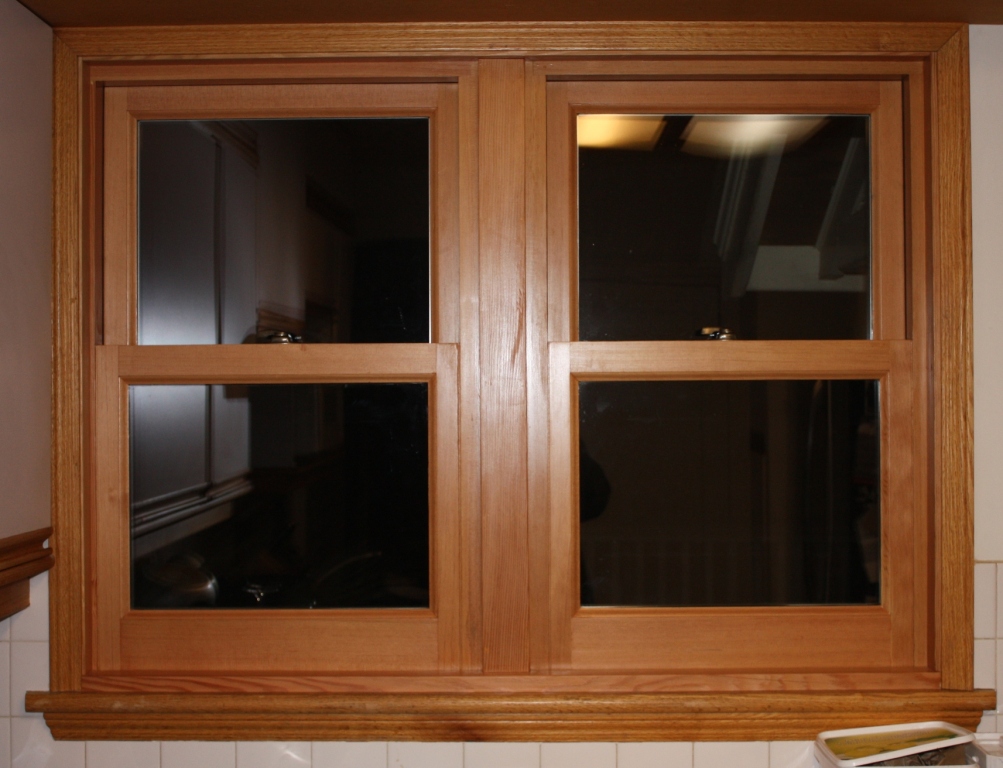
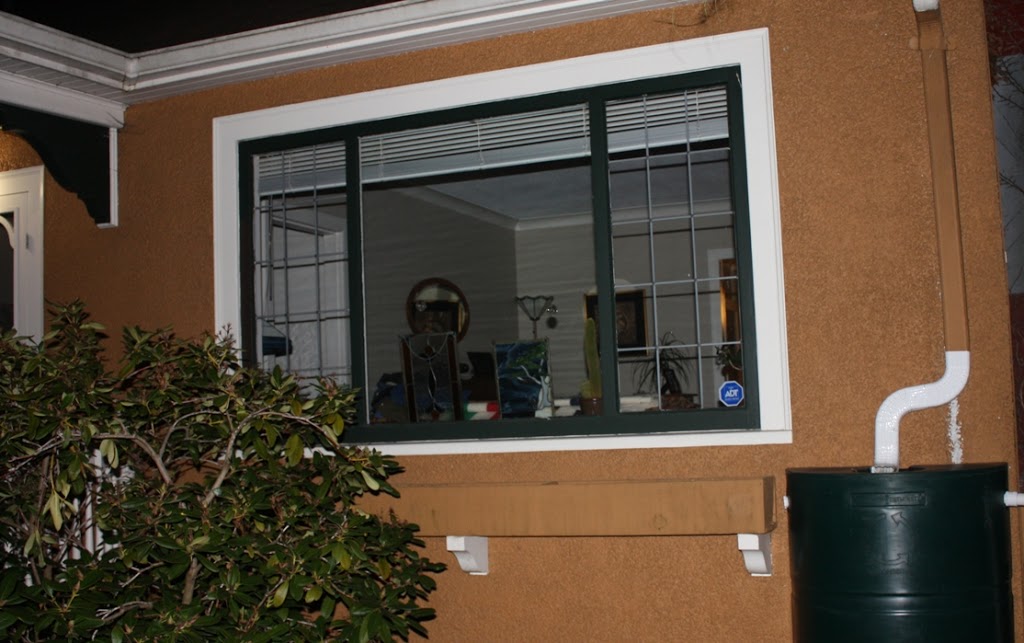
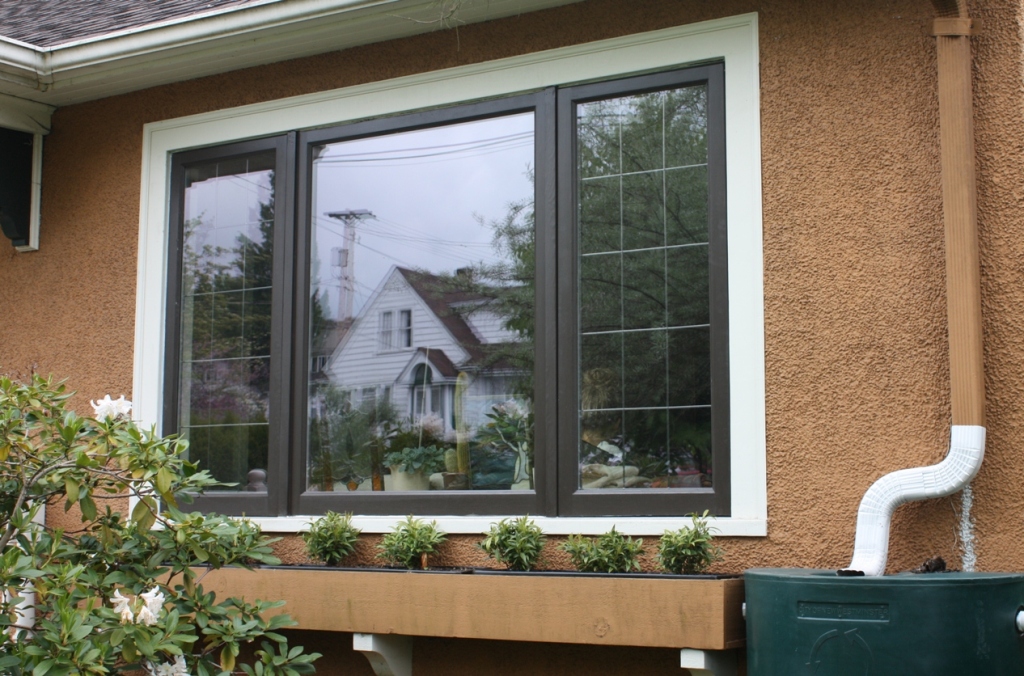
…and as the kitchen looks tonight.

?

Note this is one of the only locations where we lost a bit of window space, in the need to re-construct the framing
around the windows. In other locations, we increased glass space, like in this very badly installed off-the-shelf plastic window in our basement suite:

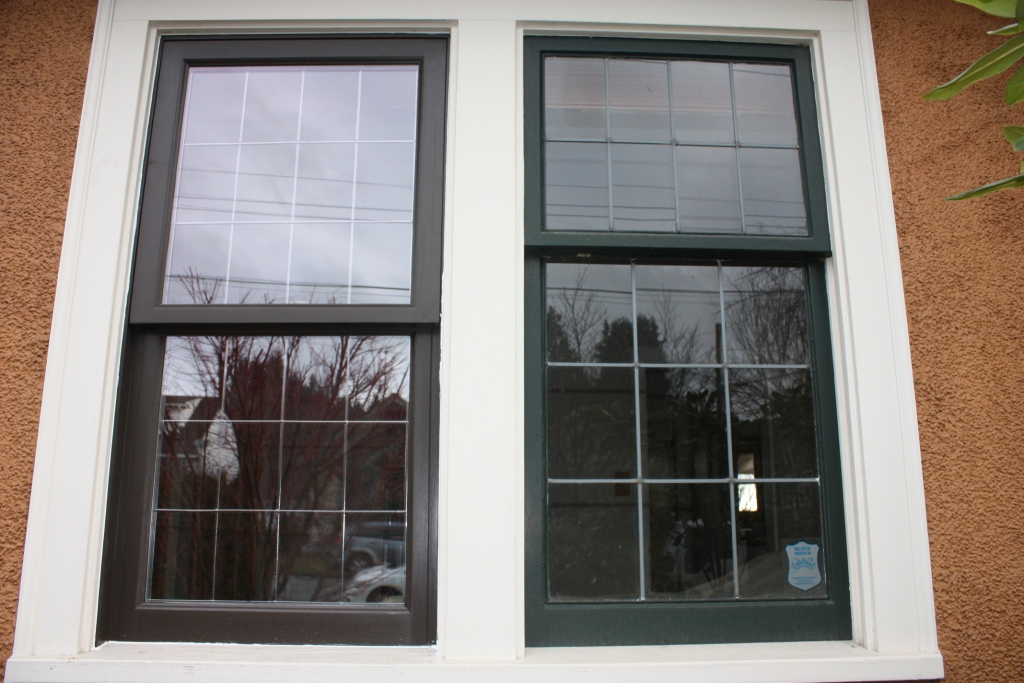
We also changed the bedroom windows slightly, to make the 1940’s style window slightly more compliant with 2000’s building codes (allowing large enough openings for emergency egress). In this photo you can see the old window next to the new during install. The change in the leading pattern made these windows match the leading in the living room window that is next to it on the façade of the house. They had been mis-matched, probably since the house was built in 1940.

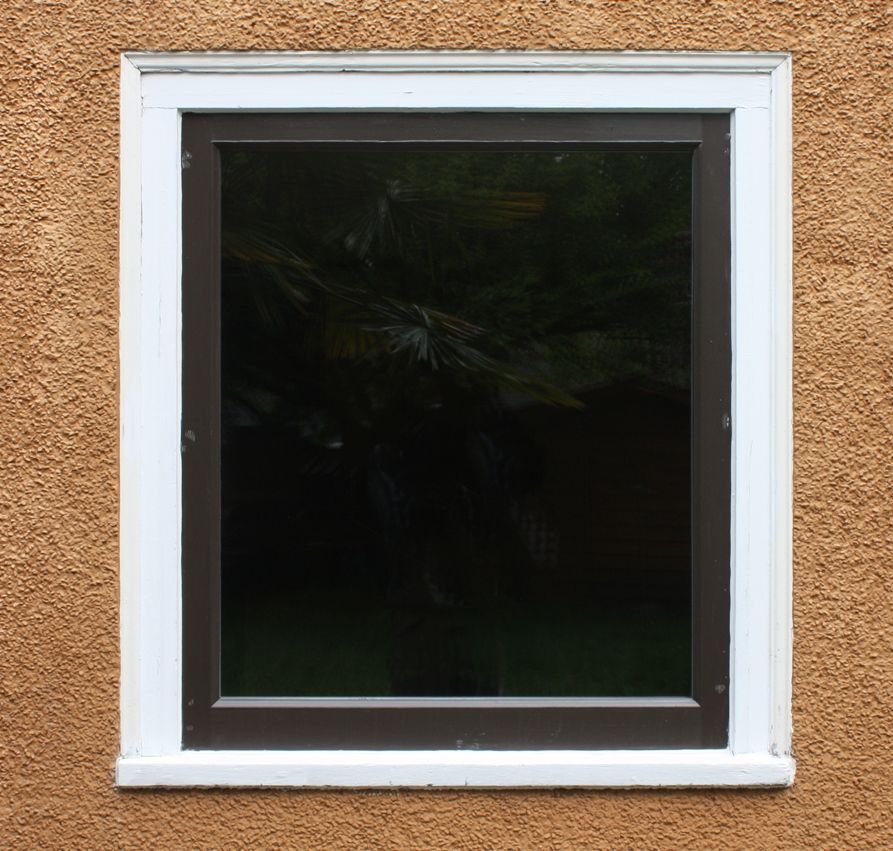
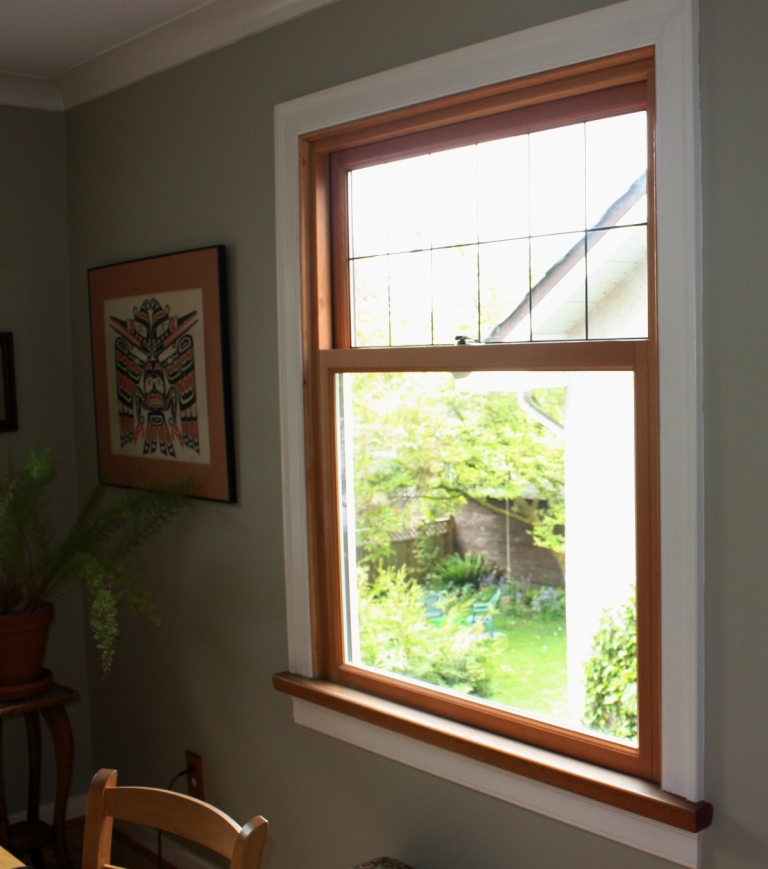
We elected to go with stained wood on the inside. Painted on the outside, with a colour that will hopefully be amenable with our inevitable re-painting of the house in a few years. First, we will probably be doing some work on the painted framing around the windows on the inside, to restore or replace the original wood and complete the look.

In the end, we went with a small, local manufacturer. By doing so, we did not buy “Energy Star” rated windows, and we therefore were not able to take advantage of the Federal rebate program for increasing the efficiency of our house. The process of getting their window assemblies certified as Energy Star is onerous, and would cost tens or hundreds of thousands of dollars. Easy for Fella® or Home Despot®; tough for a guy running a shop with a dozen employees in Burnaby. But we took into account the lack of rebates into our decision making on the windows. The sealed window units have CSA efficiency ratings (We know the energy gains we have received are equal to any other double-glazed low-e argon-filled units). Along with the thermal efficiency of the wood window frames, we are confident our energy rating has gone up.

And we can’t say enough about the beauty of real wood windows in a “semi-heritage” house, or the satisfaction of keeping our money local and being able to see our windows made. We know we have added to the value of our home, not just the efficiency.

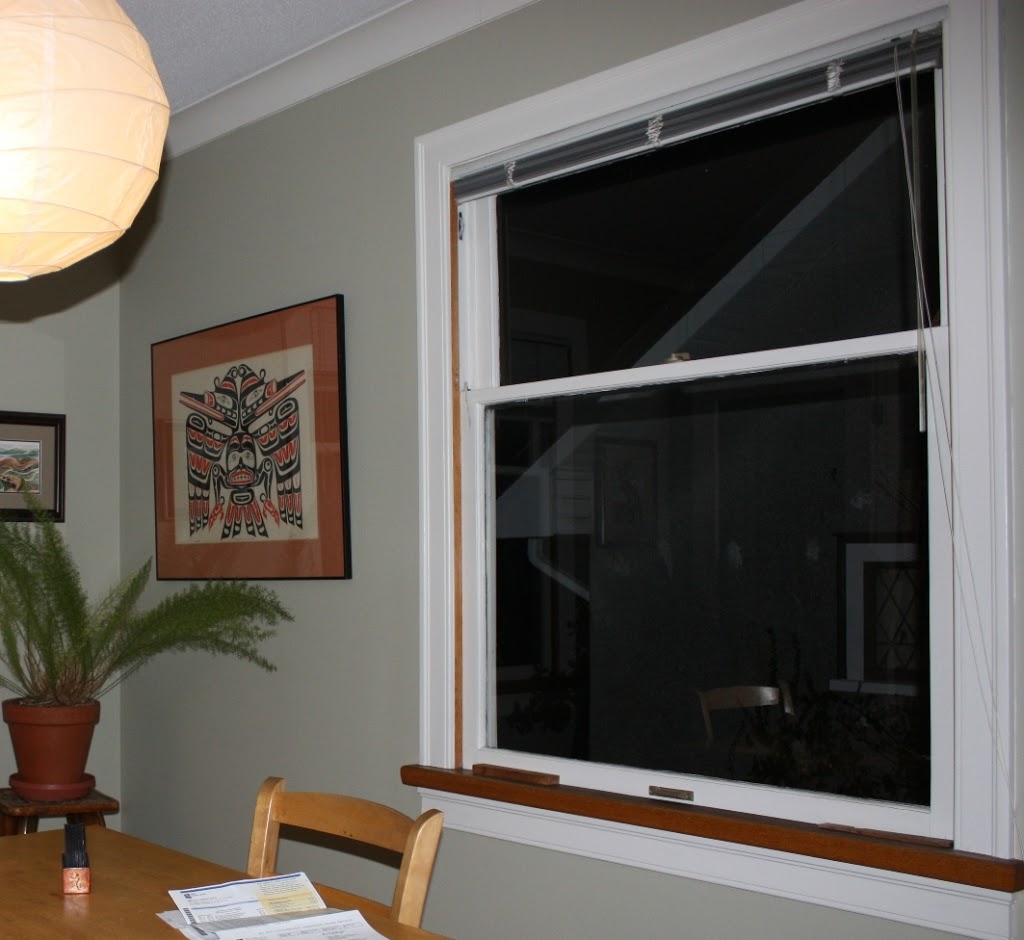
So here are some before and after pics.

Signs of the Queensborough

The cycling and pedestrian access to the Queensborough Bridge is a local success story in sustainable transportation.

The “improvements” to automobile traffic flow on the north foot of the bridge a few years ago (funded by the Federal Border Infrastructure Program as part of the Gateway Program and the, yeah, you guessed it, the North Fraser Perimeter Road) were pretty much a disaster as far as traffic-flows go. The commuter backups on 20th Street, 6th Ave, and Stewardson are no better than they were before the project started, almost a perfect demonstration of how you cannot build your way out of congestion. However, the improvements to the “active transportation” routes are great. I can attest to this, as it is my regular bike commuting route to Richmond.

However, several cycling advocates have pointed out as good as the physical improvements are for safety, the route marking is terrible. For everyday commuters, this doesn’t matter. For people visiting the City or trying to find their way through or to our City along this great new infrastructure will inevitably get lost if they follow the signs.

Like all pictures below, you can click to enlarge.

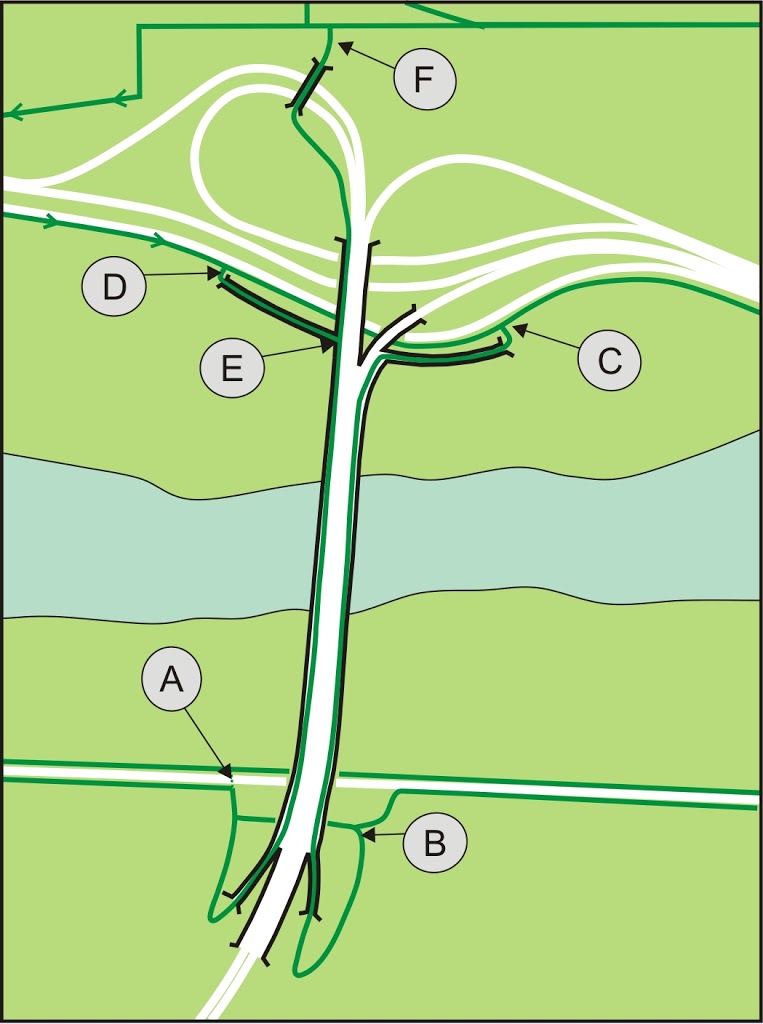
Here is my fancy CorelDraw drawing of the Bridge, green lines are bike/pedestrian routes, white are roads, and the black lines are supposed to evoke “bridginess”. As you can see, the bridge can be approached from any direction by cyclists, and the sidewalks are adequate to allow cyclists to go either way (with a little caution, more on this later). Only the two routes on the west on either side of Marine Way are “one way”. I marked the 6 most important route-marking spots with letters, summarized here.

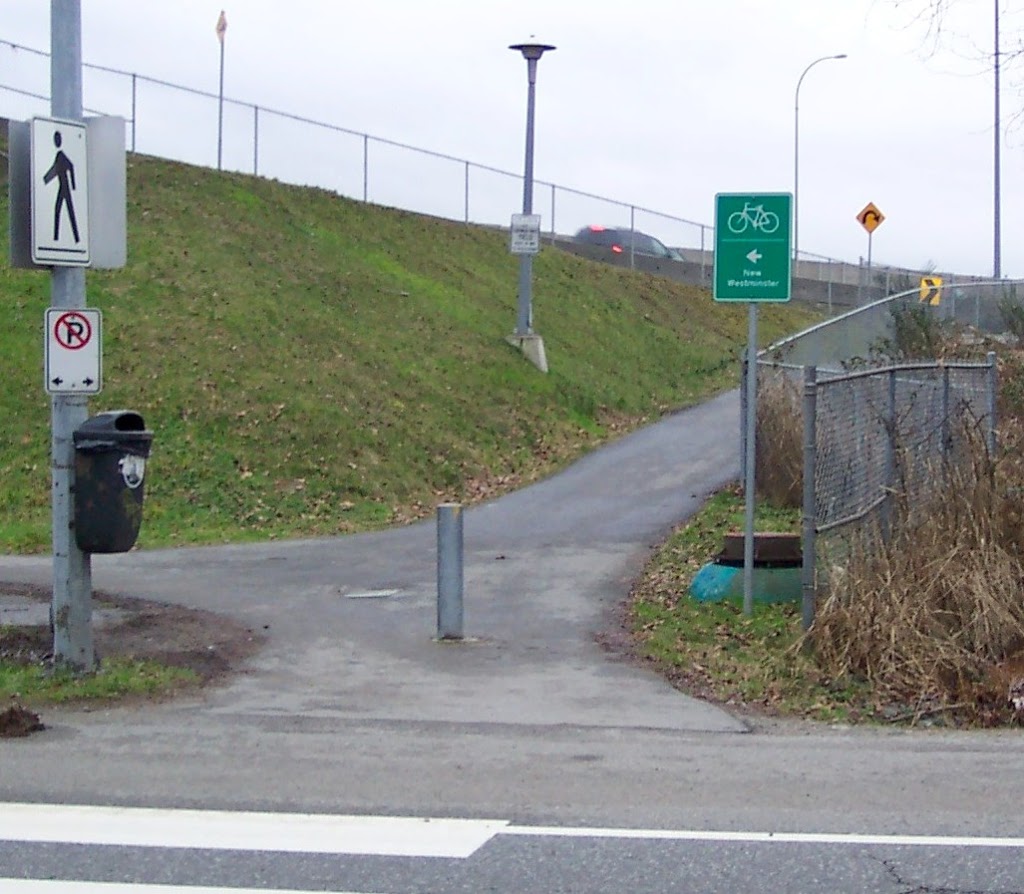
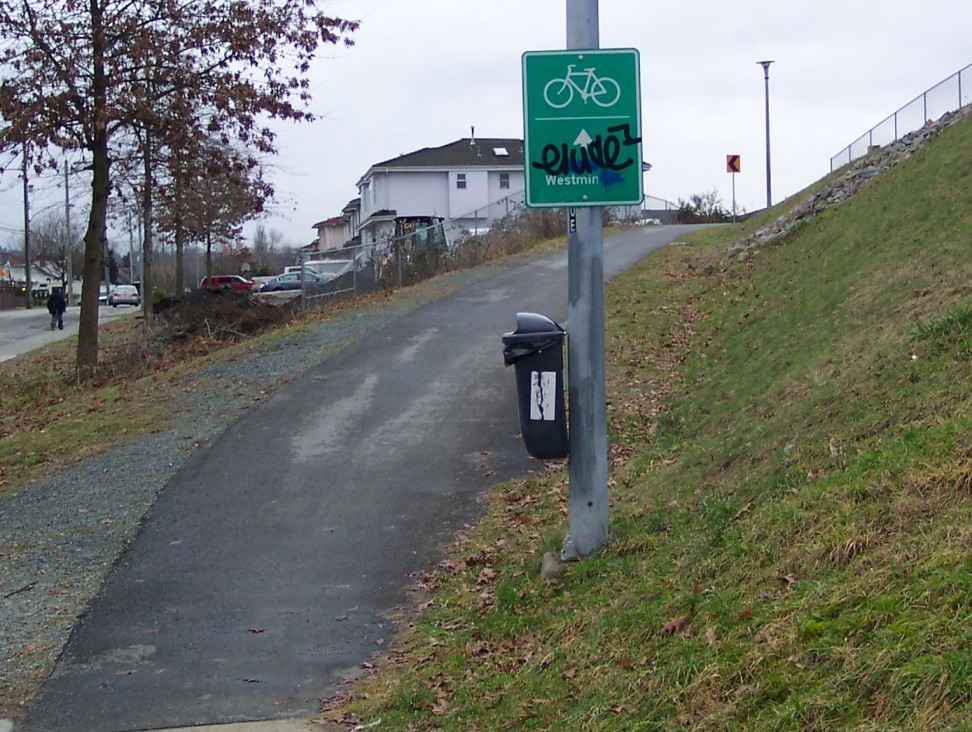
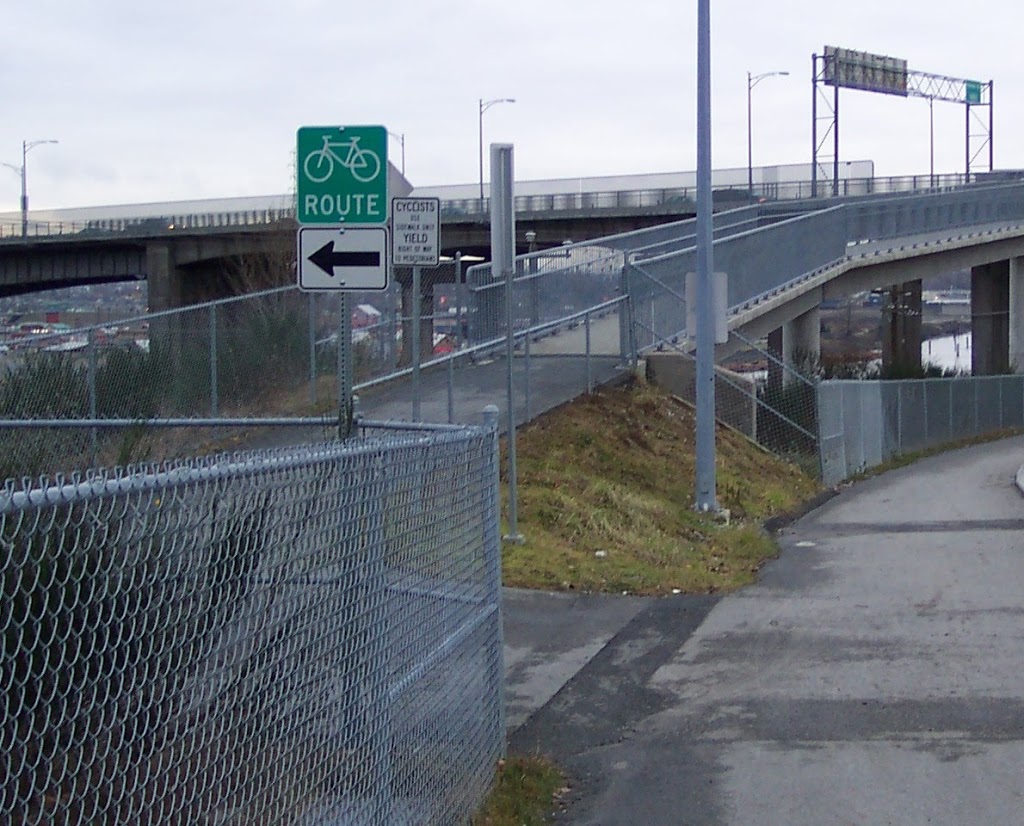
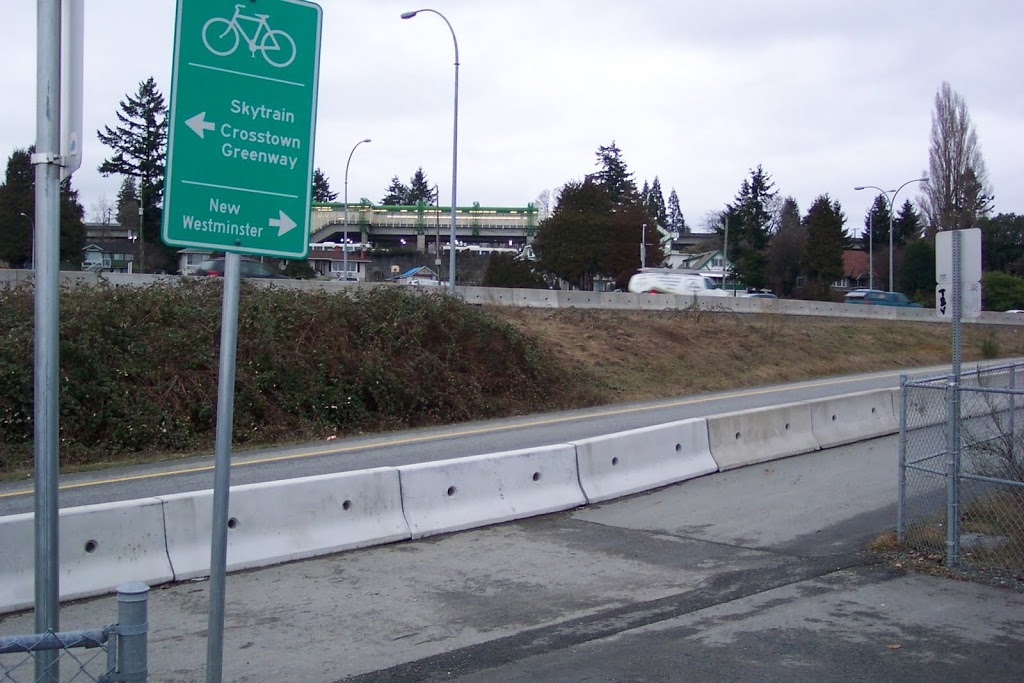
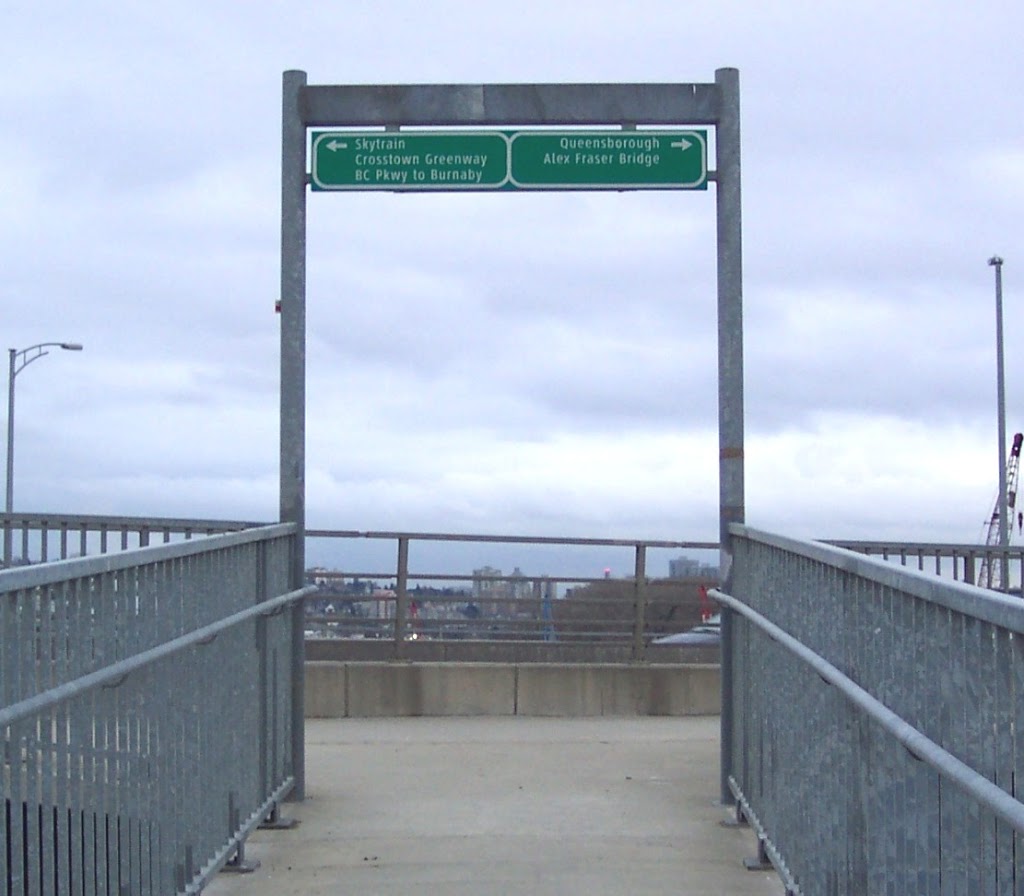
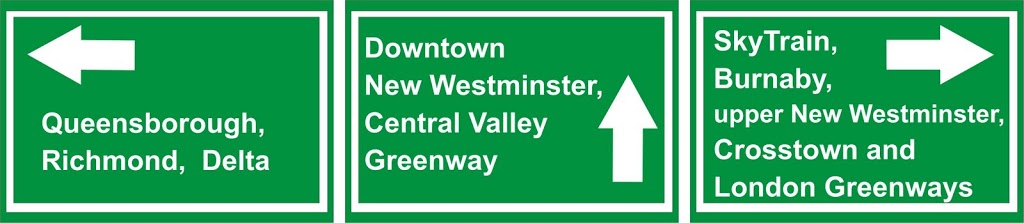
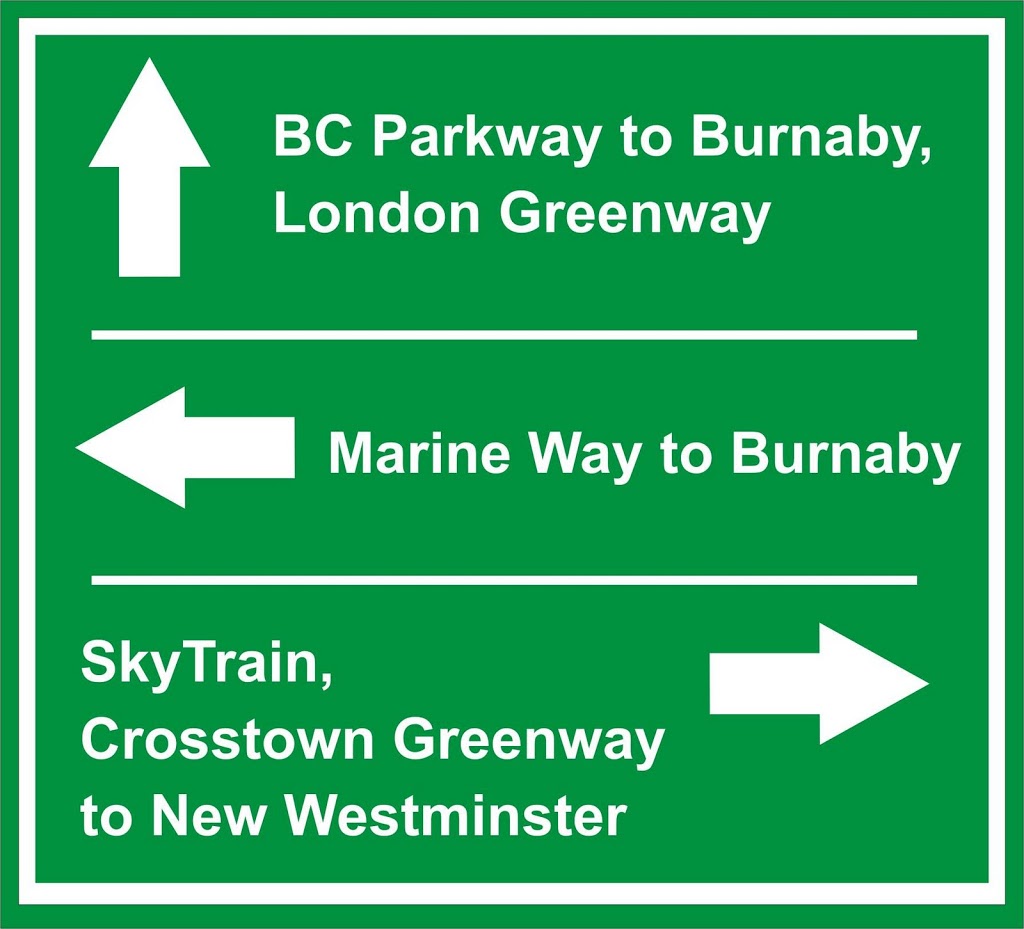
A: When approaching the bridge on the Queensborough side along Boyd Street, you have the option of taking the West sidewalk or the East one. The way the new ramps on the north side are constructed, this is not a decision to take lightly. Here is the sign you will see if you arrive from the West (say, from Richmond):

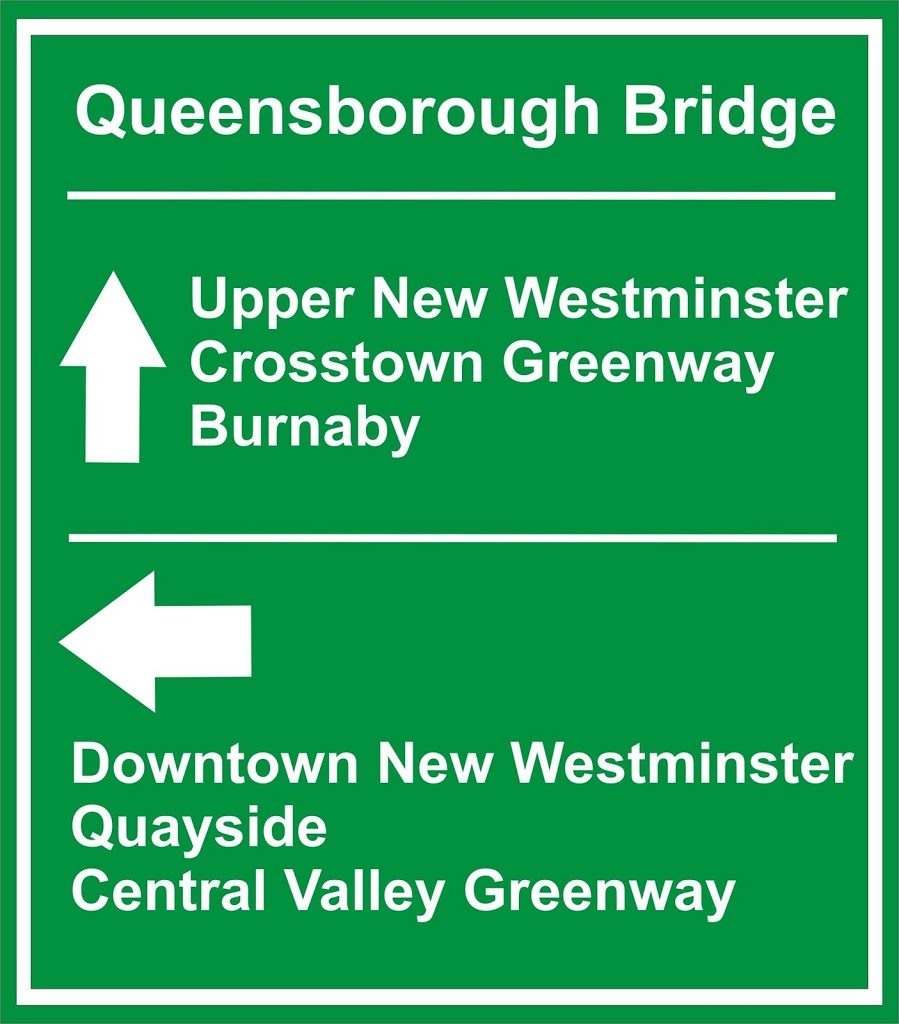
I’m not even sure what information this is meant to invoke. Take the left path to get to New West? Or go ahead to the next left to get to New West? Well, both routes will take you to New West, but then why have a sign at all?

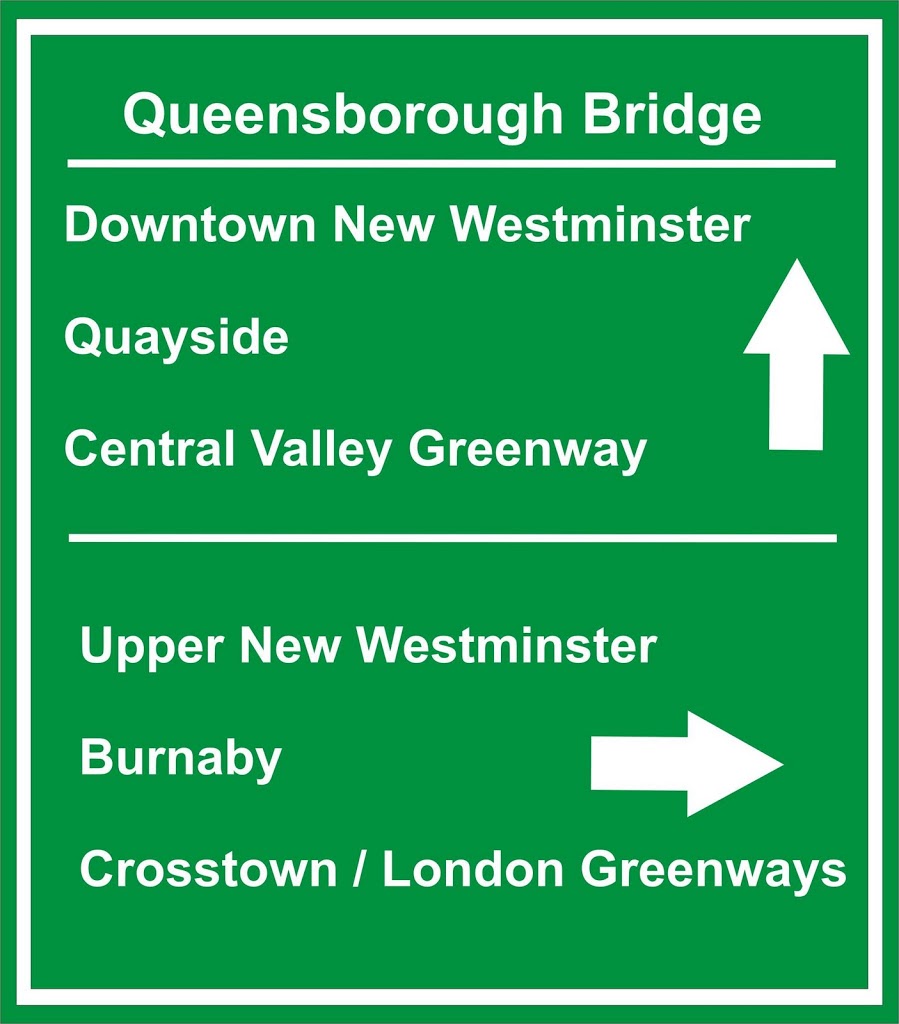
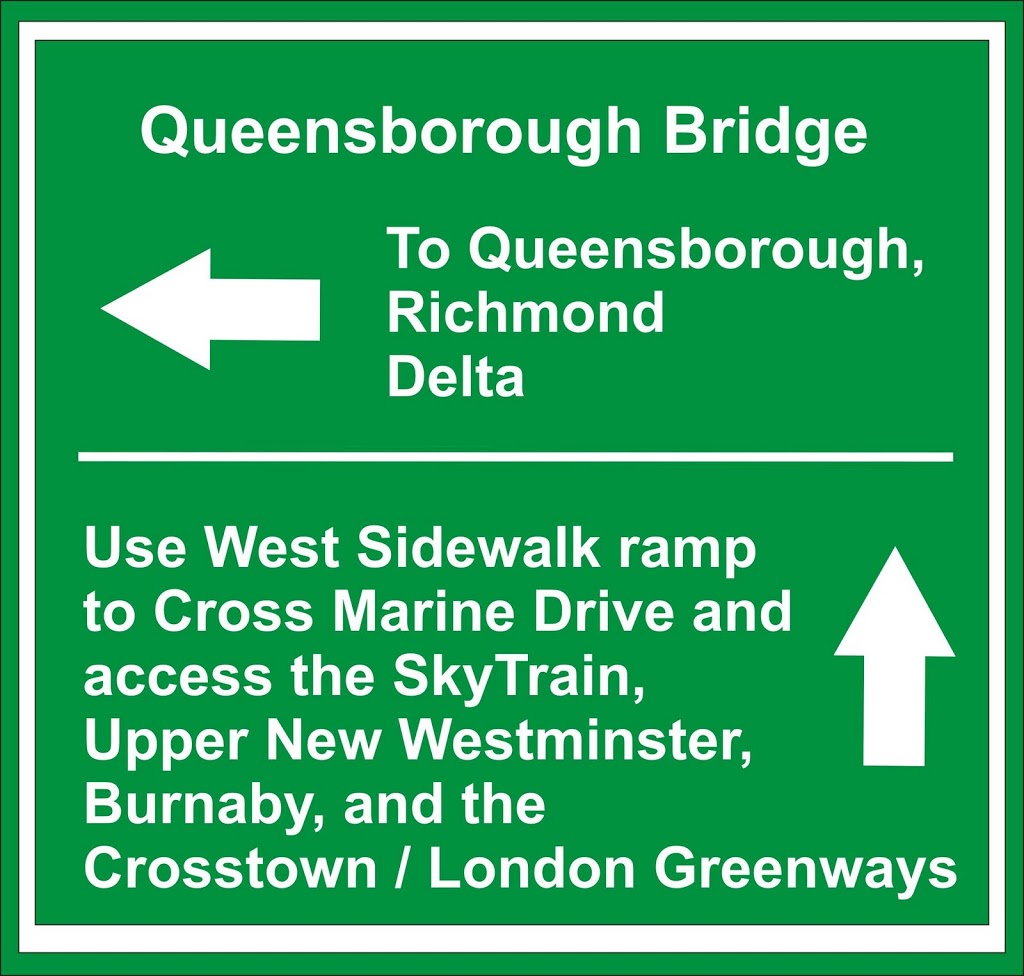
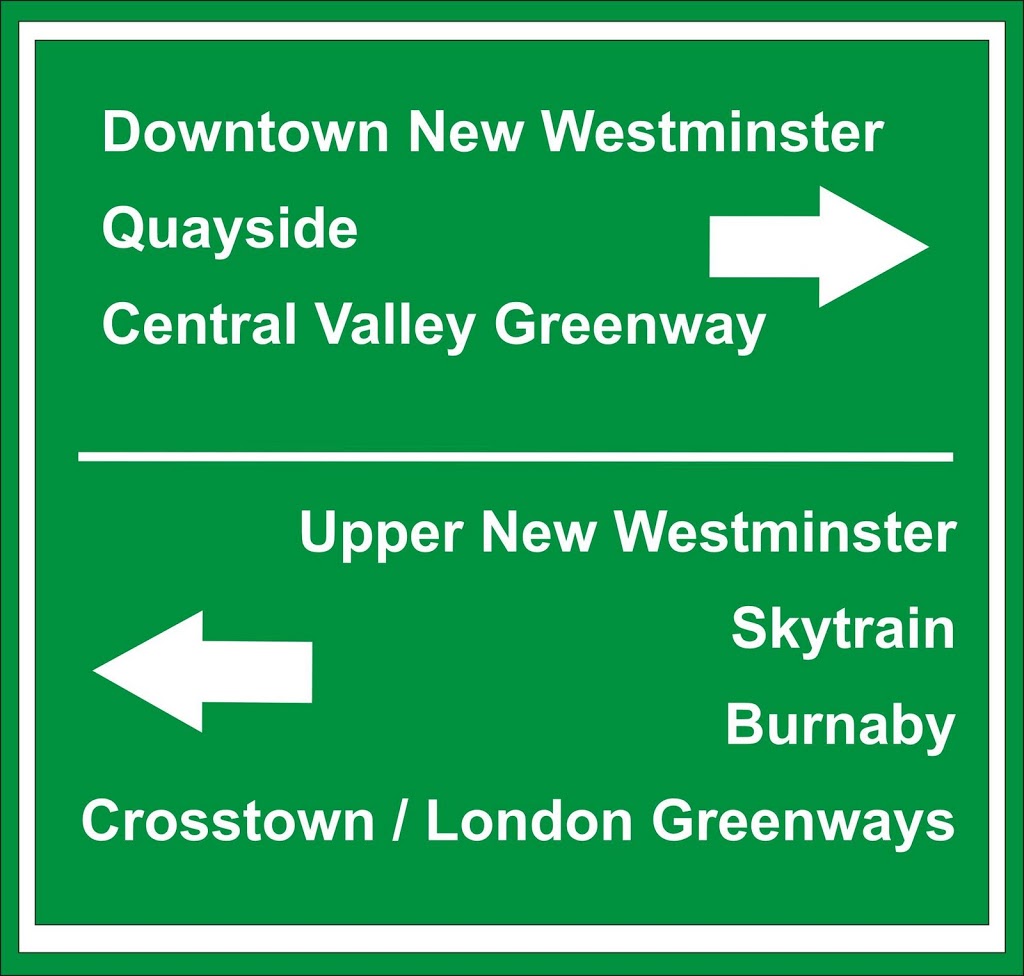
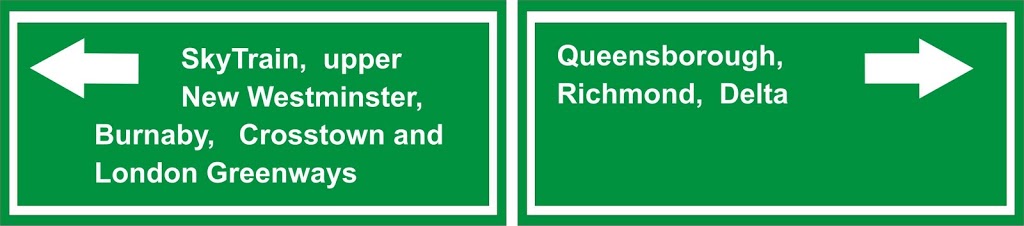
This is what the sign should look like:

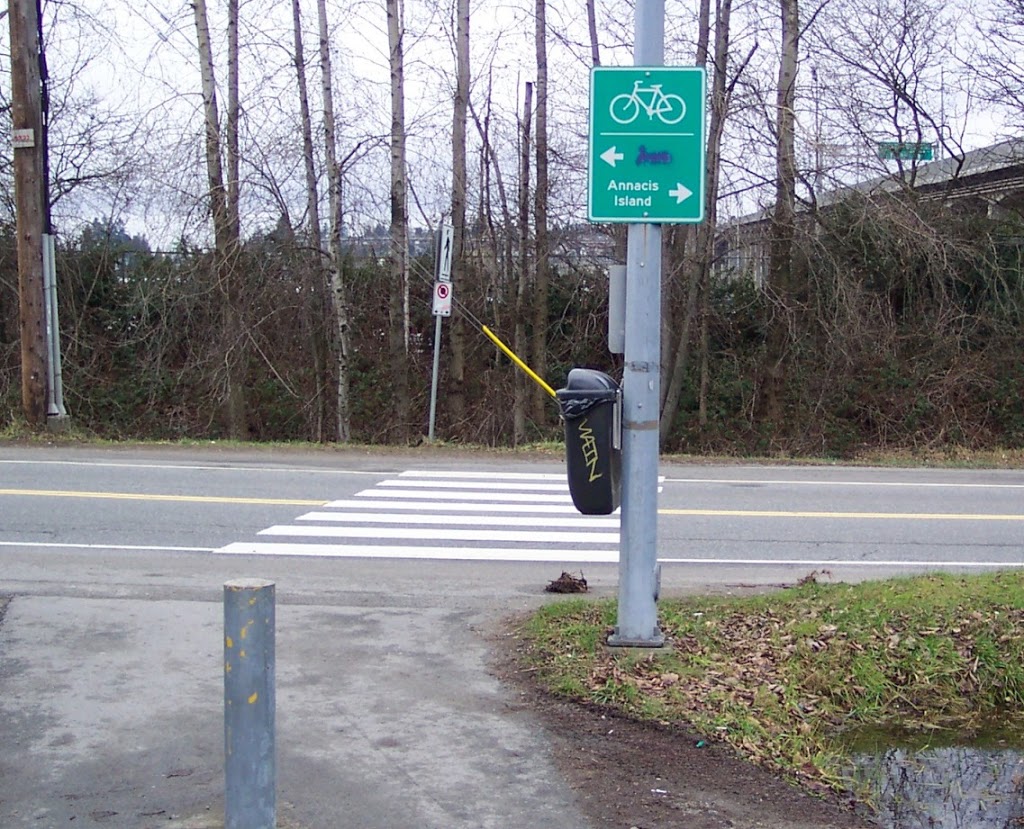
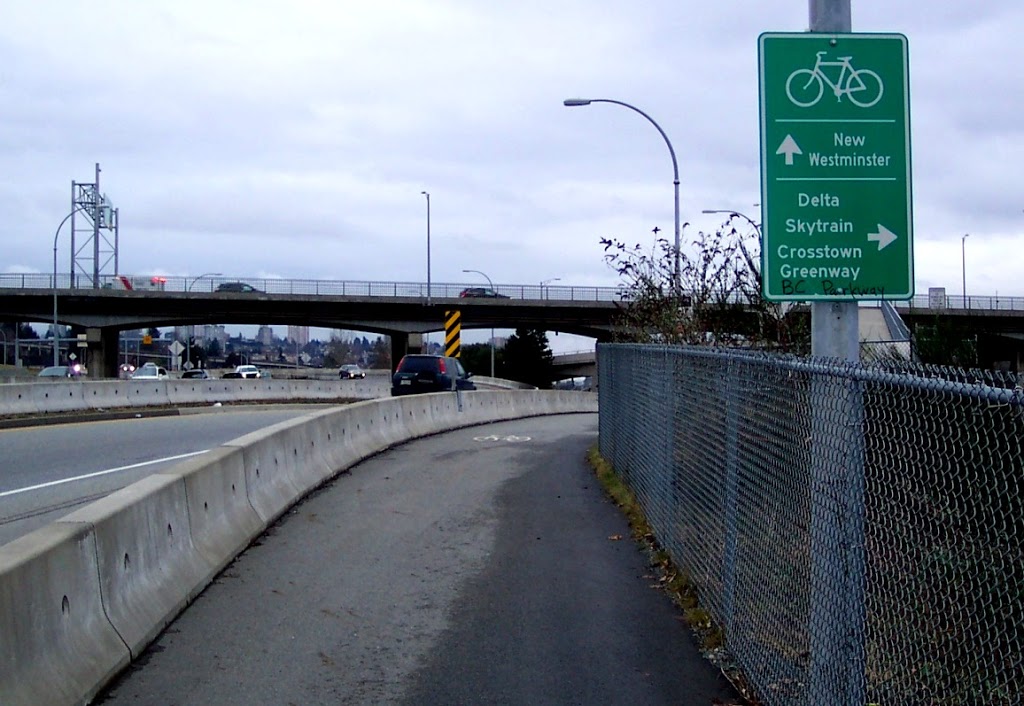
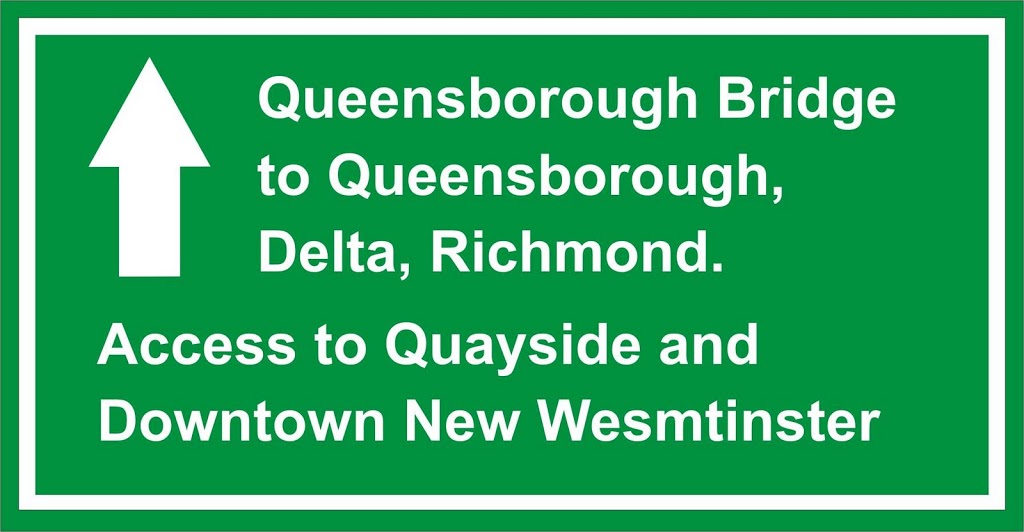
Coming off of the bridge, you approach Boyd and have this information:

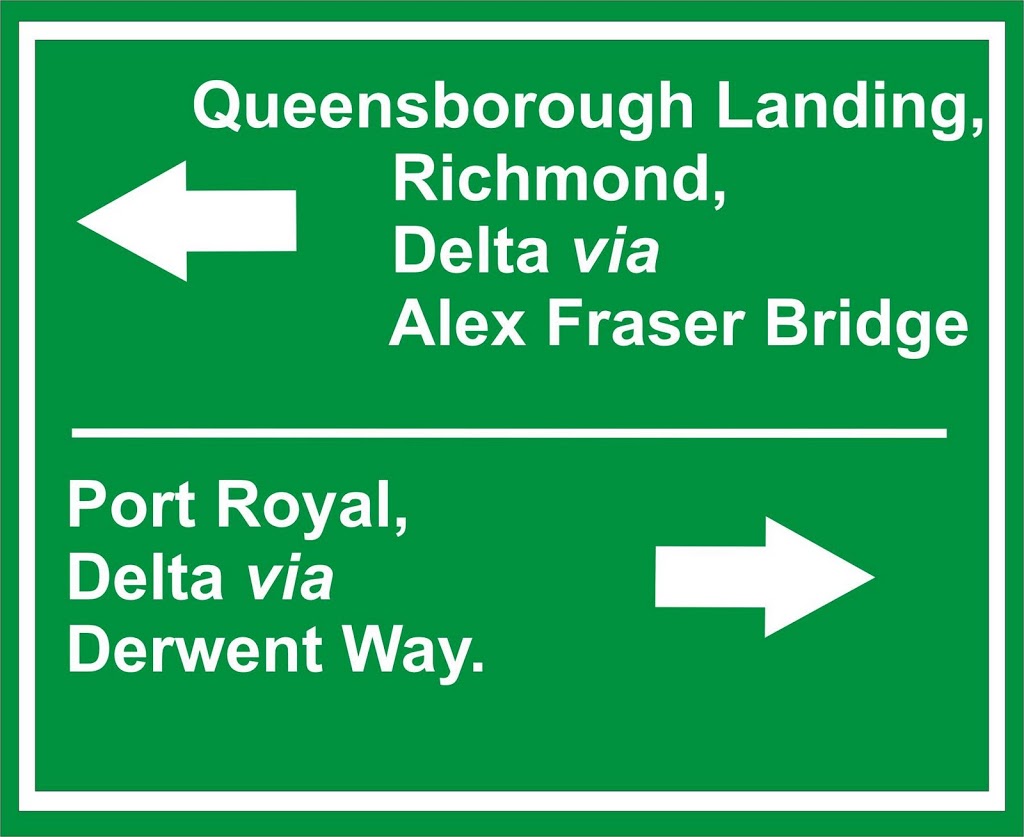
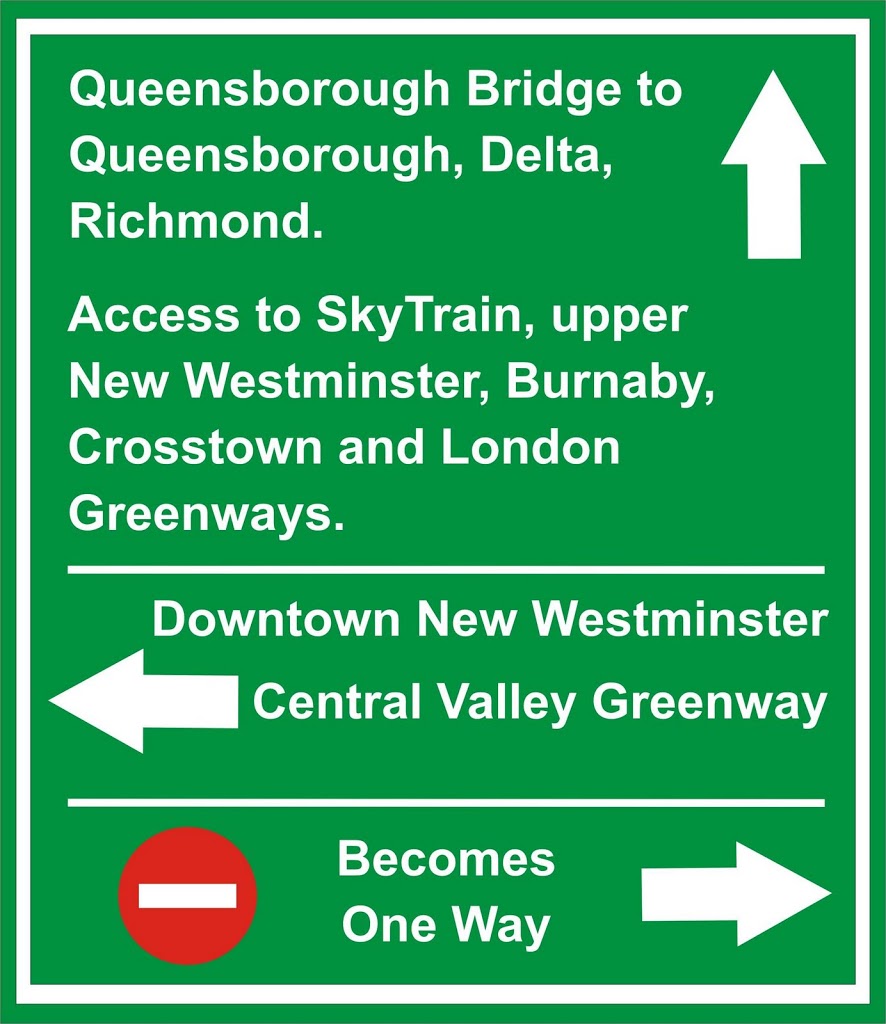
Now, this wouldn’t be so bad if the painted-over word was “Richmond”. That would provide a bit of directions suggestion. But it actually said “Delta”. I don’t know if anyone noticed, but Annacis Island is actually in Delta. This sign is Hellerian in its obtuseness, but not nearly as clever. Here is what is should say:

B: If you choose the lower option at A and head to the ramp to the East sidewalk, or if you approach the Bridge from the East (perhaps arriving from the Annacis Bridge on Derwent Way, or from Port Royal) here is what you currently see:

Not particularly useful, even before the local artistic intervention. It doesn’t even acknowledge the existence of the west sidewalk. Perhaps the sign should be moved down to the decision-making intersection, and another version of the previously-suggested sign installed:

And of course, a similar sign here as suggested on the other offramp to let people know destinations to the west or east once they arrive in Queensborough.

C: This is an interesting spot. When arriving on the designated bike route from New West, here is the instruction you get:

Bike route to where? Anyone riding up Stewardson on the old 7-11 bike route under the Skytrain has not been able to cross Stewardson for more than a kilometre. At this point, they probably have no idea how to get back on that route. Entering the bridge will take them to Queensborough. So here is my somewhat wordy suggestion:

Similarly, people coming off the east sidewalk of the bridge and hitting Stewardson might not be sure where they are at… and this sign is actually not bad, if incomplete:

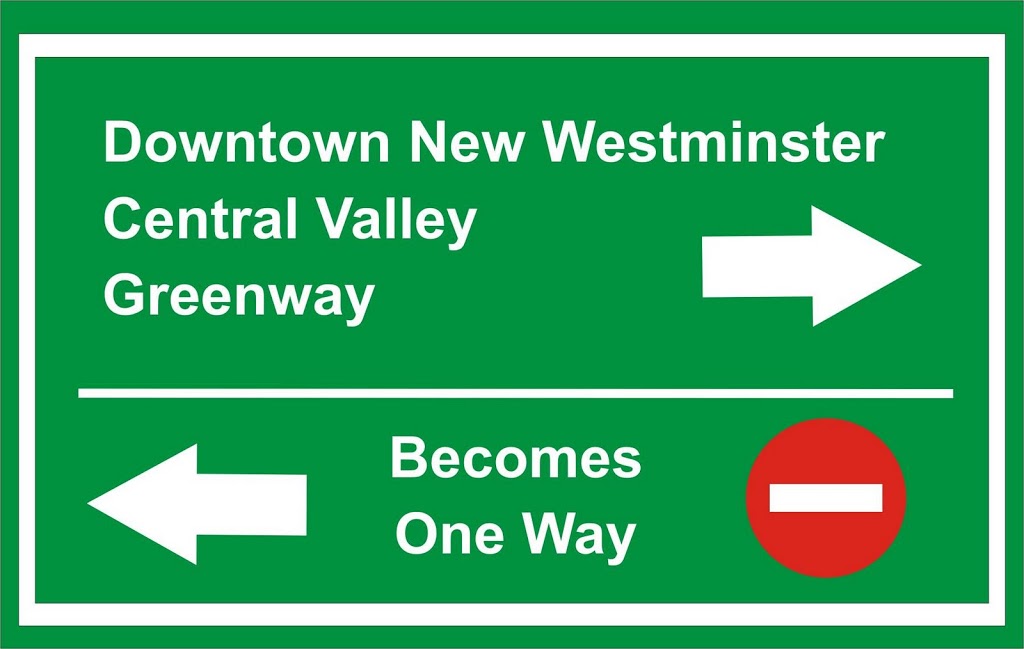
May I humbly suggest, just so we are all crystal clear:

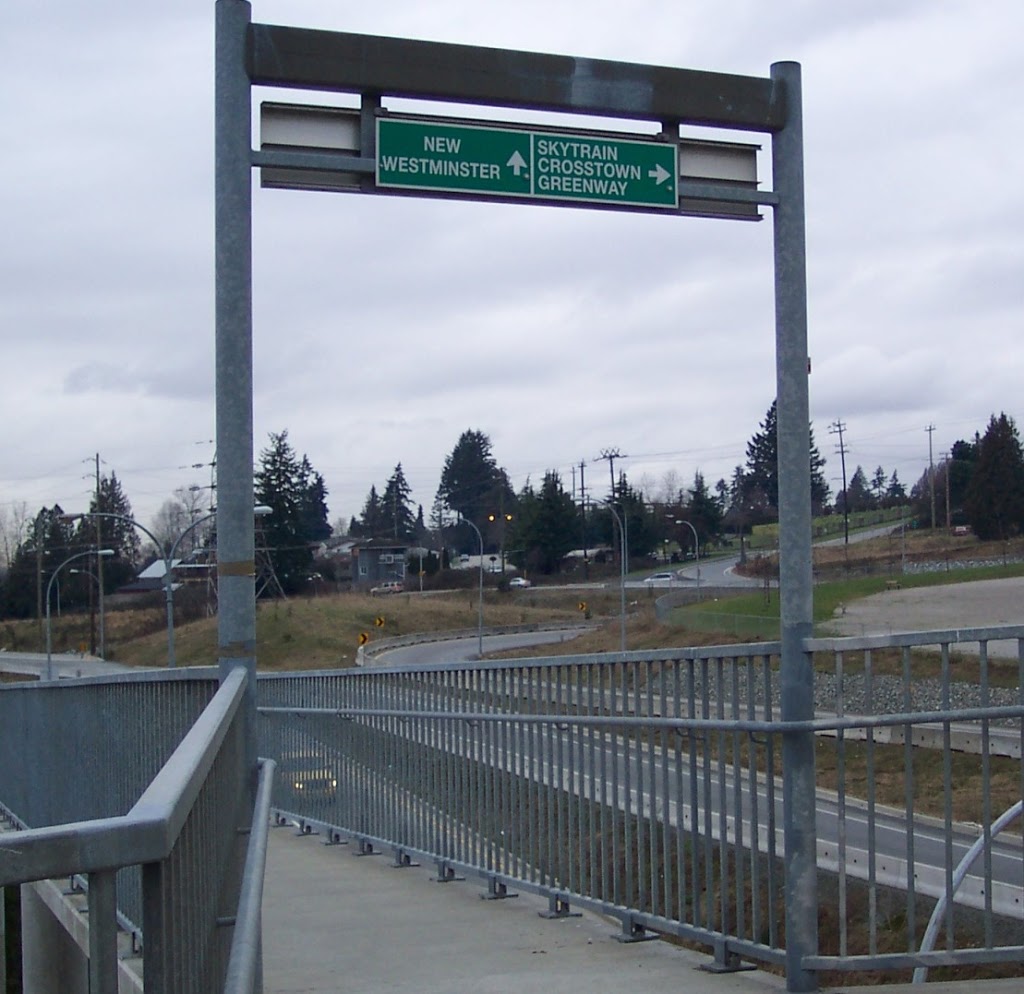
D: Approaching from the West, here is the sign you are presented with:

This is curious, as at this point all roads lead to New Westminster, either the West Side, Downtown, or Queensborough. At least here, the graffiti actually increases the amount of useful information on the sign. Approaching from the East, there is no way-marking at all, including no suggestion that the route west soon will become one-way, and you will be going the wrong way on Marine Drive if you go there.

Here, I would suggest a single sign, facing north right where the ramp leaves the sidewalk, so people looking south at the ramp (where they need to make a decision) see this:

People coming down off the ramp really only have one direction to go, so this sign can be pretty simple, but anything is better than the lack of signs they have now:

E: This is a spot where the signs are pretty good, they are pretty complete and correct for those heading up the ramp. If we were going to scrimp, this is where I would keep things like they are.

However, if the sign-printing machines are up and running and we already opened a few cans of green paint, this could be replaced with:
 The signage facing downhill on the ramp is not as good:

So it could use some modifications:

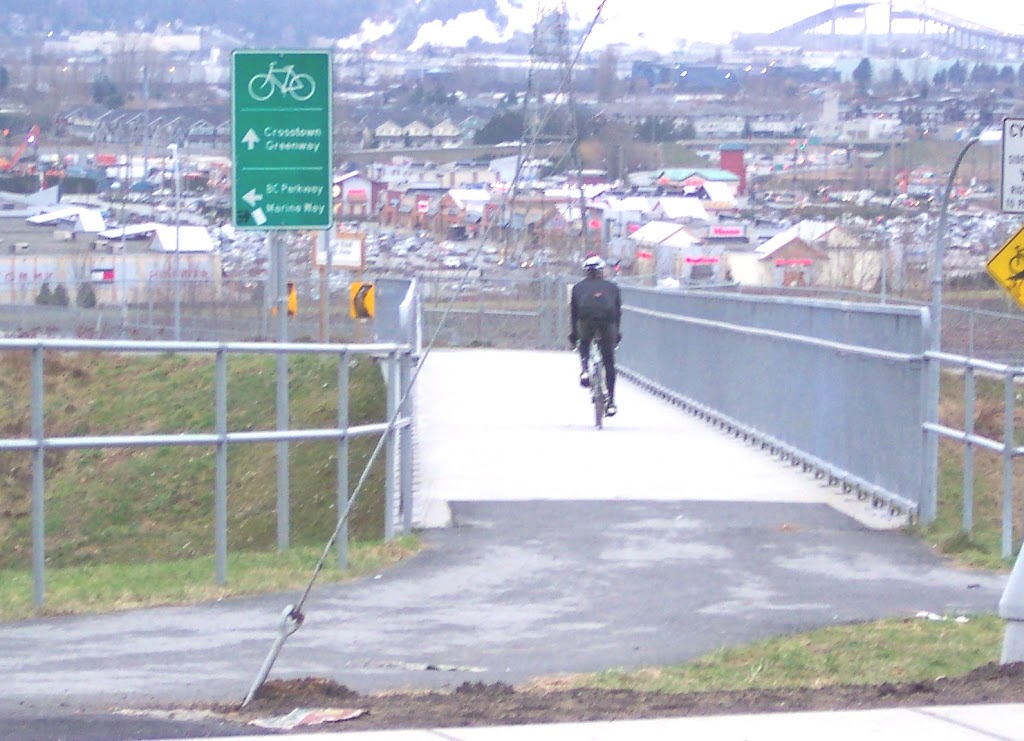
F: Finally, this sign is exactly wrong:

Actually, it looks like it has been rotated 180 degrees, so the instructions are confused. Therefore it is providing no useful instruction either way, and it is the only wayfinding sign at the north foot of the Queensborough Bridge. A couple of million dollars of infrastructure in front of you, and the sign is on backwards. Trust me, car drivers would not accept this. Why should pedestrians and cyclists?

 For those approaching this onramp, the sign should say:

For those coming off the Bridge, there are numerous opportunities. As a minimum, there should be a sign saying this:

However, this area is a major regional pedestrian and cyclist hub, and deserves better than a small green sign on the offramp. This is where the BC Parkway under the SkyTrain and the London and Crosstown Greenways all connect within a kilometre radius. Ideally, there would be a poster-style map located across the road from the bridge offramp, one that showed the quickest route to the major Greenways, and showed where each of those Greenways lead. I think there are better design minds than mine who could put such a poster together. Notably, it was raised during the City’s Pedestrian and Bicycle Advisory Committee summer ride last year that this area a funny bit of infrastructure jurisdiction. The Queensborough Bridge is Ministry of Transportation, the area under the SkyTrain including the BC Parkway is TransLink, and the Greenways are City of New Westminster. Someone would need to get all the parties together and see who would pay for this improvement, and who would install it.

All my suggestions above are just that: suggestions. If you have better ideas or suggestions, Please let me know! If you have stories of wayfinding around the Queensborough, I would like to hear those as well.

Oh, and back to that safety thing on the two-way sidewalks that are not quite wide enough for two-way traffic. Can I recommend we all practice standard trail etiquette?

  1. Cyclists should yield to pedestrians: That means when approaching them face-to-face, slow right down to walking pace, and come to a stop, holding the rail while they walk by. If approaching them from behind, give them some friendly rings of your bike bell as approaching (NOT right behind them to shock them), and slow to pedestrian speed, and only pass when they give you the right of way.
  2. Pedestrians: Try to be aware of people on bikes approaching from behind, and skooch over a bit to let them by without snagging your purse, your dog, or your hair. If a cyclist comes up from behind and says “on your left”, that is code for you to move right a little and give them room.
  3. Uphill traffic has right of way: When bikes are approaching head-on, the downhill cyclist should slow down and give way to the uphill rider. It is much easier to get back up to speed for the downhill rider than it is for the uphill rider, and the uphill rider is much more likely to be travelling at a speed that is safe for crossing.
  4. Everyone: Try to be aware of your surroundings. And don’t forget to stop at the top, spit off and count how long it takes to hit the water. Gravity is cool.

MSP hires more Lawyers

This little news story needs to get more press.

Apparently the Provincial Government has decided to cover Health Costs by giving money to Lawyers. At first glance, the politics of “suing those responsible” sounds like the kind of thing fiscally-prudent Governments should do. But read the story: a drunk driver hits a pedestrian, and the Provincial Government is suing a municipality for not having a crosswalk!?! So provincial taxpayers are paying lawyers to battle in court against lawyers working for a local government’s taxpayers … to save taxes?

But this is only a single silly example, that distracts from the real evil of the Health Care Cost Recovery Act. Am I the only one scared by this:

“The Third Party Liability Department is responsible for the recovery of health care costs when a British Columbia resident is injured due to a third party’s wrongful act or omission for both motor vehicle accidents and non motor vehicle accidents. For example: Injuries occurring from negligence involving incidents/accidents such as but not limited to slip and falls, boating, air and rail accidents, swimming, diving, skiing, explosion, fire, falling objects, and Class Actions.

The Provincial Government is now going to hire lawyers to go to court and sue someone (anyone?) to recover costs related to your slipping and falling, swimming, or skiing. If you are not scared yet, read on:

Let me tell you the story of a friend of mine.  One day we were riding our mountain bikes at Town Run Trail Park in Indianapolis. How we got there is not all that important (I was once an incredibly mediocre mountain bike racer in Indiana), but my riding partner had a pretty serious crash. Serious enough that there was an ambulance ride involved.

Now my friend and I both lived in an adjacent State, so the hospital she was sent to wanted to know how she was paying the moment she arrived. Luckily, she was gainfully employed and through her employer, was in a Health Maintenance Organization (HMO), a for-profit healthcare insurance plan. Once that was sorted out, she got very good care, as you would expect when they are charging you $1.50 a gauze and $1500 an X-ray (why scrimp?). She was not all that concerned as a) she had health care coverage; and b) she was pretty seriously concussed.

When she got home, she sent the 4-figure bill for the Hospital and the 3-figure bill for the Ambulance to her HMO, and after sending them her “co-pay” of a few hundred dollars, they paid for her care. That’s what you get for the thousand or so dollars that she and her employer paid every month to the HMO to keep her insured. What we call “health care”.

A few months later, she started to get letters and phone calls from a lawyer asking questions about her accident. She was reluctant to answer anything until they said they were working with her HMO. In that case, she asked for more details, and they explained they were seeing if there was anyone willing to share the liability. That is the euphemism they used “willing to share the liability”. At this point, she told them to get bent.

You see, her HMO had “sold” her accident to a lawyer. To recover the costs that the for-profit HMO had paid the for-profit hospital, they had sold the liability to a for-profit leech. The leech was looking for someone to sue. Anyone. Presumably, they could go after Giant Bicycles for making the bike, or Bell Helmets for not offering adequate protection, but those sound like big entities with their own raft of lawyers. It became apparent from their line of questioning (Where were you on the trail? Was the trail bumpy? Were there any warning signs? ) that they were interested in going after the people who ran the bike park.

Now, I ride a mountain bike a lot. I have fallen off of my mountain bike a lot (that is how you get to be good enough to be an incredibly mediocre racer in the mountain-bereft state of Indiana). Every time I went over the bars, I knew it was my fault. Either I overestimated my skill, or I underestimated the trail, or I got cocky, or I failed to check if my front wheel was attached. It would never occur to me to sue the person who set up and maintained a mountainbike trail system. Just like I didn’t sue the Ski Hill when I was concussed in a ski crash, and didn’t sue the beach resort when I broke my shoulder body surfing. Why? Because I like to mountain bike, I like to ski, I like to play on the beach (though I am now deathly afraid of body surfing). If I sue, I am transferring my personal responsibility to someone else, and they are less likely to set up opportunities for me to do these things, or if they do, they will need to be insured up the ying-yang and will price most people out of taking part in the activity.

However, there was no way that my friend could stop the leech who bought her liability from her HMO from suing the mountain bike park whose only crime was to set up a place where people could recreate outdoors in the middle of a mid-western urban centre. In fact, the HMO made it very clear that she could be compelled to testify in a civil suit against her will.

I suspect the majority of people have the same sense of personal decency to not sue people who provide you recreation. Break a leg doing a 720 at the local ski hill, would you sue? Slip and fall at the local swimming pool, would you sue? What if it was your neighbour’s pool? Slip on your grandmother’s step while shovelling it for her: Would you sue? You may not have a choice, as your Government will sue for you. Everyone who belongs to a curling club, who coaches a softball team, who has a grandmother who needs her walk shoveled, should be worried about this law. Yet I am betting you have never heard of it.

I expect that kind of shitty behaviour in the Tort-friendly Excited States of America, and I expect it from crappy HMO companies that must always acquiesce to the shareholders’ interests (what is suing a bike park compared to cutting cancer patients off of their meds?). I also expect from the con men who spill water on the floor at Safeway then “slip” and sue for whiplash.  I expect better from my elected government. I expect more for my tax dollars. This is not the kind of US-style health care I want to see.

What next?

Now that the UBE has been killed, and TransLink has decided that the NFPR is no longer a priority, the natural question is “What next”?

First off, we now have the luxury of a bit of time. Part of the original concern with the UBE was that there was a pressing deadline: shovels had to go into dirt real soon or Federal matching funds were going to disappear. That meant we didn’t have time to come up with comprehensive solutions for the Brunette-Columbia-Front-Stewardson corridor (the BCFS as I am going to start calling it for brevity). Although there I still a pressing need to address many of the traffic, access, and safety issues along the BCFS, we at least can now approach them with adequate planning and discussion. Stories of a 2015 Pattullo replacement now seem a little premature, with TransLink suggesting 2020 as a more likely time frame, yet a slide at the TransLink presentation on Thursday that suggested 2017-2018… let’s agree to call TransLink “non-committal” on the Pattullo timing, but at least we know we are likely a couple of years from the consultation process. That would indicate we have a couple of years to plan for that.

I would like to have a community conversation about the Brunette Creek industrial area, and how we can provide adequate access to the important businesses there without burdening those same businesses with commuter through-flow (the inevitable result of the UBE proposals). I think keeping the Bailey Bridge as one-lane alternating is a good control on through-flow. I also think that closing the level crossing at Braid would provide safety benefits and simplify the traffic situation at Braid and Brunette. (Note I don’t think it will reduce congestion, because I am strong believer that induced demand is the major control on traffic congestion; the smoother we make the flow, the more cars that will enter the flow, until the congestion reaches a point of equilibrium). This leaves us with only one other way out of Brunette Creek: Spruce Street.

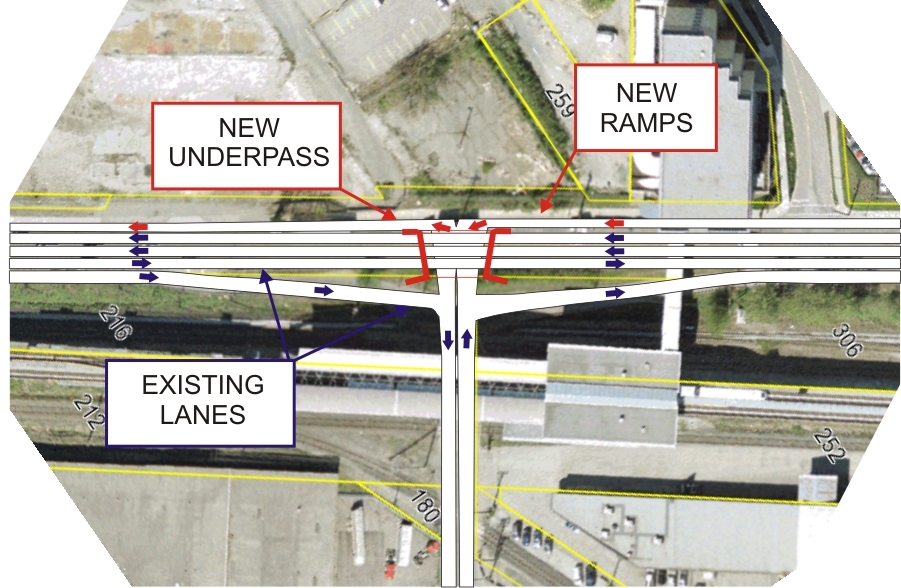
Currently, one can enter Spruce Street from northbound Brunette, and can exit northbound on Brunette from Spruce Street. To connect Spruce Street to southbound Brunette, I would suggest an underpass beneath Brunette, with entrance/exit ramps on the west side of Brunette that essentially mirror the ones on the east side. A single light-controlled intersection at the underpass. This moves trucks down where the noise will have reduced impacts on the surrounding neighbourhoods, and makes the biggest ingress-egress point from the industrial lands nearer the center of the industrial lands, but a long way from the Bailey bridge, to reduce the attraction of commuters to the industrial area. Clearly, this approach will need to take into account the current development plans at the Brewery district, but there is nothing in the ground there yet. By using this to close the Brain level crossing, the Federal Gateway Money should still be available, as this meets the same rail safety improvements as the UBE (which, notably, also included maintaining the Spruce Street level crossing).

Click to enlarge – and please excuse ham-fisted CorelDraw use

I don’t want to spend too much time on the details, because that is what these things are: details. Before we start fleshing out details, we need to make the big decisions: How will our City address its traffic problems? How will our City adapt to regional and internal growth as projected by MetroVancouver’s Regional Growth Strategy? How will we accommodate a new Pattullo Bridge? How will we address the pressure our City will see from the Highway 1 expansion? How will we support TransLink’s goals for mode shift as outlined in their Transport 2040 plan? How will we adapt our transportation infrastructure to deal with Climate Change, with Peak Oil, with an aging population? How will we protect the livability our City’s neighbourhoods, from Sapperton and Downtown to the West End and Queensborough?

The proper way to address these questions is through the City’s Master Transportation Plan. Fortunately, that planning process is starting right now. So the opportunity is in front of us.

I am hoping to take a lot of the blogging energy I have been putting into the UBE, and direct it towards addressing those questions. I don’t pretend to have the answers, and don’t expect to find them on this Blog. I think the answers have to come from the community, and it a pretty big order to fill. I only hope to open a dialogue and help find our way towards the answers. Make no mistake: this is important, even more important than the UBE. The Master Transportation Plan will shape our City for the coming decades.

Climb on board, folks, it should be a fun ride.

Thank You TransLink, Thank You Sapperton

20 hours later, I’m still unsure how to view the announcement that the UBE and the NFPR through New Westminster are dead.

My first reaction was to thank the volunteers who spent countless hours working through the consultation process. This is the note I sent the UBE Google Group last night:

“Congratulations, everyone. It is refreshing to see a community come together, and to see those elected and/or hired to represent us listen to the community.

But let’s not forget, the end of the NFPR is only the beginning of the conversation. We still have traffic issues to deal with, we still have Braid and Brunette, we still have Front Street cutting us off from our waterfront, we still have an under-serviced industrial area. The City is just now starting on a Master Transportation Plan process that will set the City’s priorities for the next decade and on. I encourage everyone who got involved in the UBE consultations to stay involved in the MTP process.

And finally, let’s acknowledge TransLink for taking an honest approach to community consultation. They spent a lot of money and staff time to make this thing work, and in the end when they could not get the support of the community, they were honest about it, and chose not to challenge the will of the people. They deserve kudos for both taking the time to make the case, and for taking the time to listen to ours.”

So this post is about that last point (there will be lots of opportunity to discuss the earlier points later).

I want to thank TransLink for engaging in this process, and for actually listening to the community instead of dictating to the community. There were a lot of people who were quick to say this consultation was all a sham. An Anonymous commenter on this Blog as recently as yesterday suggested as much. The indefatigable troll “Rick” on Tenth to the Fraser has been counted amongst those suggesting the UBE was a done deal, and frankly, a lot of people at the consultations felt the same way during the process. I was not one of them.

I have been a pretty harsh critic of TransLink recently (including a letter in this week’s News Leader following up on their recent budget announcement), but they did the right thing here, and deserve kudos. I made the point last night to personally thank Vincent Gonsalves and Sany Zein for taking the time to listen to the community and for honestly recognizing that their vision and our community’s vision were not compatable.

I heard Ken Hardie on CBC radio this morning. His message was at times slightly off-putting. It will be heard by many as one small neighborhood (Sapperton), blocking “traffic progress” for the whole region. In reality, it was the entire of New Westminster that took part in the consultation, and the reasons the community was against it were not as simple as Mr. Hardie framed them. It wasn’t only about impacts on Sapperton, it was about taking a holistic approach to the traffic issues in New Westminster, it was about prioritizing highway expansion over more sustainable alternatives, it was about trying to do what no other jurisdiction has ever done: solve traffic congestion by building roads. Those are the messages that resonated in New Westminster, and those are the reasons the community did not get on board. It was the impacts on the neighborhood that brought the people out, but it was the lack of viable solutions that killed the project.

Unfortunately, Rick Cluff (who continues to view the world through a windshield) tried to paint this as a big defeat and failure for TransLink, and I do not think that is fair. I see this as vindication of TransLink’s approach to public consultation, and it goes a long way towards building trust in TransLink as an organization that is genuinely interested in the needs of Metro Vancouver.

More importantly, this is not a NIMBY issue. New Westminster wants TransLink to build Evergreen so that our under-serviced neighbouring communities can enjoy the Transit access that New Westminster already enjoys.New Westminster wants TranLink to build rail alternatives for the South-of-Fraser and the Valley, so that the need for more roads is reduced. New Westminster wants Translink and the Federal Government to spend our tax dollars on practical, useful infrastructure that will move goods and people, and support more sustainable community development. If that infrastructure spending is not in New West, that is fine with us, becasue the entire region benefits, and we are good neighbours.

There is temptation to say “WE WON!” and by extension to suggest TransLink lost. However, that is superficial. The victory here is for the process, and TransLink owns that victory as much as New Westminster does. The only people who lost were the people sitting on the sidelines, not taking part in the engagement process, and who will now, no doubt, start complaining about the decision that was made (see the comments on the CBC news item to see the Monday-morning quarterbacking already). The fact Coquitlam was essentially absent from all these discussions (they had 24 people show up at their UBE open house event, and most were from New Westminster) will hurt them if they try to claim injustice now.

One More Open House

I have said about all I can about the UBE prior to tomorrow’s final Open House/Workshop, so I will keep this brief. Before you attend (and you are attending, right?), I hope you will read these three things:

Monica Hardjowasito’s impassioned letter to the News Leader. I have not met Monica personally, but she obviously has been paying close attention to the process , and has come to some very reasoned conclusions.

Reena Meijer Drees’ comments on her new blog. As the “Postergirl” for consultations on this project, Reena shares her characteristically frank opinions on the project and the process.

Most importantly, review the minutes from the December 13 Council Meeting where Council made it very clear that they wanted to see a holistic solution, that includes an assessment of the long term issues with traffic capacity in this City. That is what you should have in your head when evaluating the project TransLink offers up on Thursday, as that is the first bar this revised project has to get over.

An Epic Vancouver Weekend

Sunday I did what all us “environmental types” are meant to do. Like a salmon heading back to the home stream to spawn, battling Orcas, fish nets and hooks, rapids, starvation, bears, all just to squirt in some gravel and drop dead of exhaustion. I went to EPIC Vancouver

A “Sustainable Living Expo”. A consumer fair promoting the “Green Lifestyle”. An event that bills itself as “The largest sustainable lifestyle show and eco-marketplace in Vancouver, Western Canada”. The entire thing is mind-bending.

But to maintian my eco-conscious credibility, I must go. Who can say to have supped from the well of sustainability if they have not embraced the EPIC lifestyle show? I needed to try it out, see what the latest thing in Green Living is, to see if I am keeping up with the Jonses in my pursuit of the perfect Green Lifestyle.

Right off the bat, the first two booths at the entrance are Toyota (the Worlds #1 automobile manufacturer) and Post Media (The Canwest print media spinoff that brings us the Sun, the Province, and the National Post). This is not starting well. I may not totally understand the whole “sustainability lifestyle”, but I’m pretty surprised to learn it includes building 8.5 million cars a year and turning dead trees into daily pro-business propaganda sheets.

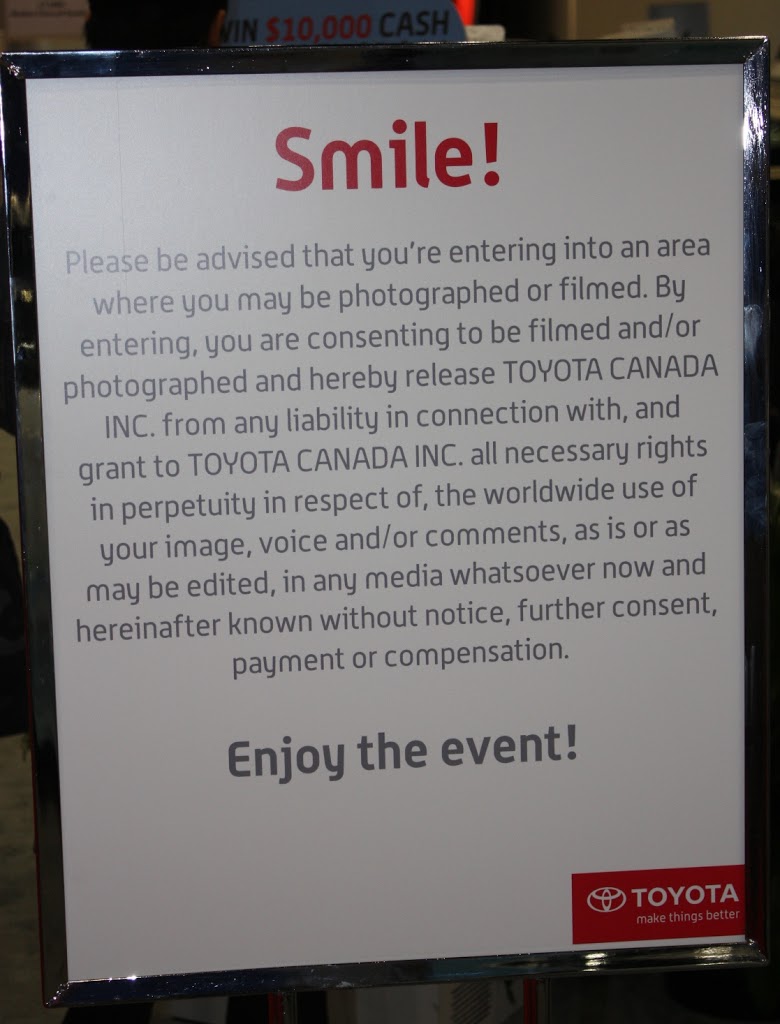
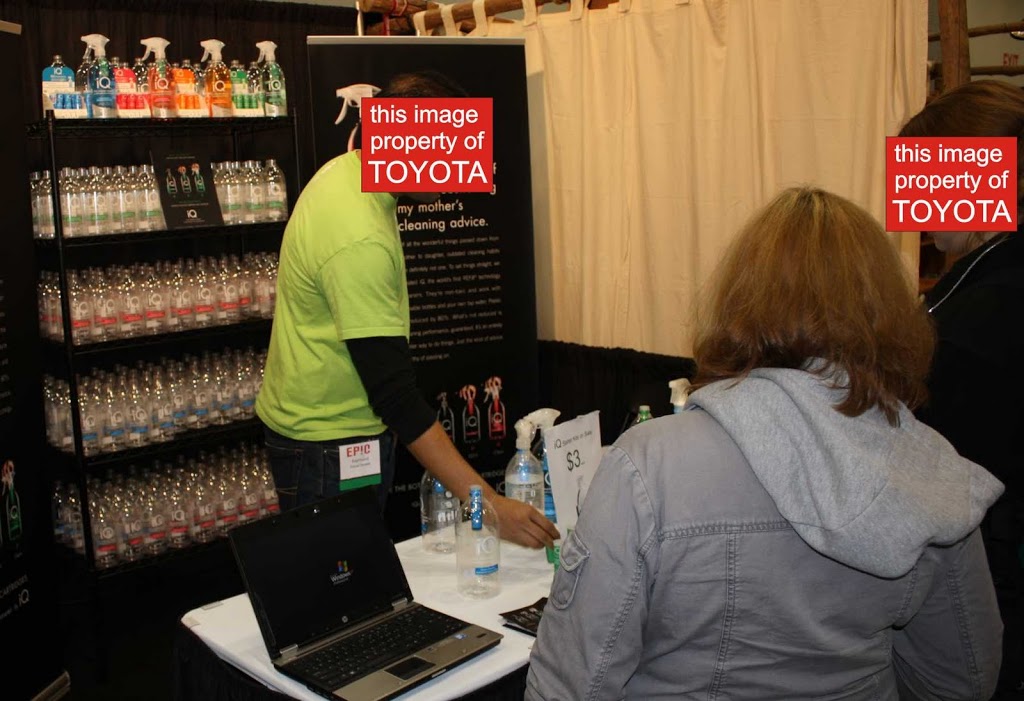
But you aren’t going to hear me say anything negative about it, seeing as how just by walking near their products, I have apparently given Toyota “all necessary rights in perpetuity [to]…the worldwide use of [my] image, voice and/or comments, as is or as may be edited, in any media whatsoever now and hereinafter…yadda yadda yadda…”
Somehow, their wishing for my enjoyment is a little hollow after that legal beating…

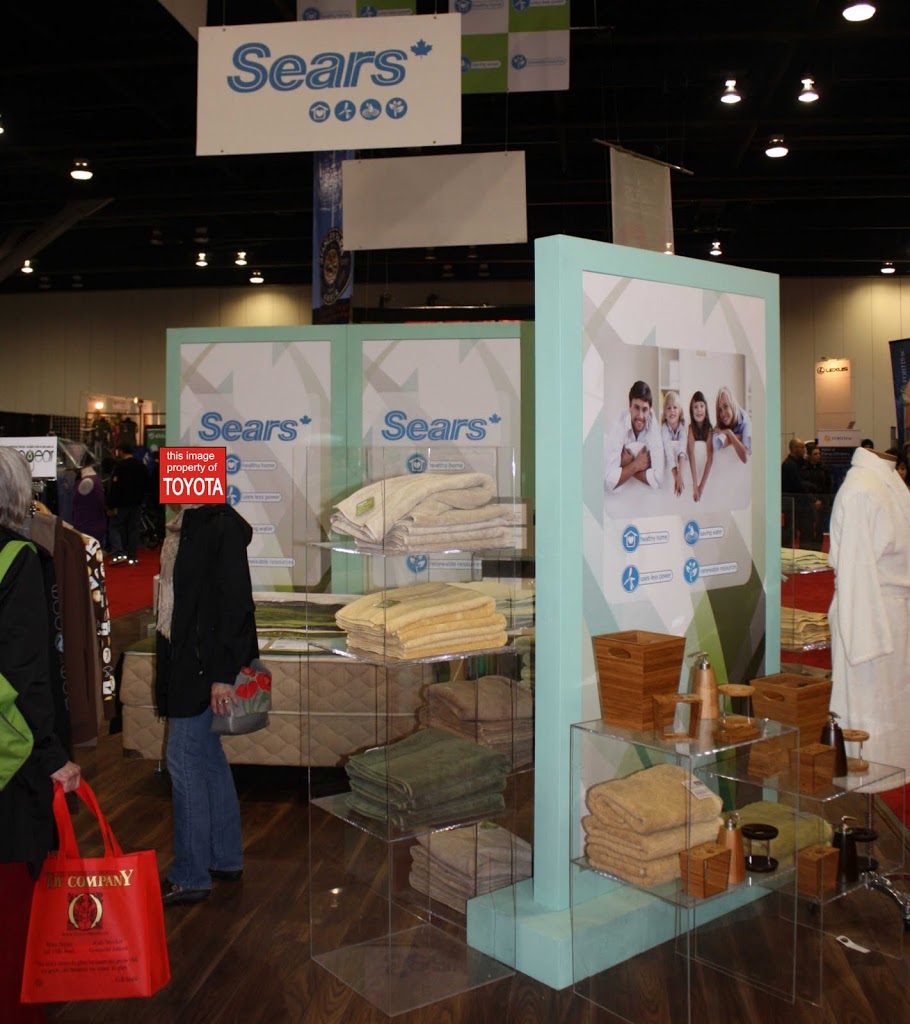
Toyota and Canwest aren’t the only big companies greenwashing their way through EPIC. After all what is more sustainable than a toilet brush holder made of wood and cotton towels in pleasing earth tones?

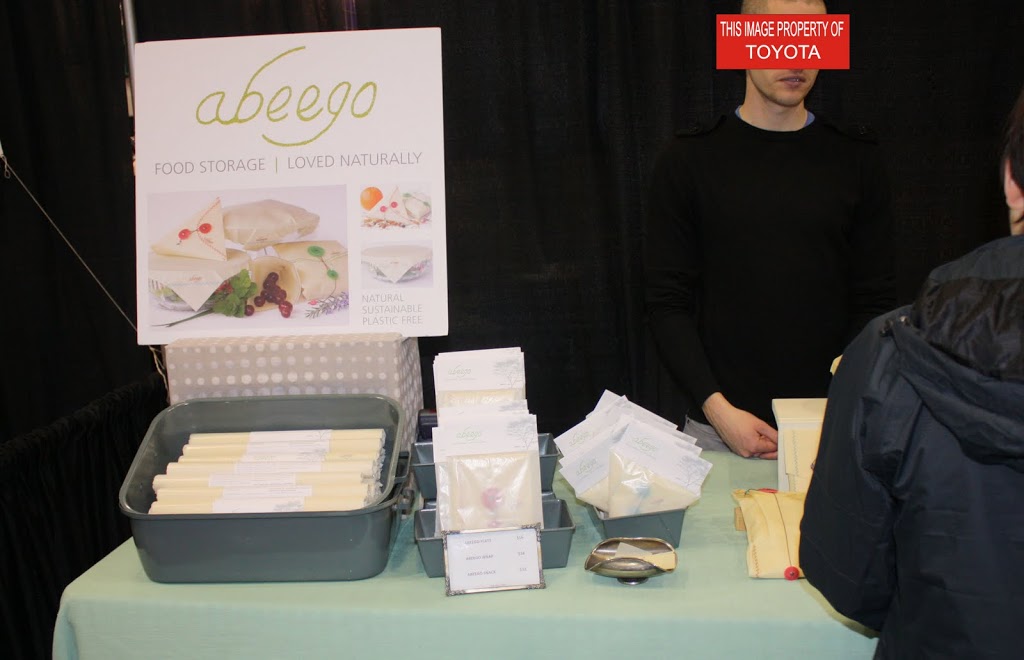
I almost felt sorry the guys who actually had good ideas:

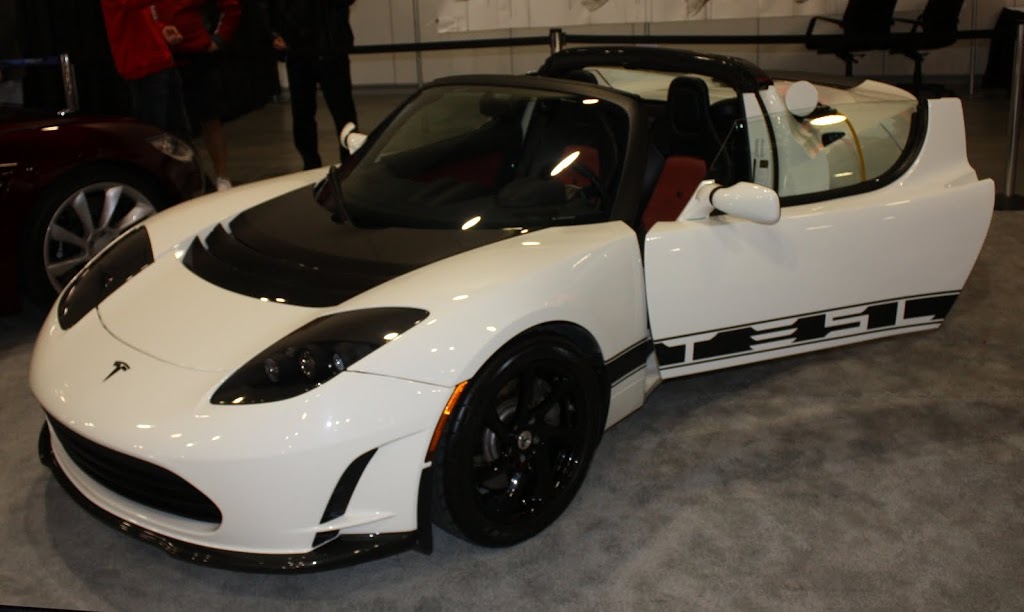
This small start-up made a washable re-useable food wrapping product using fabric and bees wax. A sort of re-usable but biodegradable and completely sustainable Saran Wrap. It was actually a good idea, but how can he compete with a $150,000 zillion-mile-an-hour electric car?

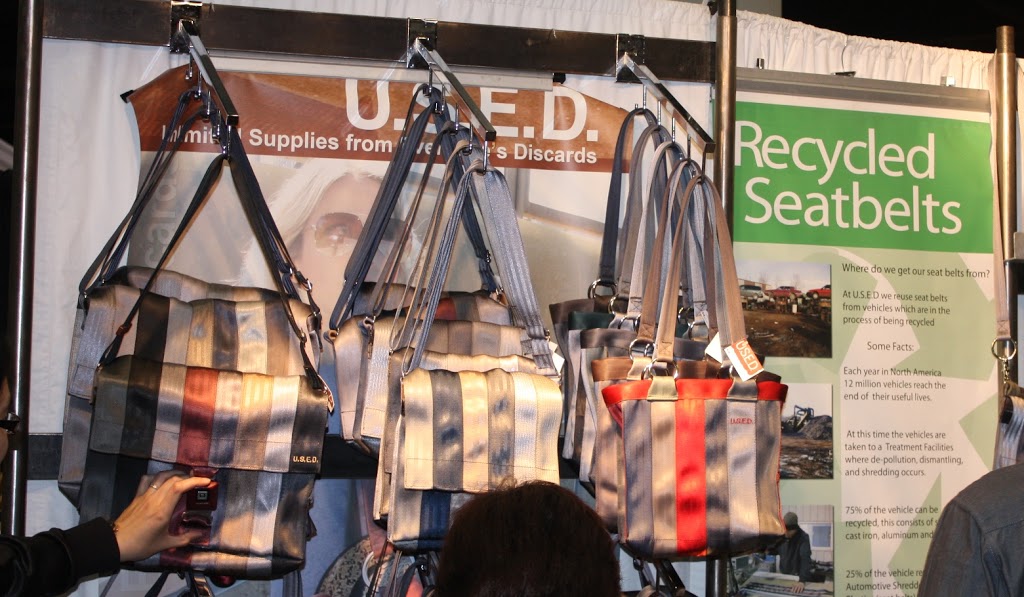
Or even the dude making seatbelts out of seatbelts?

I mean not using saran wrap might be sustainable, but it doesn’t really fit the lifestyle, does it? A seatbelt purse tells the world you recycle, it is a “cars suck” bumper sticker for your bike that you don’t even need a bike for.

Again, I’m no expert, but my accountant brother tells me multi-level marketing is, inevitably, not sustainable.

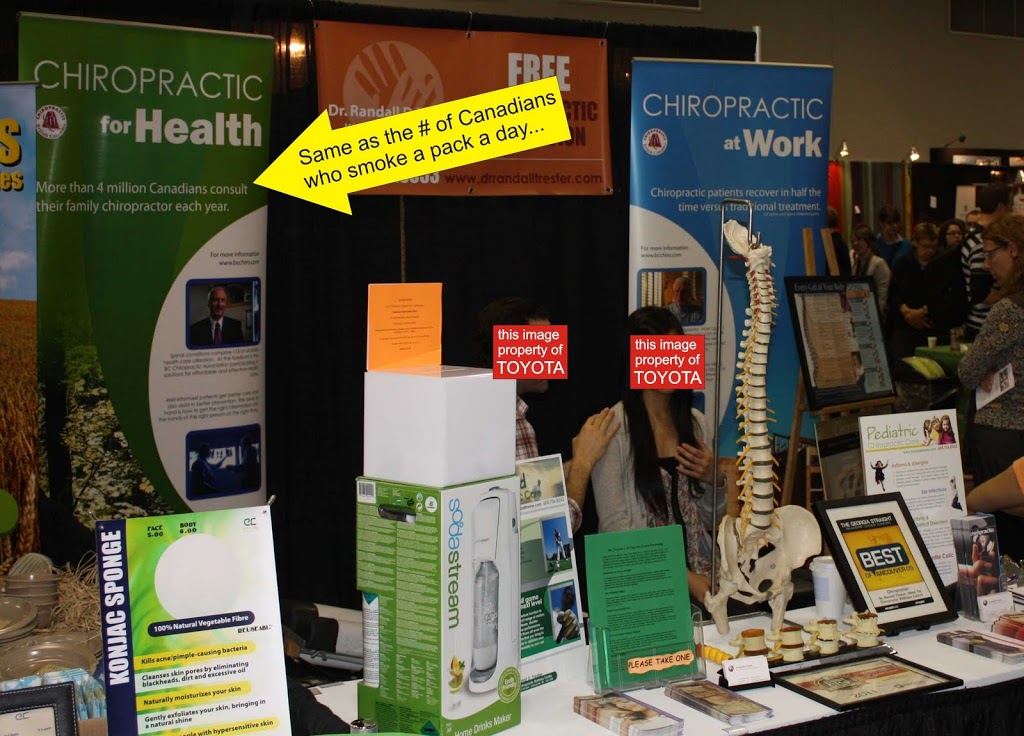
The most sustainable thing I saw at the whole show was the row of Chiropractors, an “alternative health care modality” that actually cures nothing and has no demonstrable therapeutic value. It is, by definition,  a sustainable industry because no Chiropractor ever said to a customer “this will be our last session: you are cured!”

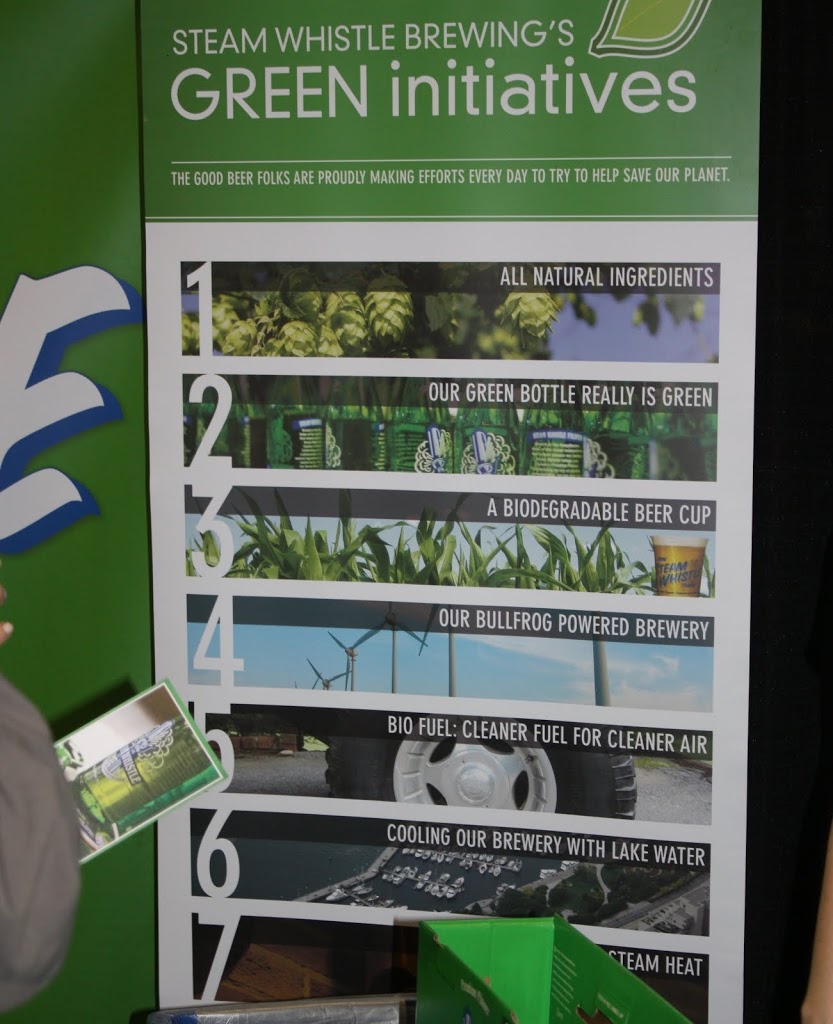
Despondent with my inability to grasp the green consumer lifestyle, my inability to geti n touch with the sustainability style of my generation, I finally stumbled upon a few businesses with products I could believe in. These products, although no more sustainable than cars or newspapers or Astroturf, had the power, if applied liberally enough, to wipe away all my concerns that I was not keeping up with the true sustainability lifestyle consumers who were going to prevent our consumer driven collapse by creative purchasing.

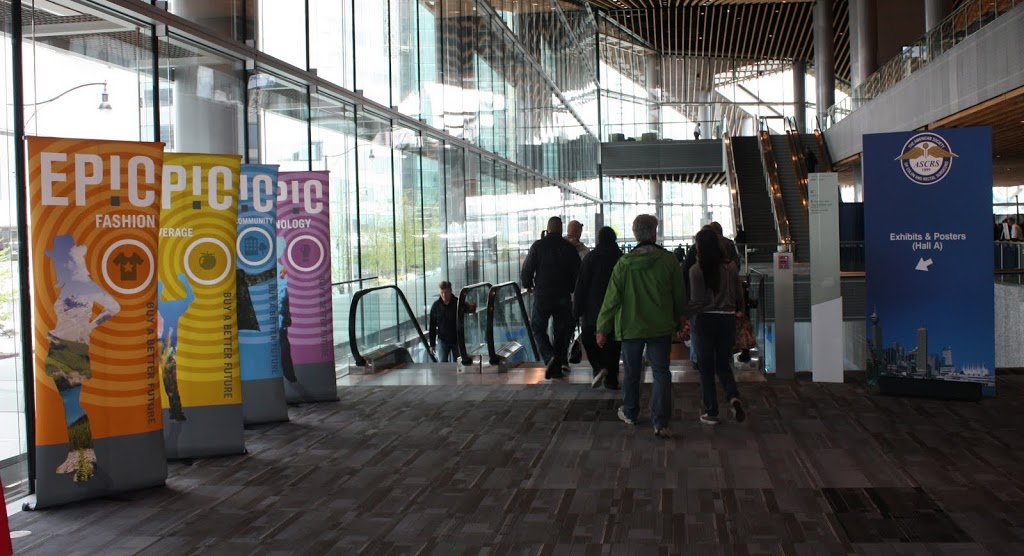
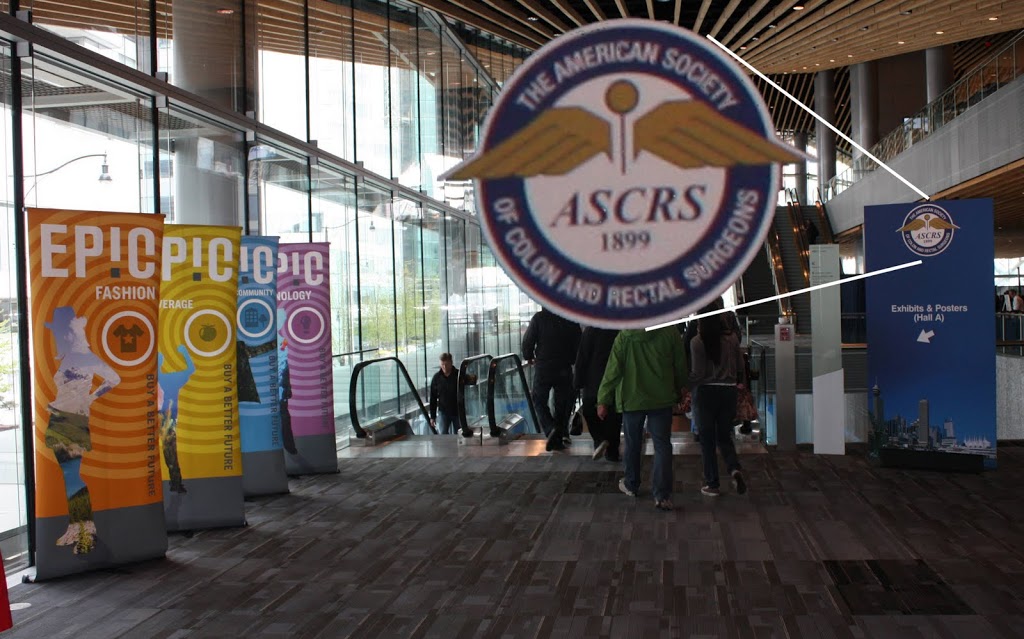
After a couple of hours at the booths, sipping sample after sample from my compostable plastic sample cup, I walked out of there with a strange rumbling in my gut. I was actually a little nauseous. Then it occurred to me, I may have been in the wrong conference. There were, after all, two going on at the same time at the Convention Centre:

Enhancement, mitigation; tomay-toe, tomah-toe.

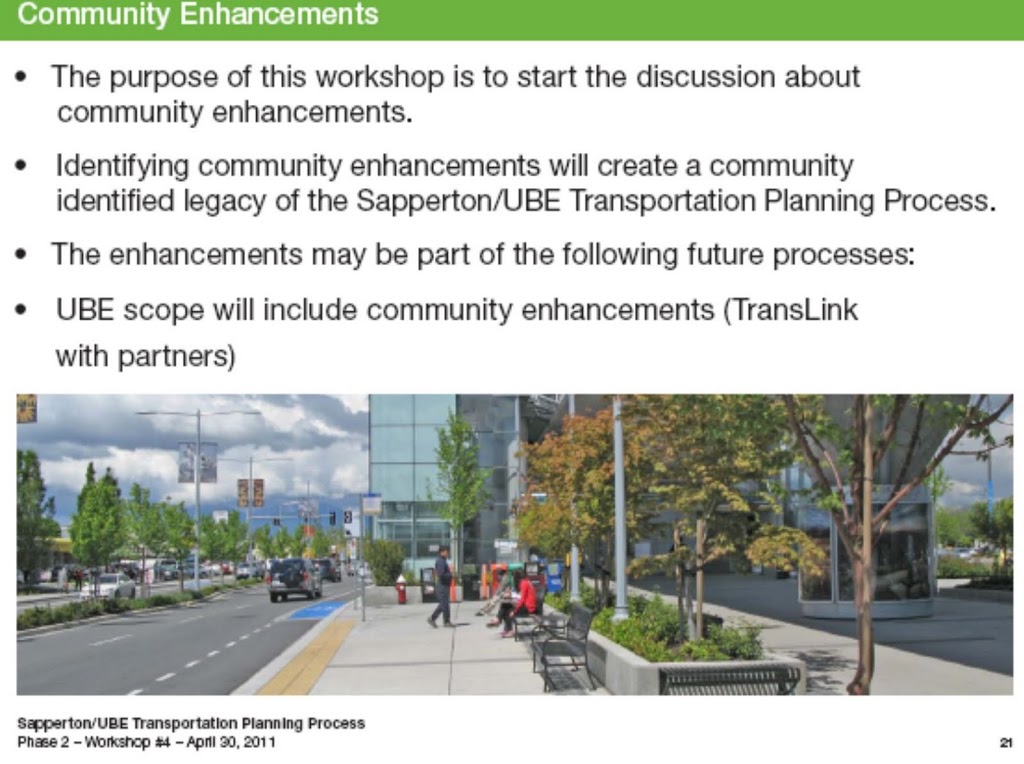
Now that the “Community Concepts” have been developed, TransLink is emphasizing the “Community Enhancements”. Which sound much better than “mitigation”. The latter is about trying to reduce the inevitable negative impacts (and is, of sorts, an admission that there will be negative impacts that require mitigation), the former sounds like the cherry on top of an ice cream sundae. Too bad I’m lactose intolerant.

click to make big

It didn’t build my confidence when the slide they showed to demonstrate model enhancement is an image of a Canada Line station and No. 3 Road in Richmond. As someone who rides a bike through Richmond on a regular basis, I’m not afraid to say the No 3 Road bike route shown in the image is a disaster. It is partly a raised and painted separated bike route, except for all the commercial driveways crossing it that are almost all blind due to the location of the support towers for the overhead SkyTrain line. Once or twice a block, the painted route becomes a bus stop (see the image). Then right at the station, the bike route becomes the favoured pedestrian route around the station itself. So the Canada Line Bike Route is a recipe conflict between bikes and cars, bikes and busses, bikes and pedestrians. A waste of money that doesn’t serve the community it is built for. Let’s hope we don’t end up with the same thing here.

So let’s look at some of the baubles we are being offered.

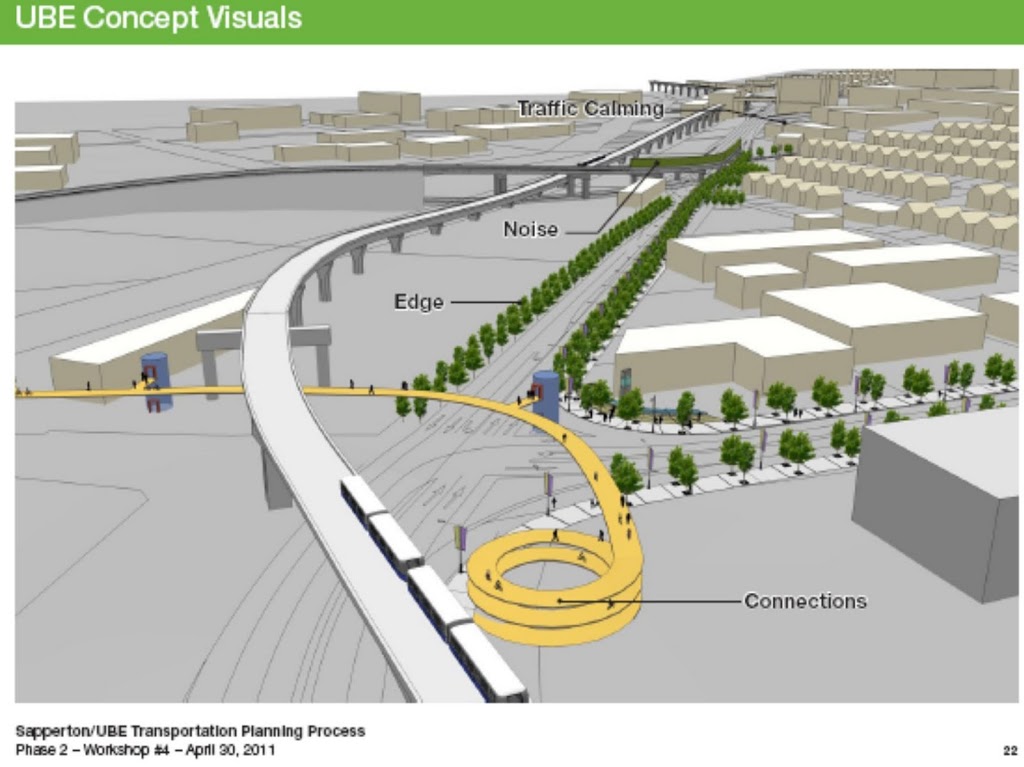
This leaf-spring overpass plan seemed to be a major part of the discussions. With the level rail crossing at Braid closed, an alternative plan for getting people not in cars across the tracks is required. The challenge is making a structure suitable for pedestrians, cyclists, and people with mobility issues. Stairs are reliable, elevators are accessible. Long ramps wrapped into loops are both, but make for a large structure and turn crossing the street into a 2-kilometre journey.

To me, this is the ultimate expression of a “bauble”. We are trying to have a discussion about the implications of doubling the traffic entering New Westminster from the East, and TransLink engages us in a long discussion about what flavour of pedestrian overpass we want. No wonder the crowd was getting restless. This kind of design element can be discusses long after there has been a decision to build or not to build. At best, it is a waste of engineering time, at worst, it is a distraction from the real story.

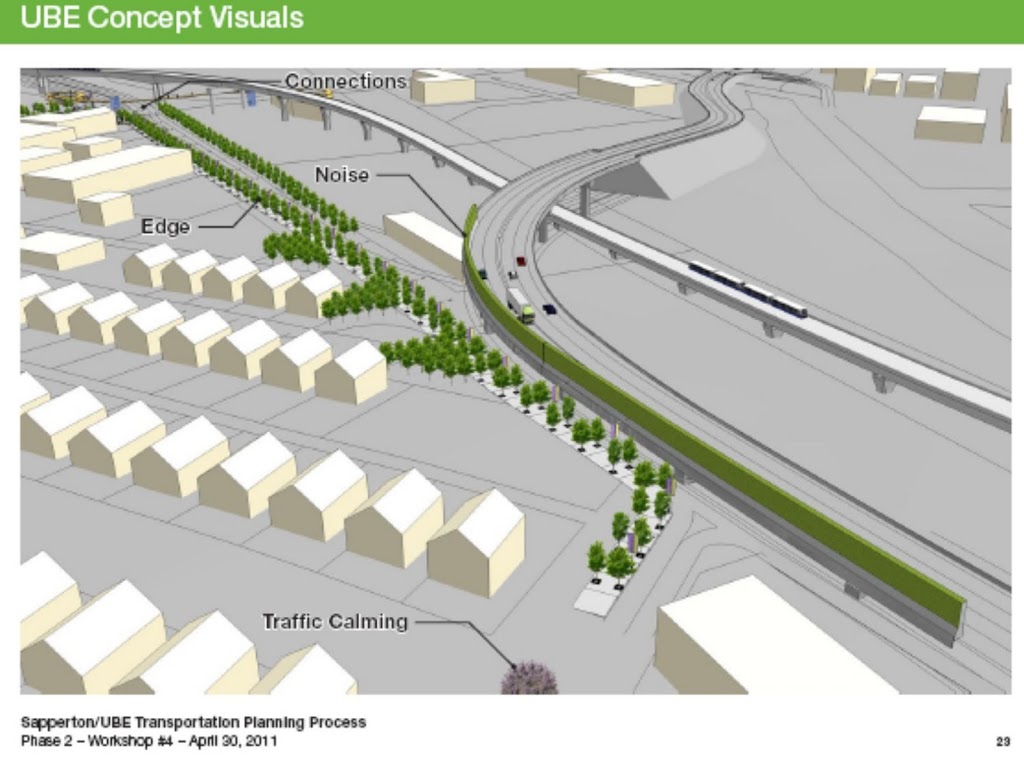
I do note that all of the “enhancement” images showed “Concept B1”. This led more credence to the theory that TransLink has already decided which option they will be taking forward.
There was also much discussion of “edge” concepts. No surprises here, everyone thought trees and planters were better than… um… no trees or planters (again, why are we talking about this now?). Absent from the drawings were the 75 kV power lines that run along the west side of Brunette, and the communications lines that run along the east side: those trees are either going to be very short (10 feet is the safe approach limit from BC Hydro), or the lines will need to be moved (not a minor task).
Anyway, good to know that replacing roadways with green space, or at least separating people from roads with green space, is about the only thing that received unanimous support…Maybe we can all agree on something.

Now let’s talk about the wall. One of the early concerns from the Sapperton Neighbourhood (other than the knocking down of their houses) was the impact on the neighbourhood of an elevated truck highway in front of their homes. To manage this concern, TransLink is offering a noise wall, even suggesting that it can be a “green wall”, with vertical plantings to make it more attractive.

I have nothing against a Green Wall per se, but the high angle view shown above doesn’t give a very good impression of how high the wall would have to be to provide adequate noise abatement to not just the properties on Rosseau, but those up on Wilson, or Garrett. (Here is a bit of a primer on vehicle noise from some specialists in the field). Much of the noise of these trucks is produces at the exhaust, 2 or 3 metres above the road, and Sapperton slopes up from t his road, creating line-of-sight challenges the further up the hill you go. I’m not saying an effective wall cannot be built, but the visual effect of the wall, on top of the height required for the overpass to clear the rails and the SkyTrain at the Dip, is starting to add up to a pretty big wall.

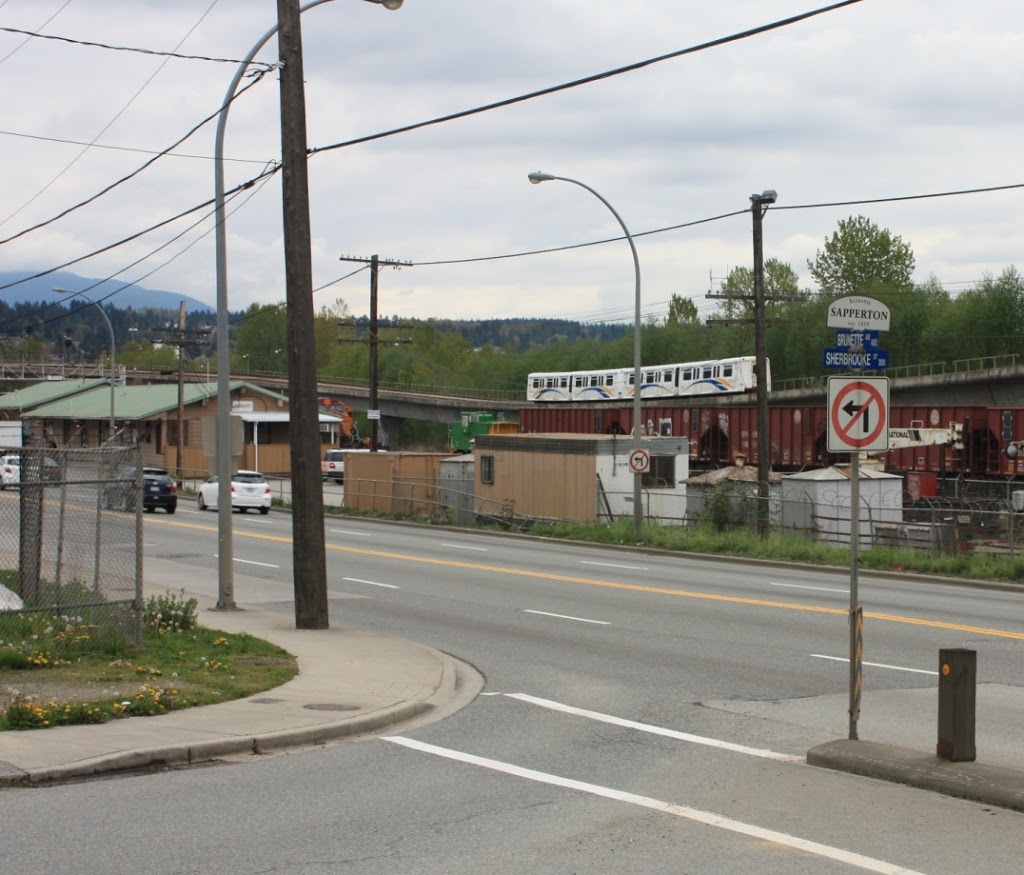
Just for perspective, here is a photo of the Skytrain swooping through the “Dip”. The white Sky Train Mark I train is about 2.5 m high from the top of the wheels to the roof. So picture another 2.5 m or so for the overpass structure, then another 3m or so for a Green wall.

Personally, I’m hoping we can take a closer look at Option “E”, and the long-dismissed Option “C”. I guess we will know on Thursday.