Truck Routes – Disappointing, not surprising.

I suppose the refusal by TransLink to remove various New Westminster streets from the designated truck route network is not surprising, but the wholesale dismissal of the concerns with a paucity of supporting arguments is definitely a disappointment. I hope this is not the end of this discussion, but the beginning of a conversation about the specific routes, and just a small setback to eventual progress*.

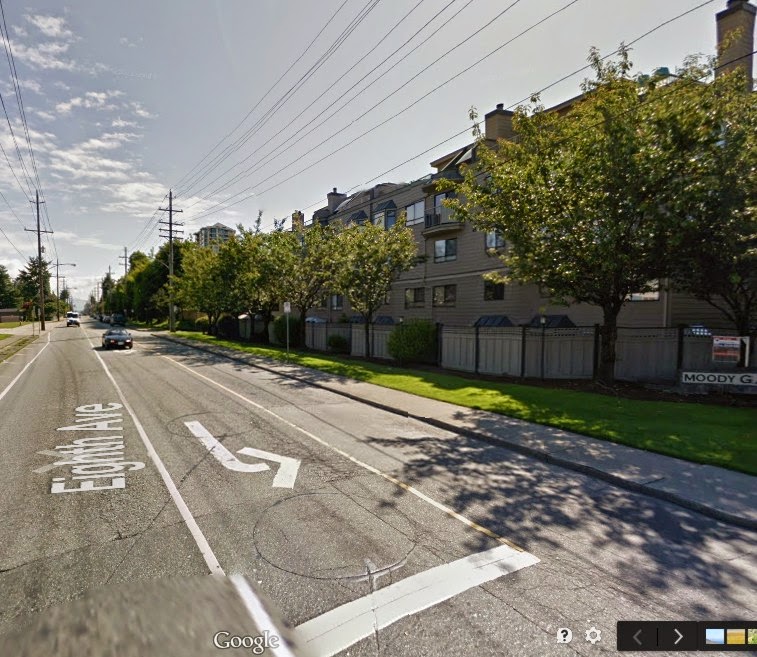
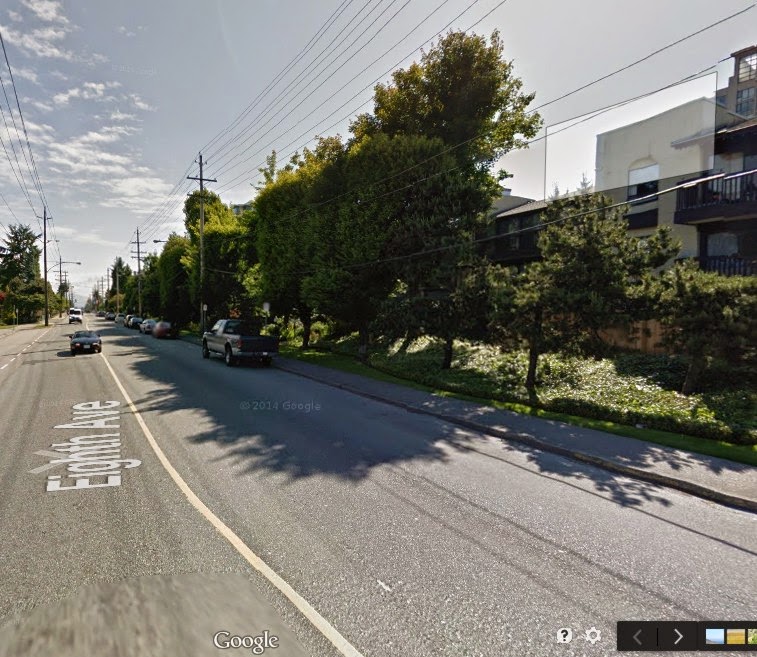
I don’t think anyone really thought Royal Ave would be removed from the designated routes at this time, not at least until there is a significant change in how the Pattullo Bridge connects on the north side of the River. However, there is no reason for keeping East Columbia through the Sapperton business area as a truck route, and a re-evaluation of the East 8th Ave connections are definitely in order.

Part of the frustration is the TransLink news release itself. Apparently released to a few news outlets, there is nothing on the TransLink media page, and the reasoning behind the decision is not made clear. The City of New Westminster provided rationale, alternate routing proposals, and justifications, and TransLink essentially said “no” without addressing the specific points.

Of course, they “took feedback from… Port Metro Vancouver, BC Trucking Association, and the Greater Vancouver Gateway Council” – that last agency essentially being the marriage of Port Metro Vancouver and the BC Trucking Association. It is unclear of they consulted with any of the residents being impacted by these trucks, by the PACs of the impacted schools, or by the businesses in Sapperton or elsewhere in the City that are meant to be serviced by these trucks. Nor are they reporting out on the feedback they received.

They basically asked kids if they want ice cream or Brussels sprouts, and got the predictable answer.

On the positive side, there is language in the news story about working with the impacted neighbourhoods to find solutions, so let’s hope this dismissing the proposed solution out of hand doesn’t set the City back too far, and we can start an expanded conversation about accommodating goods movement while protecting the livability of our City.

“No” isn’t an answer I want from any level of Government. I would rather hear: “That solution doesn’t work, but lets find one that does”.

There is an ongoing Facebook conversation about this topic in the Group “Rattled About Traffic In New West” with a variety of voices piping in, some more rational than others. The voice I find most interesting is that of Dave Tate, who is both a trucker, and cognizant of the impacts truckers have on neighbourhoods. He has been promoting the idea that a weight restriction on the Pattullo would increase safety, prolong the life of the bridge, and would remove much of the heaviest cohort of the truck traffic from Royal- those triple-axle container trucks that are typically the ones that rattle and bang down Royal, have the biggest impact on road wear and traffic, are typically the worst performers in the random roadside safety inspections, and are most likely to be using the Pattullo as the “toll free alternative” between two points that could easily be connected by an alternate route.

It is good to hear from a balanced group of people on this issue, as it is refreshing compared to the comments one might hear on the AM radio call-in shows. Yes, I’m looking at you Simi Sara.

If you listen to CKNW and (I cannot believe I am suggesting this) listen to the comments, you hear little but ill-informed people complaining that New Westminster is a progress-hating problem child, and has always been. There are a few major themes that are constantly repeated, so I thought I would touch on them as a point of retort:

“If New West keeps putting up barriers, I will avoid it, and will not shop there!”
If a significant proportion of the several hundred thousand cars that pass through New Westminster every day actually stopped to shop here, this would indeed be a strong argument to use, but unfortunately, this is just not the case. In actuality, it is the massive number of through-commuters and heavy truck traffic that makes it harder for people from around the region (and our own residents!) to access our business storefronts. It also makes our retail areas less attractive to spend time wandering around in. Removing trucks from East Columbia would improve, not worsen, conditions for businesses in Sapperton.

“Without all these trucks, your store shelves will be empty!”
Admittedly, New West does have a resounding number of Save-on-Foods outlets, but I doubt they require the 3,500 trucks a day crossing the Pattullo, with similar numbers coming in from Brunette and across the Queensborough to keep the lettuce shelves stocked. Besides, these truck route changes would not impact at all local delivery or pick-up of goods, because trucks are permitted on non-truck-route roads when actually having business on that road.These closures would only effect through-traffic trucks with no business in New Westminster, the ones that we just spent $5 Billion on new bridges and highways to accommodate.

“New Westminster needs to get with the program and build roads around the perimeter!”
Problem is, there is no perimeter, unless you define perimeter as “where someone else lives”. The roads at the perimeter of our City run right through the heart (and other vital organs) of our community, and right past people’s homes. 10th Ave is residential west of Kingsway, and residential and way too steep for trucks east of McBride. 8th Ave is residential most of it’s length. Columbia is both residential and home to a lot of ground-based retail, and is the heart of two of our most historic neighbourhoods. One can argue Brunette is a perimeter, but it only connects to non-perimeter roads to the west. Front Street cuts through our resurgent waterfront area – downtown will only succeed if Front Street succeeds as human space that connects downtown to the River. McBride, Royal, 12th Street, 8th Street – these are urban streets in the middle of bustling neighbourhoods surrounded with parks, residences, and commercial districts. Where is this mythical “perimeter” where you want to put all the trucks?

“How many of those New West people commute through surrounding Cities – they’re just being selfish!”
The short answer to the rhetorical question: fewer than any neighbouring community. New Westminstergenerates fewer car trips per capita than any Municipality in Metro Vancouver excepting Vancouverproper. Our “alternative mode share” (people who use their feet or transit for their daily commute instead of their car) is the second highest in the region. If the Northeast Sector (~82% of trips in a car) and South of Fraser region (~82% of trips by car) [data available here] had New Westminster’s mode share (~65% of trips by car) or took steps towards reaching the goal New Westminster is reaching for in the new Master Transportation Plan (~50% of trips by car), that would be a huge step towards addressing the traffic problems in New West, and a huge step forward for the region and the Province.


This all brings me to the real point here: New Westminster is not the selfish, parochial, progress-impeding “speed bump” in the regional transportation system and we need desperately to get past that narrative. New Westminster is a leader in moving towards meeting its regional commitments to a more sustainable transportation network. It has lead by building a more compact City, investing in mixed-use developments near transit hubs, but taking a SkyTrain station that Coquitlam refused, and by holding the line on mega-freeway development while suggesting increased transit investment might be preferable if the region hopes to meet its Sustainable Region goals. New Westminster has been demonstrating transportation leadership, both in words and in action, and we should not be shy talking about it.

*Since someone asked:  Progress, by my definition, is moving towards an efficient transportation system that serves the community, not a community that serves the least efficient transportation systems. “Building more lanes” has not represented progress in traffic management circles since the late 1970s; where providing affordable, efficient alternatives is how the 21st Century sees progress in Transportation planning.

Campaign Launch

New Westminster’s 2013 Citizen of the Year Patrick Johnstone to run for City Council

New Westminster, BC – Patrick Johnstone has announced he is running for a seat on New Westminster City Council in the upcoming November election.

“I love New Westminster, and have always believed in working to build your community,” he said. “I think I have the skills to be an effective Councillor, to keep the City moving forward, and will bring new ideas and a strong voice to the Council table.”

Johnstone chose to make his announcement early so he can spend the summer listening to voters from the many different neighbourhoods in the city, and learn more about their concerns.

“I have been blogging and leading conversations about issues for years. I‘m not afraid to express my opinion, but a Councillor needs to listen first. That’s my goal for the summer: knocking on doors, attending events, and listening to people who will challenge my own ideas about what New Westminster wants and needs.”

The announcement might be early, but it’s not surprising. For the last couple of months, people have been asking if he was intending to run. With encouragement from the New West community, and from his supportive partner, Johnstone decided to take the plunge. “I think the timing is right for me to take my community volunteering in this new direction.”

Johnstone is a director of the New Westminster Environmental Partners, the Royal City Curling Club and the Brow of the Hill Residents Association, and he volunteers in various other capacities in the City. He has also been a noted presence in local social media, active on Twitter as @NWimby and writing a locally-focussed blog “New Westminster – In My Back Yard”.

“I am a communicator, and want to continue to communicating  first as a candidate and ultimately, as a Councillor. People tell me they feel separated from decision-making in government. I want to help create stronger channels of communication, so residents are heard at the Council table, and residents better understand how and why Council makes decisions.”

Contact us!


Announcement

Yes, it is true. I have decided to run for City Council in New Westminster in the upcoming November election.

I think many of my regular readers suspected this, and it was funny at the PechaKuchaNW event this past weekend, pretty much every second person asked me if I was running. My standard answer was something along the lines of “not yet”, but playing coy starts to get stale. That is why I am announcing a little earlier that usual. Once I was sure I was actually going to do this thing, I wanted to announce as soon as I could get a press release together.

There is another reason for announcing now. I like to talk, and I like to listen. I like to have conversations with people about issues in the City and hear what people think. I even like talking to people I disagree with, because that is where the learning opportunity lives. So I plan to spend the summer talking to people. I’m going to knock on doors and attend City events, and I have a few fun and creative ideas to better connect with people. I want to get outside of my usual “bubble” and talk to people not in my Twitter-sphere, people who don’t read this blog, and people who aren’t in the various groups I volunteer with in the City. For all of those people in New Westminster who I don’t already know, saying “Hi, I’m running for Council” is a natural conversation starter.

I will be doing the typical roll-out-the-platform activities in early September. I have some ideas, some themes, and some goals, but for the summer, I want to listen more than talk.

Naturally, there are going to be some changes around here, mostly in the frequency of my blogging, as I just won’t have as much time to write. However, I do plan to keep blogging here, and @NWimby will continue on Twitter. For the purposes of the campaign, there will be a new website (patrickjohnstone.ca), there will be a campaign-only Twitter account (@PJNewWest), and a campaign-oriented Facebook Page. I encourage you to go to those places and link, like, tweet, comment, vote, volunteer, donate, or pretty much hit any other button you are presented with.

One commitment I will make right up front: I am not going to stop communicating during the campaign, nor will I stop communicating once elected in November. The way I see it, my success as a Councillor will be in remaining the outspoken, opinionated, honest, and talkative guy who wrote more than 400 blog posts over the last few years.

So things are going to be weird around here for the next few months, but hang in there, and it should be fun.

When Pipelines come home

I apologise once again for not posting as often as I would like here. There are many things afoot, bringing a completely different meaning to what I call “free time”. I am also working on a major project related to my pledge (a little more than a year ago) to take a risk – more details on that will be released really soon.

However, this issue has piqued my interest and I had to stay up late to write about it, because these hydrocarbon pipeline projects people keep talking about in other regions of the Province have come home to New Westminster.

After having attended last week’s NWEP meeting where Mark Allison from the City outlined the City’s approach to the project, and Elmer Rudolph from the Sapperton Fish and Game Club came to talk about the Brunette River, I think it is time we in New West started talking about Kinder Morgan.

You probably have heard that Kinder Morgan, the Houston-based uber-pipeline company that purchased the Trans Mountain Pipeline in 2005, wants to “twin” thee pipeline. To quote directly from the project site:

“Trans Mountain is proposing an expansion of its current 1,150-kilometre pipeline between Strathcona County (near Edmonton), Alberta and Burnaby, BC. The proposed expansion, if approved, would create a twinned pipeline that would increase the nominal capacity of the system from 300,000 barrels per day, to 890,000 barrels per day. At present, the Westridge Marine Terminal handles approximately five tankers per month. Should the proposed expansion be approved, the number of tankers loaded at the Westridge Marine Terminal could increase to approximately 34 per month.”

What we don’t know about this project could fill a blog post, but for a variety of reasons, I don’t want to get into the nitty-gritty of this project here. There has been some excellent analysis of the project opportunities and risks prepared by CRED, which you can read here.

However, few people in New Westminster up to now realized that this project will likely be passing though our own backyard, and may have a significant impact on one of the few remaining local areas of high ecological value: the Brunette River. When first announced, it appeared that the pipeline was to be “expanded”, suggesting that it would follow the existing right-of-way through central Coquitlam and skirting along the south side of Burnaby Mountain. However, the proposal showed a different routing for the new pipe, which passed through south Coquitlam, and essentially paralleled the Lougheed Highway. Now, and “alternative route” has become the favoured one – and this one passes though the green spaces on the New Westminster – Burnaby border, immediately adjacent to the Brunette River.

This is where Elmer Rudolph comes in. For those who may not know him, Elmer is a real local hero and a legend amongst western Canada’s Streamkeeper groups. He and his group from the Sapperton F&G Club have spent 40 years pushing the envelope on salmon habitat restoration in urban streams, improving the world’s knowledge of salmon ecology, habitat recovery, and environmental protection in urban areas. He did this mostly through sheer persistence and elbow grease. When the Brunette was a “dead” river as recently as 1970, a lot of very smart people thought any attempt to bring salmon back to the River and its would be wasted time. It was only 15 years later that the River came alive again, and for 20 years since, Elmer and his volunteers have made slow, steady improvement in habitat and water quality along the river and throughout its massive basin.

The route along the Brunette is also part of the region’s best Greenway route, the Central Valley Greenway. That route is a green oasis paralleled by development, density, and traffic, a heavily-used place for pedestrians, cyclists, dog walkers, and anyone wanting to escape the sun on these hot summer days and cool off along a bubbling salmon-bearing stream, right in the middle of our City. If you travel along the CVG, you see large areas of habitat enhancement – areas that were improved to improve water quality and habitat diversity – for the Port Mann Highway 1 expansion project only a year or two ago.

So I’m glad the City is getting involved in the project, and the idea of a Public Meeting in New Westminster to discuss the project and get the mood of the community about putting this project adjacent to the Brunette River (like the City did last year for the still-up-in-the-air Fraser Surrey Docks coal terminal project) is a good idea.

More on District Energy

I wasn’t able to attend the City’s open house last month on the potential District Energy Utility (DEU) system, tentatively proposed for the Sapperton area (it was the same night as the Royal City Curling Club AGM, and two or three other events I would have like to have attended. I need a clone). I have read a lot about DEUs, and have toured systems in a few different places. I have previously written at length about the many benefits of DEUs, so I was really interested to see what direction New Westminster was planning to go with the idea.

Based on what I read in the consultation materials, I like what I see.

The basic idea behind a DEU is that thermal energy systems can be more efficient if they are built larger. This is why there is commonly a single boiler in a large commercial or residential building, instead of having little boilers in each apartment or office. If a single energy source could supply heat energy (hot water or steam) to multiple buildings, it can be run as a utility to those buildings: a DEU.

Many large cities have had systems like this for decades. Downtown Vancouver has a gas-fired steam system that ties multiple buildings together. However, the modern resurgence of DEUs is coming out of Europe, and is being driven by low- or zero-carbon energy supplies. In the last decade, DEUs of different size and design have popped up in Victoria, Vancouver, Richmond, and other cities.

Although DEUs can be retro-fitted into existing buildings, the most cost-effective application is one where the buildings are constructed with the DEU in mind, around a development hub. Having an institutional or industrial user in the core to provide cost-buffering “baseline demand” makes the business case even stronger. A well-designed DEU will sell energy to the customers at similar rates as other energy sources (while buffering the customers from the volatility of gas or oil prices), pay for the infrastructure costs, and even turn a small profit for the utility owner. When a low- or zero-carbon energy source is part of the plan, there are spin-off environmental benefits for the entire community.

The New Westminster situation has many of the elements that could make for a very successful DEU. There is an institutional customer interested in reducing its carbon footprint for regulatory reasons, and there is relatively high density development (commercial, industrial, and residential) occurring nearby that will allow gradual scaling up for increased efficiency. There also happens to be a zero-carbon energy source right nearby.

The analysis provided by the City here shows that the sewer heat option is viable, at least in the preliminary analysis. This is really good news, because although the wood waste option would provide GHG and cost benefits over not having a DEU, the math when it comes to emissions related to a sewer heat recovery system are obviously order-of-magnitude better:

Emission estimates of different systems, click to enlarge.

Yes, scrubbers, filters and the such can improve the baseline particulate numbers, but you really can’t argue with the near-zero emissions of the sewer heat system.
 
As I said, I missed my chance to go to the open house, but I can still provide my feedback. So can you!

Read the materials here. And more here.

Then provide some feedback here.You can ask questions, let them know your concerns or ideas. Here is your chance to give them the feedback you want. But you better hurry, you have until this Friday!

On the Bailey Bridge

At least we can stop fighting about this and move onto more important issues, right?

I’m not sure it is a “disaster”, but the results of the arbitration on the Bailey Bridge dispute are disappointing, and a little frustrating.

The disappointment comes from the fact that this result will do absolutely nothing to solve anyone’s “traffic problems”, as a century of traffic research and Braess Paradox tell us that adding capacity has never reduced congestion when there is a near-infinite supply of vehicles. Instead, it will likely increase induced demand and create more congestion in the Braid Industrial area, making it harder for New Westminster businesses to access Brunette or United Boulevard.

As was already made clear, the “Ambulance Argument” was either bluster or bullshit, as a critical care ambulance is unlikely to risk getting stuck behind a train when an alternative is available, and an alternative is available from Coquitlam. An ambulance at the south foot of the new King Edward overpass can get to the Emergency room at RCH via the Bailey Bridge (2.8km) or via Lougheed and Brunette (3.4km), a difference of 600m. To save that 30 seconds, they would run the risk of getting stuck behind one of the 60-odd trains a day that cross Braid, and now will run the risk of getting stuck behind a line of cars in one of the few places where cars would not be able to pull over to get out of the way – a two-lane Bailey Bridge. I suspect the 4-and 6-lane alternative route provides higher response speeds, more room for people to get out of the way of lights and sirens, and more reliable transport times. But hey, one thing have in common with Richard Stewart is that I’m not an ambulance driver.

The frustrating part is how little information we have about why the decision was made the way it was. If you read the actual arbitrator’s decision, it clearly states that under Section 287 (e) of the Community Charter, the arbitrator is not to provide written reasons for their decision. We (the voters, the citizens, even our elected representatives) are specifically forbidden from knowing why the decision was made, or what evidence was used to inform that decision. Essentially, your parents just answered “why?” with “Because I said so!” For someone who gets engaged in local politics, and expects accountability and reasoning behind policy, this is a frustrating way to resolve a 20-year conflict.

To understand why this is the case, you need to go back through the Community Charter , which is the Provincial Legislation that governs, amongst other things, boundary disputes between municipalities. Under Part 9 of the Charter (Division 3- Dispute Resolution), there are two types of arbitration available to the disputing Municipalities in this type of case. Section 287 describes the “Final Proposal Arbitration” process, where the two parties provide their proposals and supporting justifications to the arbitrator, and the arbitrator chooses one of the two, based on whatever criteria (s)he deems appropriate, with no room for compromising middle ground or requirement to justify that choice. Section 288 describes the “Full Arbitration” process, where the Arbitrator can conduct whatever proceedings they deem appropriate (including hearings, negotiations, etc.), the arbitrator can provide an alternate solution to the ones proposed by the two parties, and the decision comes with a written explanation of the decision and justification. Clearly the second is the more open, transparent, and accountable process.

This more open and accountable process was the one argued for by New Westminster. Coquitlam wanted the closed process in the interests of expedience (because, you know, after 20 years, this needs to be settled right away). As there was no agreement on this first point of arbitration, the Province stepped in and made the decision that the closed process would be used. Which is why the New Westminster Council is now scratching their heads about how the decision was made. They are not allowed to know. Take your complaints to… uh… no-one.

Regardless, now that the arbitration result has been released, it is all (wait for it) water under the bridge, and we need to move on. Hopefully, the City will find a way to reconfigure the traffic patterns on the New Westminster side so that the businesses down there on Canfor Ave are not completely choked out when the inevitable commuting rush arrives on Braid. Also hopefully, Coquitlam won’t use this as an excuse to uselessly blow United Boulevard just east of the bridge out to 4 lanes, and take away the cyclist and pedestrian-friendly layout they have recently created between the bridge and the King Edward overpass.

Clearly ,we will find out which prediction comes true: Mayor Stewart’s assertion that his City’s (sarcasm) biggest traffic issue will finally be resolved (end sarcasm); or New Westminster’s prediction that the 5 rail tracks and already-problematic Braid and Brunette intersection are just going to mean the traffic pinch point has been moved 400m to the west, making the rail crossings less safe for everyone, and hurting New Westminster businesses for no gain whatsoever. But we likely won’t know the answer to that question until after the election, so Mayor Stewart can enjoy his gloating in the meantime.

Hey Guys! Stay on your ass (and fill out this survey)!

HEY! Got a bit of free time this weekend? Surfing the web, looking for something more interesting? Admit it, if you are reading my blog, you must be pretty stinking bored… so here is a good way to slake that boredom for 5-10 minutes, and provide useful data for someone doing interesting research here in New Westminster.

If you are at all like me, your typical healthy-ish 40-ish male, you haven’t seen a doctor in quite some time. If you have kids, you likely interacted with the healthcare system, but for those of us without, we try to think about the last time we had stitches. Or maybe that’s just me, but this is kind of the point of this survey.

Fraser Health has been doing a “My Health, My Community” survey over the last couple of months, and they need a few more people to provide data before the end of the month (yes- in the next three days!). They especially need info from my cohort- healthy-ish males who may hardly ever interact with the healthcare system. Of course, the rest of you should also take part, it’s just (typically) the middle age males you need to kick in the ass to take any kind of health self-assessment at all.

The purpose of the survey is not to sell you services, but to gather better information about the health needs of the community. They need data from a bunch of locals about your life, as it relates to your risk for health conditions, and their need to provide services. They aren’t getting too personal, but they want to understand a bit about how New Westminster folks live their life and access health care, so they can do some longer-term strategic planning.

Typically for any health care situation – young (and youngish) males are lacking in their participation. They really need a few more male people to provide data. I filled out the survey a couple of weeks ago: it was easy, it took no more than 10 minutes, and it was a little fun (remembering the good old days when I used to smoke…). This from a guy who has not seen an actual doctor in about 15 years. Yeah, I should probably go get a check-up, but the survey didn’t guilt me into feeling that. Really, who has a family doctor anymore?

Back when I was whinging about how Democracy is what you do between elections – this is a chance to help your elected officials and bureaucrats make better decisions to save you money while providing the services you need. So I’m going to say it: If you don’t fill out this survey, you are not allowed to complain about the healthcare system!

But Hurry, survey ends on the 30th, and if you fill it out, you can win a new iPad. And hey, who doesn’t need a new iPad?

You are surfing the net right now, you clearly have time. Follow this link right now and help out a bit.

On Enbridge, and editorial failures.

I haven’t said much about the Enbridge Northern Gateway Pipeline semi-announcement. Frankly, there have been too many column inches wasted on this story already, as the project is a non-starter. After all is said and done, the millions of dollars wasted by Enbridge and our Federal Government to promote an ecologically and economically indefensible project will be just one of the sad legacies of the Harper years.

So this post isn’t about Enbridge, it is about another monumental failure: this “Editorial” in one of the local Post Media Serious Newspapers of Note (which itself has become the AM Sport Radio of Print Journalism). There is so much wrong in this very short 250 words that it needs to be addressed line-by-line:

“Setting aside, for the moment, the tremendous economic opportunities and wealth creation that resource extraction has always meant to B.C. and this country…”

Point 1: We cannot simply set aside the economic opportunities of the Northern Gateway, or other resource extraction activities in BC, because that is what this entire issue is about. From the start, the people up and down the coast of BC have been critical of this project specifically because of the risk it poses to their economic reality and the threat it poses to the very resources that their economy relies on, while providing almost no offsetting economic benefits to the communities most at risk.

Point 2: By lumping in an oil pipeline in with “resource extraction” is to be disingenuous to the real concerns here. Yes, BC and Canada were built on resource extraction: furs, mines, forests, fish, and energy. But not all resources are the same, and they do not contribute equally. Some are renewable, some are not. Some we extract high value with value-added industries, some we don’t. Some we balance against significant environmental harm, some we do not. By any measure, an oil pipeline transporting diluted bitumen for immediate export through our parks, watersheds, forests, shorelines and seas provides the least extracted value from a non-renewable resource with virtually no value added, few jobs, and a potentially huge environmental impact. When compared to Canada’s largest-value of exports (automobiles and machinery) Oil and all hydrocarbons pale in comparison, both in the GDP contribution to our economy, to the amount of trade dollars, and in the amount of employment income derived by the industries.

Canada’s exports by sector, a proportion of GDP. Click to enlarge.

“Resource Extraction” built Canada, but manufacturing and services are our future.

“…when it comes to the Northern Gateway pipeline Canadians had better start asking themselves a very fundamental question: Are we going to be a nation of citizens who respect the rule of law, due process and democratic governance or are we going to descend into anarchy and mob rule?”

Wow. I mean f***ing wow (sorry Mom). The false dichotomy and broad-brush idiocy of this statement is one thing, but it’s the inherent hubris that makes me want to swear. To be lectured by cheerleaders of this project about “due process” and the “rule of law” when the proponents had many of the laws that would have provided said due process stripped away, when the persons employed by the Government to provide the scientific basis for that process have been fired or silenced, when the scientific community comes out with a comprehensive list of the ways the process was not based on scientific review of its own criteria, is, I think, a little offensive to those who believe in democratic governance and science-based policy to be accused of being an anarchist mob.

To suggest that people in a democracy, standing up for injustice, speaking their minds, providing opinion, ideas, and (yes) criticism of the government is akin to “mob rule” or “anarchy” sounds like the hyperbole of a totalitarian state – or just the regular missives of a Petro-State, I suppose.

“The decision by the Harper government Tuesday to approve the pipeline — critical to unleashing vast wealth for Canada by allowing Alberta oil to be delivered safely to world markets — has been met by predictable opposition.”

The parts on the outside of the dashes read like a reasonable comment, and are about the only truthful part of this entire editorial. The part in the middle is just more Petro-State approved gibberish. Because it paints over the reasons the opposition exists. Some suggest this pipeline is not “critical” to the ongoing development of the Bitumen Sands, it only serves to accelerate their development and make the entire operation less sustainable. Some further suggest too much of the “vast wealth” is currently going to multi-national corporations and state-owned oil companies from Norway to Malaysia, and not to the people of Canada who own the resource being rapidly depleted and exported. Mostly, people are concerned that this project will not in fact get the product “safely to markets”, but will spread a little too much of it around valuable natural resource territories, and on lands never ceded by the aboriginal inhabitants.

“In a democracy, this is healthy. But the too-common rhetoric from some quarters of taking direct action against the decision of a democratically elected government is appalling, especially after years of public process into the merits of the project and the imposition of 209 conditions to ensure the environment is as protected as is possible.”

Read that again. A major newspaper is suggesting that the Majority of Canadians who didn’t vote for the Conservatives, or even those who are part of the plurality who voted for someone other than them, you should just shut the hell up and take whatever you are given. You may say the process never demonstrated the merits, and are not assured the conditions are sufficient or will be met, but it is “appalling” that you would question a duly elected government.

“Critics talk of the need for “social licence” for projects like the pipeline, a new term created by people who can’t win elections, but think they have some right to run the country. They don’t.”

Since I am one of the majority who did not Vote for Harper’s band of thieves, perhaps I should defer to their greatest shadow-organizers, the Fraser Institute on the topic of “Social License”. You see, according to the oft-quoted free-market “dink-tank”, that term was not a term “created by people who can’t win elections”, it was invented by a successful Canadian Mining Executive, and it is described very well in this Fraser Institute article under their ”MiningFacts.org.” astroturf organization:

Allow me to quote extensively: “[social license to operate (SLO)]…is an essential part of operating within democratic jurisdictions, as without sufficient popular support it is unlikely that agencies from elected governments will willingly grant operational permits or licenses. The SLO can be revoked and it should never be taken for granted. The Social License to Operate refers to the acceptance within local communities of both mining companies and their projects. Social acceptance is granted by all stakeholders that are or can be affected by mining projects (e.g. local communities, indigenous people) and other groups of interests (e.g. local governments, NGOs). The SLO does not refer to a formal agreement or document but to the real or current credibility, reliability, and acceptance of mining companies and projects. The SLO is granted by stakeholders based on the credibility of a mining company and the type of relationship that companies develop with the communities. Stakeholders tend to grant an SLO when they feel that their values and those of the company are aligned.”

Typical Fraser Institute radical lefties. I wonder how Enbridge is doing on that Social Licence thing?

“Opponents will take heart from the demonstration in Vancouver that occurred Tuesday or from petitions with several thousand names criticizing the pipeline’s approval. But they need to remember that most British Columbians who support projects like the pipeline aren’t generally available mid-afternoon to express it. They’re working, but they do vote.”

What a load of bullshit. The Province was there, and should know that protest was held, and reached it peak, on a Friday evening – the largest numbers appeared well after the close of business Friday – and I know several people who went down there AFTER WORK to assure their voices were heard. And these people vote. And the unemployed and underemployed vote.

The best part of about that protest was the numbers that showed up after work on a Friday of a sunny weekend on very short notice – there were more people at that protest than there are jobs promised the people of BC for the entire Northern Gateway Project. To me, that is a sign of a healthy democracy, and the Province’s Editorial board is a demonstration of a failure of journalism in that democracy. Not because I disagree with them, and not just because of the specific problems above, but because of what their approach is to the entire topic, in light of the role of journalism in a functioning democracy.

What does it mean when the “Fourth Estate”- they who are meant to hold Government and Corporate feet to the fire and assure that oversight was provided outside of government in the service of the people – read too much from the government play sheet? Read this opinion piece above, and ask yourself who is being protected, and from whom? Here we have the media telling people who do not agree with the current federal government and the few corporate interests that are proposing this project not that they are wrong; not that they are factually incorrect; not that their concerns are misplaced; but to SHUT UP, YOU LOSERS!

Of course, we can’t be sure it is their editorial position at all. Considering the history of PostMedia newspapers selling advertising space to Enbridge proponents while making them look like editorials.

I used to think the dead-tree large corporate media were no longer relevant to our democracy, now I am starting to suspect they are actively trying to undermine it.