Keeping it above the (asteroid) belt.

Let’s hope this is an anomaly, and not a sign of what is to come over the next two months, but it looks like the campaign for Mayor is starting to get a little nasty.

There is a lot of veiled language in those exchanges through the media, and I think it is up to me, as an completely independent voter and someone in no way qualified to attach assumptions to anyone else’s use of language to provide a bit of clarity about that everyone is talking about here.

Here is what everyone is talking about, and what these euphemisms really mean:

An asteroid is generally reserved now for rocky bodies in the inner solar system, almost all found within the “asteroid belt” between Mars and Jupiter. Small rocky objects further out are generally classified as Kupier-Belt objects or Trans-Neptunian objects, etc. based on where they are located. Asteroids are different than comets in that the latter are in highly elliptical orbits and feature “tails” of off-gassing volatiles when they get close enough to the sun to facilitate sublimation.

Although they range from dust size, a few asteroids are very large: Ceres is the third largest “dwarf planet” (after the trans-Neptunian object Eris and former-planet Pluto), and is big enough to have collapsed into a sphere under its own gravity. It is about 1/10th the size of our own moon, but it is an asteroid nonetheless.

Clearly, the Crosty press release did not fairly characterize asteroids. It is unlikely any “dirt” would be found on an asteroid (“dirt” is usually reserved for organic materials or organic-mineral mixes, like soil), and asteroids do not roam aimlessly through space, but have been locked in stable orbits around the sun for billions of years. That said, a small group of asteroids in the inner solar system are in orbits that may occasionally intersect the Earth. Small ones will form shooting stars, large ones will cause catastrophic destruction on the planet.

Now, we all know “shooting stars” are not stars at all, but are small objects entering earth’s atmosphere and falling to earth so fast that they cause a superheated shockwave in the air in front of them, and heat up to thousands of degrees. The majority of these “shooting starts” were previously asteroids, although most are dust-sized, with very few as big as a baseball. These burn up 100km above the surface, and only glow for a few seconds at most before they completely vapourize. Only the rarest, largest, and brightest “shooting stars” survive to make on impact on the earth. And very much fewer of these create a big enough impact to be destructive.

But you can’t have a destructive asteroid without if first becoming a shooting star, even for a brief moment.

I think in politics, it is important that we define our terms, especially when someone plays the asteroid card.

Council Reports and Front Street

Summer is over, and the council reports are coming fast and furious. Three this week are worthy of reporting: An update on the Electrical Utility budget, the official launch of the Master Transportation Plan, and a quiet little report on Train Whistle Cessation.

The third of these is of significant interest right now, as the Quayside Board is going to the Federal Court of Appeal on Tuesday to deal with rail emission issues (of which whistles are part of the story) and there is a guy running for Mayor at least partially on a wave of anti-rail sentiment. Additionally, this report provides the best insight so far into how the City’s Development Services and Engineering departments envision the evolution of the City’ waterfront, and I have to admit there is a lot to like here.

Right off the bat, I have to point out this great quote from the report:

“At the conclusion of the UBE public consultation process in May 2011, Translink…confirmed that they had no plans to proceed with the proposed NFPR. City Council has concurred with this conclusion and staff will now work towards ensuring Front Street becomes a more local serving commercial street”

Although I had heard this suggested by City staff in the past, this is the first time I have seen it written in a Staff Report, and the request at the end of the Report effectively asks Council to endorse a vision that reflects this new reality. If endorsed, this may be a watershed moment for the City, and ultimately for the region, as the NFPR joins the East Vancouver Freeway and the twinning of the First Narrows on the ash heap of bad transportation ideas that never saw the light of day.

From this starting point, the report also addresses the future of White Elephant Parking Inc the Front Street Parkade, by reinforcing a previous plan to remove the west half, and refurbish the other half to extend it’s lifespan by 30 years. The money quote here is from the analysis of the past approaches to refurbishing the Parkade. Apparently, previous plans to “beautify” the Parkade ran into some opposition in part because:

”…this area is a favorite [sic] site for filming as it is a good replica of a gritty section of New York and painting the columns would result in a reduction in film revenues”

I had to read that again. Apparently there is interest in keeping this aesthetic blight on our City’s waterfront as aesthetically blighty as possible to provide a more accurate replica of the urban decay of New York City!? (as an aside, New York City provides less suitable locations, as they have seen fit to remove such areas from their waterfront). If this is the model we are going for, perhaps we should start filling the Braid Industrial Area with rusting machinery and to create a more authentic “Rust Belt Pittsburgh” look, or even help with our housing affordability issues by building corrugated tin shanties in Glenbrook Ravine to visually evoke the favela of Rio de Janeiro. Or maybe not.

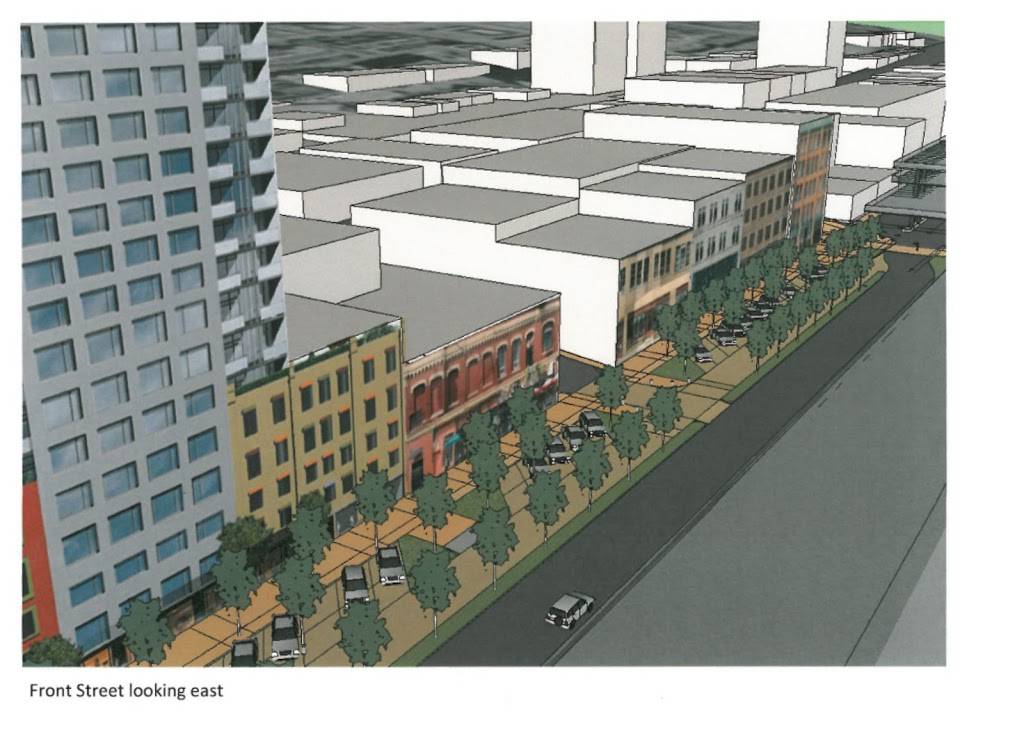
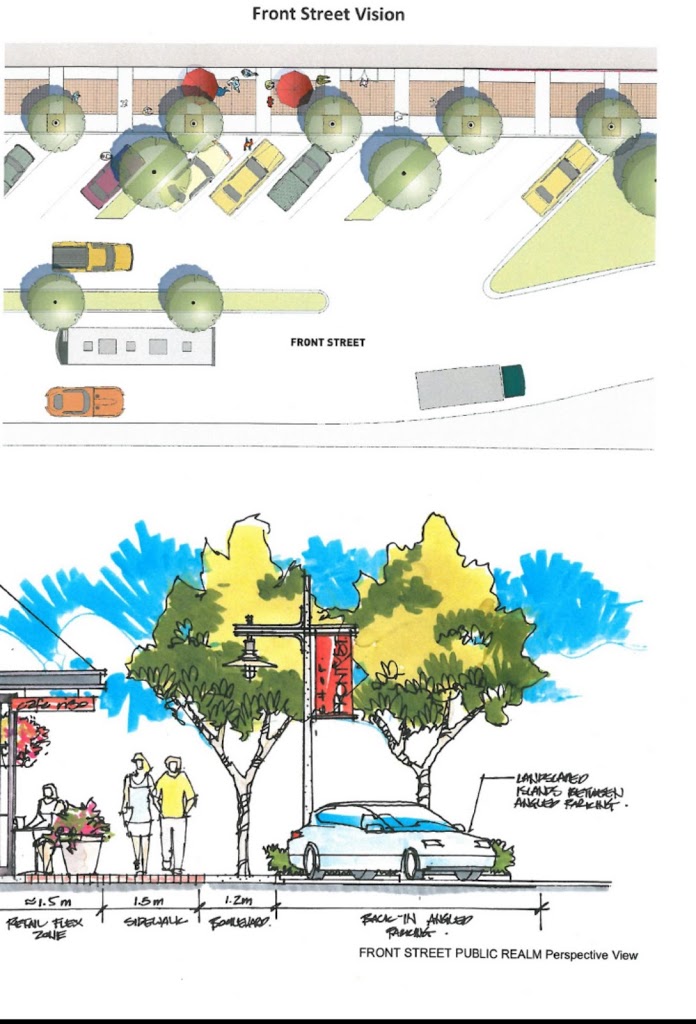
I much prefer the visualizations provided in the report of potential streetscapes with the parkade removed. As I blogged previously, those heritage businesses could be the face of our City.

Image from the Council Report- borrowed without premission, but I am a taxpayer…

As much as I support the removal of half the Parkade, I think that stops short of the true goal here. Any money spent renewing the other half of the Parkade is the result of very short-term thinking. Let’s find a better solution to distribute parking throughout the downtown (e.g. force new high-density developments to provide public pay parking in their undergrounds), or find a market solution to parking needs in the City in a location that doesn’t put a long-term speedbump in our City’s waterfront renewal.

Or course, the elephant in the room is indeed the Larco development. How much longer with it be an empty parking lot? The other side of the coin being how long until it potentially cuts off the stretch of Front Street from the waterfront for ever? How will the newly-envisioned face of front street fare when facing a 4-story parkade under the Larco highrises (a la Plaza 88 and Carnarvon).

Actually, come to think of it, isn’t removal of only the western half of the Parkade really just a necessary step to accommodate Larco? What is the point of that removal if Larco is going to put a close approximation of it right back, only a few metres south on the other side of the tracks?

I suspect these issues have been raised, and you can’t solve all problems in a single report to Council. First off the future vision has to be laid out, and I think this document does a good job at that. The report includes some of the strongest language I have yet seen about how traffic will be accommodated on Front Street, pending the City’s Master Transportation Plan. Essentially, the City would like to see fewer trucks on the Front street:

“It is recognized that any reduction away from the constant stream of trucks will immediately improve the pedestrian environment of Front Street and the Waterfront”

Except that it will do more than just improve the pedestrian environment, it will reduce noise for the residents and businesses along Front, it will reduce the particulate pollution Downtown, and it will increase the commercial land values along Front and open up significant opportunities for economic development that are not there now.

As always, click to zoom.

So with some caveats in mind, it is great to know the vision for Front Street is coming together… all the pieces of the puzzle are not there just yet, but for the first time I think we can safely say they are coming together. I think we can be more certain now than ever before that New Westminster’s waterfront will once again be human space, not space totally turned over to through-traffic. Or to quote the report:

“Front Street will be returned to a pedestrian-friendly retail street with historic waterfronts.”

That is a vision I can get behind.

Grand Canyon Part 2: The Kaibab Limestone

The top of the Grand Canyon, and much of the rubbly plain surrounding it, are made up of rocks of the Kaibab Formation. The Kaibab is a limestone unit, somewhere around 270 million years old, which puts it in the middle of the Permian Period of the Paleozoic Era.

The world was a different place in the Permian. This is a time before there were birds or mammals, even the dinosaurs had yet to develop. The dominant land animals were synapsids, which look rather like modern lizards but were more mammal-like than reptilian (with differentiated teeth and quite possibly fur). They were almost completely wiped out in the Great Permian Extinction (lucky for you they weren’t, as one of your ancestors was a Permian synapsid).

There were no flowering plants in the Permian, but cycads, ginkgoes, and ferns were common. In the sea, 300 million years of Trilobite domination was about to come to an end, and echinoderms and mollusks were rising, especially a new-fangled cephalopod mollusk, the Ammonite, which was starting it’s impressive 200 million-year reign as king of the Sea.

The Permian was also the last time that all major continental land masses were collected together through Plate Tectonics into one “supercontinent”- Pangaea, leading to bad T-shirt ideas ever since (people calling for Pangaea’s reunion rarely consider that the supercontinents correlate very well with massive declines in biodiversity, but I digress). In the part of Pangaea that is now northern Arizona, there was a shallow sea facing to the west, with the shoreline shifting around somewhat, as they are apt to do on million-year time spans, which brings us to the limestone.

Limestone is generally deposited in shallow ocean water as a result of biological precipitation of carbon dioxide and calcium out of the water column – which is a fancy way of saying: it is all shells. Not just shells of bivalves like clams and oysters, but structural parts of corals, echinoderms, sponges, and perhaps most importantly, microscopic plankton. As this pile of dead and discarded shell material is compressed, heated and dewatered, it cements together into a very hard rock: limestone. Well, it is actually kind of soft by rock standards, and it is easily dissolved (on a geologic timescale) when exposed to meteoric water. However, it often forms large, homogeneous blocks that can be very resistant to erosion in arid place, like the Colorado Plateau into which the Grand Canyon has incised.

In places west of the Grand Canyon, younger rocks are piled on top of the Kaibab, but around the canyon, these younger rocks have been eroded away at some point in between the 270 Million years since it’s deposition in the shallow ocean and it’s current exposure more than two Kilometres above sea level.

Did I mention my fear of respect for heights?

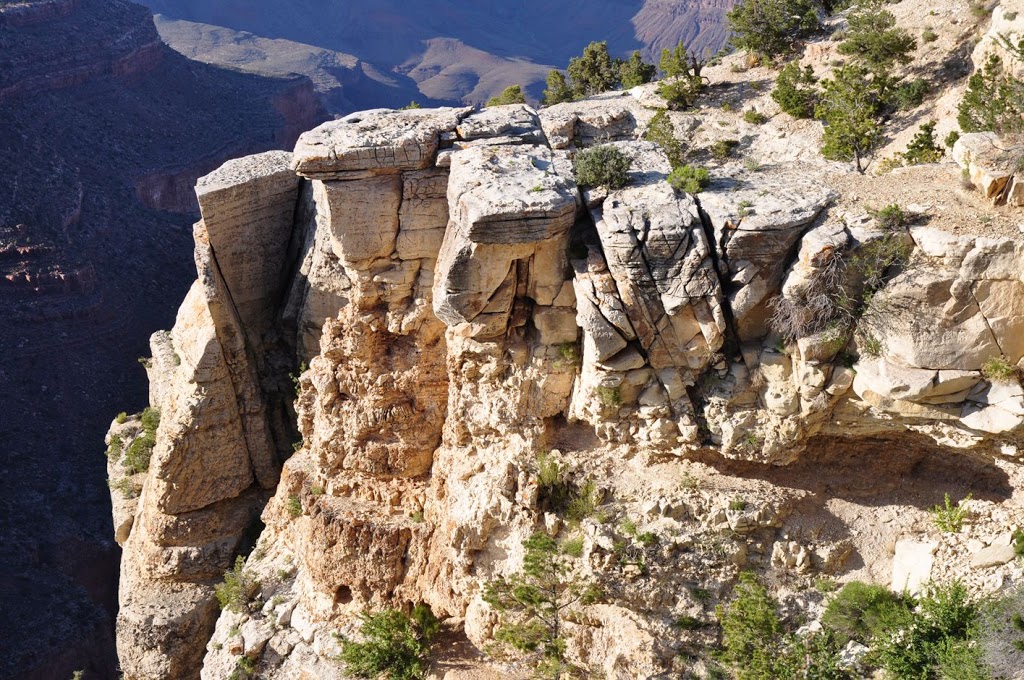
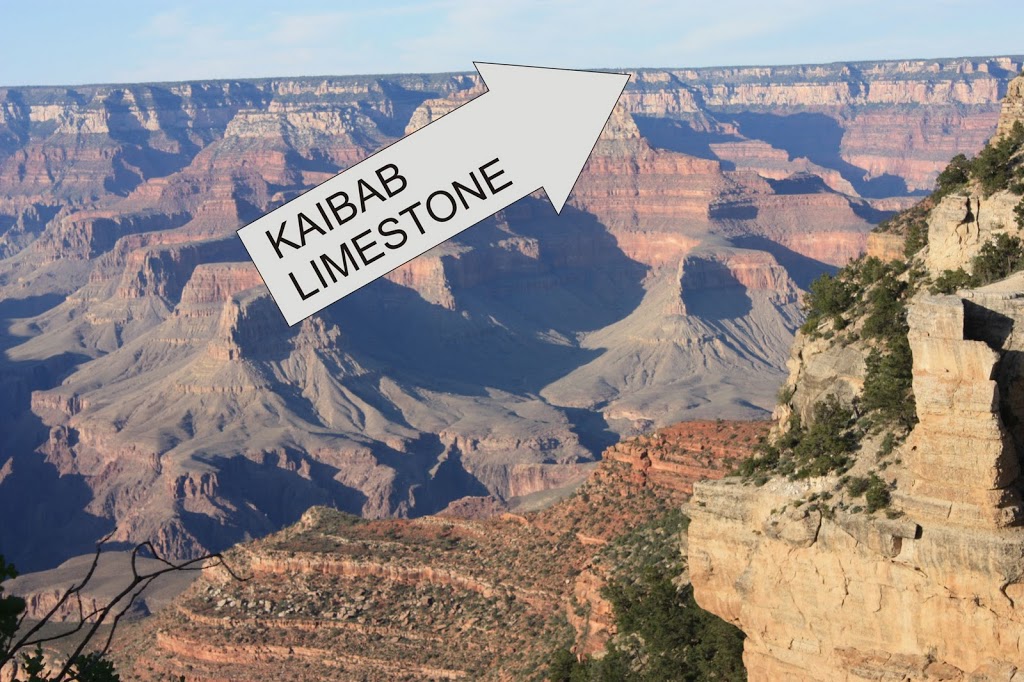
The Kaibab is hard enough to form vertical walls at the Canyon rim, some more than 300 feet high. It is also distinctly grey in colour, making a visible band around the canyon rim, and is easy to differentiate from the reddish sandstones and shales below. The underlying Toroweap formation is not as resistant, and forms rubbly slopes below the Kaibab cliffs.

Kaibab – you can recognize it from 10 miles away.

Close up, the Kaibab is grey in colour, and is variously massive (showing little internal structure) or mottled with chert nodules and fossils. It is also variously mixed with relatively thin shale or sandstones beds, just enough to give a sense of bedding.

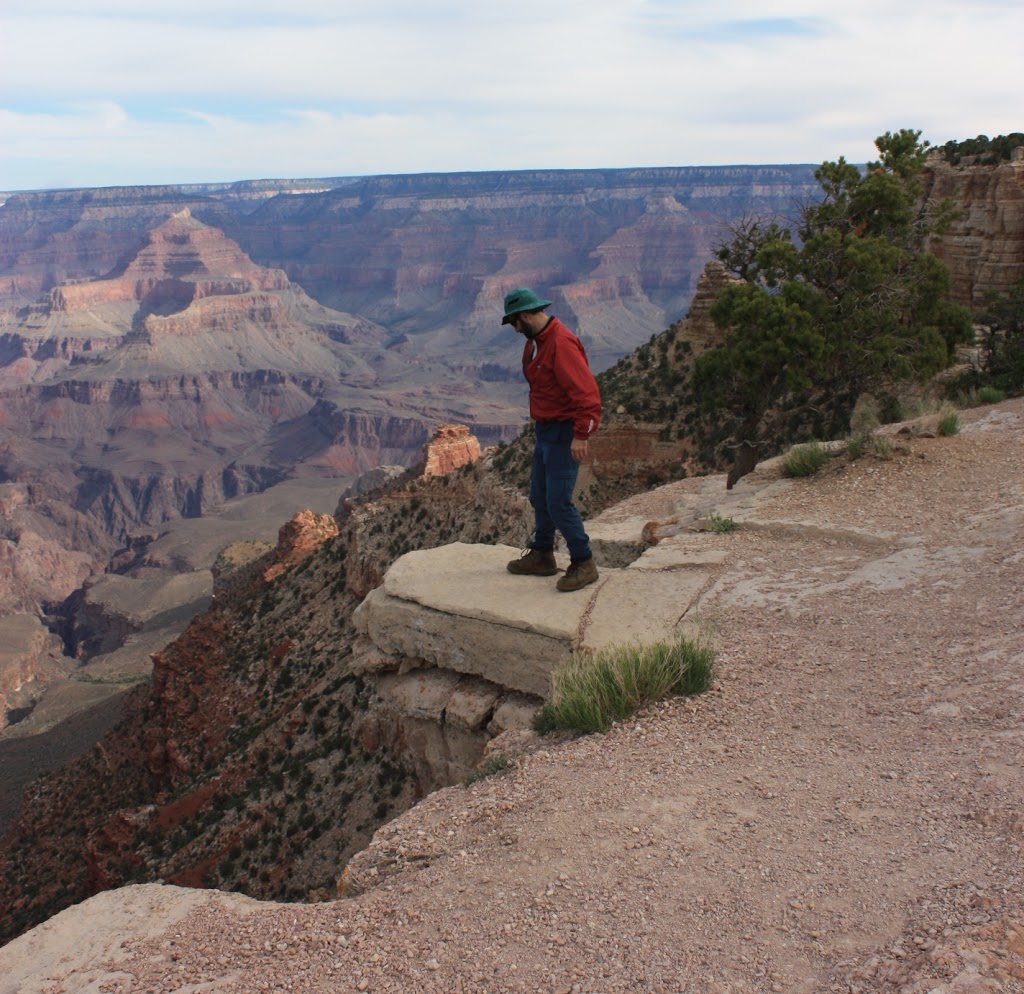
This poor, suffering bastard could use a bed. Fortunately, there is
beautifully expressed bedding in the Kaibab Limestone outcrops behind him!
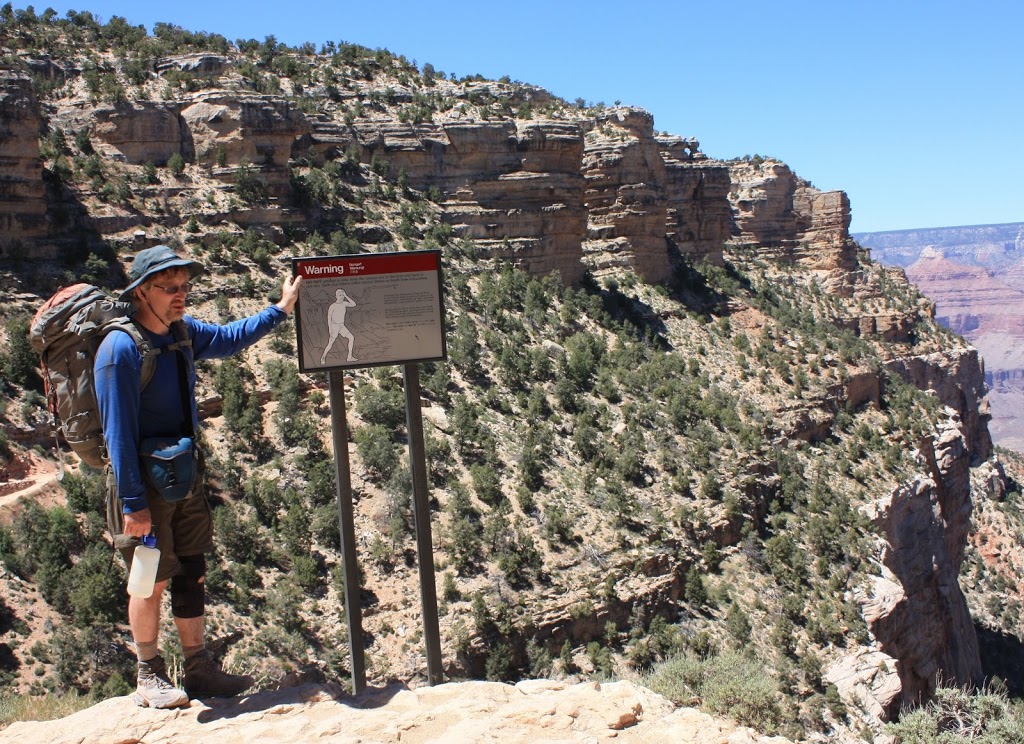
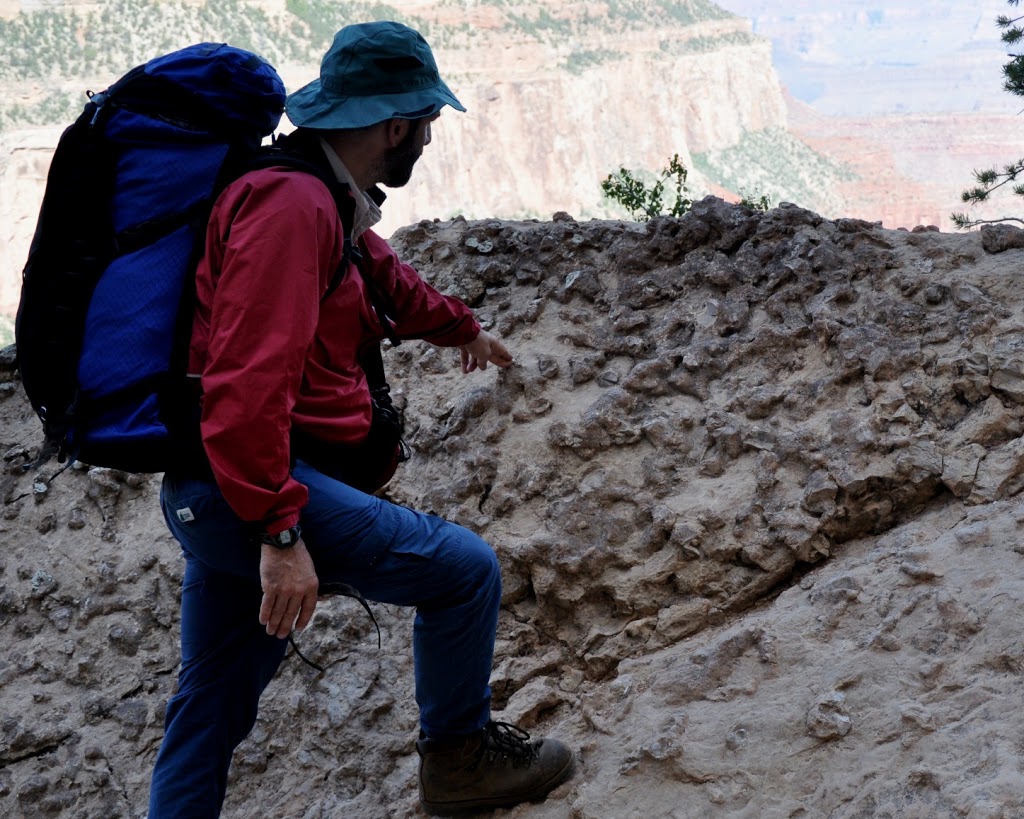
Chert nodules weathering out of Kaibab limestone. Note pointing doofus for scale.

“Chert” is a micro-crystalline form of quartz (more or less pure silica) that is much harder and less soluble than the limestone so it really stands out from the limestone surface. These nodules formed in the limestone when it was buried and hot groundwater with silica dissolved in it percolated through the limestone depositing crystals. These look like fossils, and indeed some of them do form around incongruities in the limestone caused by fossil structures, or in tunnels bored through the sediments on the ocean floor by various animals who might be grazing through the sediment looking for food (like worms do in soil) or making tunnels or tubes to live in (like some types of shrimp or clams might do). These are “trace fossils”, and I will go on at length about them in later posts.

I like trace fossils.

Game ON! -UPDATE

In case no-one noticed, Municipal Election time is here. The Silly Season has begun. I feel like I need to make a few things clear going in.

Over on the right side of this blog there is a title that reads “What this Is(n’t)”. Click that and read. There is a lot of important stuff about who I am, and what this blog is about.

I do other things in the community besides this blog, but this blog is my opinion, and my words. Anything I say about politics is not the opinion of the NWEP or any other organization I work with.

The NWEP is non-partisan, partly because it is a diverse group of people with varying opinions, partly because the NWEP will be working with whoever wins the next election (as they work now with the people who won the last one) to make positive change in the community, regardless of their political stripe.

So entering this Municipal Election, I will be supporting some candidates, and not supporting others. My support does not constitute the support of the NWEP, nor does it constitute the support of the Environmental Managers Association of BC or the Uncle Tupelo Fan Club, or any other group I belong to. I haven’t really decided who I will and will not support yet, but not all of the Candidates have declared yet.

We know all of the current council will be running.

We know Voice will be running Candidates, probably four for Council.

And unless we have been under a rock, we are aware James Crosty is going to take on Wayne Wright for the big Chair.

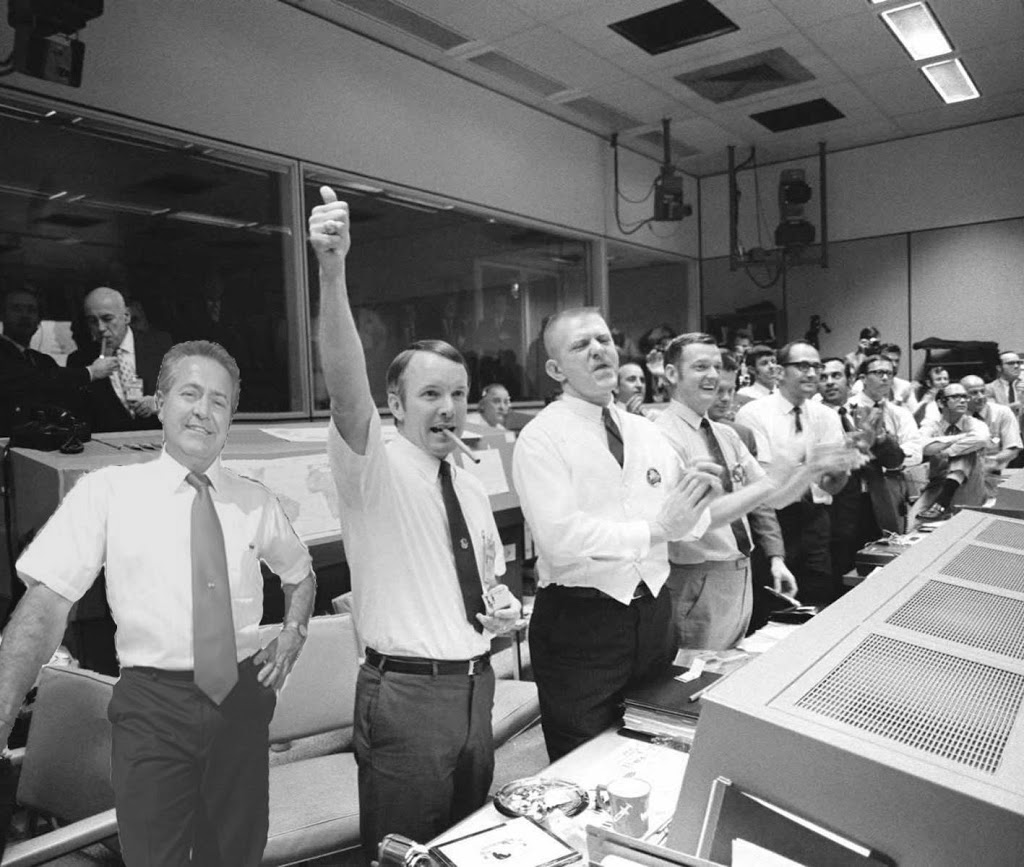
James Crosty and friends celebrate a successful campaign launch.

We can speculate on who else will be running, but many suspect a certain former Councillor, and a 12th Street Business Owner will throw their hats in the Ring. Any President of any Neighbourhood Advisory Committee is probably suspect. Until nominations are official on October 21st, it is all speculation.

But I will be blogging about the election, and I will send out kudos and criticism to all candidates, as I feel they deserve it. However, my criticizing a candidate doesn’t mean I won’t vote for them, and my sending them kudos doesn’t mean I will. I am entering this election with an open mind, will be watching carefully, and will be voting based on who I think will do the best job running the City and spending my tax money.

The only thing I can promise the candidates, and this goes back to a long discussion thread on Tenth to the Fraser: I will always treat all candidates with respect. If I make fun of them (see image above), I will do so in the spirit of fun, not malicious attack. If I call someone out, I promise to give them a fair hearing. I will stand behind statements I make, and will stand to be corrected. When all else fails, I will agree to disagree. As pointed out in that TttF post, anyone who stands for office is doing a good thing, and we should all strive to create a respectful environment where people are encouraged to take part. That is the only way we will attract the best possible people to serve.

UPDATE – Do we need any more evidence of a Silly Season than this exchange between Mayor Stewart and Mayor Wright?. Moving a 150-year old hospital and regional trauma care centre with 400+ beds and a couple of thousand staff to a less-central location with worse transportation connections, because you have a little bit of empty space available? Good for them for both coming out so strongly in support of their communities, after all, there might be giants behind those windmills.

Council Stream – UPDATE

I guess with the election around the corner, good news is the blue-plate special. The announcement that New Westminster Council will live-stream Council meetings is definitely a good news story.

Like most people, I think democracy needs to operate as openly as possible in order to be accountable. Although I find all of our City Councillors and Mayor to be accessible people, and I have attended many council meetings and volunteer on a couple of City committees, I have sometimes been frustrated with accessibility to Council.

The biggest problem to me, up to now, has been the Monday afternoon “Committee of the Whole” sessions, which are open to the pubic, but are held at a time when most working people cannot attend, and are not broadcast. Even the minutes are not available until weeks later. Often, it is at these committees where the real discussion of topics is raised, and often the motion at the Evening Council Meeting is read and passed, with the discussion already completed in the afternoon. If one is wishing to delegate to Council (as I am wont to do on occasion), it is important to know the context for the discussion coming out of the afternoon “C/W”. With video streaming of the afternoon session (and an archive available on-line for later viewing) the populace can better understand the issue and how Council made the decision it did.

Even the evening meeting have been only partially accessible to those not able to attend in person. They have been broadcast on Shaw TV, but I would hazard to guess more than half of New Westminster does not actually get their TV service from Shaw. Luckily, Matt Laird has been recording and archiving the Shaw-broadcast meetings, and I have gone back to that resource several times to get caught up on NW Council action. I suspect this story from last year at Tenth to the Fraser was a major part of Council’s decision to go this way. Nothing worse than saying something can’t be done, then have someone do it right in front of you. All you Rubik’s Cube freaks know what I am talking about.

This also fills a bit of a gap in our local media. With Print media struggling to make ends meet with reduced income, and with our local electronic media still in the “enthusiastic-and-sometimes-skilled-amateur” category, there is little coverage of the sausage-making of local government. I can’t remember the last time I saw a reporter from either local newspaper attending an evening Council meeting (maybe they are watching on Shaw at home?). That said, I can’t think of a business case for paying someone’s salary to sit in a 4-hour meeting hoping to catch a publishable nugget. Besides, if movies have taught me anything, it is that City Beat reporters are 4 martinis in by 7:00pm.

Now that all the meetings will be available on line, it is only a matter of time before a skilled local video editor grabs some quotes, punches up a little autotune, and creates a NW Council version of this:

Thanks Carl.

UPDATED: Unfortunately, Dr. Heidi was promoting naturapathic remedies to lose weight on the stream at 7:45 tonight, which I’m pretty sure wasn’ t on the agenda. hmmm…. technical glich?

Poplar Island, and a bridge to elsewhere.

It is the biggest stand of trees in New Westminster, and you have probably never been there.

Poplar Island has a rich history, which you can read about in some detail here. For those with stunted attention spans, it has been a rancherie, an Indian Reserve, a smallpox hospital (prison?), a shipbuilding centre, a home, and for most of the last 50 years, little more than a convenient place to boom logs. The history of ownership is about as chequered, and perhaps even a bit uncertain now…

I raise this issue now because some people have suggested that a bridge to Poplar may be a good idea, as part of the project to connect Queensborough’s perimeter trail system to the Boardwalk and Quayside, and finally provide a real community connection to Queensborough residents.

The problem is, attaching Poplar to this idea is a recipe for all kinds of troubles.

First off, that legacy of Poplar creates all sorts of legal issues around connecting to it. With a 100-year history of industrial activity, there is a clear history of Schedule 2 activities, so re-zoning it for Park would be somewhat complicated, even if there is not contamination present (actually, the logistics involved in doing the sampling required to determine if it is contaminated would be a real hassle for an island with no roads, no landing docks, and no services). Then if somehow the City got the rights to use the Island, and negotiated fair use with the appropriate First Nations, and got the contamination situation figured out, how do we go about controlling access to the park, preventing fires, stopping squatters, etc. I suspect there is a reason the island is being preserved in a relatively natural (if second- or third-growth) state…

I hate to be a Debbie downer. I think that a well-designed park, accessible and safe, with a proper emphasis on displaying the important heritage of Poplar, would be great benefit to the City, but it will take a long time and a fair pile of money to develop. Maybe in my second term as Mayor. So the risk here is a measured response to reclaiming Poplar Island will slow down the bridge project, potentially for decades.

Worse actually, is that Poplar Island does not represent a good place to put a bridge, if your goal is to connect the burgeoning communities of eastern Queensborough and their integrated greenways with the Boardwalk, the Quay, Skytrain, and the rest of downtown.
If we want to build a pleasant park trail to be used occasionally for dog walks, then let’s wait until we can get Poplar worked out and build the bridge then. If we want a piece of sustainable transportation infrastructure to connect Port Royal and the rest of Queensborough to the rest of the City, let’s at least put the bridge in a useful spot. That means ignoring Poplar for now.

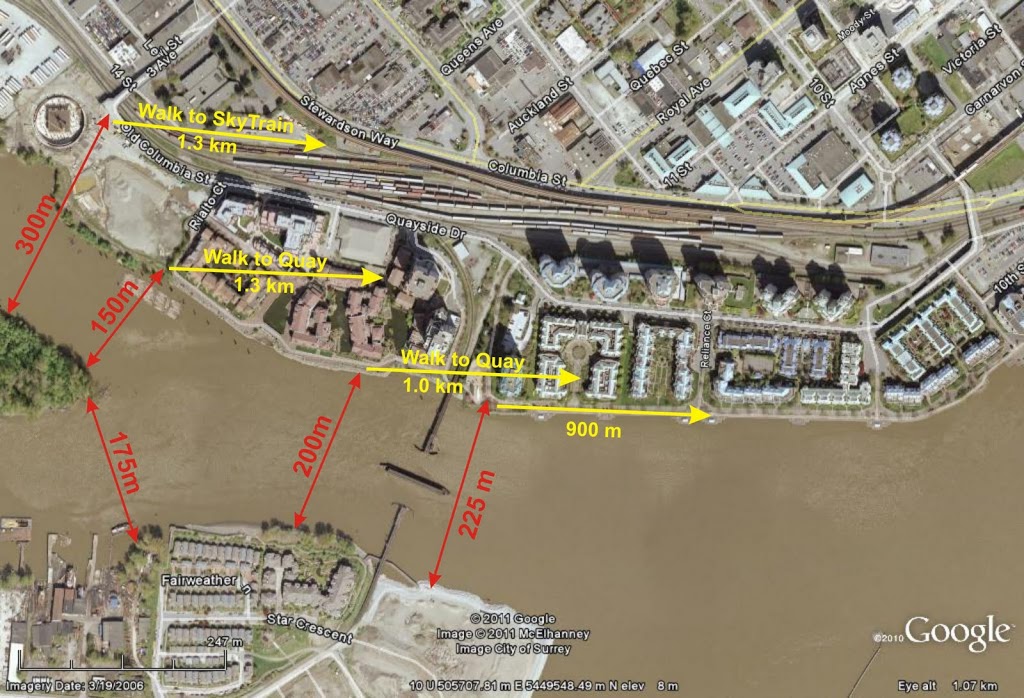
(Click to make big enough to be readable. Hey Google Earth, your share of my profits are in the mail)

As you can see in the above diagram, connecting just west of the train bridge to the trail just east of the little beach on Queensborough would require a bridge about 200m long (measuring between imaginary pillars set on opposite banks). The controversial “Submarine Park” location, more like 225m. Access via Poplar will require two bridges, totalling 325m at the closest points, of 475m to connect to the Third Ave overpass as was suggested by come commentors.

I recognize there is more to a bridge’s cost than a simple length calculation, but as a first approximation, isn’t it safe to suggest a shorter bridge is likely to be cheaper?

The second half of bridge location is that it connects to. As attractive as hooking into the Third Ave overpass may be aesthetically, I don’t think pedestrians from Queensborough are not all that interested in better access to Key West Ford (although I am sure their vehicle deals are second to none). They want to get to the Quay, to the Skytrain, and to Downtown New West and the new MUCF. So why take them so far away from their destination?

I think the Submarine Park is a minor issue, compared to building a bridge that acceptable to the local community from an aesthetics viewpoint, is accessible by more people, and serves its purpose as an important peice of sustainable transportation infrastructure.

The Submarine doesn’t have to move, and in the slim chance it has to, there are other locations it can go. At the Quayside Sale/Festival, I overheard Councillor Harper talking about the bridge with a concerned citizen, and addressing concerns that the “Submarine Park” was going to be removed. He said: “do you really think this Council is going to vote to remove a park?” The question may have been rhetorical, but it seemed to stump the questioner…

What I did this summer – Grand Canyon.

Ok, I am very late starting this blogs topic, because I actually took my summer vacation way back in early June, when my tomatoes in tonight’s salsa were mere seedlings on my window sill and the Canucks were looking good for their first championships. So much time has past.

I still wanted to blog about my trip, however, because blogging about travel was my first introduction to the medium, and because I like to talk about geology. This trip was all geology. I walked down to the bottom of the Grand Canyon with a buddy of mine who shall remain anonymous, but happens to be a Professor of Geology. The purpose was to enjoy the majesty, a once-in-a-lifetime hiking trip, and a chance to get away from spring doldrums, but mostly to look at and enjoy the geology of the Colorado Plateau.

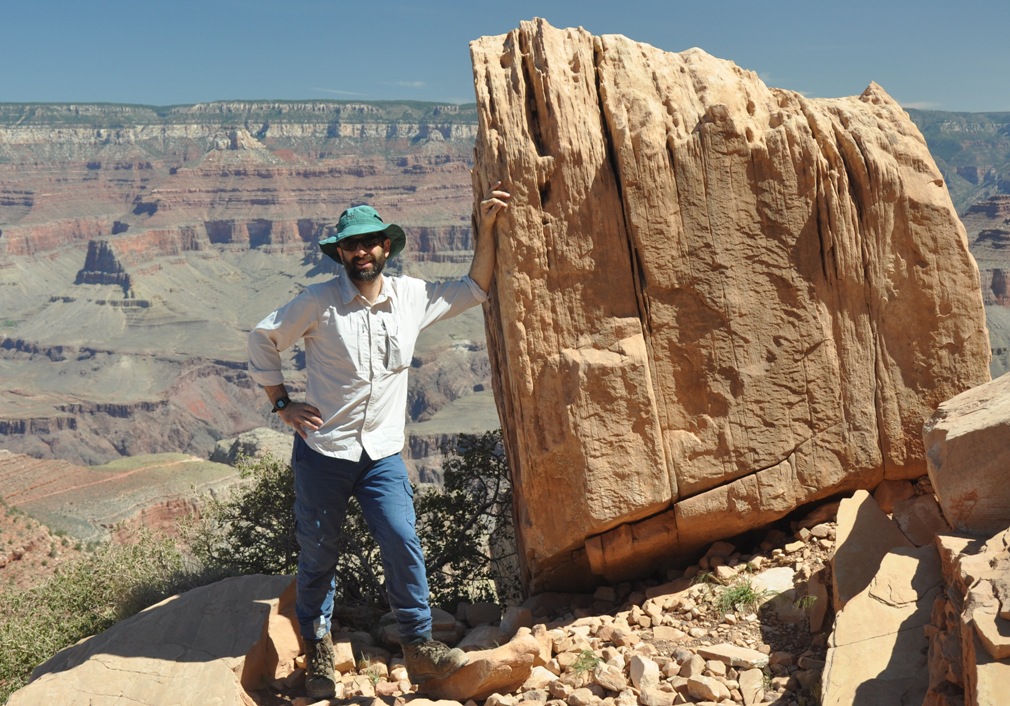
The author with some Coconino Sandstone

For those lucky enough to have avoided travelling with a geologist, it is hard to explain what “enjoying the geology” means. It is startlingly close to what you would do if you were working in geology. We first review the available literature, then look at the rocks, try to identify the rock types, look for recognizable structures, fossils or traces, try to make sense of the structural relationships, or figure out the paleo-envrionmental conditions where they were deposited. Try to point at all of the changes from one “formation” of rock to another, be that a sharp unconformity or a gradual transition. And we take lots of pictures, and talk a lot of rocks.

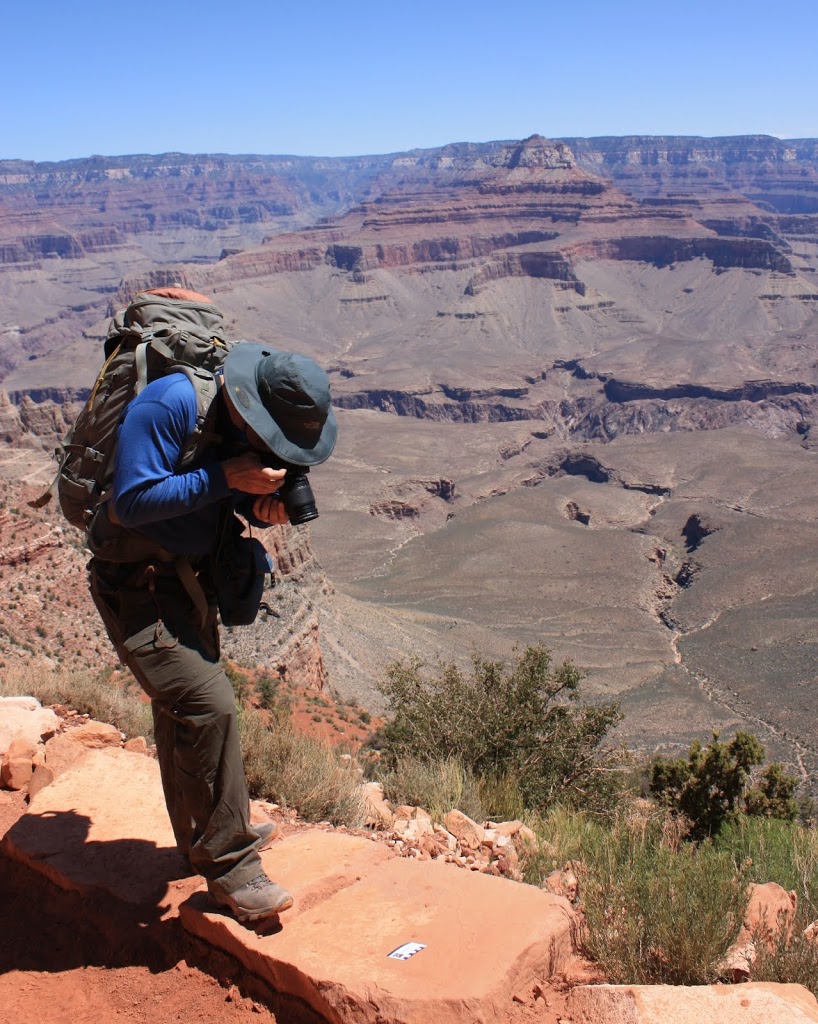
Geologists generally have more pictures of their scale card
than they do of thir kids.

How many pictures? I took about 250 photos below the canyon rim. The Prof took more like 500.

How much talking? We walked down the South Kaibab Trail to the Colorado River, about 12km, and all downhill. Even with the heat and rough trail, most people complete the hike in 4 or at most 5 hours. It took us about 9. After a day hanging at the bottom of the Canyon enjoying the charms of Phantom Ranch, we managed to come back up the Bright Angel Trail in a much more reasonable 8 hours. We were carrying less whiskey this way.

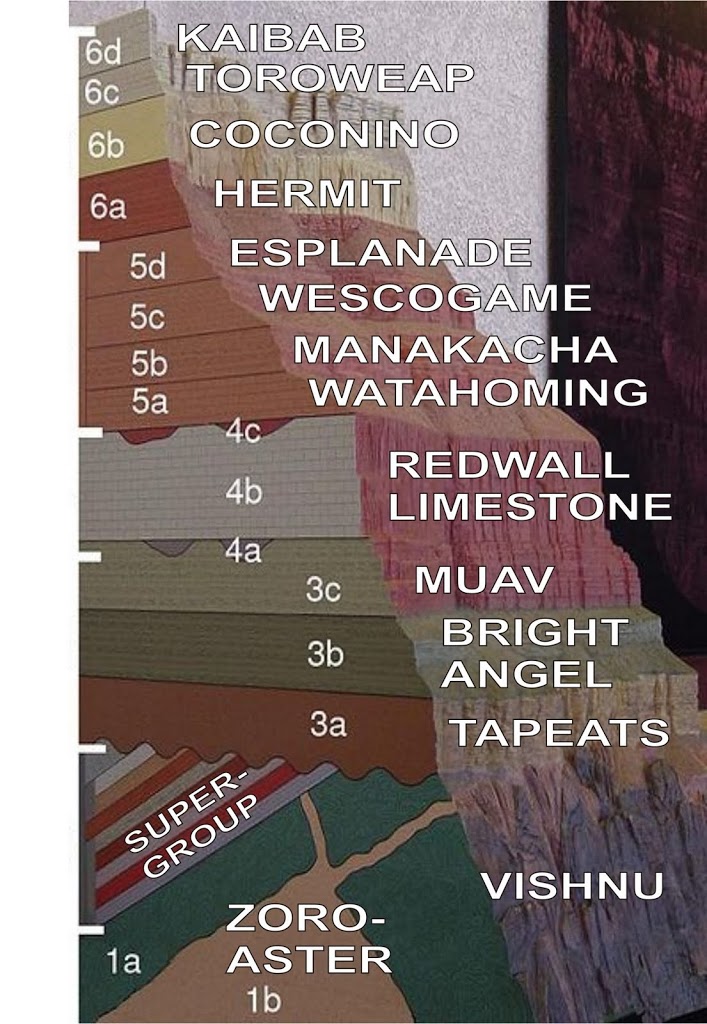
I am going to blog the trip in pieces, in the order of rock formations encountered on the way down (therefore, some pictures form the way up will be mixed in with those from the way-down). That way, the narrative will be a journey backwards through geologic time, more than a tour through our three-day trip. Remember, Law of Superposition: the rocks at the top are the youngest, the rocks at the bottom oldest.

Simple section of the canyon, modified from wikipedia.

This section shows the names of the major rock formations one encounters walking down the canyon, from the Early Permian Kaibab Limestone (about 275 million years old) at the top to the Precambrian Vishnu Schist (probably 1.7 billion years old). Add to this the Laramide Orogeny, resultant uplift, and 2 million years of melted snow runoff from the Colorado Rockies, and you get yourself a canyon drawn grand.

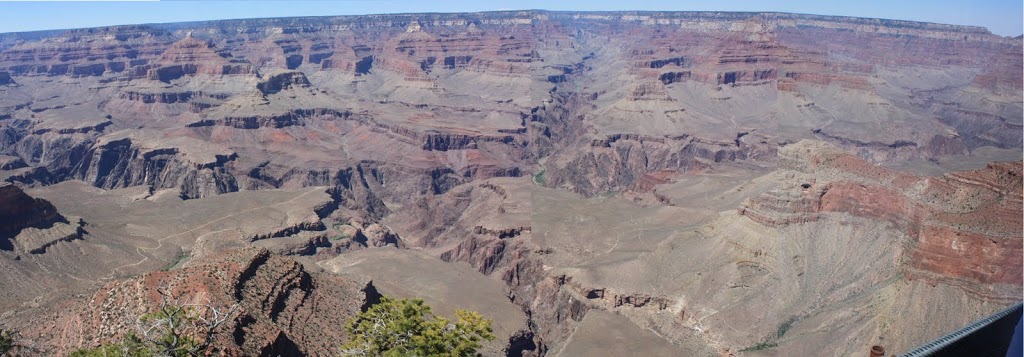
Click to make grander and more panoramic.

Details to follow…

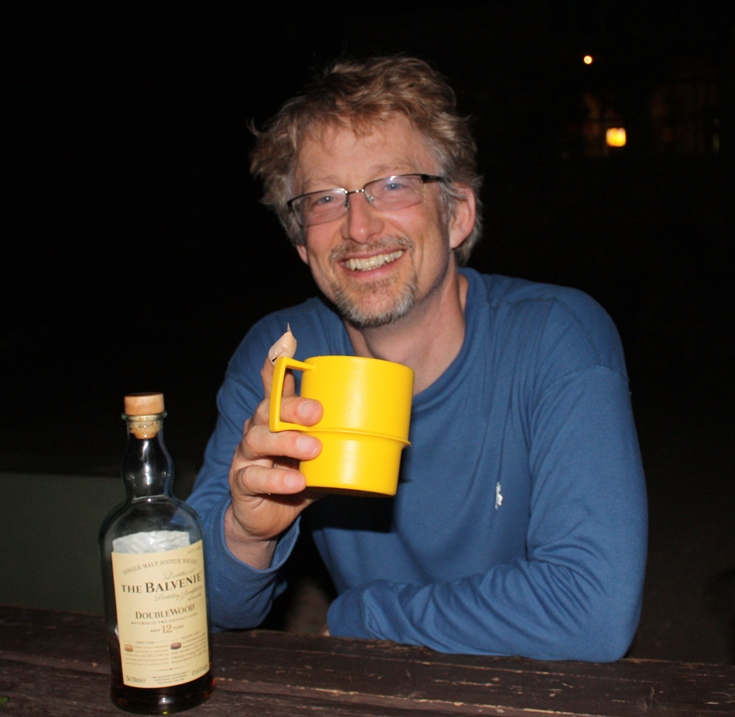
It wasn’t all fun and games.
Happy 50th, Prof!

New West needs Renewal (the substation agreement, anyway)

This is one of the stranger things I have read in the City Page .

It seems that New Westminster’s main substation (which is owned by BC Hydro) needs some upgrades. This makes sense, the City has seen a lot of growth in the last 10 years, it seems reasonable that a few upgrades would be needed. It also happens the agreement between the City’s unique electrical utility and our beleaguered provincial Power Authority over the maintenance and operation of the substation also needs some upgrades, so they are going to do both concurrently. No problems there.

Most of the rest doesn’t make sense to me, however.

Granted, I am a little thick.

First off, the whole reason for this notice is that the agreement is longer than a typical 5-year agreement, and that creates some interesting problems in the Community Charter (the Provincial regulation outlining the roles and responsibilities of local government).* Essentially, these types of agreements that involve financial commitments are easy if they last 5 years or less. Longer than 5 years and the City needs to be approved by the electorate. Essentially, an elected Council has more authority to make 5-year commitments than longer ones. This makes sense when you think about it, it stops one particular Council from dooming a City to a life of servitude to a bad agreement. The practical result is that Cities make a lot of 5-year agreements, and renew them every 5 years. So why is Hydro requesting an 8-year one here?

And who exactly is paying for this $23.5 million upgrade? Here is the quote:

“The cost of the upgrades will be fully funded by BC Hydro. The Agreement commits the City to reimburse BC Hydro for all costs relating to operating, maintaining and upgrading the substation and provides the option for the City to pay out the full amount of the remaining balance of the substation upgrade costs at any time during the term of the agreement.”

I read that as saying BC Hydro is paying the cash up front, but we can expect a bill. That seems fair, we are the ones who need it. The 30,000 residences and businesses that hook up to New Westminster Power should pay the $800 each to cover the cost. Except our Electrical Utility has a $33 Million accumulated surplus, so I guess we could pay it off right away. Or maybe we can’t, as maybe that surplus includes assets? Jeezz… I need an accountant here. (Talking to accountants, I have learned enough to know that I know too little to make actual intelligent discussion about accounting – Me talking accounting is like Kirk Cameron talking evolutionary biology…hopelessly out of my element)

But it is this part of the proposed agreement that first raised my eyebrows:

“The Agreement also includes a “revenue guarantee” provision in accordance with BC Hydro’s Tariff Supplemental No. 6. The “revenue guarantee”…(clip) …is only paid out if incremental revenue projections accruing to BC Hydro over the next 12 years are not realized.”

So if I read that right, BC Hydro has decided the amount of electricity New Westminster will buy over the next decade or more, and if New Westminster does not buy that much, they still get paid for that much? As the environmental whacko I am, this makes me wonder what this means for the City’s energy management goals? If the City were to decide, a few years down the road, to take a proactive approach to energy conservation, and start seriously reducing it’s use of electricity, and incentivise efficiency of co-generation amongst the users of the Electrical Utility, will that effectively work against our financial interest? Is this a built-in incentive against conservation? 

What does that mean for the new energy manager we are about to hire?

I have a second concern about the whole “Democracy-Accountability” side of this issue. Since they need to get approval from the electorate to enter this agreement, they have decided to allow people to voluntarily vote against it, by showing up at City Hall and filling out a form. And if 4,900 people fill out that form within the next month or so, they will take it to referendum. Is it just me, or is that a little bass-ackwards?

For perspective, 4,900 people is more than the number of votes required last election to get elected to City Council (of our present 6 councilors, only Jonathan Cote received more than 4,900 votes), and the City seriously expects 4,900 people to show up and fill out a form to force a referendum over a vague agreement with BC Hydro based on a vague ad in the local paper?

Especially when an actual election is coming up in November, doesn’t it make sense to just add this to the Civic Election as a referendum question? That way the issue can actually be discussed, and the people in the City who have decided this deal is a good one for the City can actually stand up and explain to us why it is a good deal. They would be able to educate the electorate about the need, and we can vote. Isn’t that how democracy should work? Does anyone doubt that the HST would still be here if the Liberals had taken the truthful approach and sold it on it’s benefits before en election instead of lying about it after?

Some may suggest I am tilting at windmills here, and I may be. However, the Community Charter has good reasons for creating these limitations on local government power, and sets clear criteria for when the electorate must be consulted. I just think those types of rules should be respected in the spirit of, not just the letter of, the law.

*As we go into the municipal election season, I think this will be the question I ask any Candidate for Council or Mayor who knocks on my door: “Can you explain to me the difference between the Community Charter and the Local Government Act?” Since they constitute the regulatory framework under which a City is administered, and the Candidate is looking for a job administering a City, I think the question is quite fair.
The power of Critical Thinking skills – Wasting a Phone Scammer’s time.

So guy phones me up, mystery number, asks if I have a Windows computer. I say yes. He says they are phoning all Windows users to do a security check. You know where this is going…

I interrupt his script to suggest that is a daunting task, with there being something like 2 billion Windows computers. I express genuine interest in the logistics, asking him about his staff levels, work hours and management team.

Trying to stay on track, he quickly says they have 10,000 staff working around the clock.

I act impressed, but suggest that this seems hardly enough, as each of the 10,000 people would need to make 250 calls a day each to get to all the Windows computer users within a three-year timeframe. That is only if they are lucky enough to get everyone the first try: what about the people they miss the first time, and need to call back? Or need to call back more than once? That must at least double the number of calls needed.

Starting to feel trapped, he said something about them working very hard…

I assured him I beleive he did, but what do they do about the database problem? How to keep track of calls made by 10,000 staff, and to keep track of the people who may buy a windows computer during the three years it takes to get through all the users.

He started to get itchy now. And went back to his first question: did I have a Windows computer?

Then it occurred to me that he was asking IF I had a windows computer, which leads me to believe they are making up the database as they go along. Aye Carumba! What are they thinking!?! They need to call everyone on Earth, hoping to catch the 2 billion with Windows computers!

He suggested these things were management’s problem, not his. Pretty creative response, if you ask me. But I was more undaunted than he.

I then asked if the 10,000 included management, because that just makes the numbers worse. I started to compliment him on the astounding task he and his massive team have undertaken. Then started asking how they manage the language problem, as the majority of Windows computer owners likely don’t speak English. Were there, I suggested, some sort of regional language teams, and how many languages do the 10,000 staff speak?

I had him going on this line for about 5 minutes before he hung up.

Never got my security check…

Carbon Credits revisited

This looks like good news.

I already went on about the ham-fisted way our Provincial government has forced Cities to become “Carbon neutral”, mostly by using property taxes to purchase carbon offsets and line the pockets of profitable multi-nationals.

But it’s not just eco-terrorist left wing lunatics like me saying this system is messed up. Those socialists in the Vancouver Business Press are also asking questions. In the August 23-30 edition of Business in Vancouver (issue 1139), there is a great piece called “Smoke and Mirrors” about how this system is corrupt at its core. It is well worth the read, only to hear the Surrey School Board, Marc Jaccard (the SFU scientist who shared the IPCC’s Nobel Prize for characterizing Climate change risk), John Cummins, and the BC School Trustees all agreeing with left-wing eco-terrorists like me.

Alas, if that is the system we have, how can we make it work for us? Here is where Jane Sterk of the BC Green party hits the nail right on the head. She suggests TransLink can fill its ongoing “funding gap” by selling carbon credits to the Pacific Carbon Trust. This is brilliant.

As Sterk suggests in the press release, every one of the 210 Million + transit riders per year , every person riding a bus, riding a SkyTrain, riding the West Coast Express, or riding the Sea Bus is producing less CO2e per km than a person in a car. TransLink provides the service that allows that carbon reduction. TransLink already has stats around transit use, all they need to do is get an energy economist to provide the number of Tonnes of carbon reduction per annum, and TransLink can negotiate a fat check from the PCT. Instead of our municipal and school tax dollars going to Encana, or Lafarge, they go back to us in the form of improved transportation service.

But let’s not stop there What about AirCare? According to
a recent study
, one of the side benefits of the AirCare inspection program is a reduction in GHG emissions, as much as 1.1% of the total emissions of the Lower Mainland. This works out to enough offsets to run the entire AirCare program, saving drivers money. Or the money can go right back into TransLink general revenue.

Of course, the better alternative would just be to fund transit appropriately, without having to resort to ridiculous paper-shuffling exercises like the Pacific Carbon Trust. If we took the Province’s carbon tax and specifically earmarked it for carbon-reduction initiatives (like the Evergreen Line), then we wouldn’t need to go the long way around.