Volunteers

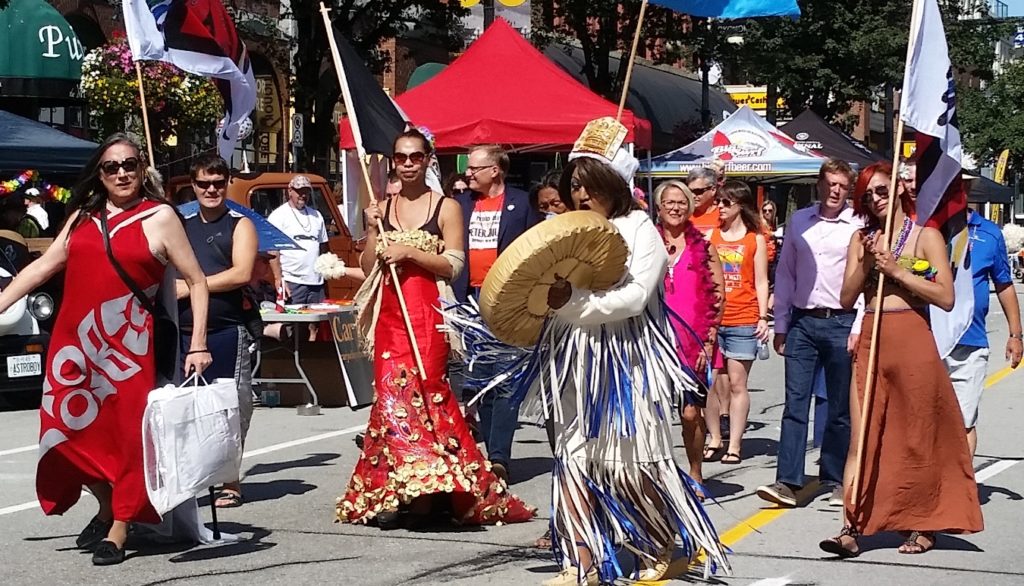
As I noted a little earlier, this summer has been pretty active in New West. This last weekend the trend continued with the annual Pride Street Party. There were community groups booths, three stages with entertainment, an active kid’s area, beer gardens, food trucks, and local restaurants and beer gardens were filled to overflowing. While other parts of the City and the world were having confrontations about inclusiveness and diversity, thousands of people filled Columbia Street to celebrate victories won for inclusion and understanding, and had fun on a sunny afternoon.

It was a great day in New West, and one that would not have been possible without an army of volunteers.

New West Pride Society is a volunteer-run society that organizes and executes the entire event. The City helps with a grant through our festival grant program, and many sponsors step up to pay for everything from volunteer t-shirts to stage rental and advertising. However all of the actual work, the organization, the year of planning, the hundreds of tasks on event day, everything is done by volunteers.

It isn’t just Pride. The New West Farmers Market, the New West Cultural Crawl, The New West Grand Prix, the Hyack International Parade,  Pecha Kucha NW, the New West Film Fest, the events that make the City come alive, are run largely on the backs of volunteer labour. Lots of Volunteer labour.

No surprising point to this, just a short post to give an extra “Thanks” to the volunteers that make this City so full of great activity – from the Presidents of Societies that work all year long, to the folks who show up on game day to sell tickets or pick up litter. I hope that everyone who enjoyed an event this year will think about volunteering for next year’s version of whatever event they enjoyed (and it doesn’t have to be just one). It doesn’t take much time (many hands make light work), you might get a T-shirt (see banner), and it makes the event even more enjoyable for you. You can say “I helped make this happen”, you will help create more opportunities to enjoy the summer with your friends, and you will more likely than not make new friends.

…on Montreal

I wrote earlier about my spring trip back east, first to the FCM conference, then as a tourist for a few days in Ottawa. I don’t want this to turn into a Travel Blog (ugh, who needs another one of those?), but I do want to talk about the last leg of our trip, because Montreal blew my mind.

I have not visited Montreal in a couple of decades, and aside from the rampant bilingualism and historic buildings, the City had little in common with Ottawa. Montreal is so vibrant, it was so being lived in, that we almost didn’t want to leave.

We got around on the quick and efficient metro system. For $18, we got a three-day unlimited pass, and found the system easy to navigate, only occasionally crowded, clean (if a little well-worn in places), and friendly. Aside: It is notable, coming from a TransLink serviced area, that only 7 of the 40+ metro stations have elevators, and there is limited accessibility throughout the system. Perhaps a legacy of the age of the system, but it puts TransLink’s occasional accessibility issues into perspective when 90% of Metro is completely off limits to those who cannot navigate escalators and stairs.

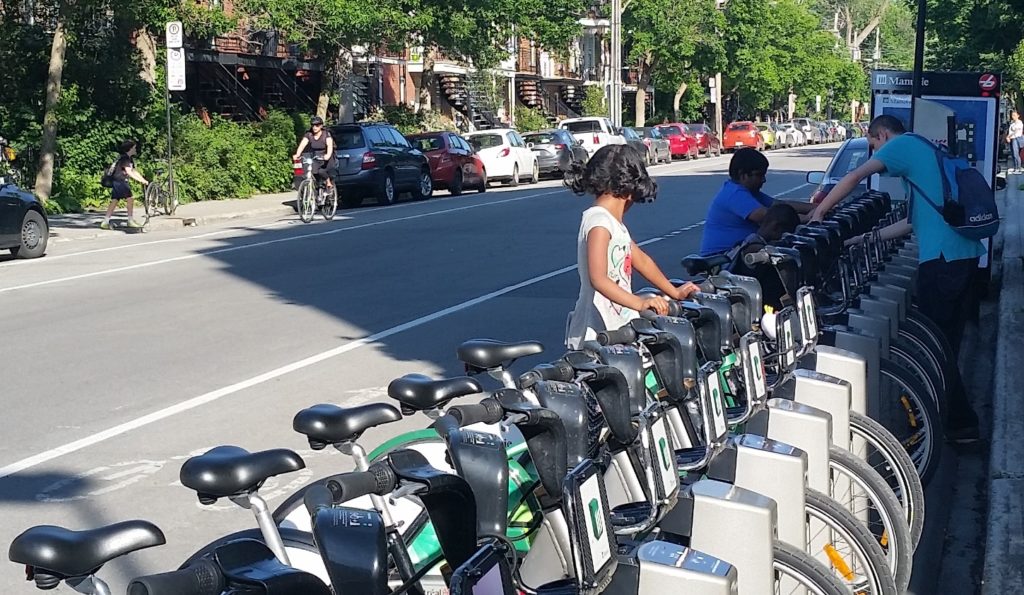
Our other transportation source was Bixi, Montreal’s incredibly comprehensive bike share program. Bixi runs like the New York CitiBike, in that the tech and booking system is in a station kiosk, and bike must be returned to a station. This was never an issue on our two days of criss-crossing the City, as stations were ubiquitous. There were three stations within 1 block of our little hotel in the Village, and another two between us and the nearest Metro Station three blocks away. We paid $5 a day for unlimited 30-minute rides, occasionally checking a bike in and checking another out if our journey was longer that the maximum. The system operated flawlessly, and appeared to be very well used.

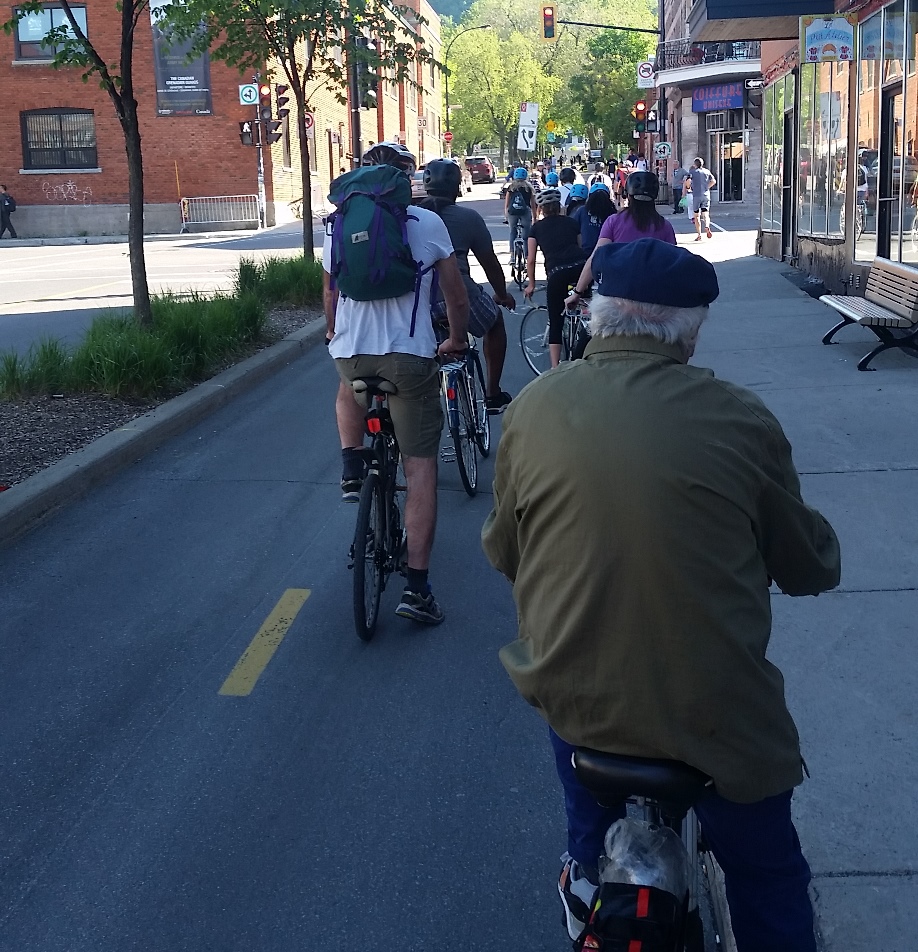
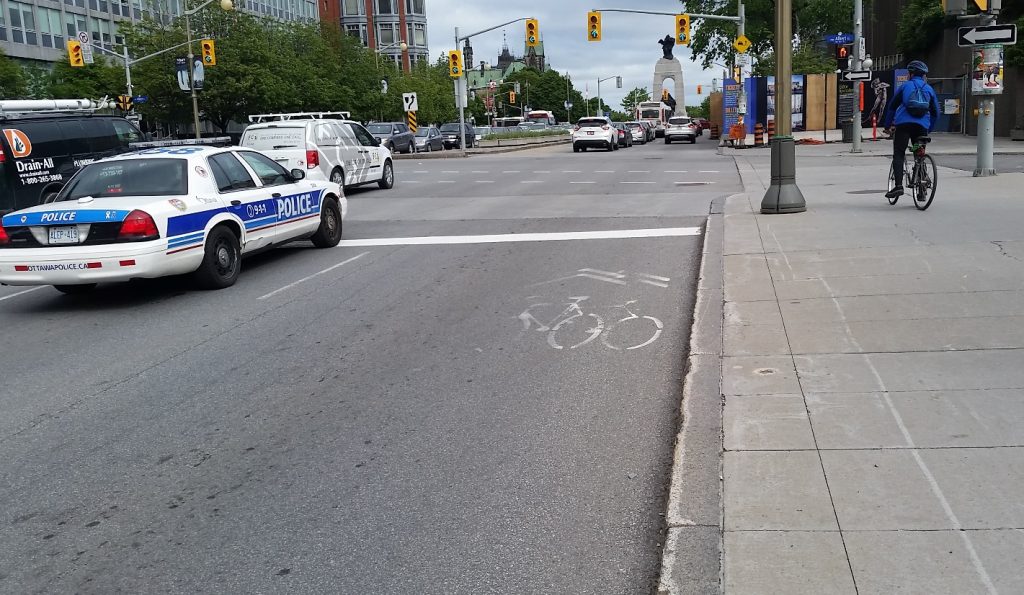
We thought Ottawa was a bike-friendly city, but Montreal takes it to an entirely different level. This is what it feels like when cycling is made equal to other modes in a City. Every journey we took, there was either a separated, protected bikeway, or a traffic calmed street bikeway, with the former more the rule than the exception. Light signals were designed with cyclists in mind, the network is connected and integrated with other modes. Overall, it just worked.

The result is obvious – we had, at times, Copenhagen-level bicycle traffic. There were a few of lycra-wearing Freds, but they were easily outnumbered by people in street clothes riding bikes of almost every shape and style, using the functional network to get around without much fuss. I would peg helmet usage in adults at about 30%, but with upright bikes and really well designed infrastructure, I don’t think I ever saw a conflict between a bike and another user. Quite the opposite, the few times we got a little turned-around with infrastructure, drivers seemed to treat us with an unfamiliar courtesy.

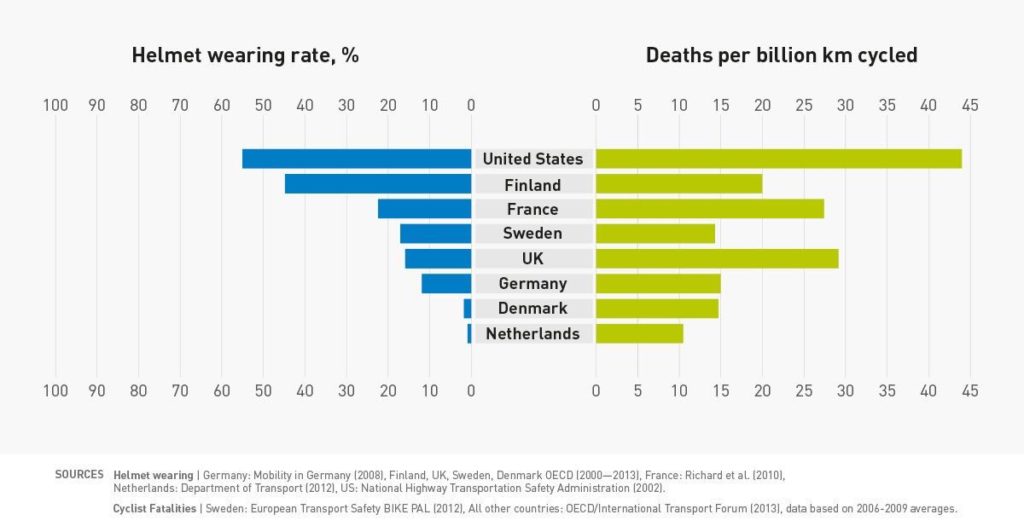
There are still people who think Vancouver is being too aggressive with bike lanes and normalizing cycling as a mode. There are people who think helmet laws are the best way to keep cyclists safe. My answer to them will now be Montreal. As a cycling advocate in the Lower Mainland for more than a decade, and someone now elected to make our City work better, I actually feel a little ashamed about how far ahead of us wintery, hilly, crowded, traffic-crazy Montreal is. Be assured: we are laggards; embarrassingly so.

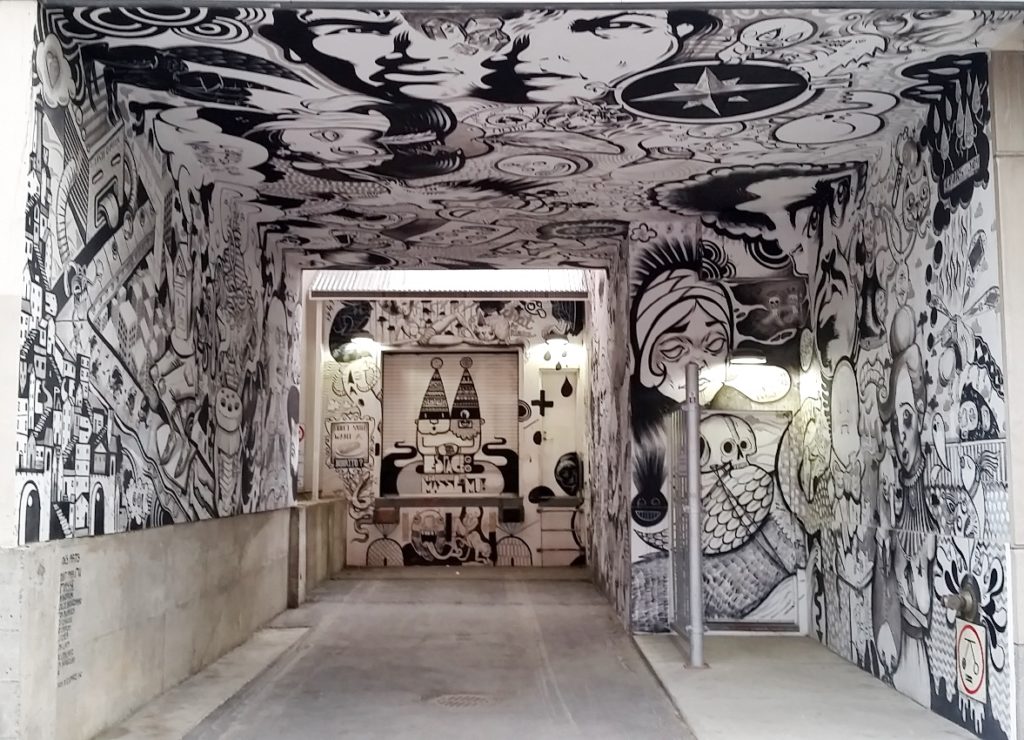
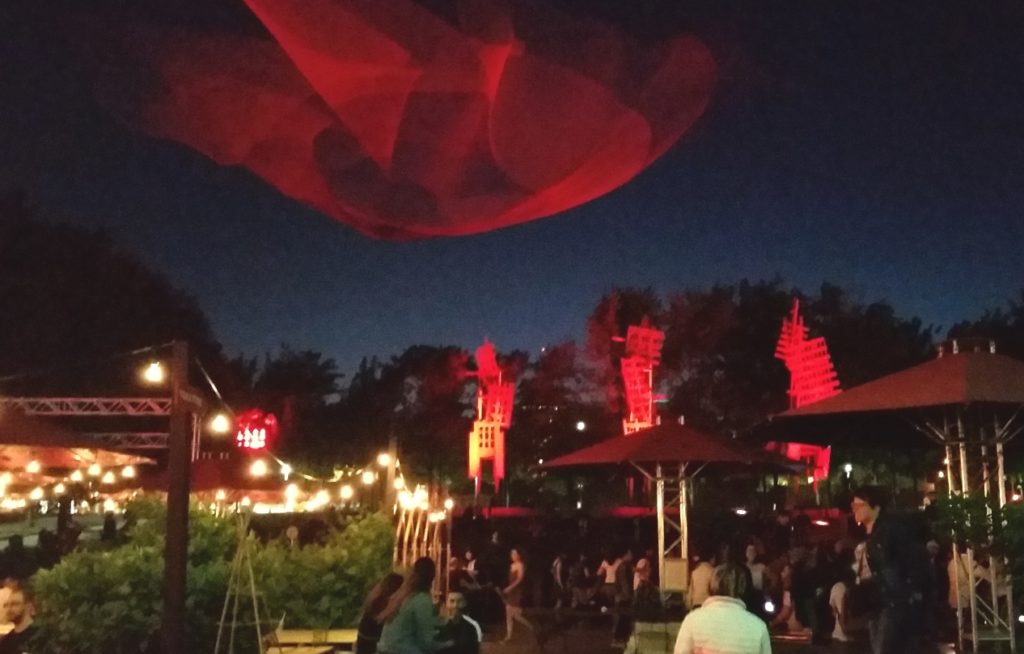
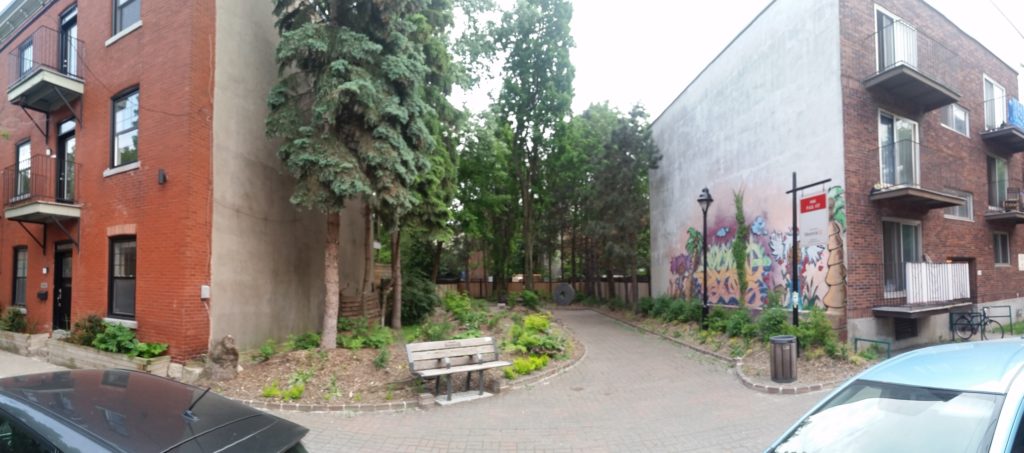
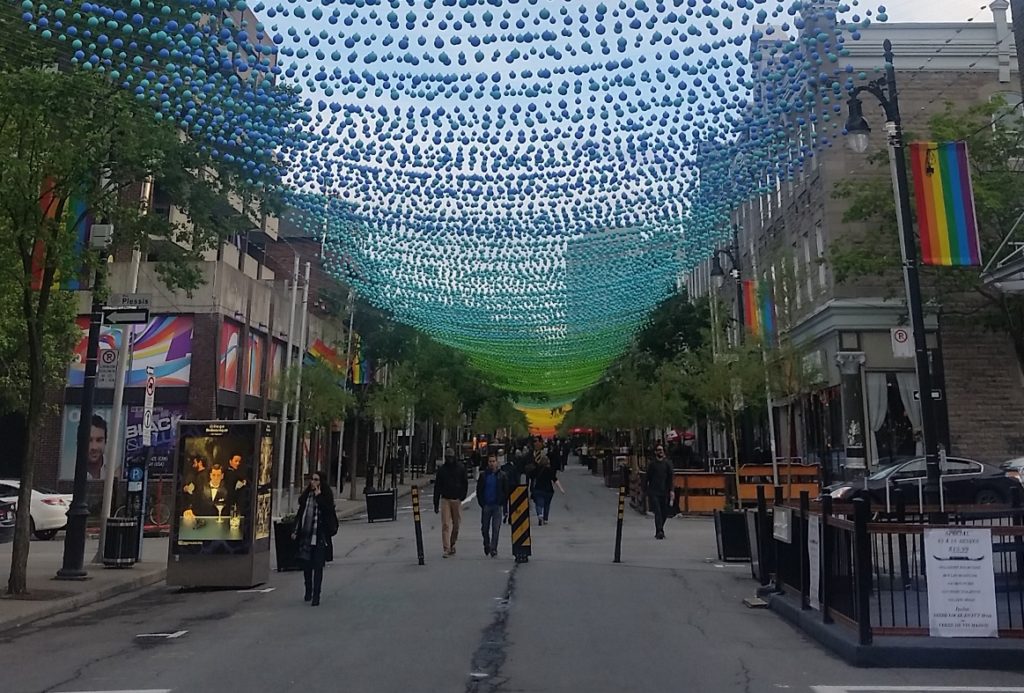
The other part that made Montreal easy to love was the incredible animation of public spaces: Parklets, road “closures”, street art, festivals, patios, the whole damn scene. We walked a few blocks on a Wednesday night and stumbled upon a swing dance event in a public park, beer being sold, people hanging out and dancing, with what appeared to be very little fuss.

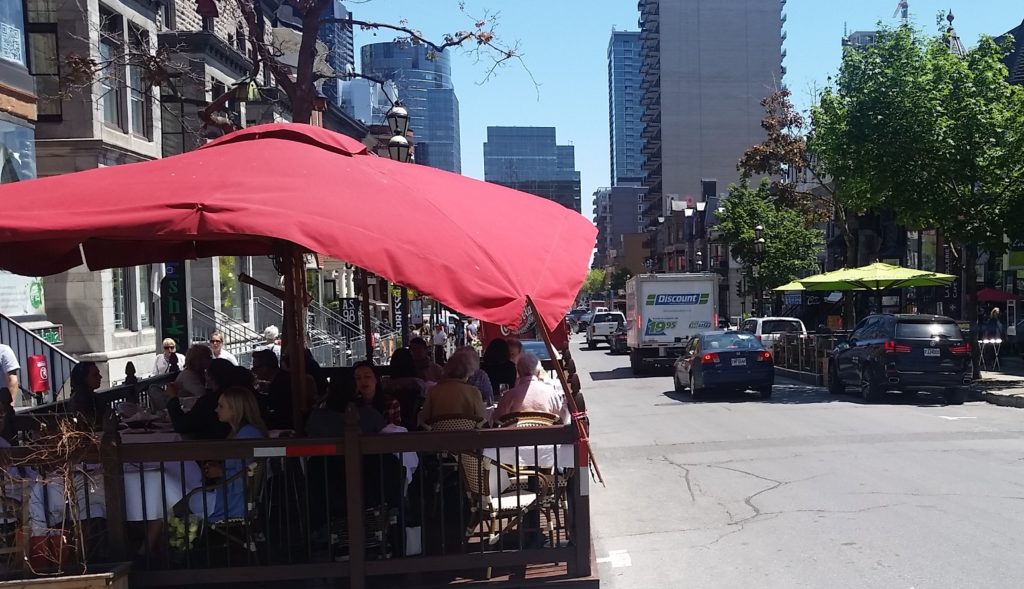
We soon discovered this was the rule, not the exception. For three days we travelled around on bikes finding streets closed and a stages set up, streets where traffic was being constrained by patio life, people playing or listening to music, stuff happening mid-week in May.

The streets of the Village, of the Plateau, of Mont Royal, of everywhere, were busy with retail and entertainment. Parklets, decks, restaurants, and a healthy-looking diversity of small street-level retail.

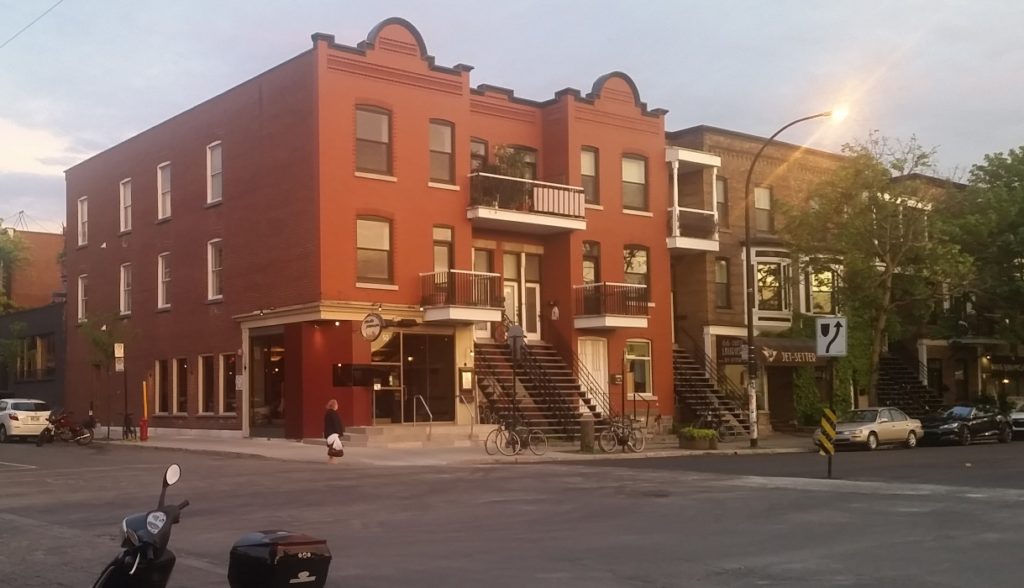
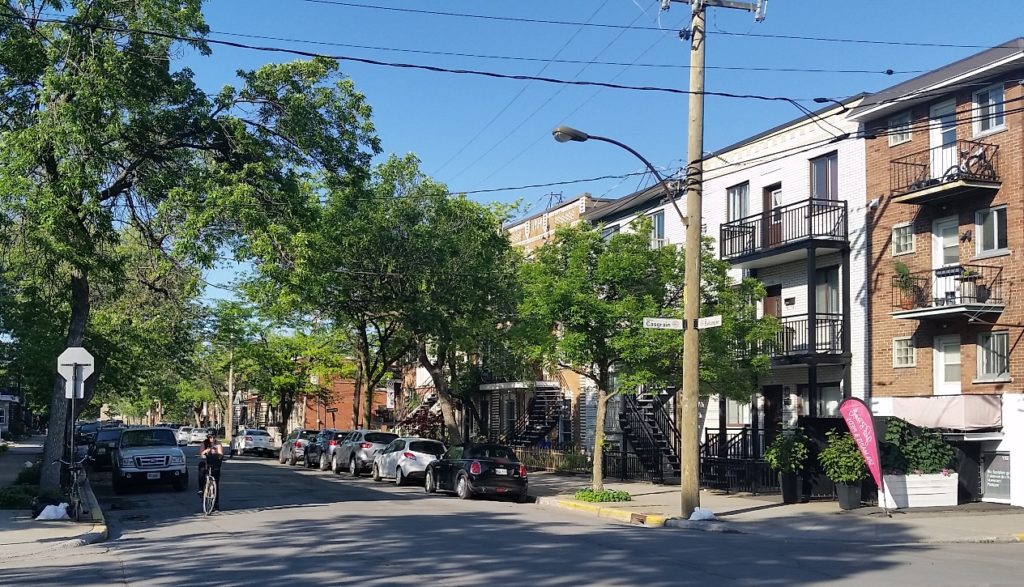
Travelling around on Bixi took us through the many residential neighbourhoods immediately adjacent to the main strips like St. Laurent, and I started to make the (obvious to my YIMBY friends) connection between the residential neighbourhoods and the street activity. and it comes down to this:

This type of 4- or 5-unit building, rental or condo, is ubiquitous in Montreal. There are many (and seemingly a growing number of) higher-rise condos in the centre of town, many areas on the fringes (a freeway-drive away from town) where relatively cheap single-family detached exist, but it is the medium-density, low-rise multi-unit apartment building that defines the livable neighbourhoods of Montreal.

I am sure there are other factors – cultural history, long winters, cosmopolitan population, laissez-faire laws, large student population – but I cannot help but connect this missing middle family-friendly density to the other features that make Montreal neighbourhoods so livable. The dependable dépanneur, the bike lanes, the lively streetfronts, the energy of the street: they all depend on a population density that supplies customers and neighbours, but doesn’t overwhelm space. This is the built form that so much of Greater Vancouver (including New Westminster) is scared of, even as our neighbourhoods struggle with being too expensive to live in, and too barren to support a vibrant community.

Seriously, we started to linger while walking past real estate offices to see what was on offer…

Trying stuff

I’m not writing much these days, mostly because I have been outside a lot. However, it is good to remind ourselves that summer days are getting shorter, and there is a lot going on New West right now. From Music on the River (which included finding new ways to program our public spaces) to our burgeoning Parklet and Public Art programs, the 7th Ave Greenway improvements and the New West Grand Prix – we have been receiving a lot of kudos for innovative new stuff in the City. We have also received some criticism for aspects of each of these, but my anecdotal evidence is that this has been the funnest summer in the New West in some time.

I can’t take credit for this, because it is almost all the result of creativity on part of our staff and efforts of many volunteers and other community members. However I am comfortable saying the volume of stuff going on is because Mayor and Council have opened to door to new things in a way that hasn’t happened often in the past. The feeling I get at Council is a willingness to try new things out before we dismiss them as unfeasible or risky or likely to create negative feedback.

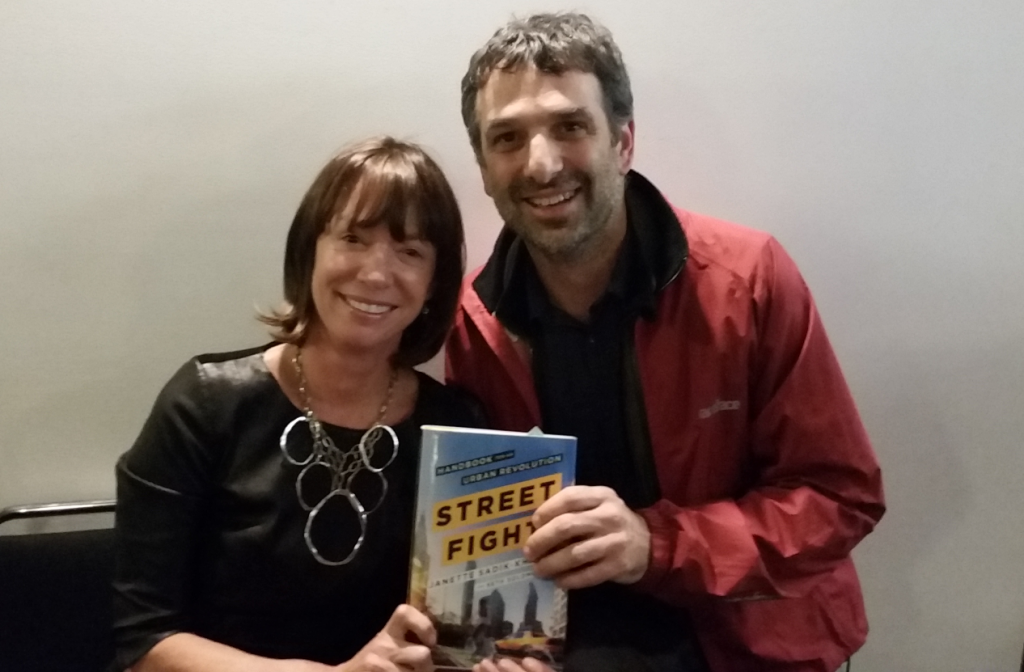
My Urbanist geek friends will recognize a bit of Janette Sadik-Kahn in that. The former New York City Transportation Commissioner oversaw significant transformation of public spaces in New York under Mayor Bloomberg (including challenging congestion in Times Square – one of the busiest urban intersections in the US – by closing it to traffic and turning it into public space). In a talk she gave in Vancouver last year she emphasized one thing that struck several of us in the audience. Paraphrased a year later, she said spend more of your consultation money trying things instead of talking about trying things. In the long run, your City will save money and have more good things.

Me, acting total Fan-Boy with JS-K. That’s her book, you should read it.

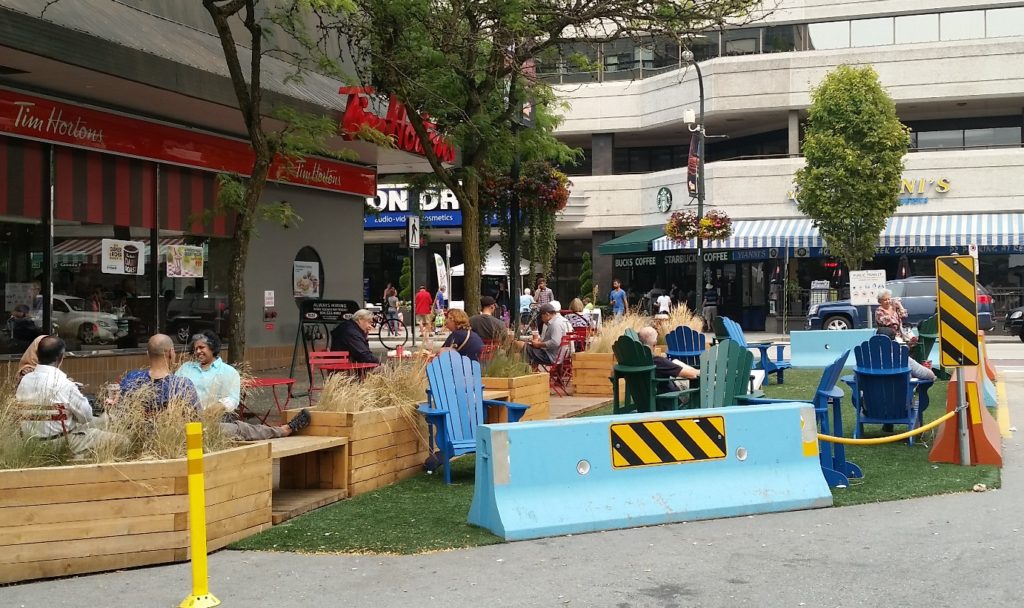
I’ve already mentioned a few places where the City has taken this approach. The Uptown Parklet is cheap: a few painted jersey barriers, some fake grass, some plastic chairs, it isn’t an opulent public space. After a few initial adjustments to how it is operated, it is a popular public space that we put in for about the same cost as it would have taken for a full public consultation with open houses and on-line surveys, etc. to determine if we could convert three parking spots into a public space. We learned a lot from it, arguably more than we would have learned from the open houses and surveys, and we apply that learning elsewhere, and not just in other Parklets around the City, but in how we open up public spaces in general.

If we try things, they might work!

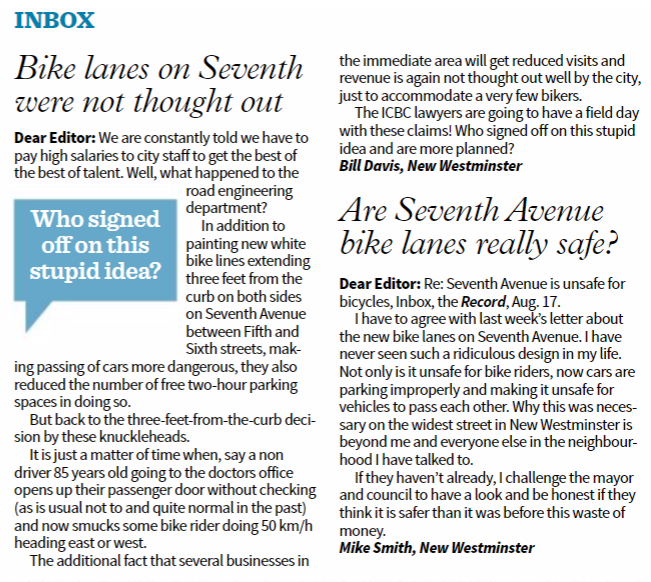
Another recent example is the new separated bike lanes on 7th Ave. You might not have noticed that we really did nothing here except put down paint. We did some local consultation with neighbours, and went through a discussion with the ACTBiPed and AAAC, as the design iterated a bit. What we didn’t do was install new pavement, put down extruded curbs, or install expensive planters and landscaping, or even do a lot of signage changes. Instead, we adopted modern engineering designs and installed them with paint to see how they work. This is not to say they are haphazardly installed – they meet the required engineering standards, based on similar designs in other places, and are demonstrably safer for most users than the old wide-road-with-sharrows design. I have already had some feedback on the lanes (both good and bad), and that is the purpose here. Those lanes, as the City’s first trial at turning car space into separate bike lanes, will give us more feedback on how the community will interact with the space than months with lines on drawings going to open houses will.

When the Q2Q bridge was put on the back burner for lack of funds, Mayor and Council decided to support a larger exploration of alternatives, including a ferry. I said at the time (and continue to feel) that a ferry is not a great alternative to a fixed link, for a bunch of reasons. However, if we make perfect the enemy of the good we will never get anywhere, so I was happy to support a pilot project to run a ferry. At least it could demonstrate if the connection would be appreciated by the residents and businesses of New West. In the spirit of Sadik-Kahn, it was a good idea to fast-track a trial, just to see what happens, and to learn what we don’t know about such a project.

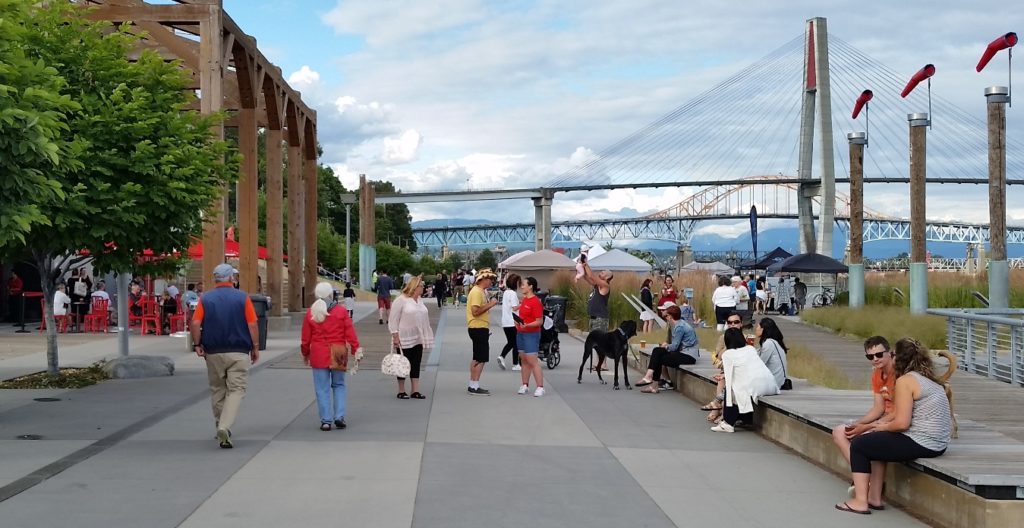
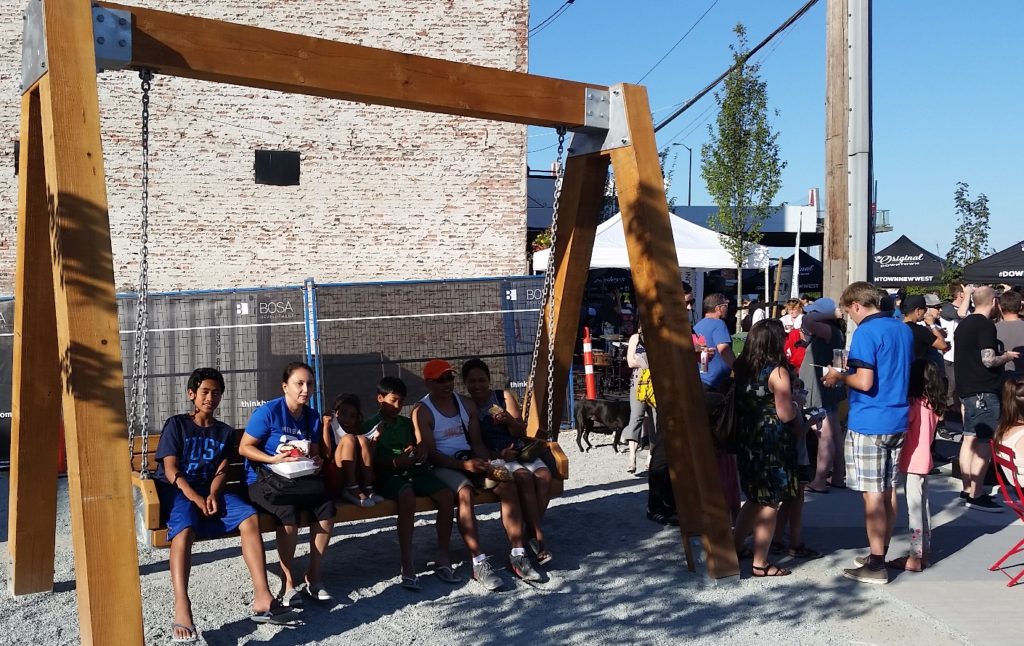
The Front Street Mews was a longer-term plan, but the adjacent temporary public space with the porch swing and benches resulted from the application from Bosa to build a presentation centre on the north half of the Copps site. Council gave staff some free reign to make the space more comfortable and programmable, and the Downtown BIA put together the Fridays on Front programming to fit. One of the examples of the success of this project is running into staff from other Cities who are coming out see what New West was able to pull off. 

There are a few weeks of summer left! Fridays on Front is on until August 25, New West Pride Week launches next week including the Street Party on August 19th, and our biggest annual Arts event, the New West Cultural Crawl is happening this weekend! While you are at it, try out the Q2Q Ferry and provide your feedback to the City here. Enjoy the summer, it’ll be curling season soon enough.

Ask Pat: Q2Q Ferry

I am a little behind on my Ask Pats, I apologize. there are a few in the queue, but work, life, and an amazing array of community events have kept me away from the computer keyboard. I’ll try to catch up.

BoatRidesAreFun asks—

Hi Pat,

Any updates on the Q2Q ferry that was supposed to open July 1? I haven’t seen anything happening at either of the docks.

The ferry has been a challenge. This is one of those times I am glad I am an Elected Type setting unreasonable expectations for staff, and not City Staff trying to meet the unreasonable expectations of the elected types!

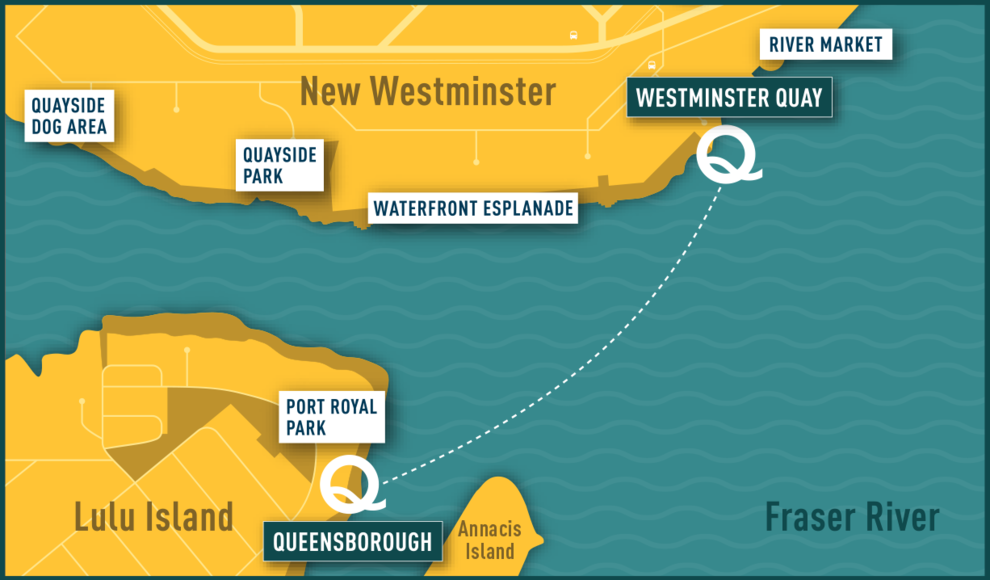
The good news is the the trial is ready to go, and will be starting this weekend. The Ferry will run on weekends and holiday Mondays in August and September from 9:00am to 7:00pm, and from 5:00pm to 9:00pm every Friday in August. It will run every 20 minutes, and will cost a Loonie or a Twoonie. The route will be from the Quay (near the Inn) to the public dock on the south side of Port Royal. The bad news is that the limitations of the project as a “pilot” will mean it falls short of some expectations, and that could benefit from some background explanation, so I am glad you asked.

Running a passenger ferry turns out to be a much more complicated process than you may think. You need a boat and operator, you need (at least) two places for it to dock, and you need permission from several different agencies responsible for keeping people from drowning as a result of poor planning.

The first issue was surprisingly hard to solve. The Fraser River is a dynamic, working waterway. There are tides reaching 9 feet in range, and tidal and river currents that flow in different directions up to 10 knots. These currents shift lots of hazardous debris like large logs. There are also tugs, barges, and large ships moving around the river. The little tubs used to shuffle tourists around the relatively safe tidewater of False Creek were not going to work on the Fraser. Something more skookum (to use the nautical term) was required. The more requirements the City put on a boat (number of passengers, weather protection, accessibility, room for bicycles, operating cost), the more limited the number of available boats just sitting round BC waiting for hire.

Then we need two places to dock the boat. Installing a new dock facility in tidewater in Canada is not a simple process, as it activates everyone from the local Port Authority to the Marine Carriers and environmental agencies including the Department of Fisheries and Oceans. For a short-term trial, the City really needed to find already-existing docks.

Ferry_Map(1)

The public dock at Port Royal was there and available, but designed for small pleasure craft, not to accommodate a passenger ferry. Significant changes would intrude into water lots owned by Port Metro Vancouver, who were helpful and accommodating, but had their own safety and operational concerns that had to be addressed. On the Quay side, the only functional docks are operated by the Inn at the Quay (where the paddlewheeler tours launch from) and the industrial dock operated my Smit. Again, both had challenges with accommodating their established operations with a new every-20-minutes group of passengers, many of whom are not that accustomed to walking around industrial marine operations, and who will create no end of hassles if they fall into the drink and get dragged downstream. Again, a deal was worked out and operational concerns managed.

At this point, City Staff need to be acknowledged for managing a significant number of potential game-stoppers here, but in the compromises required to make this work are the inherent flaws in the final plan. During this summer, we are going to have the trial ferry service that was possible, not necessarily the one we want.

When I think about connecting the Quay to Queensborough, I am not thinking of it as a tourist draw or a piece of recreation programming, I am thinking of it as a vital transportation link. To be such a link, it need to be reliable, available for daily users, and fully accessible. The trial ferry is going to fall short of this. The high tide range and reliance on existing dock infrastructure means it will not be fully accessible to those with some mobility challenges at all tide stages. Running the ferry only on weekends with limited hours means it will not be useful for work commuters wanting to get from Port Royal to Downtown or Skytrain. The limited hours will further cause people crossing the river for diner and a drink to look closely at their watches while waiting for the bill to arrive. The City recognizes these limitations, but also recognizes the value of getting this project running to see how the public reacts.

In the end, I hope people will appreciate this is a test-of-concept trial, and not the ultimate solution to connecting Queensborough to the Quay. Its successes may be limited, but there has already been a lot learned by the City just in setting up the service, and there will be much learned during its limited run, both in it’s success and where it falls short of expectations. I hope that people on both sides of the North Arm will come out to support this pilot, and provide your constructive feedback to the City, so that we have useful info to inform planning for a more permanent solution.

…on the Stairway

“A Stairway to Nowhere”. Literally the second paragraph of the story undermines the headline, but Global never lets a good lede go to waste, reality be damned.

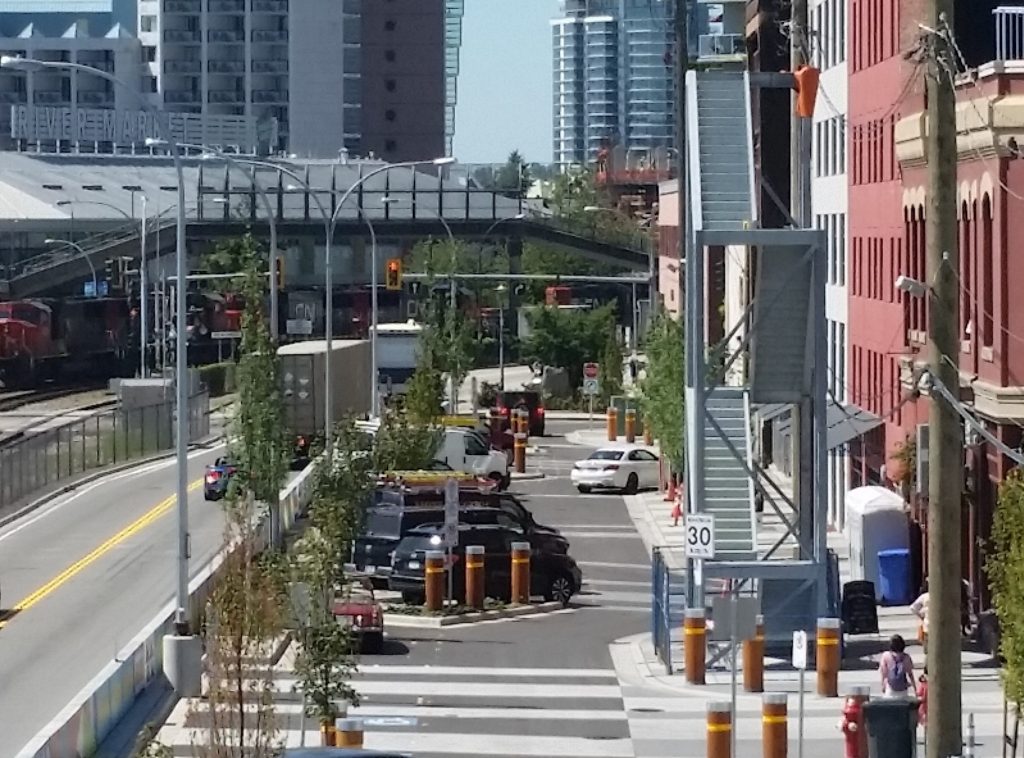
The alleged “Stairway to Nowhere” is a fire exit, required by the building code because the ~100-year-old heritage buildings adjacent do not have internal staircases to facilitate fire egress in the event a fire or other emergency blocks the front entrance. The connections between the staircase and the building have not been completed yet, because the ~100-year-old heritage electrical connections to the ~100-year-old heritage buildings are going to be moved to make the Front Street Mews look and work better, and life will be better for everyone if the lines are moved before the fire escape connections are made.

The fire escape needed to be built because the Parkade was removed. The ~100-year-old heritage building used to have gangways that connected to the Parkade to facilitate fire egress. Those were part of the “railings, lights, stairs, wheelguards, and other ‘jewellery’ [that were] past their service life and [fell] far short of modern safety codes” that I talk about in that blog post from 2015. Until the new connections are made, there is a lighter-duty and even more temporary fire escape on Columbia Street which is (arguably) as intrusive as this one. The owner of the ~100-year-old heritage building, naturally, has some say in how these connections are made, and is apparently quite satisfied with the stairway on Front Street.

20170725_120448

The cost of installing this stairway or otherwise providing alternate egress for the ~100-year-old heritage building is not an unexpected expense, but part of the (budgeted) $11 Million cost of the Parkade half-repair, Parkade half-removal, Front Street re-engineering and general gussying-up project that was approved by Council a couple of years ago. At last report, this project is still on budget, although its finish was delayed for a bunch of reasons that were reasonably unanticipated. There were some changes to the design over the couple of years since first proposed, not the least being that all of the electrical services were undergrounded, which is a significant improvement to the aesthetic of the Mews, and will make the pedestrian realm more friendly.

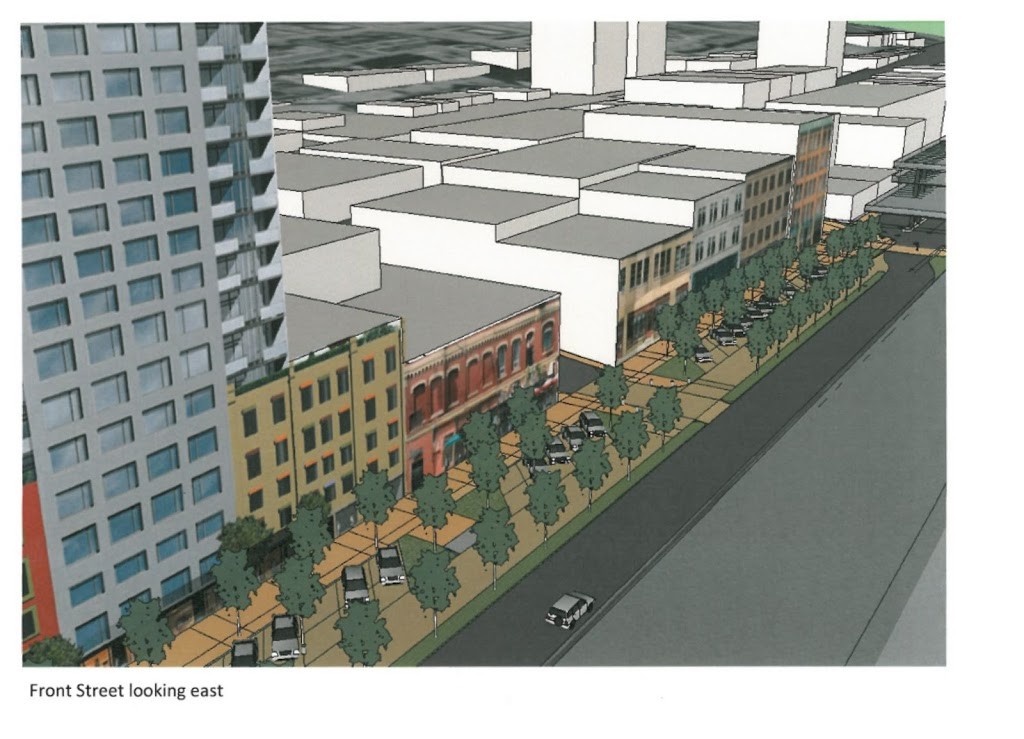
All of this doesn’t mean I am happy with the staircase (**insert part where I say this is my opinion, not official position of the City, Council, or anyone else**). I was actually pretty (excuse me, Mom) pissed off when I first looked at this temporary solution for the fire escape and it was explained to me that “temporary” meant “for the foreseeable future”. Looking back at the many renderings for the Front Street Mews used for public consultation over the years, the stairs were never depicted, and to me the structure is oversized, obtrusive, and at odds with what vision we are trying to create on the Mews. With our Open Space planning staff doing so much good work to make Front Street a comfortable, human-scaled, and functional space, this looks like something designed by (I’m sorry) an engineer.

vision-2My first reaction was to think that a fire escape, by its very nature, would be used by a half-dozen people only once, if at all. This structure looks like it was engineered to facilitate the boarding of troops onto naval vessels. However, I am told that modern fire access standards for commercial buildings expect that well-equipped firefighters will use the stairs, and carry large things up and down them with some significant urgency. The stairs are also expected to remain standing after a seismic event that no ~100-year-old heritage building was built to sustain. So it is bigger, stronger, and with a much more substantial foundation than the stairs going (for example) up to the back deck in my house. It is also a modular design that can be picked up and moved, as it was recognized at the time as a “temporary” structure, which can be utilized elsewhere if ever major renovations to the ~100-year-old heritage building make the stairway’s presence on Front Street no longer necessary. Put these factors together, and the design, fabrication and installation costs are more than my aforementioned deck stairs.
Other options were explored by staff and the owner of the building. Maintaining access above Columbia Street was suboptimal, building an access on the McKenzie Street side simply didn’t work with the internal layout of the ~100-year-old heritage building. No-one was excited about the potential engineering challenges of hanging something that met modern standards off the side of a ~100-year-old heritage building. So in the end, they are ugly and look overbuilt, but represent the best of several bad options given the circumstances. I don’t like the way the stairway looks, but have no viable alternatives to offer.

Nor, I note, do the armchair engineers or outrage-mongers at Global.

Ottawa as a City

As I previously wrote, I attended FCM this year, which was held in Ottawa. I had not been to the Nation’s Capital for something like 25 years, so after the meeting, I stayed a few extra days to visit some family and look around the City, concentrating on the holy trinity of nouveau city-making: public spaces, transit, and cycling infrastructure.

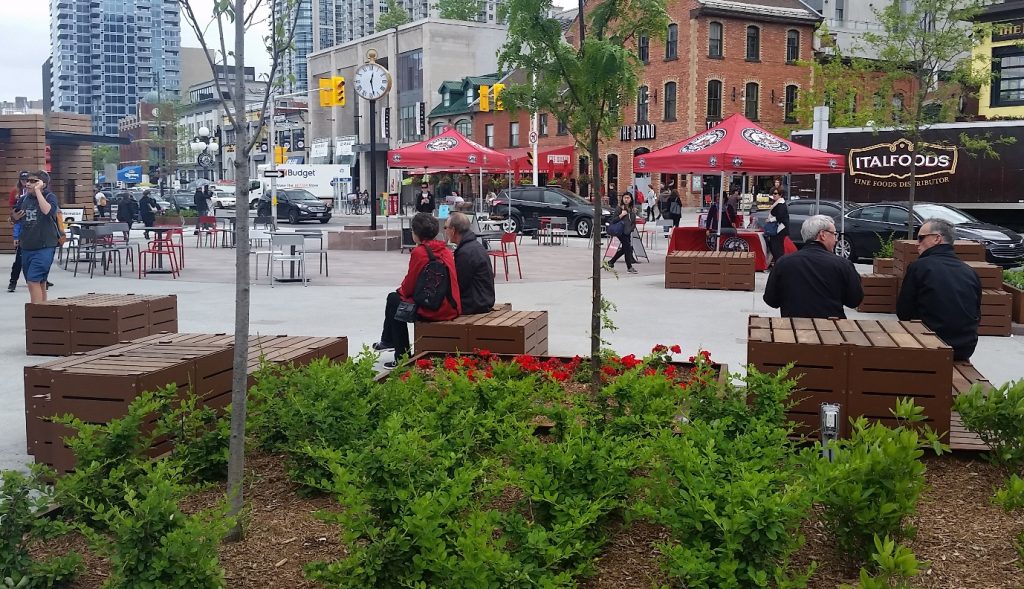
Ottawa has numerous amazing public spaces. Everywhere we went, there were public parks, squares, and market areas. At first blush, it appears to be a model for use of public space. Problem is, it seemed these were mostly serving tourists. Perhaps it is a result of me being a tourist (and my resultant gravitating towards “tourist areas”) I found a general lack of outdoor activity and “street life” compared to Vancouver or other large cities in Canada. Ottawa seems to be City where folks pack up after work and go home, leaving some surprisingly empty public spaces on a warm summerish evening.

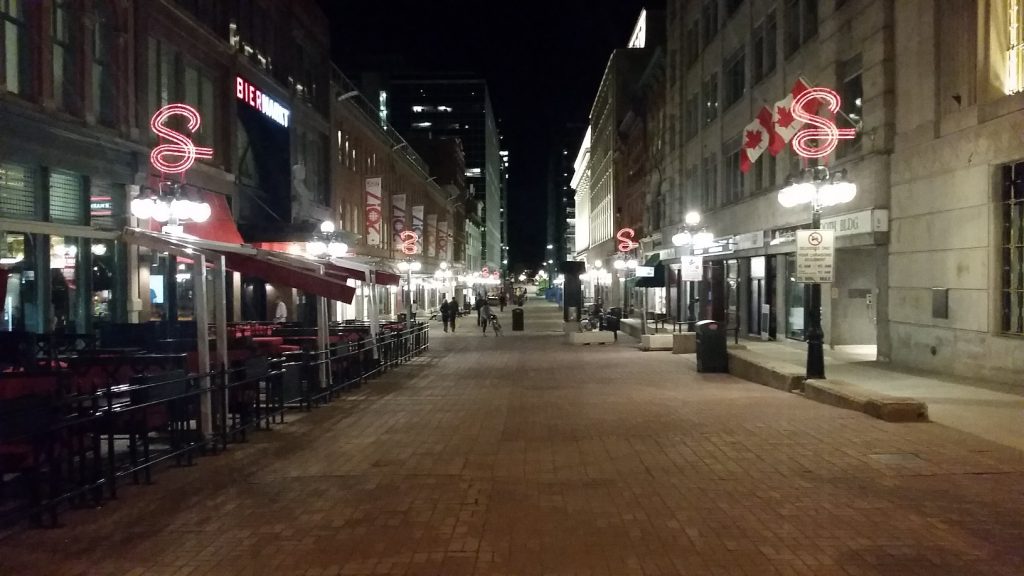
The most active street in downtown Ottawa at 10:00 on a Thursday  night.
The most active street in downtown Ottawa at 10:00 on a Thursday night.
The Market area has some nice Public Spaces,, though mostly for tourists, not denizens.
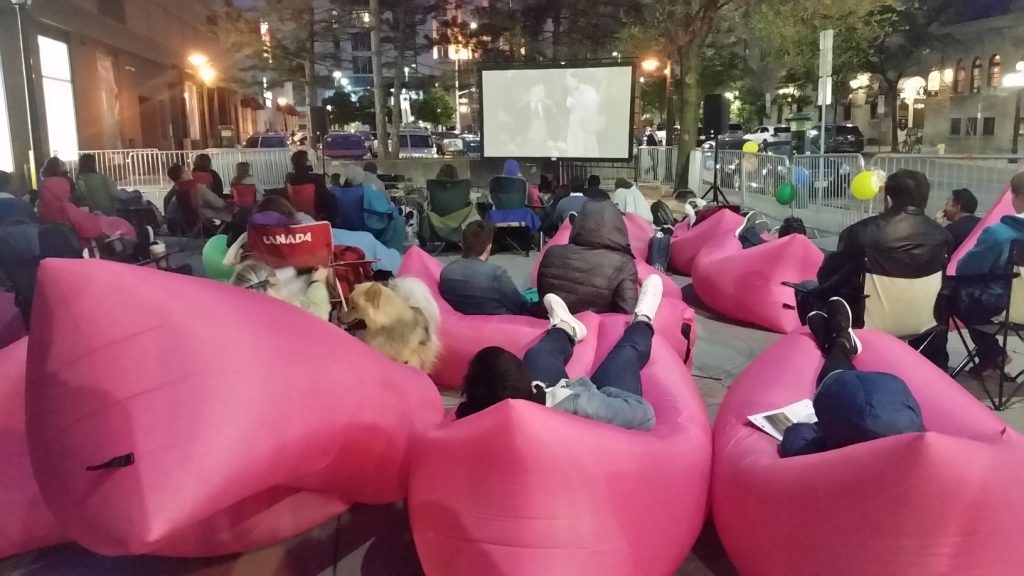
A cool use of public space in the Market area on a Friday night- Movies on the Street!

Of course, Ottawa is a lot of things: a political town where many of the workers get out of town on the weekends, a tourist town full of museums and important institutions, and a town where business gets done on a government schedule. Comparatively, the high-tech worker town is a new phenomena, so it still relies on expanding suburbs and exburbs, and shares a workforce with Hull / Gatenau (but has virtually no transit service across the river). When I arrived it was midnight, and I hopped on the bus to the hotel and arrived late in the evening to find downtown not just empty, but Zombie Apocalypse abandonment empty. It was eerie. There is virtually no mixed-use development downtown, but not too far away are leafy neighbourhoods of real mixed density, from single family homes to quadraplexes and townhomes. There were some interesting developments happening, and Sparks Street was trying really hard to be somewhere, but no matter where we went, it never felt like a vibrant City.

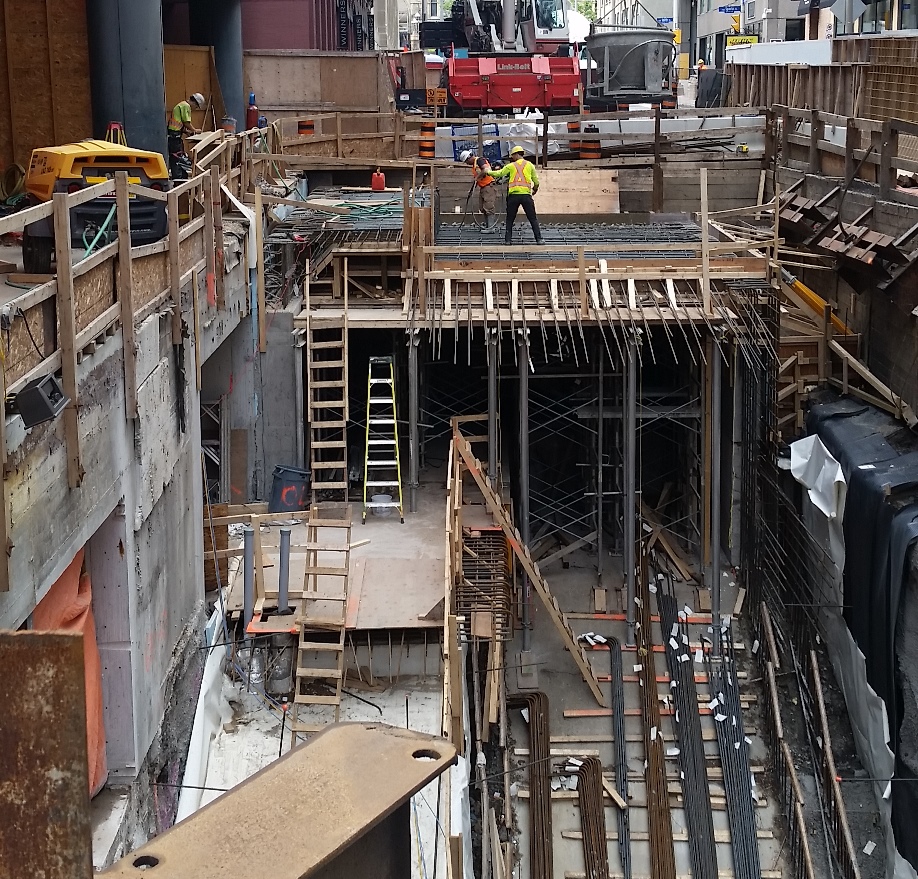
Much of downtown was being dug up to install new subway lines.

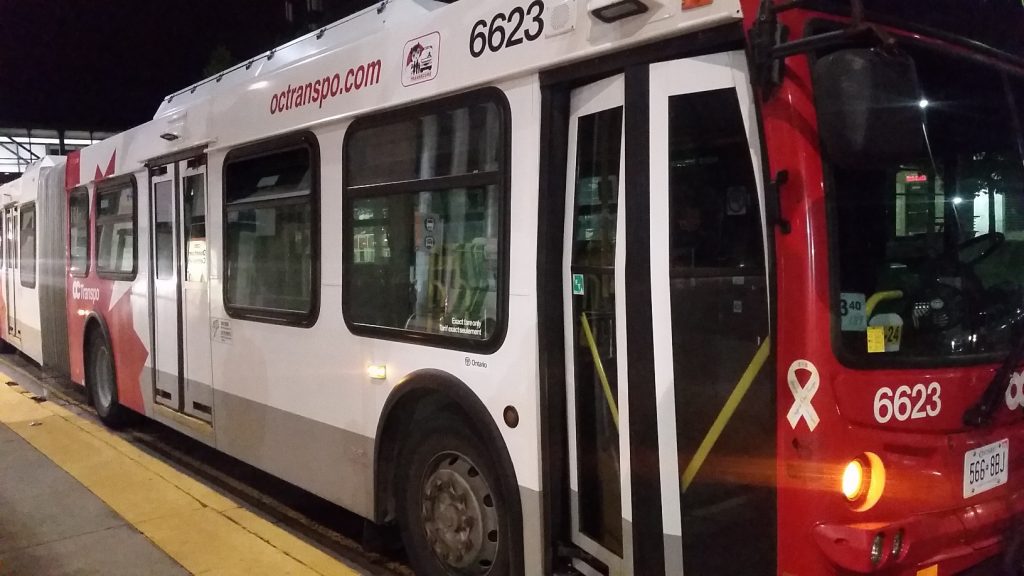
That said, much of downtown Ottawa is under construction, as a light rail system is being constructed to replace some of the dedicated “Transitway” routes, the “Bus Rapid Transit” system that has connected Ottawa to the burbs since the 80’s. This system is a model for what some other metro regions have considered as a “stopgap” between buses and light rail systems. It is fundamental to the transit in Mexico City, Bogota, and other cities, and some have even suggested this as the best way to get transit up the Fraser Valley along the Highway 1 route. As a people-mover, it worked great. However, it was notable that the limited stations didn’t appear to spawn development booms like we would expect to grow at a “real” rapid transit station that connects to downtown of a major City. Still, for $3.50 from the airport, dedicated road to avoid traffic congestion and super frequent service, the Transitway couldn’t be beat – maybe 75% of the service of SkyTrain at probably 25% of the cost.

Airport to downtown in less than 30 minutes for $3.50. and little traffic delay. Nice.

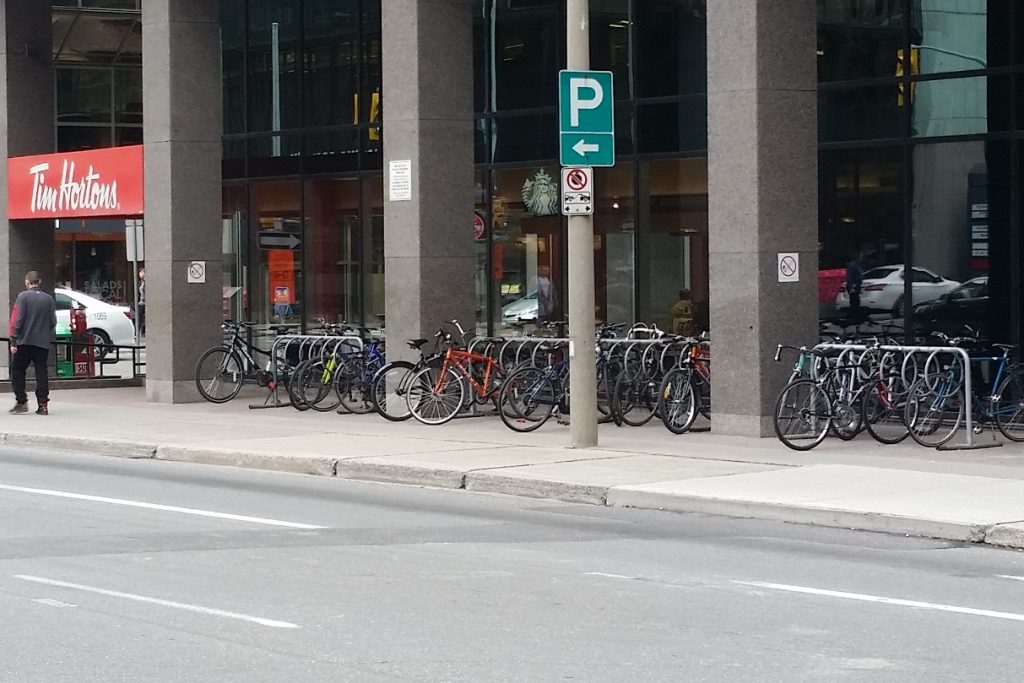
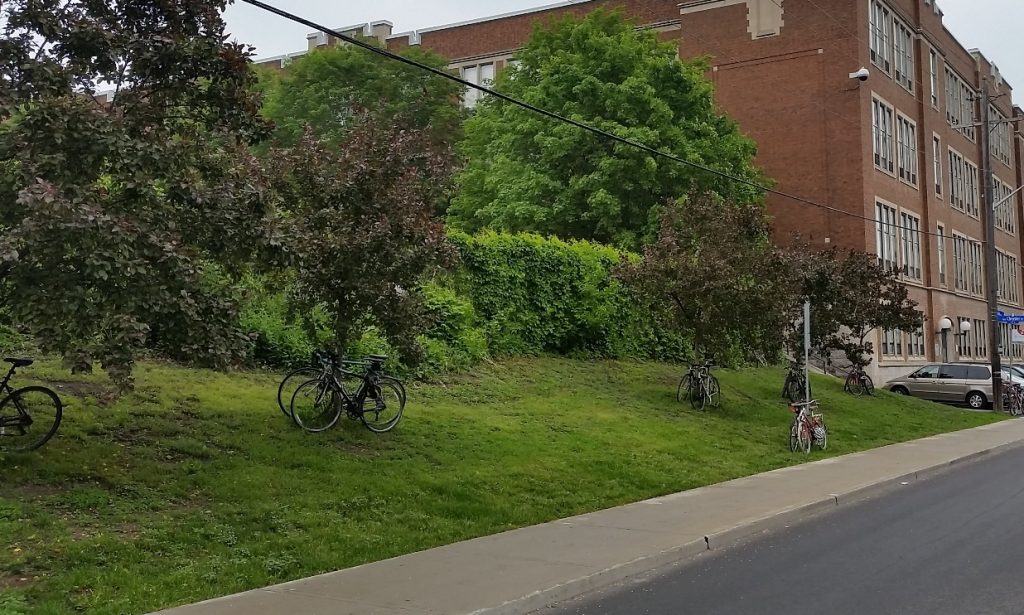
We also discovered that Ottawa (at least in the summer) is definitely a cycling city. There are bike racks throughout downtown, and they were full of bikes on business days. There is a comprehensive bike route network along the numerous waterways and canals that run through the City, and decent bike infrastructure in the more trafficked areas, though the map is not completely without gaps or terrible design choices.

Downtown had lots of bike racks, and they were all bulging with bikes.
Away from downtown, not as many bike racks, but bikes were still parked everywhere.
Although the bike routes along the Canal s were great, and a few separated routes existed in downtown, there were still some notable infrastructure gaps...
Although the bike routes along the Canal s were great, and a few separated routes existed in downtown, there were still some notable infrastructure gaps.

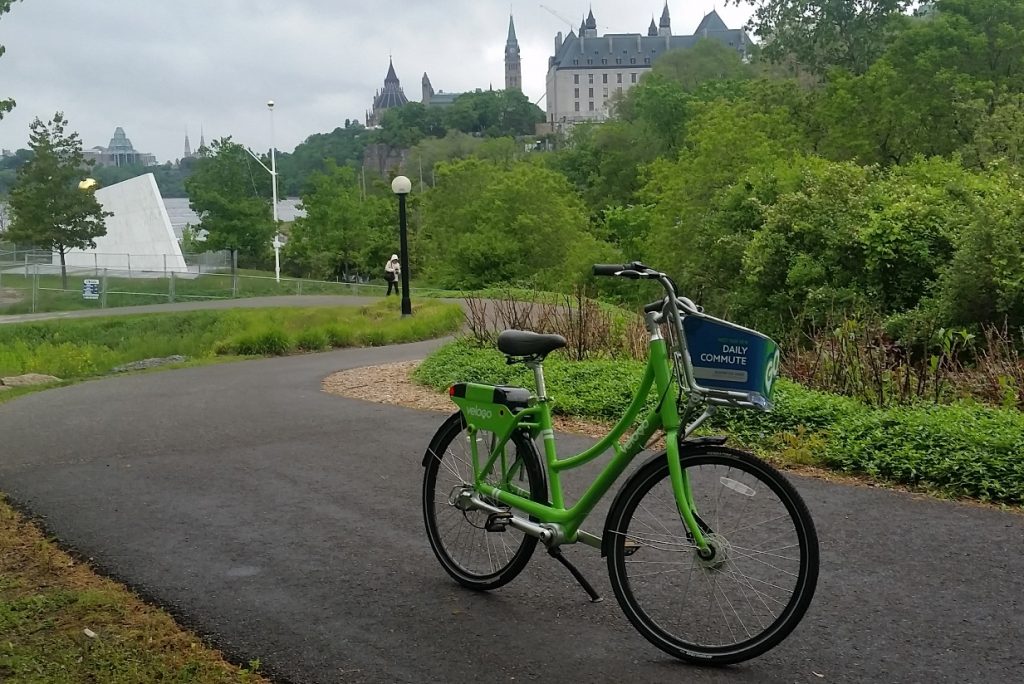
I took a couple of opportunities to use Ottawa’s bikeshare program, VeloGo. The system is very similar to Portland’s, in that the network and booking electronics are installed in the bike, and the bike’s location is tracked using GPS, allowing you to drop bikes everywhere, not just at the “stations”, although it is less expensive to drop them at the station, and it is generally hard to find one to pick up anywhere but at a station. The system is easy to use, and the durable, shaft-drive upright bikes worked great.

A quick spin between conference/lunch venues is where bike share shines.
The bike share bikes were typically Euro (upright and durable), but not sure I've ever seen a shaft-drive bike used this way before!
The bike share bikes were typically Euro (upright and durable), but not sure I’ve ever seen a shaft-drive bike used this way before!

Unfortunately, the station network and number of bikes is pretty limited, and concentrated along the aforementioned canal routes with no stations in the downtown, so the system was (are we sensing a theme here?) more useful for tourists than for the residents of the City. It was simply not a viable alternative for short cross-town trips, like my daily 15-minute walk to the conference centre, or for the 20-minute walk to the Museum of Canadian History where a reception was held. This was disappointing, because it was trip like that that are perfect for bike share, and will make the system a sustainable part of the transportation network instead of just a tourist curiosity. Compared to New York or Montreal, the system seems like a half-assed effort.

In short, Ottawa was a great City to visit, for the obvious reason: there is so much to see and so much history. Riding a bike along the Canal and through the ample green spaces was pleasant, but it curiously lacked the feeling of a vibrant City where residents enjoyed public space. It felt like too many US cities where the downtown is for business, and the burbs are where people live their lives. Which was in contrast with out next destination: Montreal.

Pattullo EA

With all of the excitement around elections, renewed commitments to transit funding somewhat confounded by unclear priorities around the application of road tolling, it is easy to forget the Pattullo Bridge is falling down and scheduled to be replaced very soon. At this point, it is unclear how the replacement will be funded, but it is clear right now that the existing structure is unlikely to be carrying traffic in 2023, so unless they get busy planning the replacement, we will be entering uncharted territory.

Translink is continuing to get busy with that planning, and is currently involved in the Environmental Assessment (“EA”) process. I write about this now, because you have until the middle of next week to provide your first round of input to that process.

The need for an EA is mandated by the province, and the EA itself is run by the Environmental Assessment Office, not by Translink. It is a fairly tightly regulated process, with a structure and firm timelines, so if you at all care about the Pattullo (and I think most people in New West fall under this category), you might want to take your chance to comment while they are open. I thought I might outline the process a bit here, not to tell you what to comment on, but to help you understand the process so your comments have the best chance of being heard.

The first stage of any EA is the pre-application stage when the terms of the EA are determined. The primary purpose of this stage is to evaluate what impacts (positive or negative) will be created by the project, and what are the potential targets of these impacts – so “sediment in the river” is a potential impact of construction work, and “fisheries habitat” is a potential recipient of that impact. The second stage is the actual “Assessment”, where these potential impacts are assessed to determine if they are real, and then to make adequate mitigation of these impacts a condition on moving forward with the project. To have a project (any project, be it a bridge, a mine, or a pipeline) refused an EA certificate would be very unusual. The more likely process for an EA to kill a project would be to create conditions that make the cost or hassle of mitigating an impact so high that the proponent will decide not to proceed. I don’t think that will be the case here.

By necessity, an EA has to have a project to review. So the proponent has to provide a project description to hang the assessment on. It appears, from the preliminary documentation provided by TransLink to the EAO, that project is “a new four-lane bridge funded primarily by user pricing” and “located north and upstream of the existing bridge, its approaches will connect to McBride Boulevard in New Westminster and the King George Boulevard in Surrey” , which is consistent with the public consultation work TransLink has done to date and with the MOU between TransLink, Surrey, and New Westminster. This is important to recognize, because comments like “they need to build 8 lanes for future capacity” or “they should build the bridge in a different location” are not relevant to the EA. Those arguments were made, and discussions had, over the last 5 years while the project was being developed, they are not the current plan, and the EA is not the process through which a radical change of plan will come about. In essence, the question in the EA is not “how best to connect Surrey to New West by roads”, it is “what impact will this 4-lane bridge proximal to the existing one have”. Comments addressing the first question are interesting, but not relevant to this process.

So the comments the EA needs right now are pretty limited, but foundational to the EA to come. Have TransLink and the EAO appropriately identified potential impacts? How do you think the proposed project will impact your life, the livability of your neighbourhood? What concerns you about the project as proposed? If you want TransLink (or other parties, such as the Ministry of Environment) to address something as part of this project, now is the time to ask, so it can get into the EA early, and the proponent has an opportunity to properly address it.

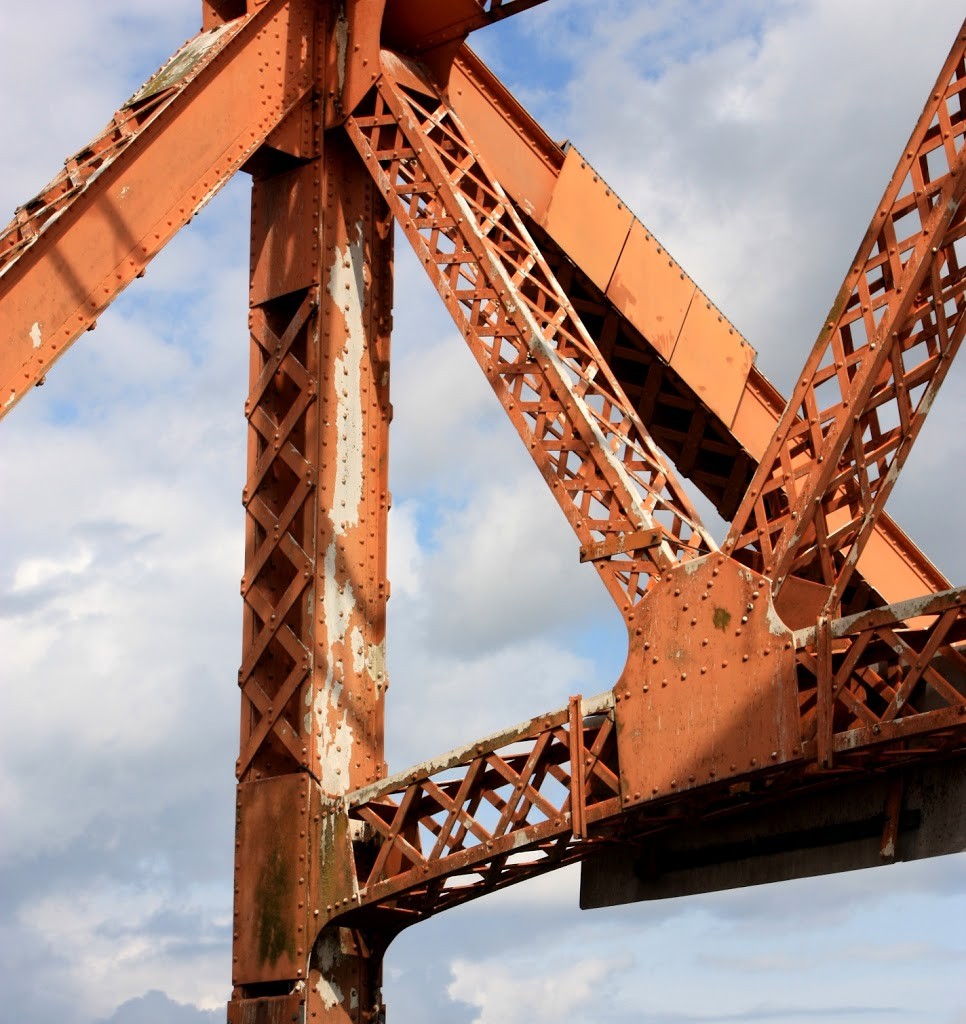
Picking a random example, I have talked in the past about how the Pattullo is an iconic structure. It has significant heritage value for the City of New Westminster. It is hard to finds a picture or photo of the City over the last 75 years that doesn’t feature the large orange arch defining the skyline. There is a value to that for our community. I don’t know how the EAO or TransLink can address that value, or what kind of mitigation can happen, but if we don’t raise that as an issue important to our community now, it will not get into the EA review, and an opportunity to discuss that aspect of the design of the bridge will be lost.

There is another issue that I hope will become clearer as the project EA proceeds, and this might be a bit wonkish. How valid are the traffic modelling assumptions baked into the assessment?

Transportation Planners and City Planners understand that traffic is impacted by induced demand. If we build a 4-lane bridge to replace an existing 4-lane bridge, there will be no more than a marginal increase in traffic counts (perhaps induced by a wider, safer, bridge configuration). That small increase in traffic is fundamental to a bunch of other impacts that will be measured – air quality impacts, noise and vibration, economic impacts, etc. However, if the traffic numbers coming out of this model are based on false assumptions about traffic, then all of the resultant data will be similarly flawed, and mitigation will not be appropriate. With all due respect to our regional transportation planners, the last two major bridges built in this region have completely failed to reach modelled traffic volumes – let’s not three-peat that mistake here.

So if this bridge is being built to accommodate future expansion to 6 lanes, how does that increase in traffic capacity (and concomitant induced demand) change those impacts, and (more importantly at this stage) is that being assessed as part of this project?

Then we have to raise the uncomfortable subject of tolls. The MOU and Project Definition both call for a tolled bridge, and the recent election seemed to indicate the province is now cold on the idea of bridge tolls. There is some time (this bridge will not be built until 2022 at the most ambitious rate) for the region’s Mayors to work up a regional road pricing scheme as envisioned in the 10-year plan, but that is something different than specific tolls on this bridge. As we have learned from recent experience, tolls significantly decrease demand for bridge infrastructure, so if this EA is based on traffic models based on toll aversion behavior of drivers, is that base assumption still valid? This is the type of thing we need clarity on right now.

Finally, there is an area of the EA where the cumulative impacts of multiple concurrent projects can enter into the assessment. The idea here is that one project may have a small, but acceptable impact on a valued part of the environment, but 10 similar projects on the same river will have a bigger impact. However, this is a transportation project, so cumulative impacts may be thought of in a different light. What impact will the (potential) cancelling of the Massey Bridge have on regional transportation (and the resultant traffic modelling?). Perhaps more important, what impact will SkyTrain/Light Rail in Surrey have on regional transportation patterns, and the assumptions feeding the transportation plan?

So that is long way of saying, if you care about the Pattullo Bridge and the impact its replacement will have on New Westminster, do a bit of reading here, and take the time to provide some comments to the EAO before the end of business on July 26. Then hold tight and wait until early 2018 when the full EA process starts.

paint

The Grand Prix

The New West Grand Prix happened last week. Our City joined Vancouver, White Rock, Delta, Port Coquitlam, and Burnaby in hosting a BC Superweek professional bike race. And what a show it was. You can read the good news stories here, here, and (especially) here. But this is my Blog, so I’m going to take my time to (space?) to thank the many people who need to be thanked for making this project work. At least, I will try to thank as many of them as I can think of. An event like this is a partnership between many groups, and I’m going to risk missing a few important people here…

1

First and foremost, we had an army of volunteers making this happen, some who gave a few hours on the day, some who spent month ahead of time putting vital pieces in place. Community member Ron Cann provided great leadership and savvy guidance as the Chair of our organizing committee, Diane Perry organized the kids’ races and events, Bill DeGroot shook the bushes of the community for volunteers, and he and Jennifer Wolowic made sure the volunteer efforts were as organized as could be. Jennifer was also a star on Race Day, bringing her knowledge of high-level cycle racing to do any of a thousand small tasks that needed to be done. Mario Bartel helped put the Grand Prix on the social- and traditional-media map, and did what he does best by capturing stories through his camera lens. Ross “Mr. Jen” Arbo helped find a bunch of places for visiting racers to billet here in New West. This was the command structure of a volunteer army.

Add to this core group more than 100 volunteers who did everything from set up and tear down fences to standing at crosswalks for hours keeping people safe and many other tasks you didn’t even see being done. Here is where the greater New West community stepped up. We had teams from the local HUB Cycling chapter, The Queens Park Running Club, and from the Fraser River Fuggitivi road riding group. We had corporate teams, Youth Ambassadors, and a team from Last Door who were particularly adept at large-fence-panel moving, and scores f individuals who just wanted to help out. I don’t know where Bill found all of these people, but the first time I felt confident about this event working was the day of the Volunteer Dinner, a week before the event, when more than 100 people showed up eager to help make race day work. Thank you to everyone!

I want to thank some City staff who really stood up, but I don’t want to name them (I am, in some weird sense, their employer, and privacy rights and all…) I think they know who they are, and I’ve tried to thank them personally. An event like this pushes them past what is normally “just their job” and takes a passion and effort that is out of scale with their everyday, and so much of this work occurs of the side of the desk along with their everyday busy schedules. Council put a little extra stress on our staff because we (frankly) started a little late on this project. This meant we had to rush some parts of the program, it also meant we weren’t able to do a few of the things that would have made the program bigger or more exciting (many learnings in the can for next year!). However, staff coordinated with the volunteers and those running the bigger BC Superweek program and answered a thousand phone calls and e-mails about every aspect of the event, then showed up on event day to do a thousand tasks, big and small. Kudos all around.

This event relies on sponsors to pay a huge portion of the bills. Again, we were a little late to get started in 2017, but it is incredible how many sponsors stepped up to contribute. Bosa Developments, Domus Homes, I4 Property Group, and Skyllen Pacific were all major partners with the City on this community-building adventure. Strongside Conditioning and Billard Architecture were two local businesses that had their front door access impacted by the event, but turned that into a reason to get involved as major sponsors.

Of course Gordon from Cap’s Original Bike Shop got involved, providing prizes for the kids race, a great draw prize for the volunteers, and the professional “pit services” for the race. Boston Pizza made sure VIPs and volunteers got fed, S&O partnered to keep folks otherwise refreshed, and the Record and Global BC helped get the word out. Champion Systems, Gateway Casinos and Alpine Credits also pitched in, and Old Crow Coffee hosted our volunteer corral. Next time you visit one of these sponsors, thank them for taking part and helping to bring this event to New West. We really couldn’t do it without them, and they are making your City more fun to live in.

Similarly, we got a lot of support from downtown New Westminster. Both the Downtown BIA and Tourism New West came on board with support, but the merchants and residents of downtown also made adjustments to their day to allow us to have one of the large road closures in recent New West history. Can’t have a road bike race without a road.

Finally*, the fans and racers. The show was great, a kicking of butt by the Woman’s winner, and a late break almost caught by the sprint in the Men’s race… there were no spills but many thrills, and a marriage proposal to cap it off. The crowd was above expectations for our first year, and seemed really enthused by the event. It was a good evening. So whether you volunteered, sponsored, raced, spectated, were inconvenienced by the traffic, or just wandered by and asked “What tha heck?”, then decided to watch for a bit – thanks! I love when this town shows up!

*postscript: Thanks to Councillor Trentadue for invoking Rule #5 at the best possible time. You were right.

Council – July 10, 2017

The final Council meeting before the summer break occurred on July 10. We don’t meet again until the end of August, which is a bit of a relief as there is so much going on in New West this summer, it will be nice to be able to enjoy my annual summer stay-cation. But first, the work. Our Agenda started with a presentation on progress on a big development project:

Sapperton Green (97 Braid Street): Master Plan Update
Sapperton Green is a big project. A 38-acre site sitting right on a Skytrain Station adjacent to Highway 1. The Official Community Plan for the property includes 3,700 homes for something like 7,500 residents, 150,000sq.ft. of retail commercial space, and up to 1,500,000sq.ft. of office commercial space. There will be a mix of building types, including about a dozen towers up to 35 stories.

A project this size (the first of this scale since Victoria Hill) takes a lot of planning and development work. The Official Community Plan Amendment, adopted in 2015, was the first high-level step, where the numbers above around square feet and land use types were determined. The next step is to perform a Master Planning process, which is where the project is now. This is the step where big decisions are made about the layout of the site, where buildings will be and where greenspace will be, what type of community amenity will be provided, and where those amenities will be located. This is also the stage where high-level details about how the ground level of the development will work, with transportation connections and parks.

There is a lot of work to do yet before we start seeing shovels in the ground here ,and there will be more public consultation, however today’s report was mostly for staff to get endorsement from Council on some of the “big principles” defining the shape and form of the development (listed in part 6 of the report).

This project differs from Victoria Hill in two ways: it is a mixed use community instead of a predominantly residential neighbourhood, and it needs to be a permeable site for pedestrians especially, because it will be located between Sapperton and a SkyTrain station, and will become a commercial centre and will have amenities servicing Sapperton as much as its own residents. In that sense, we need to think of how its connections integrate with the surrounding community in a different way than Victoria Hill.

There are some concerns about what this project means to the district’s school capital development plans, especially at the Elementary and Middle School stages, but there is some time for the School District and the Province to manage those long-term plans. The population growth anticipated here is completely consistent with the Official Community Plans back to the late 1990s, and with the Regional Growth Strategy, so it should be no surprise to anyone involved in long-term regional planning. The population is coming, what we need to provide now is some more certainty about timing and distribution of new residential development.


The following items were Moved on Consent:

Proposed Derwent Way Soil Transfer Facility
This project on Port Metro Vancouver land in Queensborough is going through a similar type of Port-driven environmental review as the Fraser Surrey Docks coal terminal project. As such, the City being asked to opine on the project as it will have impacts on City roads, drainage, and land use.

The basics of the project is that a company wants to use a piece of Port land adjacent to the Derwent bridge to transfer soils from trucks to barges so it can be shipped upriver to a storage/processing facility. These soils will include contaminated soils from development, but not soils deemed as “hazardous waste”. This is a bit technical (and within my area of professional practice) so maybe I will explore it a bit more in a future blog post.

The neighbourhood is going to have a reaction to contaminated soils being stored next door, but our staff have appropriately identified impacts we should be concerned about – how the increase in trucks impacts neighbourhood livability, how dust and vapours will be managed on site, and how site drainage will be managed. If you are a concerned citizen with opinions, you can take part in the review by following this link.

914 Thirteenth Street: Heritage Alteration Permit No. 106 for Work on Designated Heritage Property – Request for Issuance
This heritage house in the West End is Designated, meaning it is a protected heritage asset. The owners wish to make some changes to the house to improve livability, and because it is Designated, require a Heritage Alteration Permit to assure the heritage values of the house are protected. Council moved to approve this permit.

Walk New West Initiative – Update
This was an information report, following up on this spring’s walking advocacy initiative. It was a good program, and relied heavily on the support of a burgeoning Pedestrian Advocacy group that had formed in the City (The Walkers Caucus). The “challenge” part of the program was perhaps a little long and a little complicated, but most participants enjoyed it, and for a first year, it was a great launch. I look forward to 2018, and to more activity by the Walkers Caucus speaking up for the needs of pedestrians in our City and the region.

Latecomer Agreement for Extended Servicing Costs Related to the Subdivision of 1004 Salter Street
This may be a little too “inside baseball” for some, but let me try to summarize, because understanding this is a pathway to understanding how growing cities get developers to pay for utilities.

When a developer wants to build a neighbourhood that significantly increases density, it means the City’s utilities need to increase capacity by building new or larger water and sewer lines. The City gets the Developer (and, ultimately, the purchaser and user of the utilities) to pay for these, either by the developer building them, or by collecting Development Cost Charges which hare set aside by the City and are specifically and legally earmarked to pay for the cost of those capital works.

However, sometimes these density increases occur adjacent to other areas where future growth is planned, and the City wants the utilities to be upsized now not just for the current development, but for future development. Why build twice when you can build once? One way to make this happen is to get the developer to build bigger than they currently need, and then recover those extra costs from the next developer who comes along to develop that next adjacent property. To do this, the City sets up a “latecomer” agreement, allowing the City to collect money form that latter developer (when it happens) and give it to the current developer who is paying for the increased utility works installed now.

This report outlines the principles of a proposed Latecomer agreement for a development in Queensborough.

Street Closure Bylaw No. 7935, 2017 – Wood/Boyne Street Animal Services Facility
The City is building a new Animal Services Facility in Queensborough on land we already own, however part of that land is currently designated as a road (although it is forested, and the road doesn’t connect to anything). So by law, we need to officially close the road so it can be repurposed.

Temporary Relocation of Queen’s Park Arenex Gymnastics and Trampoline Programs Update
Our Parks and Recreation staff have been working hard to manage the various aspects of the post-Arenex-collapse plan. We are finalizing work on a short-term replacement structure and integration of some programming with the proposed Canada Games Pool replacement, but there has also been a lot of work finding solutions to the programs that have been displaced by the Arenex collapse so they can maintain continuity. This information report provides a bit of detail about the hardest-to-house programs, as the trampoline programs especially require pretty specific spaces. This is an ongoing work in progress, and will be until the temporary replacement is brought on line. Hopefully, there will be more news on that shortly.

800 Columbia Street (CPR Station Site): Rezoning to Allow Liquor Primary Licensed Premise – Preliminary Report
The cat is out of the bag about the restaurant operators who plan to open up this Fall in the old CP Station / Keg Building at the foot of Eighth Street. This rezoning application will allow the proponents to operate both a “food primary” restaurant and a “liquor Primary” pub in the same building. As this is a rezoning, it will go to public consultation, including a Public Hearing, so I’ll hold off my comments until then.


The following items were Removed form Consent for discussion:

232 Lawrence Street (Child Care Facility): Official Community Plan Amendment Section 475 and 476 – Consultation Report
232 Lawrence Street (Child Care Facility): Grant Funding Update
There are two things going on here, both related to the re-purposing a piece of City land in Queensborough to host a critically needed child care facility in that community. The first is a report on consultation for the required OCP amendment and zoning changes (local government sausage-making), and the second is about the City’s budget for this project.

There was quite a bit of discussion about the second point. The City is planning to tap into some Provincial Grants available to fund the capital investment required to build the space, and will use a not-for-profit to operate the facility. However, we need ot dedicate some capital budget to make both of these things happen. The extra money the City is putting up comes from the General Amenity Reserve – money collected from developers to increase density in order to provide exactly these kinds of amenities, and I am satisfied that this is an appropriate use of those finds, especially in light of the opportunity to leverage 4x the amount we invest from senior governments, and that child care is the #1 amenity priority for the Queensborough neighbourhood.

701 Sixth Street (Glenbrooke Daycare Society): Request for Financial Assistance
This is the other side of the coin. There are several child care facilities in the City struggling to pay the bills and keep services affordable, and capital costs for expansion are a challenge for them all. The City has a reserve fund for childcare, and a staff committee who determines the best use of these funds. It hurts to not be able to say Yes to every request, but I respect staff’s recommendation about how to best use limited funds to have the bidggest impact, and this application doesn’t seem to meet that test.

Construction Noise Bylaw: Proposed Changes to Permitted Hours and Pile Driving Technologies – For Consideration
This update to our construction Noise Bylaw will reducing pile driving hours on Saturdays, and look towards methods to encourage quieter and less disruptive pile technology. The first is something some other Lower Mainland communities do, and this brings us more in line with regional standards. The second is something other Cities don’t currently do, so New West is once again launching off into uncharted territory in the livability front.

The pile technology used for River Sky downtown was pretty traditional: diesel impact. It is also the noisiest. Essentially using an un-muffled diesel explosion to drive the hammer. Other technologies have strengths and weaknesses: vibratory hammers are much quieter, but may not be appropriate near heritage structures because there is some potential the vibrations can weaken older adjacent foundations. Drilled piles and rotary techniques are also quieter, but are more expensive, and may not work reliably depending on the type of geology you are drilling into.

The request to staff here was to bring back a more detailed report on strengths and weaknesses of the technologies, and to give us some guidance on what our abilities are as a local government to either demand a certain technology use (or, more likely, a desired outcome as far as noise and intrusion), or to incentivize less impactful techonology. Are we limited by building codes or higher government standards? What is our negotiating ability here with larger developments? Or do we need to rely on the neighbourliness of Developers (like the approach Bosa Developments have taken for the new development on the waterfront). More to come…

Passive Design Exclusions for Low-Rise Residential Zones
We want to encourage people to build more efficient homes, or upgrade the efficiency of their existing homes, but however unintentionally some zoning rules act against this. More efficient homes to the PassivHaus level often have much thicker walls, floors and ceilings. If we count square footage by the outside walls, then wall thickness comes at expense of floor space. Similarly when we limit the peak height of houses. Staff has some creative suggestions to fix this mixed message. Council agreed. Staff will work on the Bylaw amendments.

Public Water Station Installations
Public fountains are coming back into vogue as we build a more walkable city with more active public spaces. Can public bathrooms be far behind?

Centennial Lodge Renovations
Some suggested changes to the Centennial Lodge are being put on the back burner due to some shift in the operations on site resulting in less use conflict. Good news is we save a bit of money from our Capital budget. By the way, the Art Gallery at Centennial has a refreshed look – new floors and paint, and it looks nice. You should drop by an see what they have going on.

New Westminster Urban Solar Garden Pilot Project Update
This is a pretty cool program that New Westminster is uniquely able to operate, partly because we own our own electrical utility. Following the lead of equally-advantaged Nelson, BC, we are launching a Solar Garden program where you can purchase a share in a solar panel array, then receive the benefit of the electricity it produces.

A challenge to installing your own photovoltaics at home is beyond the cost of the panels, but the cost of installation engineering, electrical converters, meters, wiring, and maintenance of the above. If a bunch of panels are installed together, those costs are shared and the entire operation is more efficient. Through a Solar Garden, you can buy a panel at our Public Works Yard, and our electrical utility operates it. You pay a buy-in cost, then the power your panel produces is subtracted from your monthly electricity bill.

There will be a public Open House to outline the idea next week. Show up and see if a Solar Array is right for you!

Advisory Committee for Transit, Bicycles and Pedestrians (ACTBiPed): Implications of New Westminster Hosting a Walk21 Conference
I was unfortunately unable to attend the ACTBIPed meeting from which this arose, but am intrigued about the Walk21 Conference. It was held in Vancouver a few years ago and member of this Council and some other sustainable transportation advocates in the community attended and found it an inspiring and education experience.

I support this motion from ACTBiPed that we should explore hosting the conference in future year, but added to it that we ask staff to also consider partnering with an adjacent community in hosting. This may be an opportunity for New West and Burnaby or Surrey to work together on some of our common sustainable transportation goals.


These items were Late Additions, to the Agenda:

Arenex Facility Investigation Report
This report by independent structural engineers reviewed the likely causes of the Arenex roof collapse. It is an interesting read, but the short version is that there is no single cause that could be identified. The roof snow load was not as big as in some previous years, and there were no signs ahead of time of structural problems. Potentially, repeated stress cycles over 80 years exacerbated an undetected flaw in the ceiling beam that failed, and the final snow load was the straw that broke the camel’s back. Ultimately, it was unanticipated, and most likely impossible to predict until the night it started to creak and the building was evacuated.

Status of tree Bylaw Amendments
The Tree Bylaw introduced back in 2016 is not without its teething problems. In the year after adoption, there were 295 applications processed under the Bylaw, 466 trees authorized for removal and 653 replacement trees planted. 47 hazardous trees were removed by permit and more than 300 trees that may have been lost were retained (including 46 “specimen trees”). So as far as protection and increasing the number of trees in the City, the Bylaw is working. As far as smooth and timely execution of the permitting process, we still have a bit to go. At this point, there is a real process backlog which means we are not hitting reasonable standards for customer service.

That said, we did make a commitment to review the Bylaw within the first two years to look at improvements or necessary changes. Staff are working on bringing a full report to Council, and I hope we will see something in the Fall. In the meantime, we are working on staff resourcing to fix the backlog problem.


We then wrapped out meeting, as per usual, by rolling through our Bylaws:

Wood-Boyne Street Road Closure Bylaw No. 7935, 2017
As described above, this Bylaw that results in the official closure of a portion of Wood street in Queensborough so the Animal Shelter can be built upon was given three readings.

Cultural Services Fees and Charges Amendment Bylaw No. 7931, 2017
As discussed at the May 15 Meeting, this Bylaw that adjusts the rates for studio space at the Anvil Centre was adopted. It’s the law of the land, adjust your dance card appropriately.

Sign Bylaw No. 7867, 2017
Bylaw Notice Enforcement Amendment Bylaw No. 7921, 2017
As also discussed at the May 15 Meeting, this update to our Sign Bylaw was adopted by Council. Long-haired Freaky People need not apply.

Zoning Amendment (602 Ewen Avenue) No. 7840, 2016
This Bylaw amendment supporting the 16-unit townhouse development in Queensborough was Adopted by Council.

Zoning Amendment Bylaw (430 Duncan Street) No. 7796, 2015
The Bylaw that came to Public Hearing back in November of 2015 is finally ready to be adopted by Council, which we did.

And except for a few announcements, that was the end of the TV run for New Westminster Council. Have a good summer.

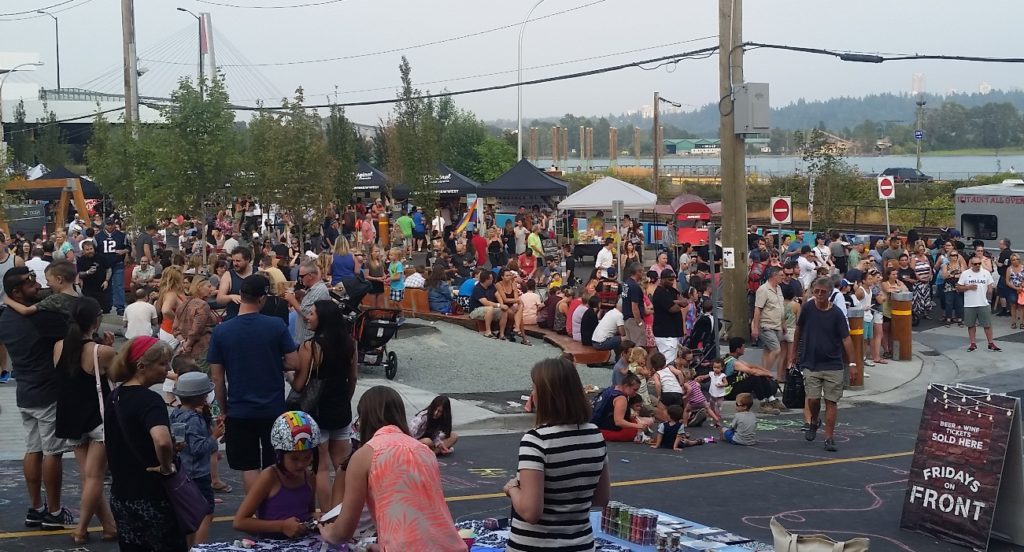
Friday on Front

Yikes. That was a crowd.

I had a slight sense that our little Grand Opening on the Front Street Mews was going to have a big turnout. It had all the elements – a new public space, nice weather, music, and a Beer Truck. Still, I think the turnout was about 5x planning estimates. Which is a good problem to have, I guess, although I was among those who spent a lot of time in the beer line up…

Fortunately, most people were happy to see the crowd and the space, the open liquor licence model didn’t seem to cause any problems, and the spill-over meant it was hard to find an empty restaurant or pub seat in Downtown. Which I guess is the ultimate goal.

Again, there are many people to thank for making this event happen – Kendra and her Downtown BIA team, City staff who helped organize, the Arts Council and NW Farmers Market for the boothy goodness, and all the Happy New Westies who showed, once again, that we can have fun outside, show up in numbers, and not create problems.

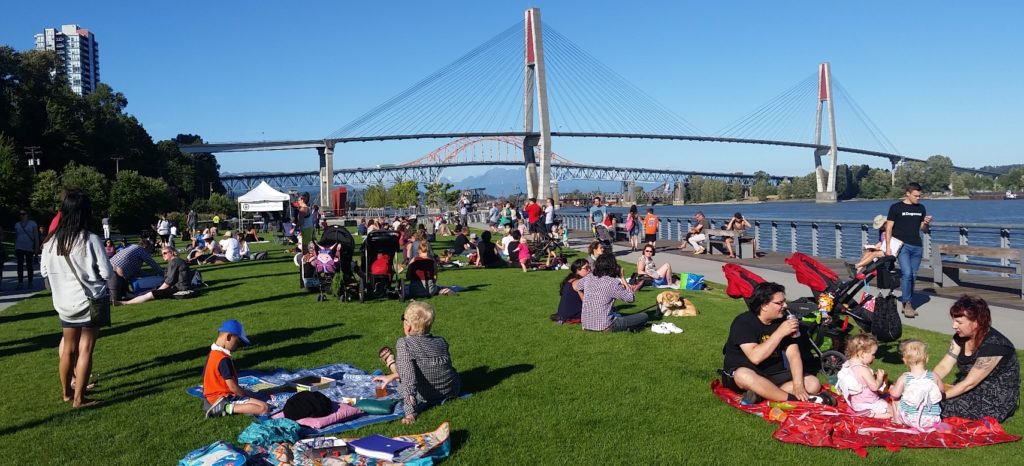
I cannot believe this used to be three levels of parking.