The Grand Prix

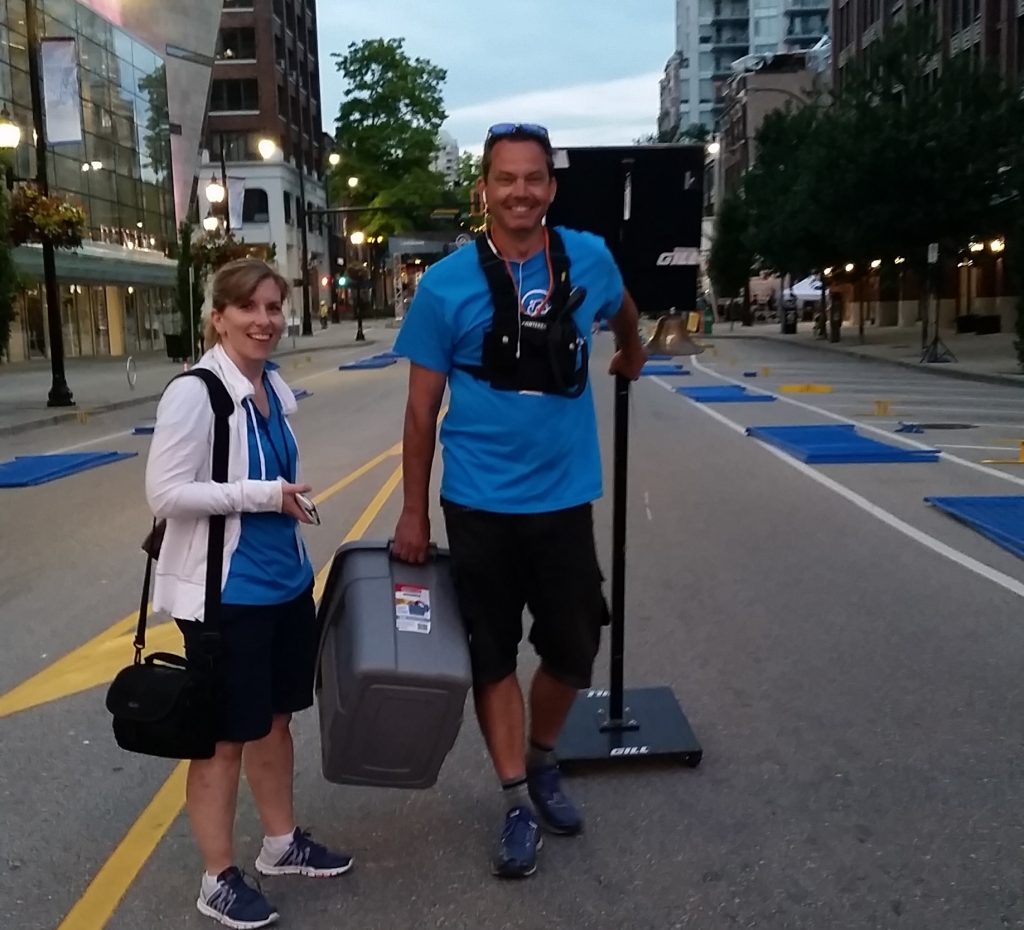
The New West Grand Prix happened last week. Our City joined Vancouver, White Rock, Delta, Port Coquitlam, and Burnaby in hosting a BC Superweek professional bike race. And what a show it was. You can read the good news stories here, here, and (especially) here. But this is my Blog, so I’m going to take my time to (space?) to thank the many people who need to be thanked for making this project work. At least, I will try to thank as many of them as I can think of. An event like this is a partnership between many groups, and I’m going to risk missing a few important people here…

1

First and foremost, we had an army of volunteers making this happen, some who gave a few hours on the day, some who spent month ahead of time putting vital pieces in place. Community member Ron Cann provided great leadership and savvy guidance as the Chair of our organizing committee, Diane Perry organized the kids’ races and events, Bill DeGroot shook the bushes of the community for volunteers, and he and Jennifer Wolowic made sure the volunteer efforts were as organized as could be. Jennifer was also a star on Race Day, bringing her knowledge of high-level cycle racing to do any of a thousand small tasks that needed to be done. Mario Bartel helped put the Grand Prix on the social- and traditional-media map, and did what he does best by capturing stories through his camera lens. Ross “Mr. Jen” Arbo helped find a bunch of places for visiting racers to billet here in New West. This was the command structure of a volunteer army.

Add to this core group more than 100 volunteers who did everything from set up and tear down fences to standing at crosswalks for hours keeping people safe and many other tasks you didn’t even see being done. Here is where the greater New West community stepped up. We had teams from the local HUB Cycling chapter, The Queens Park Running Club, and from the Fraser River Fuggitivi road riding group. We had corporate teams, Youth Ambassadors, and a team from Last Door who were particularly adept at large-fence-panel moving, and scores f individuals who just wanted to help out. I don’t know where Bill found all of these people, but the first time I felt confident about this event working was the day of the Volunteer Dinner, a week before the event, when more than 100 people showed up eager to help make race day work. Thank you to everyone!

I want to thank some City staff who really stood up, but I don’t want to name them (I am, in some weird sense, their employer, and privacy rights and all…) I think they know who they are, and I’ve tried to thank them personally. An event like this pushes them past what is normally “just their job” and takes a passion and effort that is out of scale with their everyday, and so much of this work occurs of the side of the desk along with their everyday busy schedules. Council put a little extra stress on our staff because we (frankly) started a little late on this project. This meant we had to rush some parts of the program, it also meant we weren’t able to do a few of the things that would have made the program bigger or more exciting (many learnings in the can for next year!). However, staff coordinated with the volunteers and those running the bigger BC Superweek program and answered a thousand phone calls and e-mails about every aspect of the event, then showed up on event day to do a thousand tasks, big and small. Kudos all around.

This event relies on sponsors to pay a huge portion of the bills. Again, we were a little late to get started in 2017, but it is incredible how many sponsors stepped up to contribute. Bosa Developments, Domus Homes, I4 Property Group, and Skyllen Pacific were all major partners with the City on this community-building adventure. Strongside Conditioning and Billard Architecture were two local businesses that had their front door access impacted by the event, but turned that into a reason to get involved as major sponsors.

Of course Gordon from Cap’s Original Bike Shop got involved, providing prizes for the kids race, a great draw prize for the volunteers, and the professional “pit services” for the race. Boston Pizza made sure VIPs and volunteers got fed, S&O partnered to keep folks otherwise refreshed, and the Record and Global BC helped get the word out. Champion Systems, Gateway Casinos and Alpine Credits also pitched in, and Old Crow Coffee hosted our volunteer corral. Next time you visit one of these sponsors, thank them for taking part and helping to bring this event to New West. We really couldn’t do it without them, and they are making your City more fun to live in.

Similarly, we got a lot of support from downtown New Westminster. Both the Downtown BIA and Tourism New West came on board with support, but the merchants and residents of downtown also made adjustments to their day to allow us to have one of the large road closures in recent New West history. Can’t have a road bike race without a road.

Finally*, the fans and racers. The show was great, a kicking of butt by the Woman’s winner, and a late break almost caught by the sprint in the Men’s race… there were no spills but many thrills, and a marriage proposal to cap it off. The crowd was above expectations for our first year, and seemed really enthused by the event. It was a good evening. So whether you volunteered, sponsored, raced, spectated, were inconvenienced by the traffic, or just wandered by and asked “What tha heck?”, then decided to watch for a bit – thanks! I love when this town shows up!

*postscript: Thanks to Councillor Trentadue for invoking Rule #5 at the best possible time. You were right.

Council – July 10, 2017

The final Council meeting before the summer break occurred on July 10. We don’t meet again until the end of August, which is a bit of a relief as there is so much going on in New West this summer, it will be nice to be able to enjoy my annual summer stay-cation. But first, the work. Our Agenda started with a presentation on progress on a big development project:

Sapperton Green (97 Braid Street): Master Plan Update
Sapperton Green is a big project. A 38-acre site sitting right on a Skytrain Station adjacent to Highway 1. The Official Community Plan for the property includes 3,700 homes for something like 7,500 residents, 150,000sq.ft. of retail commercial space, and up to 1,500,000sq.ft. of office commercial space. There will be a mix of building types, including about a dozen towers up to 35 stories.

A project this size (the first of this scale since Victoria Hill) takes a lot of planning and development work. The Official Community Plan Amendment, adopted in 2015, was the first high-level step, where the numbers above around square feet and land use types were determined. The next step is to perform a Master Planning process, which is where the project is now. This is the step where big decisions are made about the layout of the site, where buildings will be and where greenspace will be, what type of community amenity will be provided, and where those amenities will be located. This is also the stage where high-level details about how the ground level of the development will work, with transportation connections and parks.

There is a lot of work to do yet before we start seeing shovels in the ground here ,and there will be more public consultation, however today’s report was mostly for staff to get endorsement from Council on some of the “big principles” defining the shape and form of the development (listed in part 6 of the report).

This project differs from Victoria Hill in two ways: it is a mixed use community instead of a predominantly residential neighbourhood, and it needs to be a permeable site for pedestrians especially, because it will be located between Sapperton and a SkyTrain station, and will become a commercial centre and will have amenities servicing Sapperton as much as its own residents. In that sense, we need to think of how its connections integrate with the surrounding community in a different way than Victoria Hill.

There are some concerns about what this project means to the district’s school capital development plans, especially at the Elementary and Middle School stages, but there is some time for the School District and the Province to manage those long-term plans. The population growth anticipated here is completely consistent with the Official Community Plans back to the late 1990s, and with the Regional Growth Strategy, so it should be no surprise to anyone involved in long-term regional planning. The population is coming, what we need to provide now is some more certainty about timing and distribution of new residential development.


The following items were Moved on Consent:

Proposed Derwent Way Soil Transfer Facility
This project on Port Metro Vancouver land in Queensborough is going through a similar type of Port-driven environmental review as the Fraser Surrey Docks coal terminal project. As such, the City being asked to opine on the project as it will have impacts on City roads, drainage, and land use.

The basics of the project is that a company wants to use a piece of Port land adjacent to the Derwent bridge to transfer soils from trucks to barges so it can be shipped upriver to a storage/processing facility. These soils will include contaminated soils from development, but not soils deemed as “hazardous waste”. This is a bit technical (and within my area of professional practice) so maybe I will explore it a bit more in a future blog post.

The neighbourhood is going to have a reaction to contaminated soils being stored next door, but our staff have appropriately identified impacts we should be concerned about – how the increase in trucks impacts neighbourhood livability, how dust and vapours will be managed on site, and how site drainage will be managed. If you are a concerned citizen with opinions, you can take part in the review by following this link.

914 Thirteenth Street: Heritage Alteration Permit No. 106 for Work on Designated Heritage Property – Request for Issuance
This heritage house in the West End is Designated, meaning it is a protected heritage asset. The owners wish to make some changes to the house to improve livability, and because it is Designated, require a Heritage Alteration Permit to assure the heritage values of the house are protected. Council moved to approve this permit.

Walk New West Initiative – Update
This was an information report, following up on this spring’s walking advocacy initiative. It was a good program, and relied heavily on the support of a burgeoning Pedestrian Advocacy group that had formed in the City (The Walkers Caucus). The “challenge” part of the program was perhaps a little long and a little complicated, but most participants enjoyed it, and for a first year, it was a great launch. I look forward to 2018, and to more activity by the Walkers Caucus speaking up for the needs of pedestrians in our City and the region.

Latecomer Agreement for Extended Servicing Costs Related to the Subdivision of 1004 Salter Street
This may be a little too “inside baseball” for some, but let me try to summarize, because understanding this is a pathway to understanding how growing cities get developers to pay for utilities.

When a developer wants to build a neighbourhood that significantly increases density, it means the City’s utilities need to increase capacity by building new or larger water and sewer lines. The City gets the Developer (and, ultimately, the purchaser and user of the utilities) to pay for these, either by the developer building them, or by collecting Development Cost Charges which hare set aside by the City and are specifically and legally earmarked to pay for the cost of those capital works.

However, sometimes these density increases occur adjacent to other areas where future growth is planned, and the City wants the utilities to be upsized now not just for the current development, but for future development. Why build twice when you can build once? One way to make this happen is to get the developer to build bigger than they currently need, and then recover those extra costs from the next developer who comes along to develop that next adjacent property. To do this, the City sets up a “latecomer” agreement, allowing the City to collect money form that latter developer (when it happens) and give it to the current developer who is paying for the increased utility works installed now.

This report outlines the principles of a proposed Latecomer agreement for a development in Queensborough.

Street Closure Bylaw No. 7935, 2017 – Wood/Boyne Street Animal Services Facility
The City is building a new Animal Services Facility in Queensborough on land we already own, however part of that land is currently designated as a road (although it is forested, and the road doesn’t connect to anything). So by law, we need to officially close the road so it can be repurposed.

Temporary Relocation of Queen’s Park Arenex Gymnastics and Trampoline Programs Update
Our Parks and Recreation staff have been working hard to manage the various aspects of the post-Arenex-collapse plan. We are finalizing work on a short-term replacement structure and integration of some programming with the proposed Canada Games Pool replacement, but there has also been a lot of work finding solutions to the programs that have been displaced by the Arenex collapse so they can maintain continuity. This information report provides a bit of detail about the hardest-to-house programs, as the trampoline programs especially require pretty specific spaces. This is an ongoing work in progress, and will be until the temporary replacement is brought on line. Hopefully, there will be more news on that shortly.

800 Columbia Street (CPR Station Site): Rezoning to Allow Liquor Primary Licensed Premise – Preliminary Report
The cat is out of the bag about the restaurant operators who plan to open up this Fall in the old CP Station / Keg Building at the foot of Eighth Street. This rezoning application will allow the proponents to operate both a “food primary” restaurant and a “liquor Primary” pub in the same building. As this is a rezoning, it will go to public consultation, including a Public Hearing, so I’ll hold off my comments until then.


The following items were Removed form Consent for discussion:

232 Lawrence Street (Child Care Facility): Official Community Plan Amendment Section 475 and 476 – Consultation Report
232 Lawrence Street (Child Care Facility): Grant Funding Update
There are two things going on here, both related to the re-purposing a piece of City land in Queensborough to host a critically needed child care facility in that community. The first is a report on consultation for the required OCP amendment and zoning changes (local government sausage-making), and the second is about the City’s budget for this project.

There was quite a bit of discussion about the second point. The City is planning to tap into some Provincial Grants available to fund the capital investment required to build the space, and will use a not-for-profit to operate the facility. However, we need ot dedicate some capital budget to make both of these things happen. The extra money the City is putting up comes from the General Amenity Reserve – money collected from developers to increase density in order to provide exactly these kinds of amenities, and I am satisfied that this is an appropriate use of those finds, especially in light of the opportunity to leverage 4x the amount we invest from senior governments, and that child care is the #1 amenity priority for the Queensborough neighbourhood.

701 Sixth Street (Glenbrooke Daycare Society): Request for Financial Assistance
This is the other side of the coin. There are several child care facilities in the City struggling to pay the bills and keep services affordable, and capital costs for expansion are a challenge for them all. The City has a reserve fund for childcare, and a staff committee who determines the best use of these funds. It hurts to not be able to say Yes to every request, but I respect staff’s recommendation about how to best use limited funds to have the bidggest impact, and this application doesn’t seem to meet that test.

Construction Noise Bylaw: Proposed Changes to Permitted Hours and Pile Driving Technologies – For Consideration
This update to our construction Noise Bylaw will reducing pile driving hours on Saturdays, and look towards methods to encourage quieter and less disruptive pile technology. The first is something some other Lower Mainland communities do, and this brings us more in line with regional standards. The second is something other Cities don’t currently do, so New West is once again launching off into uncharted territory in the livability front.

The pile technology used for River Sky downtown was pretty traditional: diesel impact. It is also the noisiest. Essentially using an un-muffled diesel explosion to drive the hammer. Other technologies have strengths and weaknesses: vibratory hammers are much quieter, but may not be appropriate near heritage structures because there is some potential the vibrations can weaken older adjacent foundations. Drilled piles and rotary techniques are also quieter, but are more expensive, and may not work reliably depending on the type of geology you are drilling into.

The request to staff here was to bring back a more detailed report on strengths and weaknesses of the technologies, and to give us some guidance on what our abilities are as a local government to either demand a certain technology use (or, more likely, a desired outcome as far as noise and intrusion), or to incentivize less impactful techonology. Are we limited by building codes or higher government standards? What is our negotiating ability here with larger developments? Or do we need to rely on the neighbourliness of Developers (like the approach Bosa Developments have taken for the new development on the waterfront). More to come…

Passive Design Exclusions for Low-Rise Residential Zones
We want to encourage people to build more efficient homes, or upgrade the efficiency of their existing homes, but however unintentionally some zoning rules act against this. More efficient homes to the PassivHaus level often have much thicker walls, floors and ceilings. If we count square footage by the outside walls, then wall thickness comes at expense of floor space. Similarly when we limit the peak height of houses. Staff has some creative suggestions to fix this mixed message. Council agreed. Staff will work on the Bylaw amendments.

Public Water Station Installations
Public fountains are coming back into vogue as we build a more walkable city with more active public spaces. Can public bathrooms be far behind?

Centennial Lodge Renovations
Some suggested changes to the Centennial Lodge are being put on the back burner due to some shift in the operations on site resulting in less use conflict. Good news is we save a bit of money from our Capital budget. By the way, the Art Gallery at Centennial has a refreshed look – new floors and paint, and it looks nice. You should drop by an see what they have going on.

New Westminster Urban Solar Garden Pilot Project Update
This is a pretty cool program that New Westminster is uniquely able to operate, partly because we own our own electrical utility. Following the lead of equally-advantaged Nelson, BC, we are launching a Solar Garden program where you can purchase a share in a solar panel array, then receive the benefit of the electricity it produces.

A challenge to installing your own photovoltaics at home is beyond the cost of the panels, but the cost of installation engineering, electrical converters, meters, wiring, and maintenance of the above. If a bunch of panels are installed together, those costs are shared and the entire operation is more efficient. Through a Solar Garden, you can buy a panel at our Public Works Yard, and our electrical utility operates it. You pay a buy-in cost, then the power your panel produces is subtracted from your monthly electricity bill.

There will be a public Open House to outline the idea next week. Show up and see if a Solar Array is right for you!

Advisory Committee for Transit, Bicycles and Pedestrians (ACTBiPed): Implications of New Westminster Hosting a Walk21 Conference
I was unfortunately unable to attend the ACTBIPed meeting from which this arose, but am intrigued about the Walk21 Conference. It was held in Vancouver a few years ago and member of this Council and some other sustainable transportation advocates in the community attended and found it an inspiring and education experience.

I support this motion from ACTBiPed that we should explore hosting the conference in future year, but added to it that we ask staff to also consider partnering with an adjacent community in hosting. This may be an opportunity for New West and Burnaby or Surrey to work together on some of our common sustainable transportation goals.


These items were Late Additions, to the Agenda:

Arenex Facility Investigation Report
This report by independent structural engineers reviewed the likely causes of the Arenex roof collapse. It is an interesting read, but the short version is that there is no single cause that could be identified. The roof snow load was not as big as in some previous years, and there were no signs ahead of time of structural problems. Potentially, repeated stress cycles over 80 years exacerbated an undetected flaw in the ceiling beam that failed, and the final snow load was the straw that broke the camel’s back. Ultimately, it was unanticipated, and most likely impossible to predict until the night it started to creak and the building was evacuated.

Status of tree Bylaw Amendments
The Tree Bylaw introduced back in 2016 is not without its teething problems. In the year after adoption, there were 295 applications processed under the Bylaw, 466 trees authorized for removal and 653 replacement trees planted. 47 hazardous trees were removed by permit and more than 300 trees that may have been lost were retained (including 46 “specimen trees”). So as far as protection and increasing the number of trees in the City, the Bylaw is working. As far as smooth and timely execution of the permitting process, we still have a bit to go. At this point, there is a real process backlog which means we are not hitting reasonable standards for customer service.

That said, we did make a commitment to review the Bylaw within the first two years to look at improvements or necessary changes. Staff are working on bringing a full report to Council, and I hope we will see something in the Fall. In the meantime, we are working on staff resourcing to fix the backlog problem.


We then wrapped out meeting, as per usual, by rolling through our Bylaws:

Wood-Boyne Street Road Closure Bylaw No. 7935, 2017
As described above, this Bylaw that results in the official closure of a portion of Wood street in Queensborough so the Animal Shelter can be built upon was given three readings.

Cultural Services Fees and Charges Amendment Bylaw No. 7931, 2017
As discussed at the May 15 Meeting, this Bylaw that adjusts the rates for studio space at the Anvil Centre was adopted. It’s the law of the land, adjust your dance card appropriately.

Sign Bylaw No. 7867, 2017
Bylaw Notice Enforcement Amendment Bylaw No. 7921, 2017
As also discussed at the May 15 Meeting, this update to our Sign Bylaw was adopted by Council. Long-haired Freaky People need not apply.

Zoning Amendment (602 Ewen Avenue) No. 7840, 2016
This Bylaw amendment supporting the 16-unit townhouse development in Queensborough was Adopted by Council.

Zoning Amendment Bylaw (430 Duncan Street) No. 7796, 2015
The Bylaw that came to Public Hearing back in November of 2015 is finally ready to be adopted by Council, which we did.

And except for a few announcements, that was the end of the TV run for New Westminster Council. Have a good summer.
53 Stories.

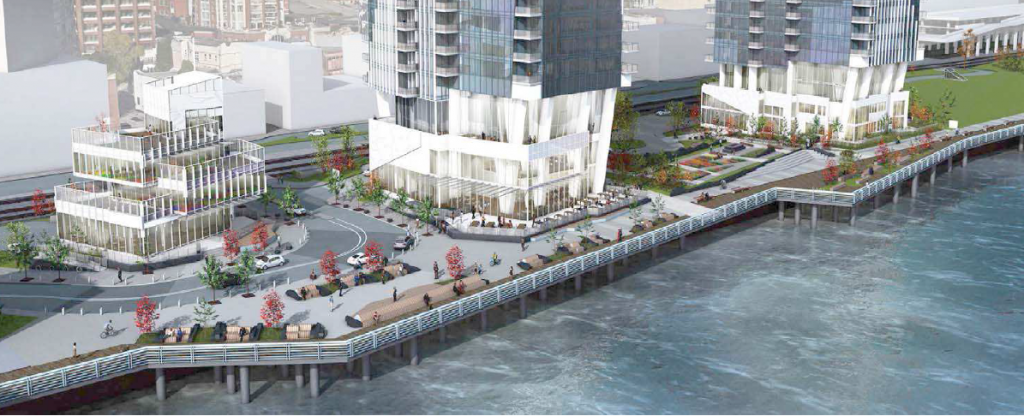
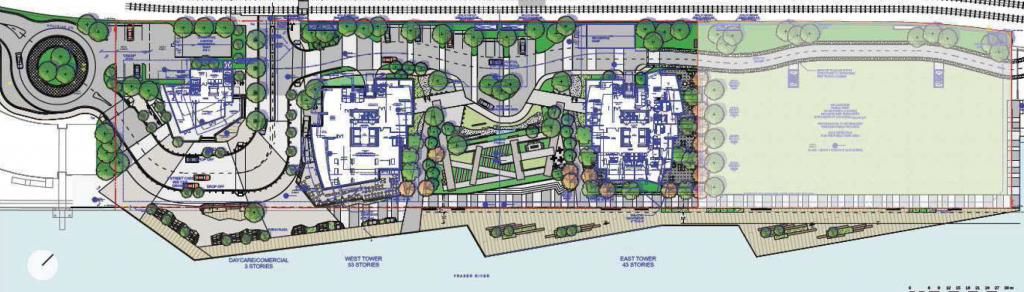
What is arguably the highest-profile development proposal in my time on Council was given a development variance by Council last week. Bosa Development (not to be confused with Bosa Properties who are building the nearby River Sky. These are two separate companies) plans to fill the parking lot between the Fraser River Discovery Centre and Westminster Pier Park with two residential towers and a 3-story commercial building, while dedicating a bunch of the space to expansion of public park space on the waterfront. The big news seems to be the 53-story height of the tallest building, but there is (as always) much more to the story. As there is a bit of uninformed chatter in the community about this development, it is worth me going through my impressions about this variance, and how I made my decision on which way to vote.

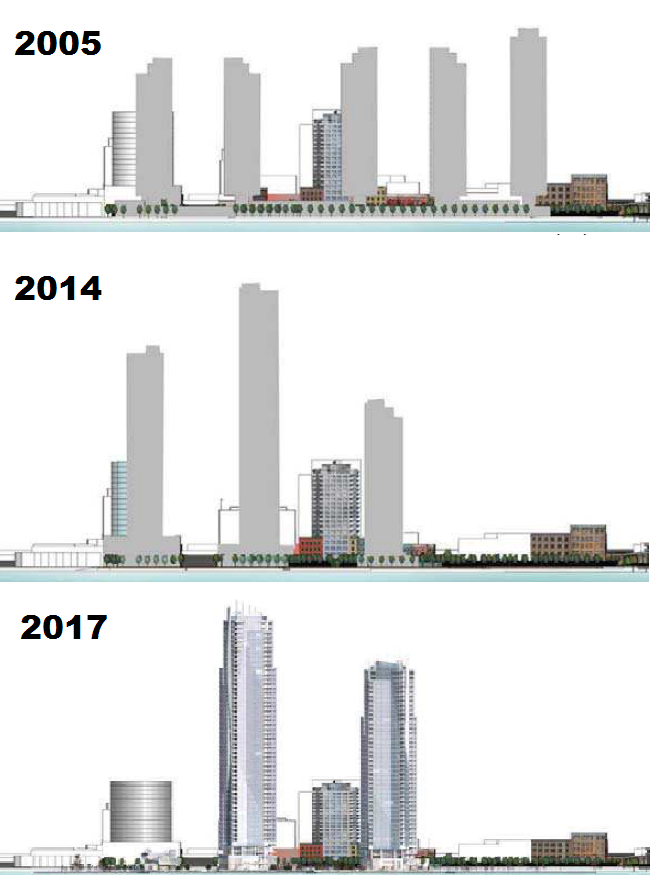
The background for this development pre-dates my time on Council. Back in the early 2000s , this site was zoned for 5 towers and 1,000 residential units to be built upon a multi-story parking pedestal. As the Downtown Community Plan changed and North Fraser Perimeter Road was shelved, this model of an elevated parking pedestal no longer met the vision of the City to connect the waterfront to Downtown and keep it public space. The previous Council worked with the owner of the time (Larco Properties) to re-imagine the space so that parking could be placed below grade, the number of towers could be reduced to three, and the number of residential units reduced to 820. After a Public Hearing on September 29, 2014, that rezoning was adopted by the City in November, 2014, just before the last Municipal elections.

The process that occurred over the last year was not a rezoning. The owner of the land has the right under existing zoning to build that 3-tower 820-unit development. However, for reasons that no doubt result from serious number-crunching at Bosa, they requested to change this project footprint from three towers to two, and to reduce the number of residential units to 665. They still committed to giving the City about two acres of public park and to build the full allotment of parking (mostly under grade except for 20 surface spots). They are now committed to meet and exceed the City’s Family Friendly Housing Policy by building mostly 2- and 3-bedroom units. To do this, they want to make the two towers larger than those proposed in 2014, and they re-designed the landscaping to move the towers out of direct line of existing towers on Columbia Street, and to better accommodate rail setbacks and traffic flow through the site, and to build a 9m-wide boardwalk across the riverfront. These changes did not require rezoning (the FSR has not increased, and the number of units has gone down), but variances of the development permits.

bosa4

It is important to emphasize that: the decision Council had before it was to grant the variances or not, we were not deciding whether buildings could be built on the site or not. The developer had their zoning in hand, and could have proceeded with the 2014 plan; Council had to decide if the 2017 plan was a better one for the City.

The public consultation and delegations to Council brought forward a few concerns, which create a good framework to answer that question:

Too much density: This general concern was that this project brought too many people or too much traffic to downtown. As previously described, the variance actually reduces the number of units in the development by 20%. If density is your concern, the variances are your friend. Building density within a 5-miunte walk of two SkyTrain stations is completely consistent with our City’s pending OCP, with the Regional Growth Strategy, and with our larger regional desire to manage automobile traffic by providing people better access to alternatives – the opportunity to live, work, play and learn within a short walk of major transit infrastructure.

What about our views?: Every building in downtown blocks someone else’s view of the river, and this is simply the easternmost development of a line of buildings stretching along the Quayside. However, this variance shifts from 3 towers 34m apart to two towers 50m apart, which opens up more view corridors and reduces the blockage of river views from existing buildings.

53 Stories is just too big: Indeed, this will be the tallest building in New Westminster (although similar-sized buildings are currently being planned or built in Burnaby, Vancouver, Coquitlam – essentially anywhere SkyTrain exists), however the variance only increases the height of the tallest building by 6 stories, from 47 to 53 stories. I have consistently said that the real impact of new buildings in the City is felt in the bottom three stories – how the building footprint improves the streetscape – and not at the elevation of the penthouse. One need look no further than Plaza 88 to see that the streetscape impacts are much more important than the ultimate height

bosa3

The FSR of this development is not increasing, and the buildings have relatively small footprints. By shifting the locations of these buildings on the lot (as done on the variance), there is better flow-through of the site and the vehicle access to the buildings is separated from the boardwalk. In my opinion, we get a better layout of the site for the public, in exchange for a relatively modest increase in height.

bosa1

What can the city get out of this?: We get two residential buildings bringing residents, customers for the local businesses, and a financially viable development on a piece of land that has sat empty for more than 20 years. The City will get 2 acres of public park space, a re-aligned Begbie Street intersection built to maintain whistle cessation, a second access to Pier Park spanning the rail tracks at the foot of 6th street, a 40-child day care space in the third commercial building, 80 public parking spaces underground, new restaurant spaces, and a re-aligned 9m-wide boardwalk along the waterfront. This will be a phenomenal addition to our Riverfront once it is built.

However, there is something else that came out of the public consultations around this variance that speaks positively towards the development. The construction was originally envisioned to start this fall and result in a closure of the Begbie St rail crossing for up to 18 months. This shocked and concerned local businesses, especially at the River Market, as they are already feeling the pressure of the River Sky construction. After meeting with River Market owners and the Downtown BIA, Bosa agreed to delay the start of construction until after the RiverSky development makes its public parking available to guests of the River Market and adjacent businesses. They also adjusted the construction plan so that the (absolutely necessary) closure of Begbie would only be for a few weeks. The willingness of the developer to delay and adjust their construction schedule like this cannot be emphasized enough – these are real costs the developer is bearing for the benefit of the businesses and citizens of downtown New West.

The use of secant piles instead of steel pile walls and a commitment to using vibratory hammer driving of building piles will reduce construction noise and vibration by about 50% compared to RiverSky. This is also an increased cost the developer is bearing to the benefit of the community.

In summary? Yes, 53 stories is tall, but the density is within the existing plan, and the ground level amenities (and demonstrated will of the developer to be a good neighbour to existing residents and businesses) made this variance easy for me to approve. In my opinion, the changes that made the variances necessary make this a better development overall.

FCM2017 part 2

This is part 2 of my (partial!) report from the annual meeting of the Federation of Canadian Municipalities (Part 1 is here).

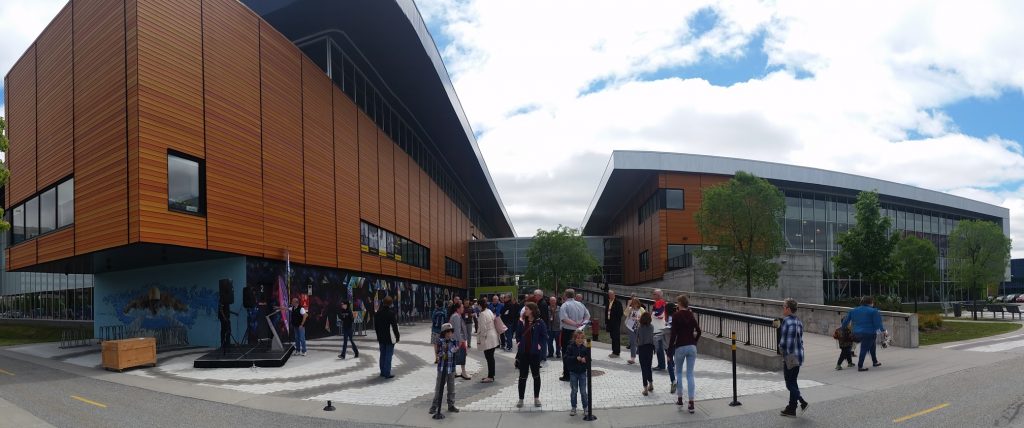
One of the tours that was really valuable for me was of the Centre Sportif Gatenau. This relatively recent (2010) sports complex in one of Ottawa’s Quebec suburbs was useful to tour at a time that some of the more detailed design decisions are being made in New Westminster around the Canada Games Pool and replacement of the Arenex.

outside

The CSG had a natatorium that I suspect is close to the volume of water and pool types that we are hearing is desired for New West from the stakeholders and public engagement. They have a 52m 8-lane pool with a moveable floor on one half to increase use flexibility, and a second warmer leisure/wellness pool that may not have as many “fun”activities as some community pools, but did provide a small length swimming area to increase flexibility. They also had a one of the larger diving complexes in a diving-centric community (towers to 10m and paired springboards for synchronized diving) that are probably beyond the needs here in New West.

One interesting point: the modern standard for BC of emphasizing gender neutral and family changing areas is not the standard in Quebec. Their relatively small family-oriented change area is restricted to those 9 and under when accompanied by a parent. I assume that people needing assistants or care providers are also accommodated, but there was little to be seen indicating this was a standard idea in Quebec.

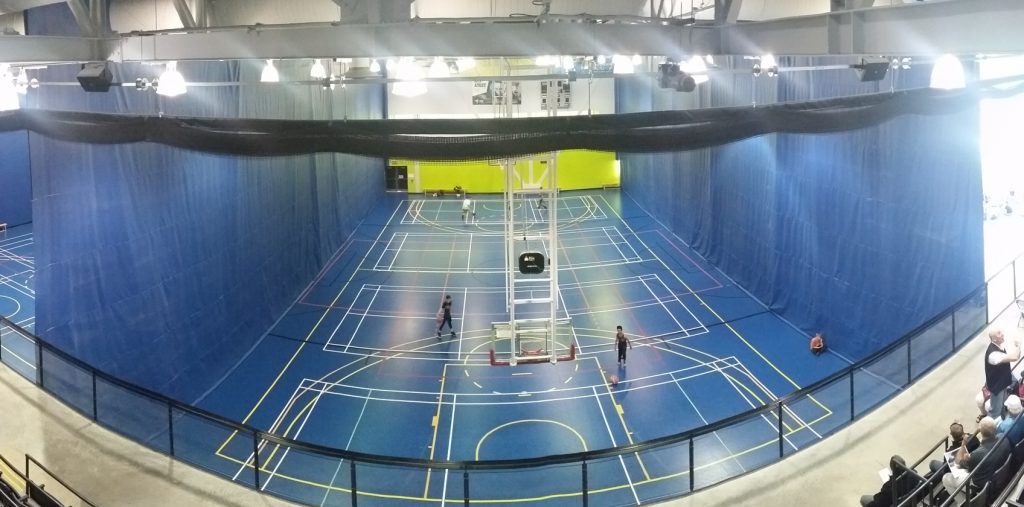
bball

The CSG also had a large three-partition gym complex (it is the home of Canada’s national volleyball team) that is a little larger than is appropriate/affordable for a CGP replacement, but there were some learnings in their state-of-the-art floor treatment (“Terraflex”), and their already old tech lighting (sodium!). A lot can change in 7 years.

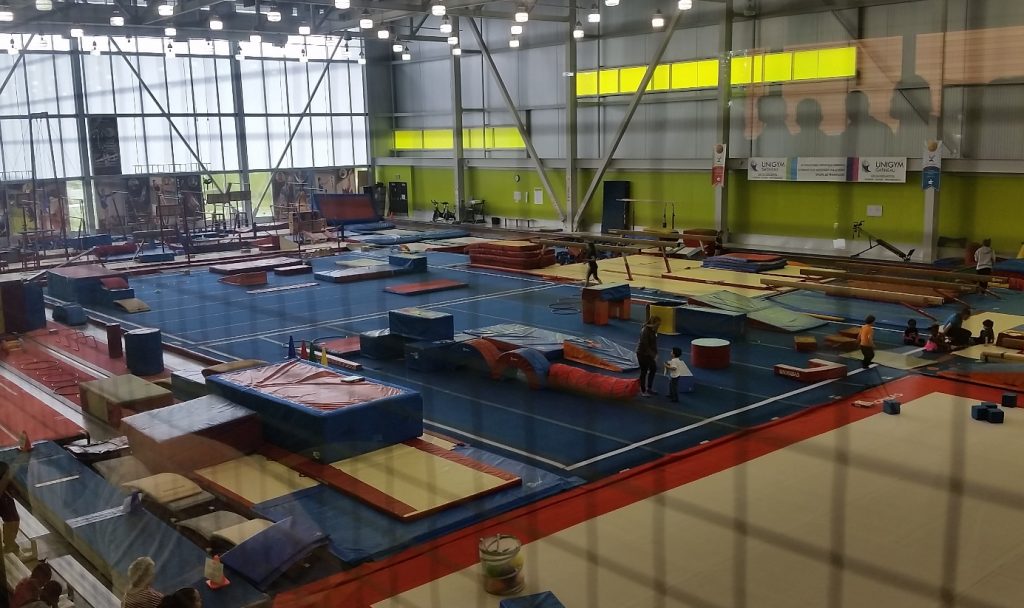
The CSG also featured a very large (20,000 square feet) gymnastics area. Again, gymnastics are hugely popular in Gatineau, which allows them to program a gymnastics space twice the size of the Arenex. It was an impressive space that helped provide some context to what a space that size can provide, as we look at options for short- and long-term Arenex replacement.

?

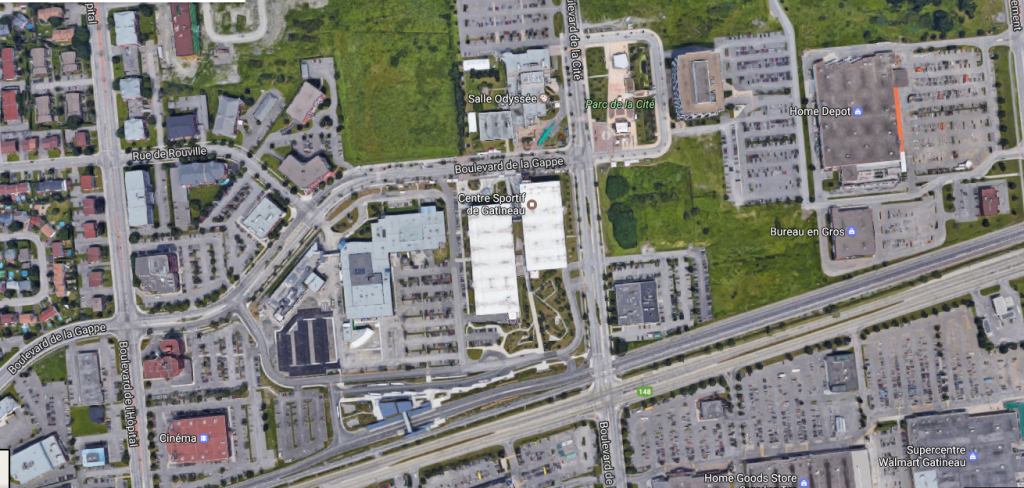
Gatineau is a true suburb of Ottawa, and in looking around the CSG area, has all of the stroads, strip mall parking lots, and low-density housing you would expect of an auto-oriented community. There is a Corridor Rapid Bus station adjacent to the facility, a community college to one side and the National Library to the other, yet, they only built 175 parking spots. Parking is free for 90 minutes, but charges are applied for longer periods.

map

There were many, many more details we learned about: what works well and what does not, and about how decisions were made for specific programming. After touring several pools and community centres across the Lower Mainland over the last year, this provided great context to how other regions address similar constraints and desires.

We were also fortunate to get a meeting with staff from Infrastructure Canada to discuss opportunities around the new infrastructure funding plan that is being rolled out by the federal government. There were a couple of other sessions at the FCM discussing the structure of the grant program, and what the Federal Government will be looking for in projects applying for grants. The plan is long-term (10 years) and the needs across the country are large, but this is an important time for information gathering so we can put the best proposal together when funding windows open.

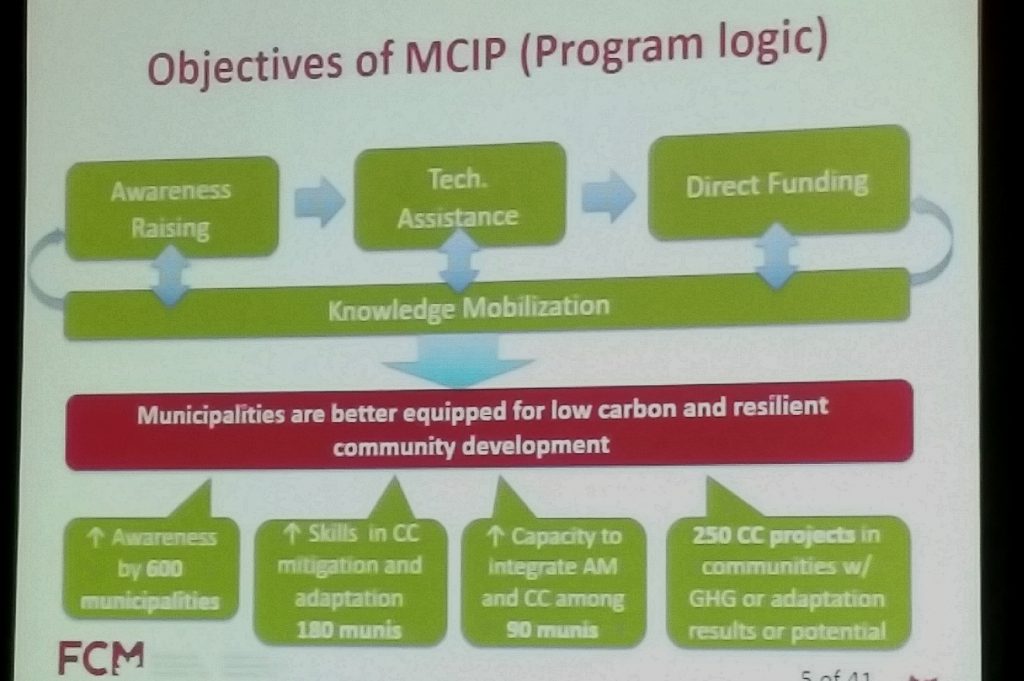
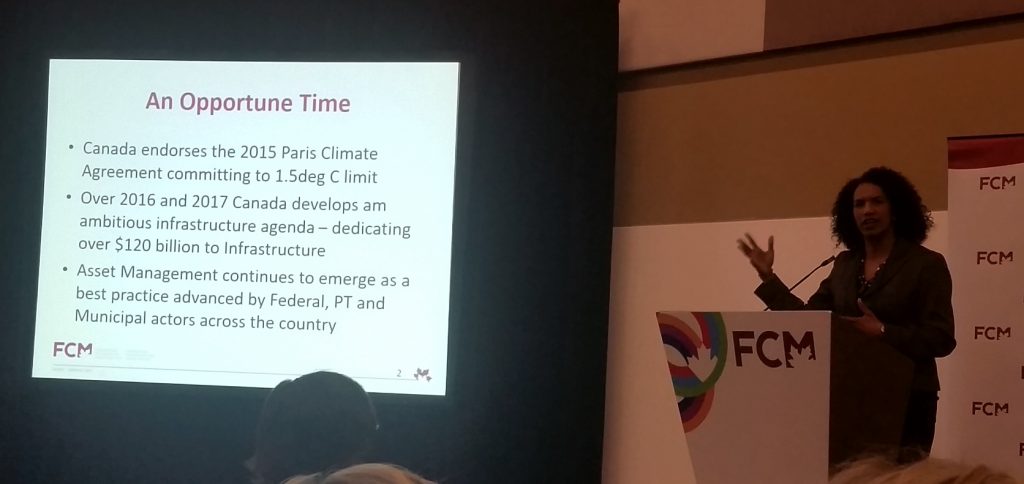
Speaking of funding opportunities, I also attended a session where the FCM’s Municipal Climate Infrastructure Plan grants were discussed. Local governments in Canada own half of all public infrastructure, and are responsible for 60% of public service greenhouse gas emissions. BC is ahead of most provinces on this file (as the first Climate Action Plan under the Gordon Campbell Liberals really pushed Cities towards carbon neutrality), but there is still a lot of work to do, and it was great to learn from the experiences of Cities across the country. It was not lost on this crowd that this talk was occurring the day after President Trump announced his intention to pull out of the Paris Accord, shortly followed by a chorus of state and local government leaders stepping up and saying they were going to lead if the President fails to. Local governments can, and must, lead on climate mitigation and adaptation. The FCM is doing much to help us do so.

?

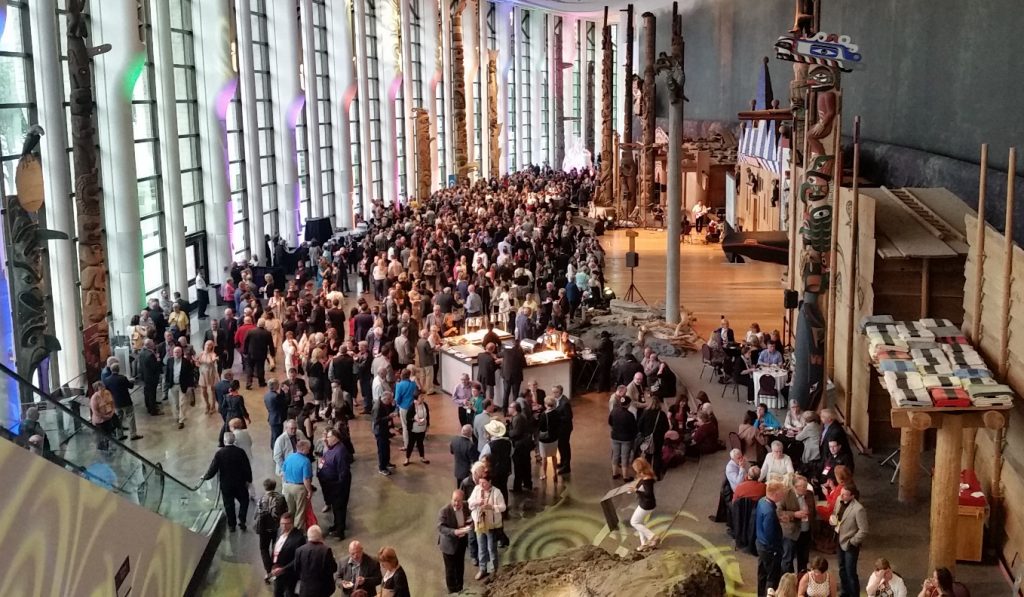
Finally, the FCM provided so many opportunities for informal learning. There were networking sessions where I met everyone from a City Councillor representing Kanata who has served for 28 years as Ottawa grew into a tech hub to a young Councillor from a small town outside of Edmonton who frequented New Westminster because his girlfriend actually lives in Moody Park! There is also a significant Trade Fair, where vendors of everything from waste management systems to artificial turf come to show us what is new in public services.

I went for a bit of a vacation after FCM, visiting family in Ottawa and friends in Montreal, which led to a bunch of other informal learning about how those Cities work, but I’ll save that for a future blog post.

FCM2017 – Part 1

As a member of New Westminster Council, I attended the annual Federation of Canadian Municipalities meeting in Ottawa last week. This is my third year on Council, but my first opportunity to attend FCM. It was a busy time, and I haven’t had time to write blogs about it, but I thought I would spend a post or three sharing a few highlight moments from 4 days of learning and networking.

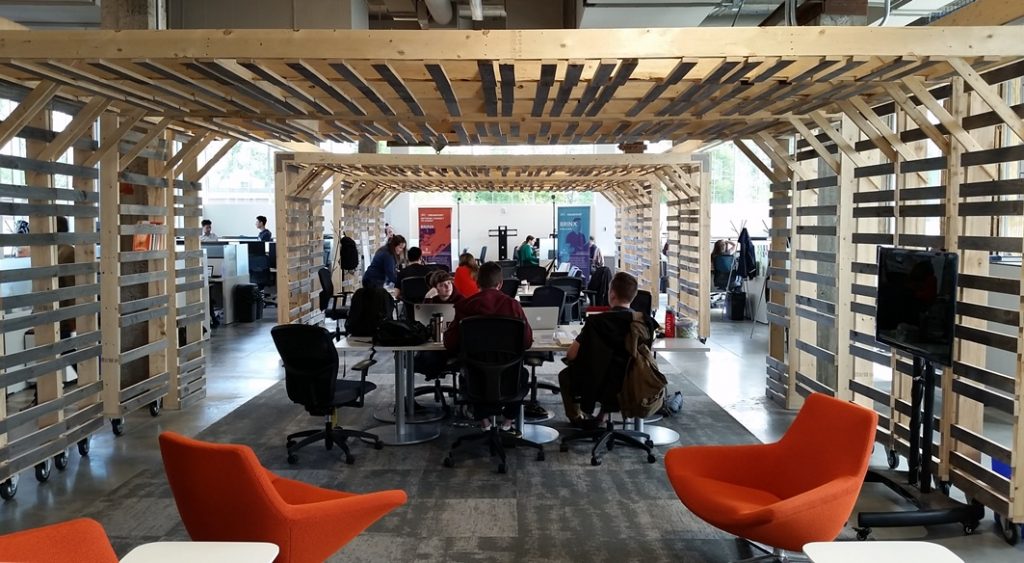
We were fortunate to open the event with a personal tour of the Innovation Centre at Bayview Yards. This is an example of a tech business incubator and network hub. An old industrial building (originally a bus storage and repair terminal) has been converted into a comfortable and lively space where tech startups can share resources and, have direct access to mentors, funding agencies, and angel investors.

20170601_092322

Ottawa is a unique place when it comes to “tech clusters”: the golden egg-laying goose of every region’s economic plan. Much like Silicon Valley, Ottawa had the right combination of highly trained workforce (a legacy of government research labs, Bell Laboratories, and Nortel), a couple of nearby engineering universities, and access to senior government investors to encourage R&D investment. However, even with all of this, it wasn’t until amalgamation of the 30+ communities that made up greater Ottawa that they started to do economic development in a coordinated regional manner – under the branding of “Invest Ottawa”.

The Innovation Centre model operates on Federal and Provincial grant money, and has a well developed mentorship and growth model for start-ups. They travel the world shopping for start-ups, and have a comprehensive screening system to assure applicants selected are those with the best chance at development, and even then not many more than 10% actually grow into a viable business that grows out of the hub (or, more likely, becomes and idea that a larger company buys from the start-up). Still, the return of investment from that small proportion easily created value that outstrips the cost of the facility.

We had a lengthy discussion with the general manager, and there was much to learn that was relevant to New Westminster’s IDEA Centre concept, and to how we support and foster tech industries in Greater Vancouver. Not the l east, we need to get past our parochial model of economic development (as you may have heard Greg Moore discussing at this year’s Innovation Week Leadership forum): . Only so much foreign investment out there, we will get swamped unless we lead together. This is a conversation we are planning to continue as we plan next year’s Innovation Week and continue to develop the IDEA Centre.

During the FCM, I also attended sessions discussing the building of municipal infrastructure, and how to integrate low-carbon energy systems and environmental resiliency into our design and development process for new buildings. There was a discussion of the many “sustainability” rating systems for new infrastructure, from LEED to Passive House and Envision, and how to determine which of the 8 or 9 common rating systems meets the goals of your project, and the needs of your community. The new North Shore Waste Water Treatment Plant was used as an example of a well-designed review process for rating systems, and a detailed explanation of how the Envision system works for large public infrastructure (where most others are designed for typical residential or commercial buildings).

As New Westminster is in a pretty serious infrastructure-building phase (with the new Animal Shelter, Canada Games Pool, District Energy Centre infrastructure, and potential IDEA Centre and Arenex replacement structures), we have already been discussing a review of our existing policy requiring LEED rating for our new buildings, making this comprehensive discussion apropos.

20170603_165138

On the same day I attended talks on improved Pavement Management Systems work being done at Carelton, and the Smart City Challenge and FCM Innovation network funding opportunities while networking with leaders from communities across Canada learning about their challenges and ideas for making their organizations work better. It was interesting to learn how Milton, Ontario is managing extremely fast growth, and their challenges in funding infrastructure with a very tax-adverse populace, while also learning how the smaller communities are trying to keep up with changing municipal needs as senior government funding seems harder and harder to find.

20170602_194110

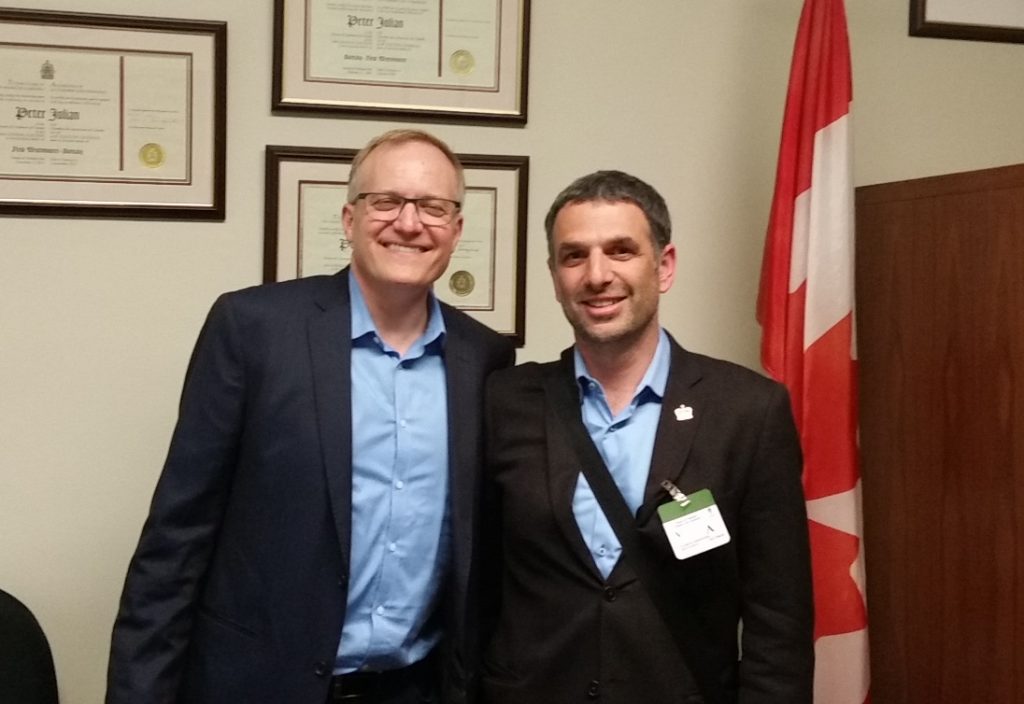
I also managed to squeeze in a tour of the Parliament led by the Hardest Working MP in Canada, who was an excellent host and entertaining tour guide!

20170601_203031

to be continued…

Free Rides

You may have heard TransLink is doing a Fare Review process. I wrote a bit about this a few months ago after attending a stakeholders meeting. The next phase of the process is meant to begin in the Fall according to the TransLink webpage, but I recently read a story that brought to mind one of my pet peeves about the transit fare system, and an idea that I think we need to adopt.

It is time we stop charging youth for using Transit.

I don’t have kids, so this isn’t about me saving money, but I have a couple of close friends in New Westminster who changed their travel pattern once their kids got to paying-for-transit age. At some point, paying for yourself and two others makes transit less desirable when a family can travel together in other modes (car, taxi, rideshare, etc.) at the cost of one person.

I would rather that young families be encouraged to ride transit together, for a couple of reasons. First off, it promotes the more sustainable mode, allowing more people to access transit and reduces traffic congestion, travel cost, environmental impact, all of the good things a well-used Public Transit system delivers to a community. The larger benefit, however, may be found in normalizing the use of transit for youth at the time of their life when life-long patterns are established.

It sends a message to 6-year-olds when we tell them that being driven by mom or dad to every event is the normal way to travel longer than a walking distance. By making it easy for them to accompany their parent on a bus and the SkyTrain, kids are not only demonstrated that public transit works for many trips, but are also taught how to navigate the City using transit, and to be comfortable in transit situations. This means they will more easily transition to being independent transit users, and will more likely see transit as an alternative when they grow older.

Of all the incentive programs that TransLink could put in place to drive ridership, this could potentially have the greatest long-term benefits since the U-Pass program was introduced. It would also, arguably, increase revenue, as more parents would be encouraged to pay a fare that they are now skipping because they have kids in tow, and the kids who are now riding for free are likely to become regular customers when they reach working age.

I’m not sure how this would work with our Faregate system (ugh…), nor am I sure if following the example of Toronto and London by making 12 the cut-off age is the right balance. I get the feeling that extending free rides to the age of 18 (essentially, the age students finish High School, and have first access to the U-Pass system) will better meet the public policy goal of “normalizing” transit use. These policy details probably require a better economic analysis than this blog post, and I trust the planners in TransLink to do that work. However, the larger policy idea will have to come from the community asking this of TransLink.

For the future of the region, kids and teens should ride for free.

Post-Election Idea #3

The recounts are on and hopefully the brokering will soon pass the competing press conferences and social media channels stage. I am now wholly convinced none of the Provincial leaders read this blog, so I’m barging ahead with spitballing a few big ideas that would make for a better provincial government. After Electoral Reform and Climate Change, I now want to talk about our regionalism problem:

Idea 3: Ministry of Regional Unity
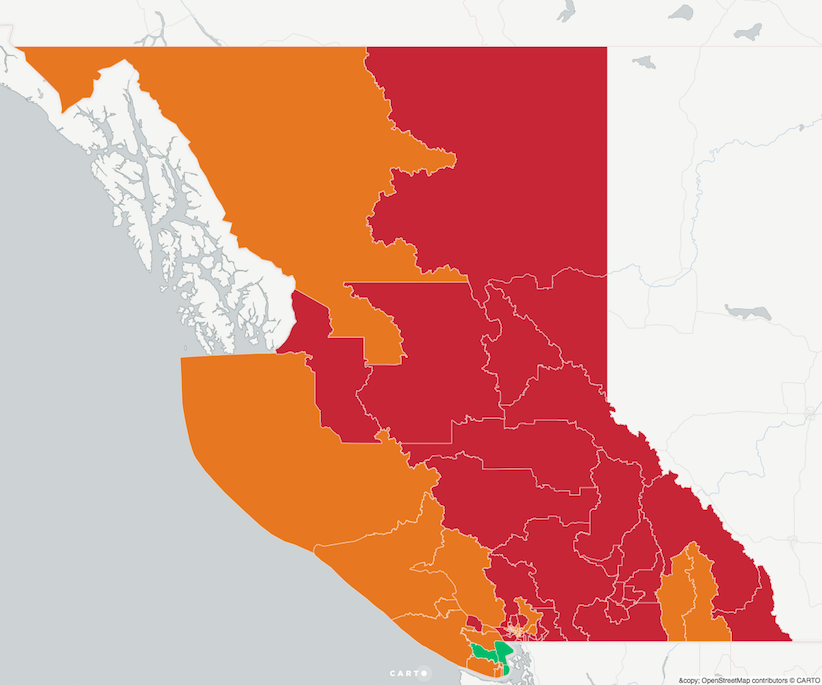
This election has, once again, perpetuated a Two Solitudes impression about British Columbia. Ridings that touch salt water almost all went NDP, those without tidewater almost all went Liberal (and those who can see the Saanich Peninsula went Green, but let’s put that aside for a bit).

As a person whose job it is to make a city in the Lower Mainland work better, I was pretty clear in my biases, so feel no need to extend my earlier gripe about Sam Sullivan into a wider one about how the BC Liberals seemed to not just ignore the Lower Mainland, but treat it with a bit of distain. Sometimes it seemed like policy decisions were made to specifically piss off the Urban Elites of Greater Vancouver. At the same time, John Horgan was criticized for not spending enough of the campaign North of 50, or reaching out to the recourse communities of the interior that used to be the NDP bread and butter.

Regardless of causes or coincidence, the idea of battling regions in a province as economically and physically tied together as BC does nothing to help advance anyone’s interests. Much of the economy of the Lower Mainland is tied to resource extraction, agriculture, and energy drawn from the interior, and almost every service the interior receives from government (health care, schools, roads, etc.) is heavily subsidized by the taxes of residents and businesses of the Lower Mainland. However, neither of those should be political fodder: the province is a confederation of interests that should work together to raise the quality of all of our lives.

So when a premier suggests that people in Prince George shouldn’t pay through their taxes for the Port Mann Bridge, it is an intentional attempt to drive a wedge between the regions. When Vancouver mentions that more people work in high tech industries in the Lower Mainland than all resource extraction in the interior, it similarly creates a category of “them” that leads inevitably to “othering” their problems. And don’t get me started on the whole topic of The Gateway.

This regional divide needs to be addressed as a potential to grow the province and get it working better, instead of a convenient political wedge to divide the province. People in Vancouver have to realize that gas and ore and timber and fruit from the interior are important to the provincial economy, and that people in the interior lack many of the services we take for granted – high-speed internet, reasonable access to healthcare, public transit. People in the interior need to understand that the lower mainland is the real economic driver of the province, and that making that economic machine work better through transportation investment or affordable housing actually helps pay for the services they do have access to.

I suggest we need someone from the provincial government to talk about the stresses that are specific to regions, and to work with the other ministries to help bring regional voices to the table and make the confederation work better. They could work with the local government organizations (LMLGA, SILGA, NCLGA, etc.) to bring their concerns to Government, and with the UBCM to balance needs. The name I’ve given it might be too Utopian for 21st century post-growth politics, but a person needs to do this job.

Perhaps more importantly, they can explain to the Premier why telling Millennials who cannot afford a place to live in Vancouver to “Move to Fort St. John” when that region has double the unemployment rate of Metro Vancouver may not make either place happy…

2017-BC-Election-results-822

Post-election Idea #2

The recounts and brokering are still ongoing, and I’m doubly assured none of the provincial leaders read this blog, so I’m going to continue spitballing big ideas that make for interesting conversation, and would support (in my mind) a strong Green-NDP alliance that could rule for a full term. After dispatching electoral reform, I present another vision for the province’s future:

Idea 2: Ministry of Energy and Climate Change

The science on climate change is clear. The causes are known, the implications are serious, and a wide suite of potential policy solutions have been developed and debated. Yet little progress is being made outside of select northern European countries. Under Gordon Campbell, BC was looking to take a lead on this file, but that leadership has slowly eroded for a decade. What now?

For too many reasons related to policy implementation, we need to stop thinking about climate change as an environmental issue, to be managed under the Ministry of Environment. Fundamentally, climate change is an economics issue. The impacts of it come with economic costs and the policies needed to combat its cause are economic policies. At the same time, the Ministry of Energy And Mines marries together two policy areas that will become less aligned as we work towards a post-carbon economy, as our federal government is suggesting is our goal.

Energy and Mines is currently without a Minister. Bill Bennet retired going into this election, and the Legislature will need to sit to put another Minister in place. I would argue that the file is large enough to split into two ministries.

I am one of those people who thinks the fact we had one of the largest environmental spills in Canada’s history on this Minister of Mines’ watch should have been a resignation-level event (and the fact no charges were laid in the spill raises questions about the competence of the Minister of Environment, but I digress). This event shook public confidence in the safety of our mines, just as Environmental Assessments to support new mining projects are ongoing and four new mining projects are pushing forward. The whims of the global metals market and speculative investment have always driven the pace of development in BC mining, but returning public confidence in the industry and its oversight should be job #1 for the Minister of Mines, and could be a full time job.

By taking the “Energy” part of the file out and placeing that new ministry in charge of Climate Change policy, the province can leverage its greatest advantage when it comes to sustainable energy policy and technology development: BC Hydro.

Hydro has a solid grid, and oodles of energy storage capacity in the existing dams across the province (I’m going to avoid wading into the Site C issue here). BC’s electricity is plentiful, cheap, and provides a significant boost to provincial revenues through cross-border sales. We also have a massive potential for solar, wind, geothermal, and other alternative energy production. The storage afforded us by large-reservoir dams connected to an integrated grid also provides the “battery” we need to make these less-consistent power sources viable and reliable through pumped water storage. BC Hydro also has an incredible reservoir of human talent in power technology (through Powertech), managing energy markets (through Powerex), and forecasting demand (through the BCUC). To be world leaders in sustainable energy, BC needs an integrated and coordinated effort that looks at our entire energy regime – from how we power our cars to how we provide cost-competitive power to industry and manage residential rates. Coordinating these efforts under a single ministry would facilitate this process.

And yes, managing our domestic supply of hydrocarbons is also a fundamental part of that long-term planning. The mandate of the Ministry of Mines (facilitating the safe extraction of resources to supply markets domestic and international) is harder to reconcile with long-term planning for a de-carbonization of our energy supply.

Most importantly, BC can again look to be leading the country on climate change policy, which will help keep the Greens on side through what might be rocky political days ahead.

Post-Election Idea #1

The recounts and brokering are ongoing, and I’m pretty sure none of the Provincial leaders read this blog, so I’m just going to spitball a few big ideas that make for interesting conversation and would support (in my mind) a strong Green-NDP alliance that could rule for a full term. I’ll put these out in a couple of short posts.

Idea 1: Andrew Weaver as Minister of Electoral Reform.

If anyone is interested in the stability of a true coalition, it could be forged by giving Weaver an interesting cabinet post. Environment is an obvious choice, but I think he wold quickly run into conflict, and would perhaps prefer to be “holding their feet to the fire” on that file instead of being the one getting burned. I suggest a better place for him would be leading the move to get big money out of politics and reforming the voting system.  These are two goals Horgan made clear were also his priorities during the election, making it their point of connection.

Placing Weaver in charge of a non-partisan commission to develop and support the promised referendum on a better voting system should shore up support across for the proposal once presented. We really don’t know what that looks like now, but no-one is more motivated to make some form of proportional representation work than the Greens (with all due respect to the alleged SoCred resurgence).

Reforming party fundraising is also something that was at the centre of both Weaver’s and Horgan’s campaigns. Weaver is the one leader who walked the walk on this during the campaign (ending his own Party’s corporate fundraising six months before the writ dropped), and as such may be in the best position to develop new guidelines. It will be interesting to see how donation limits, tax credits, and third-party campaigning will be managed during this conversation, as there are some potentially thorny constitutional issues related to what some would consider a restriction of free speech.

For any progress to be made on these files, the government will need a couple of years of stability, which will require the Greens to commit to supporting the NDP on budgets and other matters of confidence. This may require a commitment on expanding the carbon tax and health and education funding, issues that will likely be fought strongly by the Liberals. However, I would love to read this tweet by John Horgan from the day after the election as a bit of pre-negotiation:horgan

LMLGA 2017

The day after the election that isn’t over yet, most of your City Council carpooled up to Harrison Hot Springs to attend the annual meeting of the Lower Mainland Local Government Association. It was a packed 2-1/2 days, but here’s my quick summary of what we got up to while representing New Westminster.

The LMLGA is an “area association” that operates under the umbrella of the Union of BC Municipalities, and acts as an advocacy, information sharing, and collaboration forum for a large area, stretching from Boston Bar and Pemberton to the US border, including all of the communities of the lower Fraser Valley and Howe Sound. It represents a large, diverse region comprising dense urban centres, resort municipalities, and the majority of BC’s farms. For an organization centered around Greater Vancouver, it has a strong and effective presence from the Fraser Valley and Howe Sound regions, which makes for an interesting rural/urban mix.

The meeting has three components: the typical convention-type workshops and networking sessions, the Resolutions Session where the membership votes on advocacy issues, and the AGM with all the budget-approving and electing-officers fun.


I attended several workshop sessions, but two stood out for me, both which will probably blow up into stand-along blog posts:

“Running a City like a Business” was a discussion of this oft-used, but poorly understood phrase. The discussion seemed to revolve around the idea that local governments are not “customer focused” enough, which presumes that business hold a lock on customer service (ahem… United Airlines). The discussion seemed to also focus too much (IMO) on delivering Economic Development service, which boiled down to (and I paraphrase) “treating businesses in a business-like manner is good for businesses”, which seemed like a banal argument.

What I found more interesting was the discussion of how cities manage risk, compared to your typical business. As a rule, local governments are incredibly risk adverse, and have a structural resistance (throughout Councils, Staff, lawyers, and their policies) to trying something new just to see if it works. There was also some thought-provoking ideas around how slow Cities are to evaluate their performance and course-correct – something an effective business needs to be constantly doing to remain effective. I think everyone recognizes there are good reasons why these two characteristics exist (think about the effort we put into public consultation), but at times we may use this conservatism as accepted practice when perhaps a more dynamic approach to change would work.

“FCM–RAC Proximity Initiative” was a wide-ranging dissuasion of proximity issues between rails and communities, and between port-related industrial activity and other land uses. The Federation of Canadian Municipalities and the Rail Association of Canada have created a set of development guidelines that local governments may use to reduce the noise, vibration, and safety impacts of rail operations on nearby residential development. Not many cities have yet picked up these guidelines, but they are a useful guide that deserve a closer look. At some point soon I am going to write a ranting blog post about working with the railways, but that would take us pretty far off the rails (1) today, but I will summarize by saying that being a good neighbour sometimes requires more action than strictly following the letter of the law, and good neighbours meet each other half way.

There were 27 resolutions debated at the meeting, and the majority of them passed. They ranged from asking the BC Government to change the building code to require outdoor fire sprinklers on balconies for 4-story wood-frame residential buildings (passed) to a request that the province start up a Municipal Lobbyist Registry to provide transparency and accountability at the local government level that already exists for the provincial and federal level (also passed).


The three most hotly-contested resolutions were remarkably diverse topics:

Criminal Records Checks for Local Government Elected Officials This resolution called on the Provincial Government to make criminal record checks part of the nomination process for those seeking local government office, reasoning that many people volunteering or working for local governments are required to provide these checks, but us elected types have no such duty. The arguments against wondered what problem we are trying to solve, raised privacy issues, and suggestions that this would create a barrier to participation in electoral politics for those with minor offences or those who had long-ago served their debt to society. The resolution failed.

Varied taxation rate for the Residential Class Currently, all residential properties within a local government taxation zone have the same “mil rate”, and inequitable increases in assessed property values results in unequal taxation – essentially people in apartments pay less into the system than those in single family detached homes, though they consume the same amount of the things taxes are meant to pay for – roads, fire, police, parks, etc. This resolution called for a split of residential tax classes to “single family” and “multi-family” – much like Industrial zoning is currently divided between “light” and “heavy” industry. The counter argument was that this created unforeseen complications, and that unequal representation may result in this being used to incentivize single family houses at the cost of denser land uses. The resolution failed.

Right to Dry The request was for a change to the Strata Act to make it illegal for Strata to forbid the drying of clothes on balconies of strata buildings. This was a surprisingly controversial issue not because of a fiery debate (some spoke of it as an energy saving measure, others didn’t want to take rights away from Stratas) but because of the long process of having a standing head count vote, including a proxy voting controversy(!), that ended with the resolution losing in a tie vote. Such is democracy.


Finally, the AGM went smoothly, with the new executive including a wordy and swarthy new City Councillor for the City of New Westminster as the newest Officer at Large. Because I have so much free time…

larrycurlymoe